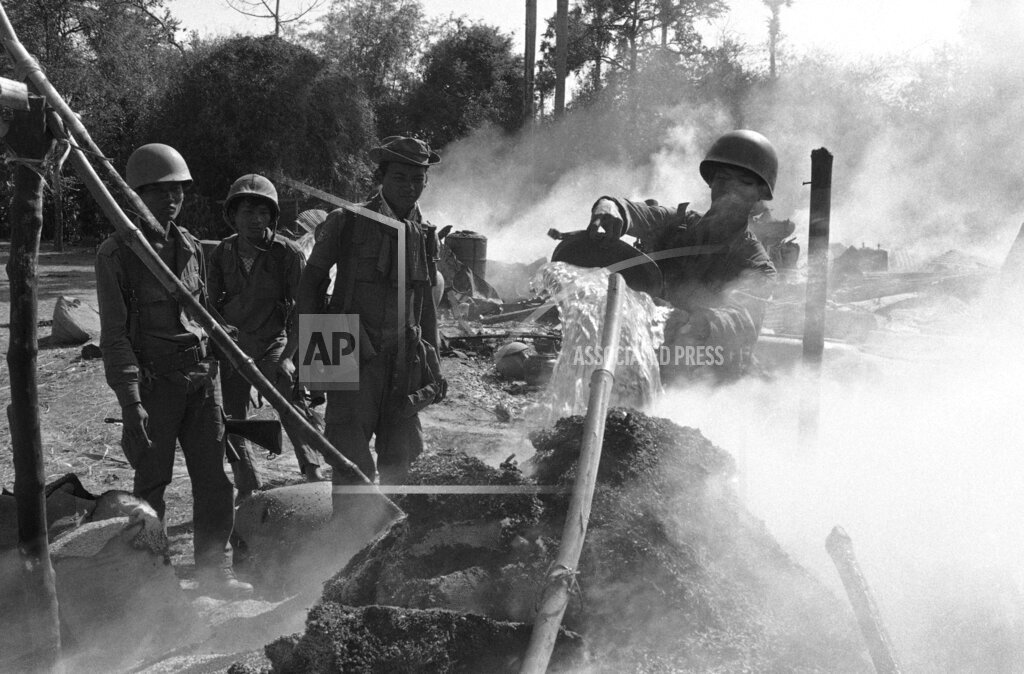
Scores of Cambodian civilians were reported killed today in fighting between government and communist troops near Phnom Penh’s airport. The fighting was reported to be centered on a heavily populated area north‐ of the airport. Rebels fired three rounds from a 75‐mm. recoilless rifle into the airport, killing two mechanics and slightly damaging three air force helicopters. Another rocket fell into a lake in the northeastern section of the capital. Reports from the scene said one government soldier was killed and 10 were wounded in the fighting today. The communists’ losses were unknown, although eight rebels—including six young women—were captured. The heaviest casualties were suffered by civilians caught between government and communist gunfire. There were reports that thousands of civilians had been abducted by the insurgent fortes, but these could not be verified. Cambodian Government troops were supported by T‐28 aircraft that hammered at rebel positions only five miles from downtown Phnom Penh.
Tonight, President Lon Nol, in a five‐minute radio broadcast, ordered city officials to organize paramilitary neighborhood committees throughout the capital to protect against possible attack by communist forces. The fighting near the airport was so intense that the government diverted part of the First Division from a road‐clearing operation along Route 4, south of Phnom Penh. government troops today managed to open the entire 135‐mile‐long highway, which runs from the capital to Cambodia’s sole deepwater seaport at Kompong Som. The highway was cleared after nearly a week of fighting. The breakthrough came when the government forces beat back rebel troops at a point known as Hill 123, about 40 miles southwest of Phnom Penh.
North Vietnamese bulldozers and South Vietnamese fighter bombers are locked in an unequal duel in the forests of the central highlands in South Vietnam, As South Vietnamese commanders watch apprehensively, North Vietnamese engineers are swiftly expanding and improving a skein of roads, lumbering trails that wind down the country’s western flank, poking eastward at strategic junctures.
Former Northern Ireland Prime Minister Brian Faulkner resigned as the leader of the Ulster Unionist Party in the wake of the Party’s January 4 rejection of the Sunningdale Agreement. Brian Faulkner resigned as leader of the Unionists, Northern Ireland’s biggest Protestant party, but he said that he would remain as head of the British province’s new governing executive body. His resignation followed a vote on Friday in the Unionist ruling council that gave a majority to those who opposed his policy of sharing power with Roman Catholics and of participating, together with the government of the Irish Republic, in a Council of Ireland.
Irish extremists claimed that they possess planes to be used in terrorist attacks against Britain. Pilot training occurs in Ireland and Libya; the planned guerrilla activity is paid for by Libyan President Kaddafi. A massive British army security operation is still in effect, which was implemented after Arab terrorist plans were discovered by the government.
Thousands of angry British coal miners walked off the job in protest of a union suggestion that they end their eight-week ban on overtime if national interests were being damaged, and militant labor leaders urged half-time working, a move that would threaten collapse for the nation’s fuel-starved industry. But Prime Minister Edward Heath’s government gave no sign of yielding to the miners’ demands for higher Wages. Railroad engineers, meanwhile, were debating whether to tighten a slowdown begun December 12 in a bid for pay increases.
Prime Minister Heath is prepared to keep Britain on a three-day work week at least until spring rather than yield to the wage demands of the nation’s coal miners. In an interview with The New York Times, Mr. Heath took a decidedly tough line on the issues in the controversy.
Gasoline rationing began in Sweden, with private vehicles limited to only 100 liters (26 U.S. gallons) of gas for the 53 days between January 7 and February 28, as Sweden became the first Western European nation to begin rationing.
France will receive oil from Saudi Arabia in return for jets and heavy arms. The U.S. was upset over Paris’ action, as the decision is a major blow to Secretary of State Henry Kissinger’s plan to band oil-consuming countries together for meetings with oil-producing countries.
Secretary of State Henry A. Kissinger apparently has persuaded Joseph J. Sisco — assistant secretary of state for the Middle East whose resignation was announced December 6 — to stay on. The White House is expected to announce today that Sisco will become undersecretary for political affairs, the No. 3 post at the State Department and traditionally the highest for a career Foreign Service officer. Sisco, for years a principal architect of Middle East policy, would replace William J. Porter, who has been named ambassador to Canada.
The Action Committee on American-Arab Relations criticized Secretary of Defense James R. Schlesinger for saving there was a risk that U.S. public opinion might call for force against the Arabs if the oil embargo crippled world industry. Schlesinger, in a television interview, added that he was doubtful of such an eventuality. But the Arab group, in a telegram to the defense secretary, said such remarks were intended “to incite and mobilize” public opinion “for a Vietnam-like conflict in the Middle East.”
Six alleged Israeli agents, accused of slaying a suspected Arab terrorist, pleaded innocent at the opening of their heavily guarded murder and espionage trial in Oslo. Ahmed Bouchiki, 30, a Moroccan, was shot down outside his home at the Norwegian resort town of Lillehammer on July 21. Fearing possible Arab terrorist attacks, police have placed the building where the trial is being held under heavy guard. The case is being tried before a special jury of three judges and four laymen.
The U.S. State Department said Lebanon had agreed to the appointment of G. McMurtrie Godley as ambassador. The announcement came in reply to a question about a New York Times report that Lebanese officials were being urged to reject his nomination. The report said the Popular Front for the Liberation of Palestine had warned against the nomination, citing “crimes” of Godley in Southeast Asia. As ambassador to Laos, Godley helped direct secret military operations against insurgents.
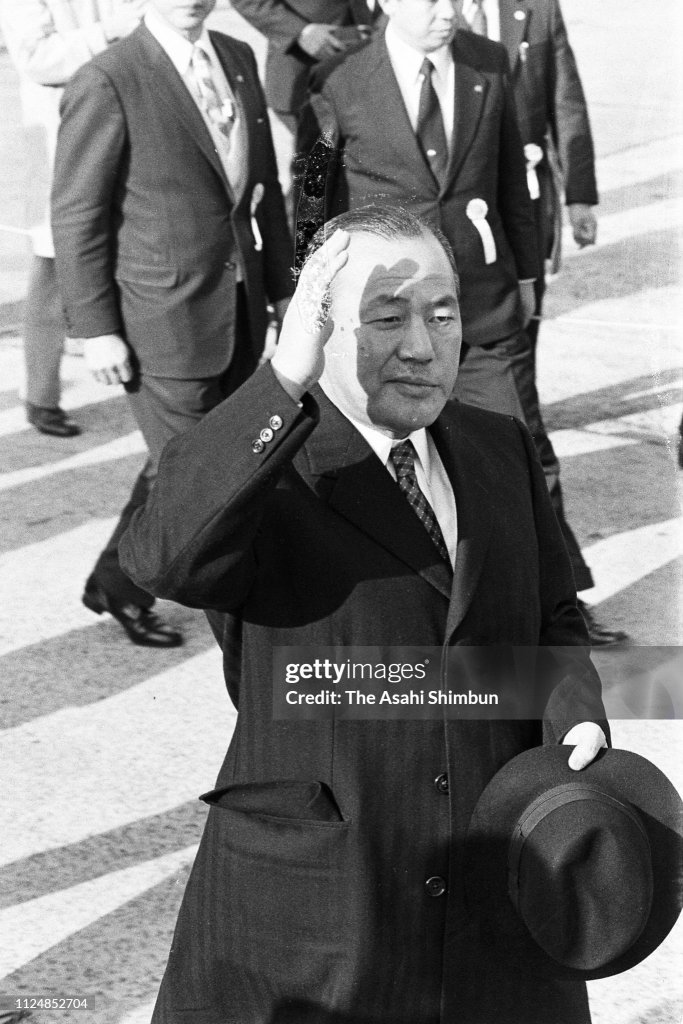
Japanese Prime Minister Kakuei Tanaka arrived in Manila on a tour that will also take him to Thailand, Singapore, Malaysia and Indonesia to promote understanding and friendlier relations. It is Tanaka’s first trip to Southeast Asia as prime minister. Hostile demonstrators are likely in Thailand and Indonesia where students have criticized Japan’s massive economic penetration.
The yen suffered a de facto devaluation of 6.7% as the Bank of Japan suspended its intervention in support of the currency on the Tokyo foreign exchange market. Without the bank’s support, the yen fell to its lowest rate against the dollar since the currency crisis last winter. A shift to American dollars also swept through the foreign exchange markets in Western Europe as speculators rushed to sell British pounds, West German marks, Swiss francs and other currencies.
Bora Laskin was sworn in as the 14th Chief Justice of Canada to replace the retiring Gérald Fauteux. In appointing Laskin, Prime Minister Pierre Trudeau broke with tradition by passing over the more senior justice, Ronald Martland.
The United States and Panama are near agreement on the future of the Panama Canal and Secretary of State Henry A. Kissinger might go there this month to sign a new treaty, Panamanian Foreign Ministry sources in Panama City reported. They gave no details of the apparent agreement, and U.S. sources in Panama refused to comment. Talks have been held there between Panamanian Foreign Minister Juan Tack and U.S. special envoy Ellsworth Bunker.
The office of Prime Minister Leabua Jonathan announced that there appeared to be “a massive plot to overthrow the government of Lesotho by force.” A statement issued after an emergency meeting of the cabinet said armed gangs attacked three police substations in the northern sector of the kingdom which is surrounded by South Africa. Supporters of the opposition Basutoland Congress Party were blamed for the incidents.
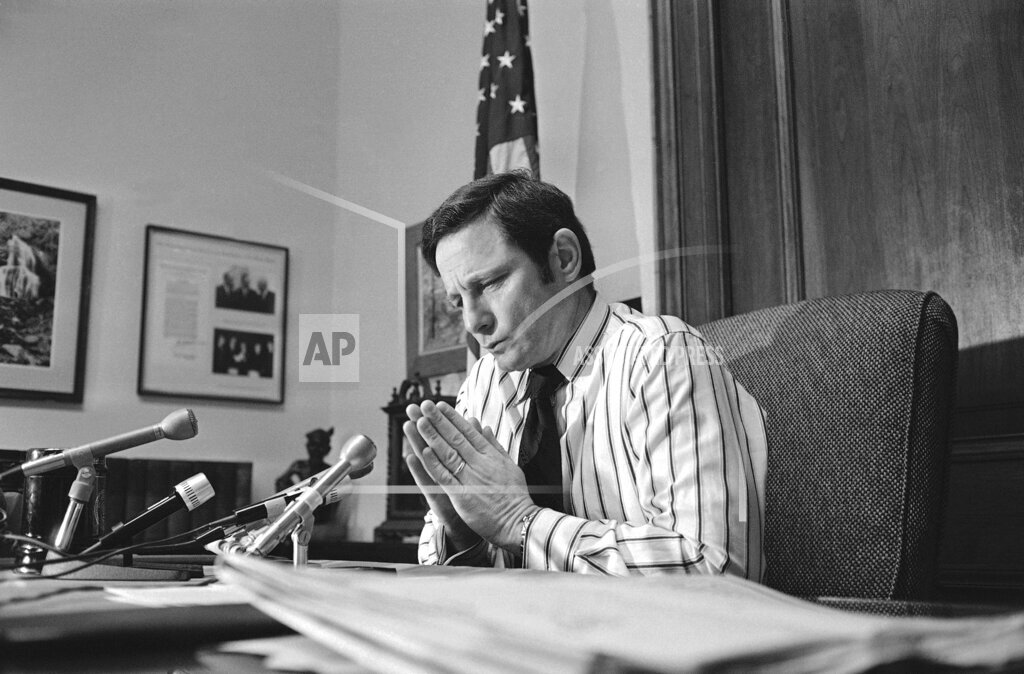
The groundwork was laid for an early test of impeachment sentiment among returning Congressmen when the House Judiciary Committee chairman, Representative Peter Rodino, New Jersey Democrat, said a vote of the full House was needed to give subpoena power to the committee’s impeachment inquiry staff. An informal poll of the Judiciary panel’s ad hoc committee on impeachment indicated that a resolution giving subpoena power to the panel was expected to go before the House for a vote early in February.
Deputy energy chief John Sawhill reported that 1 million barrels of Arab oil still reach the U.S. daily through various leaks in the embargo.
The Supreme Court refused to grant a hearing to independent gasoline station operators who contended that government price controls were unfairly curtailing their income.
The Defense Department has been allocated 637,000 barrels of oil a day in the first three months of this year, an increase of about 2% over military fuel demands in the final quarter of 1973. This will make possible, the department said, the resumption of training flights by the Air National Guard and Air Reserve, which were grounded by the fuel shortage.
In an effort to narrow the price spread for heating oil in New York and New England, the Federal energy chief, William Simon, asked major refineries to sell more domestic oil, which is cheaper than imported fuel, to independent wholesalers. He made the request in telegrams to 26 refiners.
Federal education and energy officials said that temporarily closing schools to conserve fuel would do more harm than good. John C. Sawhill, deputy administrator of the Federal Energy Office, and John Ottina, education commissioner, told a Senate education subcommittee that more job losses, increased delinquency and higher home energy consumption would result from the closings. Many parents who work while their children are in school would have to resort to day-care centers, if available, or perhaps even quit working. Sawhill also spoke against any curb on school busing used to achieve racial balance, saying it would be a “serious error.”
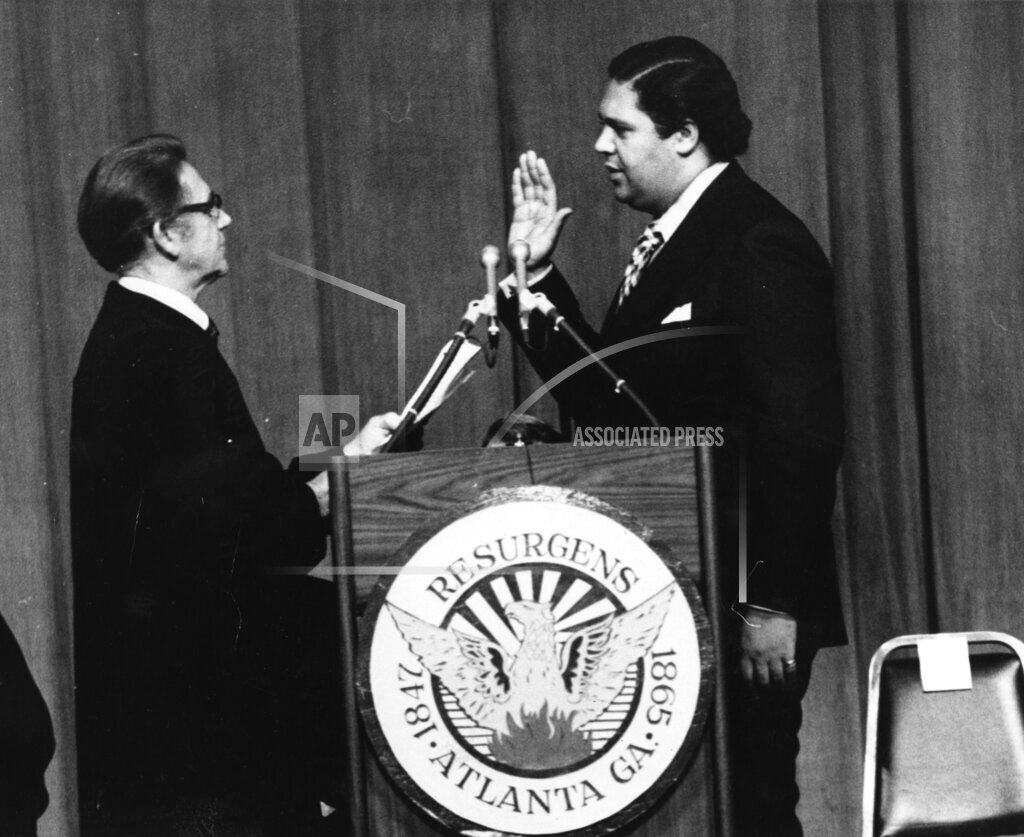
Maynard Holbrook Jackson Jr., the great-great-grandson of a former Georgia slave, became tonight Atlanta’s youngest mayor ever. He will be 36 years old in March. Some 5,000 people, from youngsters in blue jeans to dowagers in mink stoles, filled the Atlanta Civic Center to see Mr. Jackson inaugurated. Asserting that this city stands at a decisive point in history, he said: “Everybody knows the old South is dead forever, and thank goodness. But in spite of propaganda to the contrary, we have not yet seen the birth of a really new South. Now we stand with the choice. We can live as if this were simply the worst of times, as if there were no past for Atlanta save the terrible mistakes of the urban North. Or we can strike out in still uncharted directions.”
Mr. Jackson’s address was interrupted 18 times by applause. Minutes before Mr. Jackson took the oath of office his aunt, the opera star Mattiwilda Dobbs who had come from her home in Stockholm for the occasion, sang a song for her nephew: “He’s Got the Whole World in His Hands.” Mr. Jackson, who in his campaign last summer united the black community and won enough white support to give him a commanding victory three months ago, spoke about what he considers Atlanta’s most serious problem: crime and a homicide rate that now averages a killing a day. He specifically challenged those who cared about their community to join with him and the newly elected City Council in combating crime and poverty. He suggested that by eliminating the latter, crime could be dramatically reduced. But all of this will necessarily mean strong citizen participation, he warned.
Much of the $50,000 to $100,000 in treasure that diver Tom Gurr said he had thrown back into the ocean was found in a canal behind his home in Islamorada, Florida officials said. Wilburn A. Cockrell, state marine archaeologist, said divers had recovered artifacts, valuable pottery, jewelry and other objects. Gurr was shown on a CBS television news program Friday dumping what he said was treasure from the sunken Spanish galleon San Jose back into the ocean over the wreck site. Gurr said at the time he was taking the action because he could not get the state to divide it and give him his share. Officials said Gurr had been arrested and charged with grand larceny because 25% of what he threw away belonged to the state.
Police killed one inmate and wounded another after the two men threatened to kill three women they were holding hostage at a treatment center in Junction City, Ohio, for mentally ill convicts, authorities said. The hostages, all employees of the facility’s record center, were not harmed. The inmates had held the women for five hours and had threatened to kill them unless they were given a getaway car. But police successfully stormed the room as the deadline drew near. The dead man was identified as Michael Woods, 22, and the wounded man as Bernard Barbiaux, 32, both of Cuyahoga County.
Former Ohio Governor James A. Rhodes was in an “inflammatory” mood prior to the Kent State University shootings in 1970 and referred to student antiwar demonstrators as “brown shirts,” a World War II term for young Nazis, a witness told a federal grand jury in Cleveland. Michael Delaney, a former public information officer for the Ohio National Guard, testified in the investigation by the jury into the May 4, 1970, killings of four students by Ohio guardsmen. Delaney said Rhodes met briefly in Kent with officials. “He told the guardsmen to use whatever force necessary, although the specific point of when they should fire was not discussed, as I remember,” Delaney said.
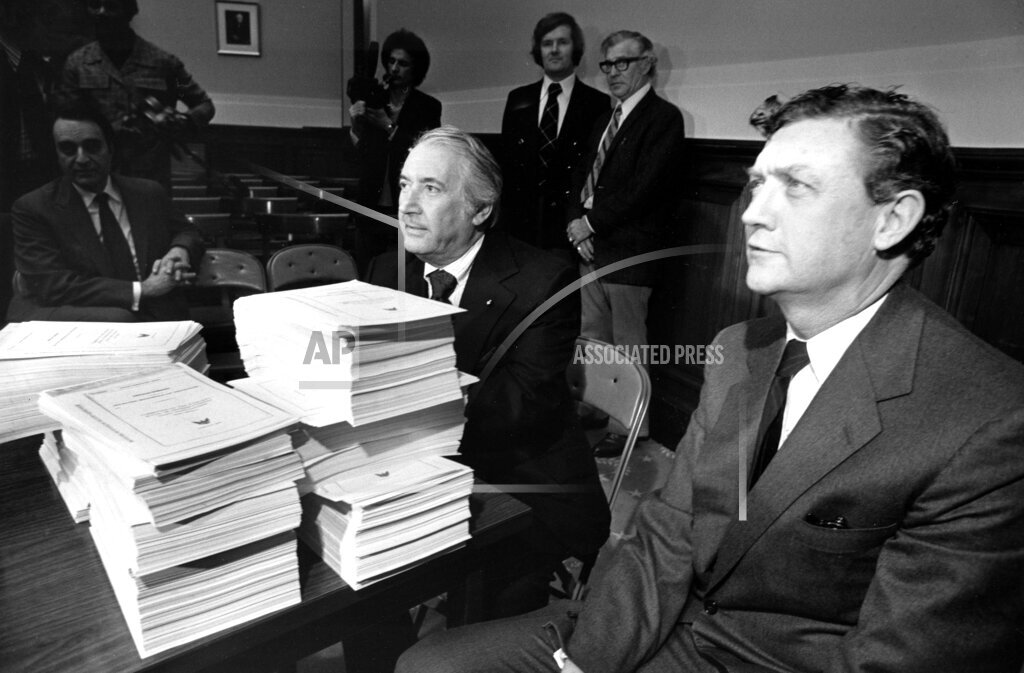
Evidence concerning Philadelphia Mayor Frank Rizzo’s now-defunct special police squad will be turned over to the Justice Department for investigation of possible federal civil rights violations. In a 30-page presentment, an outgoing grand jury that had been investigating the police squad pointed out that the unit’s actions “did not constitute a violation” of Pennsylvania law.
The “Gombe Chimpanzee War” broke out in Tanzania’s Gombe Stream National Park between two groups of Eastern chimpanzees (Pan troglodytes schweinfurthii) that primatologist Jane Goodall had studied since 1960. A group of eight male primates, dubbed by Goodall as the Kahama community, had broken away from the Kasakela chimpanzee community. Eight Kasakela males attacked and killed the Kahama male “Godi”, beginning a four-year-long “war” between the two groups.
Dow Jones Industrial Average: 876.85 (-3.38, -0.38%).
Born:
Vance McAllister, controversial U.S. Congressman for Louisiana; in Oak Grove, Louisiana.
İbrahim Kutluay, Turkish basketball player, Top scorer in the EuroLeague (1999), the Turkish League (1999) and the Greek Cup finals (2001); in Yalova, Turkey.
Trevor Winter, NBA center (Minnesota Timberwolves), in Slayton, Minnesota.
Rob Radlosky, MLB pitcher (Minnesota Twins), in West Palm Beach, Florida.
Joseph L. Erb, U.S. and Cherokee Nation filmmaker and computer animator; in Gore, Oklahoma.
Died:
Charles Coulson, 63, British applied mathematician and theoretical chemist known for the Coulson–Fischer theory and the Chirgwin–Coulson weights measurement of valence bond, as well as other applications of molecular physics to valence bond theory.
General Wang Shusheng, 69, Vice Minister of National Defense for the People’s Republic of China.
Paul Methuen, Baron Methuen RA, 87, English painter and zoologist. The lizard Methuen’s dwarf gecko (Lygodactylus methueni) is named in his honor, and he is known for his identification of the frog genus Gephyromantis, as well as the Karoo dwarf chameleon (Bradypodion karrooicum) and for Standing’s day gecko (Phelsuma standingi).
Margaret Q. Adams, 99, the first woman to serve as a deputy sheriff in the United States, sworn in to the Los Angeles County Sheriff’s Department in 1912 and retiring in 1947.
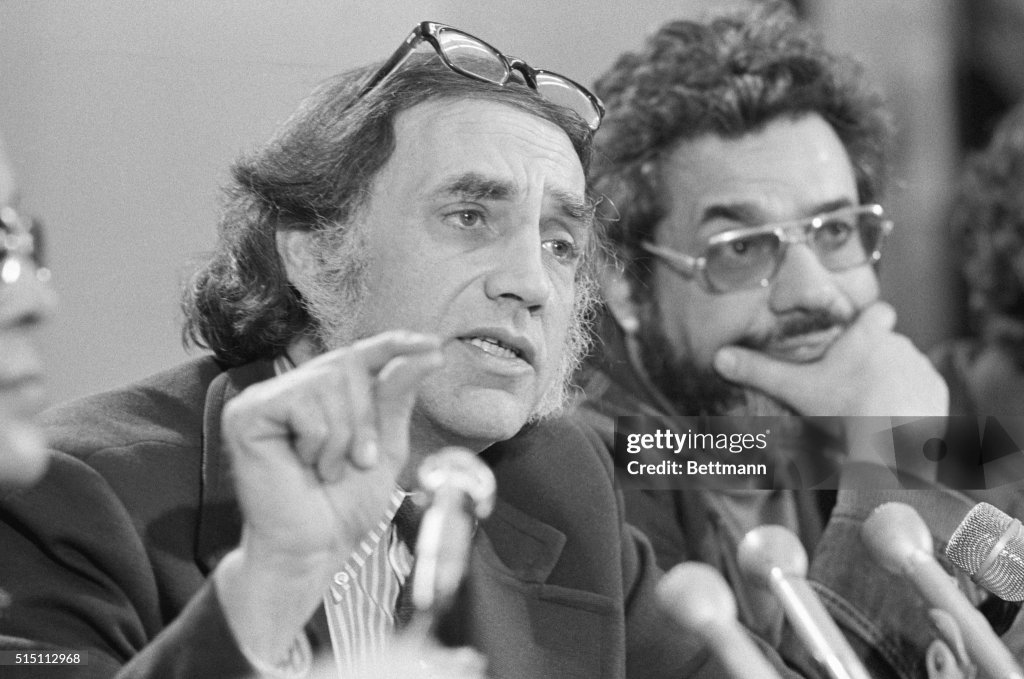
Marvin Glass, 59, American toy designer, died of complications from a stroke.


 History Diaries