A policy of moderation pursued by the leader of the four-day-old coalition administration of Northern Ireland was repudiated by his own Protestant party. By a vote of 427 to 374, the Ulster Unionist Council in Northern Ireland voted to reject the Sunningdale Agreement that had been signed between the United Kingdom and the Republic of Ireland to establish a revival of the Northern Ireland Assembly and an advisory Council of Ireland with representatives from both Northern Ireland and the Republic. The defeat for Brian Faulkner, the chief executive of the coalition and head of the Unionist party, which represents Northern Ireland’s two-thirds Protestant majority, came on a motion of support for proposed cooperation with the Irish Republic.
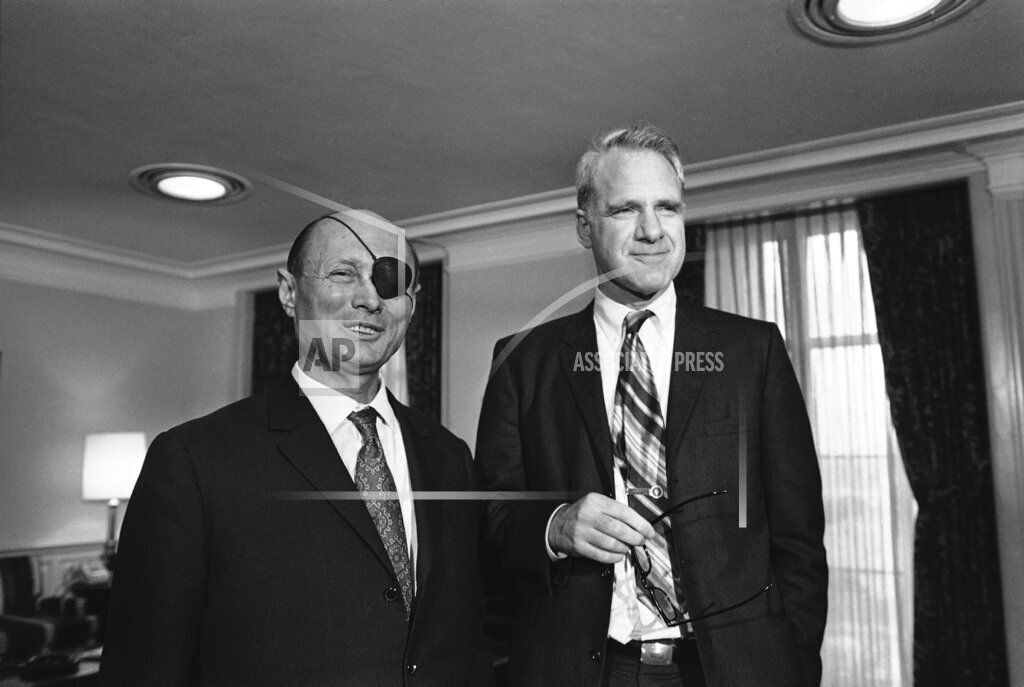
The Soviet press today attacked Defense Secretary James R. Schlesinger’s plans to seek an $85‐billion defense budget for 1975, on the ground that this was an attempt “to turn back the process of détente.” The lead editorial in the Government newspaper Izvestia accused “American hawks” of “fighting for acceleration of the arms race” and contended that this was “particularly unseemly” after Moscow had announced a formal reduction in its 1974 defense budget. The Communist party Central Committee in mid‐December approved a formal Soviet defense budget of 17.6 billion rubles. or $23.5 billion, down from 37.9 billion rubles last year. But Western specialists are uncertain whether that reflects any real reduction because the Soviet military budget excludes such items as the nuclear weapons program and key research and development expenditures that are hidden in other budget sectors.
Aleksandr I. Solzhenitsyn reportedly told two French lawyers at his wife’s apartment in Moscow Monday that he expected to be arrested and tried for the foreign publication of his new book, “The Gulag Archipelago, 1918‐1956.” The Nobel Prize author’s documentary account of the Soviet system of prison camps and secret police was published in Russian here last Friday. Translated excerpts were published in three installments in The New York Times beginning Saturday. According to the lawyers, who represent a little‐known Paris‐based group for the defense of human rights, Mr. Solzhenitsyn told them: “I’m going to have a trial. It’s possible.” But he reportedly added he had had no direct word from the Soviet authorities up to that time. He was quoted as saying: “I’ve lived a lot. I was in prison. I will carry on.”
Eleven Czechoslovak liberals sent to prison in the summer of 1972 on charges of subversion were released on probation shortly before Christmas, usually reliable sources said here today. The 11 were said to have included Alfred Cerny, Communist party secretary for southern Moravia under Alexander Dubcek, and the son and daughter of Jaroslav Sabata, a former party secretary in the Moravian city of Brno. A total of 46 people were convicted in the 1972 subversion trials. About a dozen of those who received the highest sentences, ranging as high as six and half years, are believed to be still in prison, including Jaroslay Sabata.
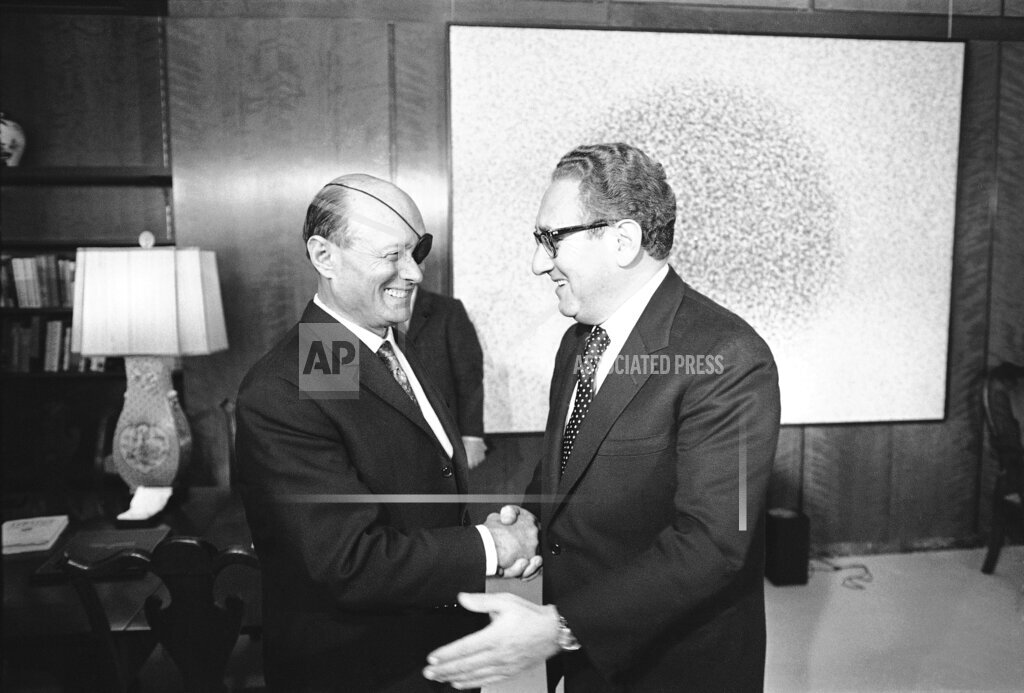
Secretary of State Henry Kissinger and Israeli defense minister Moshe Dayan discussed the latest developments in the Mideast. Dayan presented Israel’s troop disengagement plan to Kissinger at today’s meeting in Washington. Kissinger reported that progress was made at the meeting, though Dayan stated that the Mideast peace plan is not yet ready for discussion.
General Dayan told newsmen in the State Department lobby that he had presented Mr. Kissinger with the Israeli Government’s “thoughts and principles” on how the disengagement of forces should take place. In response, he said, Mr. Kissinger offered some “views and principles” of his own. State Department officials said privately that the purpose of the general’s visit to Washington was to begin a thorough discussion of ways to carry out the disengagement of forces along the Suez Canal. These talks began in November along the Cairo‐Suez Road. They broke off, then were resumed last month in Geneva under the mantle of Arab‐Israeli peace conference. Israelis have said that no agreement could be reached at Geneva until after their elections — held Monday — and the formation of a new government. But General Dayan’s mission, according to Israeli sources, was to put before Mr. Kissinger what the general called “the general concept” of the Israeli position — namely, that Egypt must take steps to match an expected movement eastward from the canal by Israeli forces.
Two American diplomats arrived in Syria, opening diplomatic contact between the U.S. and Syria for the first time in several years. Syria may be softening its position regarding the Geneva peace conference.
An Israeli blockade of food and nonmilitary supplies for elements of Egypt’s Third Army and the city of Suez was reported to have been lifted after United Nations intercession with the Israeli Army and government. The deputy spokesman for the United Nations Emergency Force, Birger Hallden, said that Israeli troops had refused to permit United Nations drivers to proceed with truckloads of supplies to unloading areas, citing shooting in the area as the reason for the blockade.
The United Nations peacekeeping force reported heavy fighting around Suez City as negotiators met in Geneva to work out a peace agreement.
The Foreign Ministry, responding to a request by an Arab pressure group, said today that government action to dismiss an Italian newspaper editor was “not conceivable” because it would violate the constitutional freedom of the press. The embattled journalist is Arrigo Levi, managing editor of La Stampa of Turin. The newspaper, owned by the Fiat Motor company, published an article by two humorists last month that the Libyan leader, Colonel Muammar el‐Qaddafi, found insulting. The Foreign Ministry said it thought the dispute could be settled “through the appropriate channels and in the spirit of the traditional friendship between our country and the Arab world.” The dismissal of Mr. Levi, who is Jewish and who fought with Jewish forces against the Arabs in 1947, was demanded by the Cairo-based Arab Boycott Office.
British officials arrested a second American woman supposedly acquainted with Allison Thompson, who was arrested earlier in the week. The women are members of an extremist, pro-Palestinian terrorist group. The British will charge the women and their two male companions with possession of firearms, allegedly brought to England to give to the terrorists.
China accused the Soviet Union and the United States today of having created a state of “no war, no peace” in the Middle East to gain control of the region. A report by Hsinhua, the official Chinese press agency, that was broadcast by the Peking radio said that the Middle East remained “tense and turbulent” Idespite the cease‐fire arranged in October by Washington and Moscow.
The South Vietnamese Government and the Vietcong’s Provisional Revolutionary Government agreed “in principle” today to resume the prisoner exchange that broke off in dispute in July. The tentative agreement, confirmed independently by ranking officers of both sides, did not appear to be an indication that significant agreement on other issues would be forthcoming. The purpose of the resumed exchange, the officers said, would be to permit the prisoners to rejoin their families for Tết, the Lunar New Year, which begins January 23. Still, the agreement in principle was the first hint of cooperation between the two sides in several months. Fighting has continued in numerous areas recently despite the cease‐fire agreement signed last January.
President Nguyễn Văn Thiệu called on his troops today to attack the Viet Cong in their own territory because the Vietnam War had begun again. At a review of troops, he said that while the pre‐emptive actions of the South Vietnamese Army had forestalled a Communist offensive, the fight now had to be carried to the Viet Cong zones because the threat of an offensive remained. Speaking here in the main city of the Mekong Delta on the 11th anniversary of the founding of Military Region IV, he said: “We should not allow the Communists a situation in which their security is guaranteed now in their zone so that they can launch harassing attacks against us and destroy our infrastructure, schools and bridges. We should carry out these activities not only in our zone but also in the area where their army is now stationed. “As far as the armed forces are concerned, I can tell you the war has restarted.”
In Mahlabatini in South Africa, Harry Schwarz, the white opposition leader of the Transvaal province parliament, and Mangosuthu Buthelezi, the black Chief Executive Councilor of KwaZulu, signed the Mahlabatini Declaration of Faith.
Citing executive privilege, U.S. President Richard Nixon refused to surrender over 500 tape recordings that had been subpoenaed by the Senate Watergate Committee. President Nixon, in a letter to Senator Sam Ervin, rejected the Senate Watergate Committee’s subpoenas seeking more than 500 tapes and documents, and simultaneously overhauled his Watergate defense staff. The shake-up in the legal staff removed both Fred Buzhardt and Leonard Garment from active direction of the Watergate case. The new man in charge will be James D. St. Clair, a Boston lawyer.
Committee counsel Sam Dash defended the need for each document and tape that was requested under subpoena. Committee chairman Sam Ervin declared that the President has overstepped the Constitution by refusing the subpoenas. The committee will go to court over the matter.
President Nixon pocket-vetoed a bill that would have facilitated the use of federal funds for the purchase of local buses. In a “memorandum of disapproval,” the President said that the bill had “become an anti-transit measure.” He said that the bill would allow the use of funds from the Urban Mass Transportation Act for the purchase of buses even if the buses were to be used part time for charter operations and would prohibit the use of Federal Highway Act funds in the same circumstances.
Soaring increases in jet fuel costs brought warnings from the airline industry that it would face bankruptcies or need large government subsidies unless sharp new fare increases were authorized. The head of Eastern Air Lines, Floyd Hall, suggested the need for two 5 percent increases in 1974 in addition to a surcharge of 2 to 4 percent that would be tied to fluctuations of fuel oil prices.
Watergate conspirator Bernard Barker has been freed pending the appeal of his case. Barker stated that prison officials were responsible for some paralysis to his mouth; prison officials denied any “laxity” in their treatment of Barker. Barker said that his involvement in Watergate was a service to his country, and under the same circumstances he would take the same action as he did before.
The nation’s unemployment rate rose in December for the second consecutive month, but the role of the energy shortage in the rise was still uncertain, the Labor Department reported. The unemployment rate in December was 4.9 percent of the labor force, up from 4.7 percent in November, but still a little below the 5.1 percent of December, 1972.
The energy crisis is responsible for much of the unemployment and is particularly rampant in California where 5.5% of the labor force is out of work. One unemployment office manager stated that the unemployment rate doubled over the past month. Many gasoline stations have been forced to close, and the recreational vehicle and automobile industry have been affected by the crisis. Airlines are going to cut more flights and lay off more workers as well.
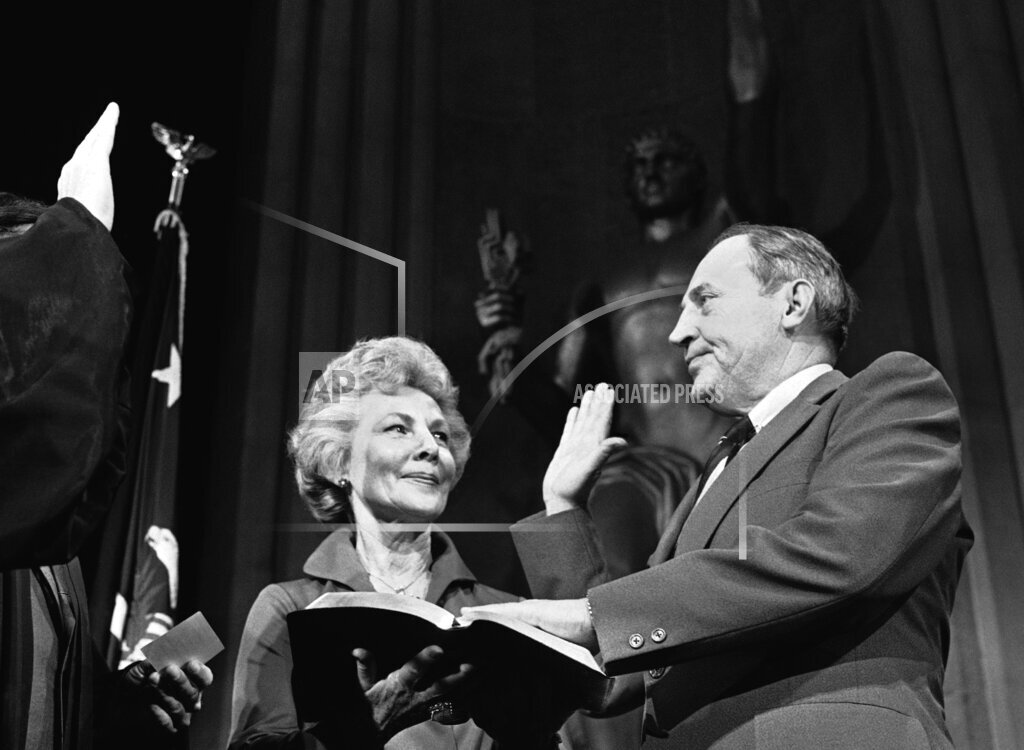
On the eve of his swearing-in as Attorney General, Senator William B. Saxbe said he would pursue “strict, vigorous enforcement” of the antitrust laws and would investigate oil companies to determine if they had done anything to contrive the oil shortage.
The director of Central Intelligence, William Colby, told a federal judge this week that “highly classified” intelligence information might be “leaked” to the public if the agency complied with the judge’s recent order to make that information available to limited group of security experts. One of those experts — and the only one named specifically in the judge’s order — is Morton H. Halperin, a former consultant to the National Security Council and a former Deputy Assistant Secretary of Defense. Mr. Halperin’s telephone was tapped for 21 months in 196971, while he was an assistant to Henry A. Kissinger on the council and afterward, as part of a wiretap operation that President Nixon said later was an attempt to stop leaks of secret information to the press. Mr. Kissinger has said that the conversations overheard on Mr. Halperin’s phone “never cast any doubt,” on Mr. Halperin’s “loyalty or discretion.” The judge, Albert V. Bryan Jr. of the United States District Court in Alexandria, Va., issued the order two weeks ago at the request of the publisher and the authors of a book about the C.I.A. The agency is trying to censor the book.
American serial killer Ted Bundy attacked his first victim, University of Washington student Karen Sparks, by invading her apartment, then bludgeoning her with a medal rod and assaulting her. Sparks survived the attack but was left permanently disabled.
Oregon Governor Tom McCall is trying to make the buying of gasoline easier for motorists. Under his plan, motorists will be limited to making purchases on just two days per week according to their license plate number. McCall believes that oil companies are discriminating against his state.
Senator Hubert H. Humphrey, Democrat of Minnesota, is suffering from a tumor of the bladder and has been undergoing X‐ray treatments since the first week in November, his physician said today. Dr. Edgar Berman said, “We think we have it stopped,” but he added that it was uncertain whether the tumor was malignant. Mr. Humphrey, 62 years old, was admitted to the Naval Hospital at Bethesda, Maryland, early today for tests, but Dr. Berman said the former Vice President would “go home in a couple of days.” Dr. Berman said Senator Humphrey would undergo antether cystoscopy, a procedure by which a doctor can examine the bladder, within two months to determine whether the X‐ray treatments had stopped the growth of the tumor.
Former Vietnam POW Leo Thorsness announced his candidacy for Senator George McGovern’s seat in next year’s election.
In a major executive shake‐up William H. Moore relinquished the post of president and chief executive officer of the Penn Central Transportation Company yesterday and Jervis Langdon Jr., a trustee of the bankrupt corporation since July, 1970, was selected to replace him. The change, reflecting reported policy differences within management, came amid reports that pressure also was exerted on Capitol Hill following President Nixon’s signing earlier this week of legislation that will merge the Penn Central and six other bankrupt lines into a new Consolidated Rail Corporation. The new corporation will have the benefit of up to $1.5‐billion of federally guaranteed loans for improvements to track and equipment.
Four armed men in hard hats, posing as telephone workers, gained entrance to a cargo building at Kennedy International Airport yesterday afternoon, handcuffed 10 airline employes and escaped with more than $200,000 in cash. Lieutenant Ronald Fenrich of the Queens burglary squad said that the entire robbery took about four minutes. The four escaped in a blue van despite a police cordon. The holdup occurred at 2:45 at the office of a cargo building occupied by Alitalia Airlines. Once inside, the robbers handcuffed the employes to each other and herded them into restroom. Although he did not resist, one employee, Anthony Baldi, 38 years old, was pistol-whipped.
Dow Jones Industrial Average: 880.23 (-0.46, -0.05%).
Born:
Armin Zöggeler, Italian Olympic luge champion, 2002 and 2006 Winter Olympics gold medalist; in Merano, South Tyrol, Italy.
Carl Powell, NFL defensive end (Indianapolis Colts, Baltimore Ravens, Chicago Bears, Washington Redskins, Cincinnati Bengals), in Detroit, Michigan.
Ian Moor, English pop singer, in North Ferriby, East Riding of Yorkshire, England, United Kingdom.
Sindi Dlathu, South African actress and musician; in Meadowlands, Gauteng Province, South Africa.
Died:
Abdul Ghafoor Breshna, 66, Afghan painter, composer, poet and film director.
Renzo Videsott, 69, Italian conservationist, founder of the Movimento Italiano per la Protezione della Natura.
Phelim Calleary, 78, Irish politician, Teachta Dála for Mayo North (Dáil constituency) from 1952 to 1969
Ellef Mohn, 79, Norwegian footballer.

 History Diaries