Generalissimo Francisco Franco’s forces were ported menacing the Spanish government’s main defenses today in lower Catalonia after a sweep down the east bank of the Ebro River. Rebel dispatches asserted a large government force was trapped in the angle of the Segre and Ebro rivers as rebel columns struck south behind the government lines. The rebels moved from the Segre River, through the Llena Mountains, to reach the Ebro at Vinebre.
After breaking through from the north, the rebels were reported to have wiped out a 12-mile stretch of government lines near Vinebre. From there the attack pointed toward fortifications running from Falset east through Reus to Tarragona. The rebel offensive in Catalonia, aimed at Barcelona, began on December 23. Rebel officers in Saragossa estimated that in the first ten days of the drive their troops had taken 675 square miles of territory and 16,200 prisoners and shot down 100 enemy war planes. Government dispatches acknowledged rebel progress in the Ebro sector but reported the offensive blocked in the regions to the north. On the left flank of Franco’s attack, government reports said the rebel troops were checked about six miles from Artesa, which is seventy-five miles northwest of Barcelona.
The rebels have been trying to take Artesa, an important communications center, in a two-pronged drive from Tremp, which lies to the northwest, and Balaguer, which lies to the southwest. In the central sector, the rival armies were reported deadlocked east of Lérida, with the rebels concentrating their campaign on the flanks and government fortifications holding firm across the main Lérida-Barcelona Highway. Earlier dispatches meanwhile had reported rebel activity on the south side of the rebel corridor to the Mediterranean. The Catalonia offensive is on the north side of this corridor. Rebels said their troops there had gained key positions in the Vall de Uzco sector approximately twenty-five miles north of Valencia.
The death toll of the rebel bombing of central Barcelona on New Year’s Eve rose to sixty-one today as many of the wounded died. Seventy-one wounded still lived. The casualty total for the entire holiday weekend in Barcelona was seventy-one dead and 104 wounded.
General Francisco Franco announces that all Spanish citizens will be trained to “take up arms.”
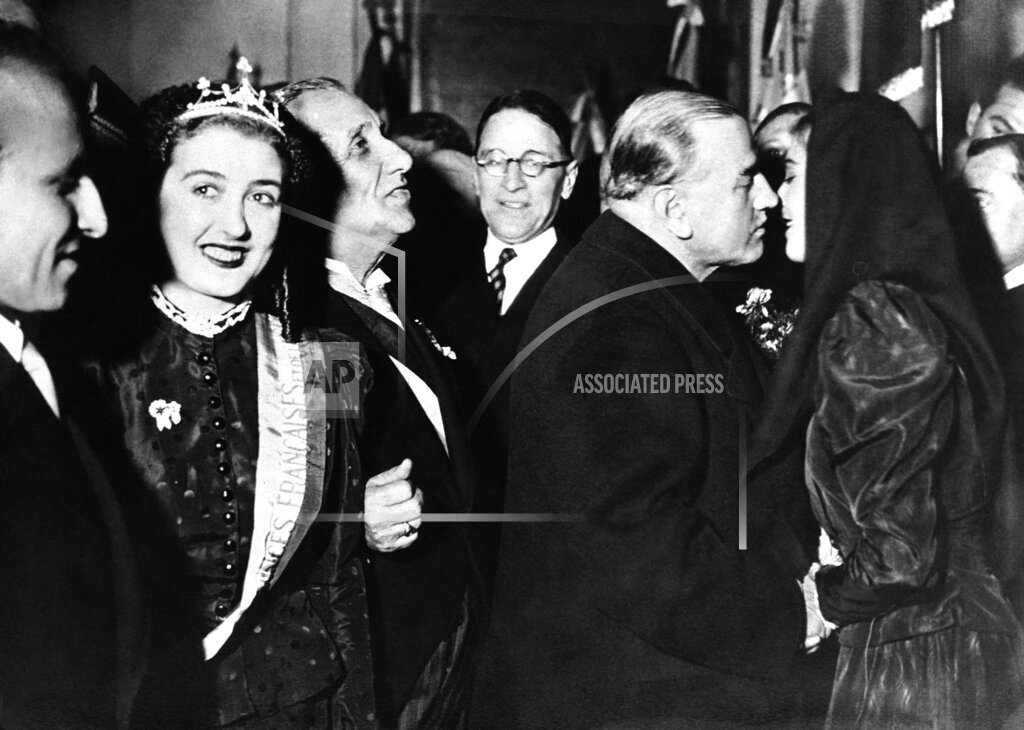
Premier Edouard Daladier of France circled the island of Corsica with a fleet of warships today. The trip was a symbolic warning to Premier Mussolini of Italy that France is prepared to fight to keep her empire. Daladier addressed throngs in Ajaccio and Bastia. In both places thousands of Corsicans made no attempt to conceal their idea of the object of the trip. They greeted the premier with shouts of “Mussolini au poteau!” [“Mussolini to the gallows!”] and then sent him off with the chant ringing in his ears. Just before he left Bastia for Tunisia, Daladier cried to the citizens: “We prefer death to servitude.”
At Ajaccio in the morning, he had said that his trip had been planned to touch there and then to make a circle back around the island as a guarantee that Corsica, a department of France, had nothing to fear for the future. “France does not need to be aggressive or menacing.” Daladier said. “She has no need to raise her voice. She must be strong; she is, and that is what I have come to tell you now while this squadron circles your island.” He referred to his convoying fleet of warships as an “image” of France’s strength. “While this squadron circles your island,” he said, “I wish every farmer and every fisherman seeing it pass to return to his home with the calm of one who knows security.”
At least eighteen death sentences are expected to be pronounced in Nazi Germany’s “biggest treason trial” which opens tomorrow before the Peoples’ Court in Berlin. The defendants are Ernst Niekisch, former right-wing publisher, twenty of his close associates, and many others. They are charged with having organized “a terrorist organization aiming at the murder of leading men of the regime.”
In addition to the twenty-one accused ring leaders, more than one hundred persons are involved in the treason plot. Heavy prison terms are expected to be passed on the latter. At tomorrow’s court session Niekisch and two former Socialists will be tried for publishing and distributing treasonable leaflets “grossly insulting” Reichsführer Hitler and his lieutenants. Thousands of these leaflets were distributed throughout the country by the Niekisch organization, which included extreme rightists, former democrats, Socialists, and communists. Niekisch, who is 49 years old, called Hitler a “German misfortune” in a book which he wrote. He was arrested last March.
German industry is operating at capacity, but the stock market is depressed.
Joseph Goebbels states that world pressure will not change the German attitude toward Jews.
All women under 25 years of age who are gainfully employed in Germany henceforth will be conscripted for a period of one year as farm hands or to help in households which have many children by a decree published today. It is estimated that an average of 400,000 young women thus will be conscripted annually. A similar regulation providing for the conscription of girls up to 25 years of age has been in force, but restricted to stenographers and girls employed in certain trades. Now all trades are affected in an attempt to counteract the drift of the rural population to the big cities and also to provide servants and nurses for families. Today’s order did not mention pay. Under the previous voluntary system girls received 20 pfennigs (8 cents) daily spending money in addition to board and lodging.
Thousands danced at Britain’s Piccadilly Square on New Year; some carried black coffins with the lettering: “He did not get winter relief.”
The British Chief of Naval Staff called for a suitable coastal escort vessel capable of being fitted for minesweeping.
Czechoslovakian statesmen share a “bloodless revolution” plan.
Former Polish premier Wladislas Sikorski predicts that Western democracies will not remain neutral if Germany attacks Russia.
Five dismissed operatives of NKVD — commissariat of internal affairs — of the Moldavian autonomous republic were found guilty and were sentenced to be shot at their trial at Kiev, it was disclosed today. The five were tried on charges of forcing “confessions” of counter revolutionary activities from innocent persons by criminal means. The trial ended December 31, and the death sentences probably have been carried out. Before sentence was pronounced the five admitted their guilt, but asked the court to spare their lives. Ten men appeared as prosecution witnesses. In his speech asking the death sentences the prosecutor said: “This crime is particularly heinous because it sullied the honorable name of Chekists (agents of the political police) with contemptible deeds. These defendants must not get away with it.”
The 76th Congress will meet at noon tomorrow with greatly increased Republican strength which, leaders in both parties agreed, may modify rubber stamp New Deal legislation. The first action of the lower house after roll call will be the reelection of Speaker William B. Bankhead of Alabama. A caucus of Democratic House members decided on his reelection today. A Republican caucus tonight chose Joseph W. Martin Jr. (Massachusetts) as candidate for speaker, which means he will be the house minority leader. After his selection Martin said the country looks to the rejuvenated Republican Party to restore Congress to its position as an independent branch of government instead of a body subservient to the administration. A similar anti-rubber stamp idea was voiced by Speaker Bankhead, who said in a radio address his party could not afford to overlook the result of the last election, intimating that Democratic congressmen no longer pass legislation at the President’s bidding.
An overall review of the Works Progress Administration programs is being conducted by Harry L. Hopkins. Curtailing of the WPA may allow more direct relief needs to be met.
New Deal crop plans are under review.
The National Cooperative Milk Products Federation is dissatisfied with the British and Canadian trade pact, calling Uncle Sam “out-traded.”
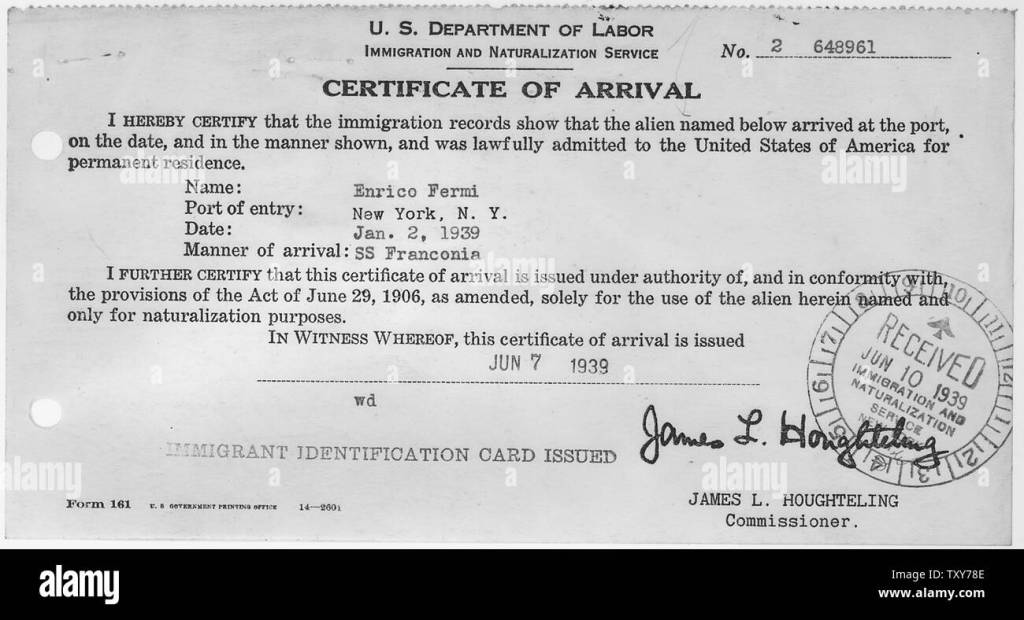
Professor Enrico Fermi, 37-year-old Italian scientist and 1938 Nobel prize winner in physics, arrived in New York on the Cunard White Star liner Franconia today to teach at Columbia University. He would not discuss reports that he intended to remain in this country permanently.
Hormone extraction is hoped to help premature babies survive.
Scientists state that brain waves are as individual as fingerprints.
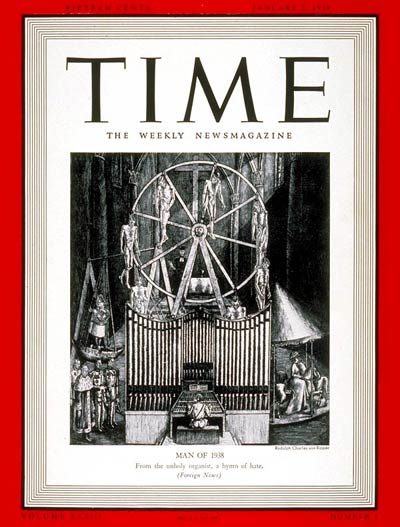
TIME magazine of New York publishes a glowing report of Third Reich Germany and names Hitler “Man of the Year.”
“Rebecca” by Daphne du Maurier tops best-seller lists.
The American Chess Federation championship ends in deadlock.
Two American publishers announce plans to release an unabridged edition of Adolf Hitler’s “Mein Kampf.”
The champion racehorse Seabiscuit is back in training.
5th Sun Bowl, El Paso, Texas: Utah 26, New Mexico 0. The Utes dominated from the start, scoring three first-half touchdowns, with a Tom Pace touchdown run and two Ray Peterson touchdowns, including a 1-yard run on fourth-down. In the second half, New Mexico had numerous opportunities to close the gap following Utah turnovers but their aerial attack couldn’t capitalize, being held to 59 yards passing and four interceptions, not even reaching Utah’s 40 the whole game. Utah, on the other hand, racked up 366 yards rushing, and outgained the Lobos 384–212, adding in a Clarance Gehrke touchdown late to make the final score 26—0, the first ever shutout in Sun Bowl history.
5th Sugar Bowl, New Orleans, Louisiana: Texas Christian 15, Carnegie Tech 7. TCU scored the first with a Connie Sparks touchdown run, but O’Brien’s kick missed, so they were only up 6—0. Carnegie stormed back with a George Muha touchdown catch from Pete Moroz. Carnegie led 7—6 going into halftime, the first time TCU had trailed all season. TCU rallied back with a Durwood Horner touchdown catch from O’Brien, who missed the extra point once again. But after Carnegie punted the ball back, TCU drove to Carnegie’s 1-yard line, where they were stuffed as O’Brien set up to try a short field goal, having missed two PAT’s earlier. But this time he made the field goal, increasing the lead to 15—7 with seven minutes remaining. Carnegie almost scored immediately when Muha returned the kickoff to TCU’s 21-yard line, but O’Brien intercepted Carnegie’s pass as TCU ran the clock down without having to score again, clinching TCU’s first undefeated season and their second national championship in three years. It was their last bowl win until 1957. O’Brien went 17 for 28 and threw for 225 yards and Ki Aldrich had 19 tackles.
3rd Cotton Bowl, Dallas, Texas: Saint Mary’s (California) 20, Texas Tech 13. Texas Tech was undefeated and ranked eleventh in the final AP poll (released in early December). Sportswriters had tagged the California-based Gaels as a “Cinderella” team, due to their tawdry 5–2 record, though the two blemishes were by narrow margins to ranked teams on the road. It was the first bowl game for unranked St. Mary’s and the second for Texas Tech, which played in the previous season’s Sun Bowl. Texas Tech committed eight turnovers in the game; five interceptions and three fumbles. Entering the fourth quarter, the Gaels led 20—0 with a touchdown scored in each quarter; runs by Ed Heffernan and Michael Klotovich in the first half and Whitey Smith’s interception return in the third quarter. Texas Tech scored twice in the fourth quarter on touchdown catches by Elmer Tarbox and E.J. McKnight from Gene Barnett. The extra point on the second score was blocked and the score was 20—13. Tech nearly tied the game when George Webb caught a pass from Barnett, heading for daylight until Lou Rimassa stopped him in St. Mary’s territory. But Tech could only advance to St. Mary’s 15-yard line and they failed to score; St. Mary’s held on to win in one of the biggest upsets in college football history.
5th Orange Bowl, Miami, Florida: Tennessee 17, Oklahoma 0. Tennessee’s Volunteers crowned their flawless 1938 record with a bruising 17—0 victory over Oklahoma today before an overflow Orange Bowl crowd of 32,191. Led by a whirling dervish named George Cafego and a jackrabbit runner dubbed Babe Wood, Tennessee ripped through Oklahoma’s vaunted defense for two touchdowns and Captain Bowden Wyatt kicked a field goal as the Sooners failed in the last minute to complete their only serious scoring threat. It was a rough-and-tumble duel, interspersed with frequent penalties and fumbles. The outweighed Vols showed they could more than take it in that kind of warfare. They pounced on a break to move 27 yards in the first quarter, Bob Foxx scooting through the line from eight yards out, capitalized on a fumble to get the field goal in the second period and then proved they could start from scratch. Wood personally conducted a 73-yard touchdown sortie, scoring from the 19-yard line on an end run behind magnificent blocking.
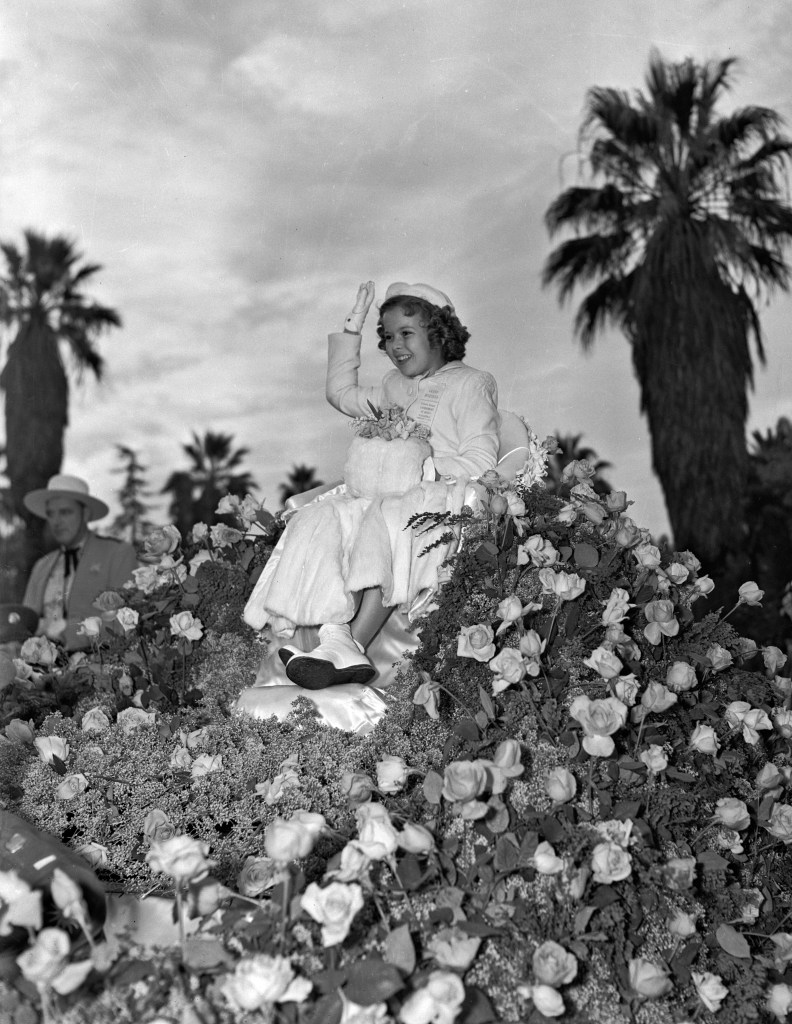
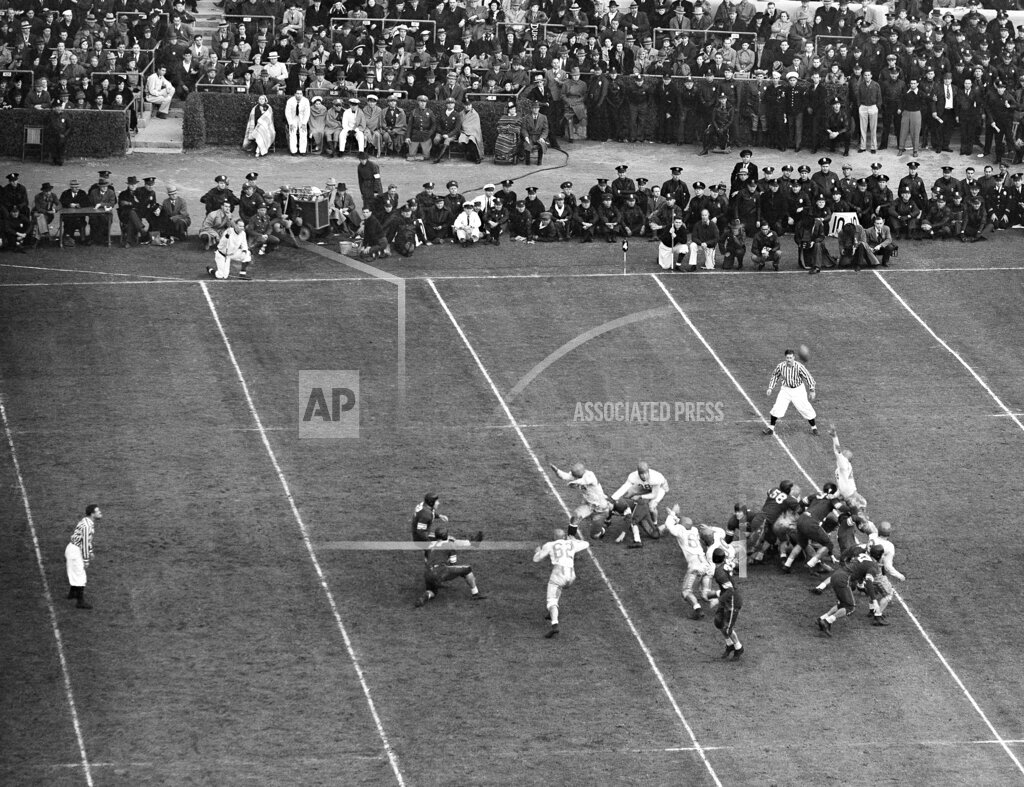
25th Rose Bowl: Southern California 7, Duke 3. Scoreless after three quarters, Duke gained the lead with a 23-yard field goal by Tony Ruffa early in the fourth. However, backup quarterback Doyle Nave of the Trojans completed four straight passes to sophomore end “Antelope” Al Krueger, who outmaneuvered Eric “The Red” Tipton and scored the winning touchdown with one minute remaining. Krueger’s touchdown marked the first points scored against Duke during the season. For his performance in the game, Krueger was inducted into the Rose Bowl Hall of Fame in the class of 1995. The 50th Tournament of Roses Parade preceded the game in Pasadena, with ten-year-old Grand Marshal Shirley Temple (the youngest) presiding over the parade and the game.
Reconstruction of seized north China will cost Japan billions of yen.
Born:
Jim Bakker, American televangelist (Assemblies of God, “The PTL Club”) and convicted fraud, in Muskegon, Michigan.
Naval Construction:
The Kriegsmarine (German Navy) Type IIC U-boats U-62 and U-63 are laid down by Deutsche Werke AG, Kiel (werk 261 and 262).
The Kriegsmarine (German Navy) Type 1936A destroyer Z24 is laid down by AG Weser (Deschimag), Bremen (werk 958).
The Royal Navy Tribal-class destroyer HMS Maori (L 24, later F 24, finally G 24) is commissioned. Her first commanding officer is Commander Godfrey Noel Brewer, RN.
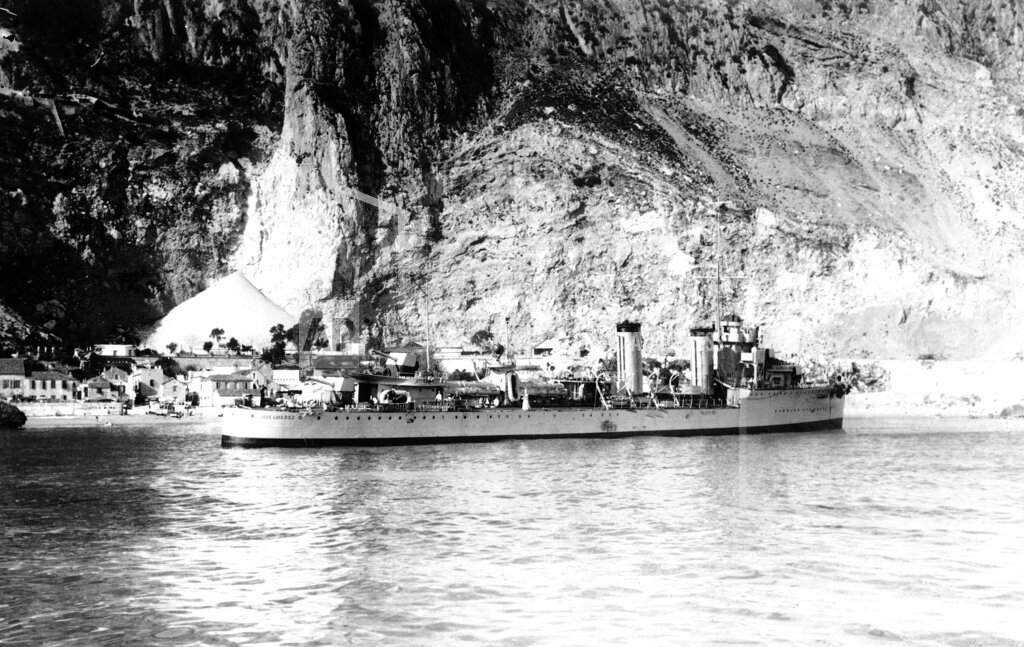

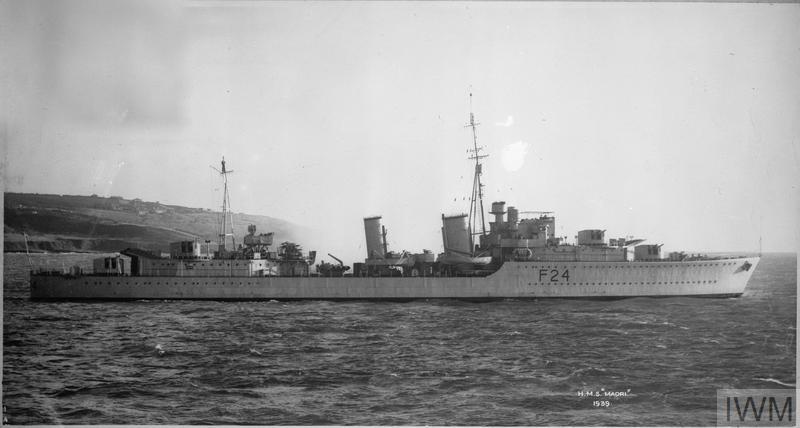
Maori joined HMS Cossack’s division in January 1939 and joined the Mediterranean Fleet. She and the other Tribal-class destroyers did convoy escort duties, and Maori then returned to Britain in October. Until April 1940 she patrolled the North Sea and also took part in the Norwegian Campaign. In June she sailed to Iceland looking for German warships and also served briefly in the Faroe Islands.
In May 1941, she participated in the pursuit and destruction of the German battleship Bismarck. While escorting Convoy WS.8B to the Middle East, Maori, along with the destroyers Cossack, Sikh and Zulu broke off on 26 May and headed towards the area where Bismarck had been reported. They found her that evening and made several torpedo attacks in the evening and into the next morning. No hits were scored but they kept her gunners from getting any sleep, making it easier for the battleships to attack her the next morning. Maori then rescued some of the survivors from Bismarck after the battleship sank.
She served with the 14th Destroyer Flotilla during the Battle of Cape Bon in December 1941. Maori, commanded by Commander R. E. Courage, RN, was attacked by German aircraft and sunk at her moorings in the Malta Grand Harbour on 12 February 1942, with the loss of one of her crew. HMS Maori was attacked from the air and a bomb found its way into her engine and gear room. The Tribal blew up and sank, still moored at the emergency destroyer buoy at the entrance to Dockyard Creek. Crews from other ships helped in the rescue work as blazing oil spread across the water. Since off-duty personnel customarily slept ashore in shelters while in Malta, only one man was killed in the attack. At daybreak, Maori’s forepart still showed above the water and the wreck seriously interfered with shipping movements but it was decided to leave her there for the time being. Her ‘A’ and ‘B’ guns were still in good order so it was suggested that those guns be mounted on the Ricassoli Breakwater for the Army’s use. Bombs still fell on Maori during succeeding air attacks. By the end of 1942, the Admiralty decided that her wreck should be lifted, moved out of Grand Harbour and set down off Sliema. On 5 July 1945, Maori’s hulk was scuttled finally in deep water far away from the harbor.
Battle Honours: NORWAY 1940 – BISMARCK Action – CAPE BON 1941 – ATLANTIC 1941 – MALTA CONVOYS 1941-42
(Imperial War Museums, © IWM FL 15085)
 History Diaries