The greatest battle of the Spanish civil war rages as the Catalonian Offensive continues. Powerful rebel armies blasted their way yard by yard toward strategic Artesa today, but Spanish government sources described that snail-like progress as a victory for the Barcelona regime. The government also claimed an “outstanding victory” in the northern part of the sector below Lérida where rebels said Italian troops were operating. Government reports maintained that in recent fighting the Italian Littorio Division almost was annihilated. Rebel dispatches reported that Cubells, six miles southwest of Artesa and on the way through the heart of a network of roads called “the key to Catalonia” in northeastern Spain, had crumbled before a series of furious attacks on New Year’s Eve. But government sources flatly denied the reports. They said government troops still clung to Cubells’ battered fortifications.
The reports from Barcelona, the Spanish government capital and ultimate objective of the current campaign that started ten days ago, declared the Italian unit was “temporarily retired at a moment when it was about to be put entirely out of the fight.” Rebel dispatches said their southern wing today occupied Palma de Ebro, on the southern edge of their drive, and also moved ahead from Pobla de Granadella to take Juncosa, three miles to the north.
A report from Saragossa was that the rebels were continuing their advance in the east Seros sector and were mopping up the area surrounding Granadella, using a Navarrese legionary corps that included 27,000 Spaniards and members of the Littorio Division of Italians. On the Valencia front after four months of almost “cease-fire” Franco suddenly smashed through loyalist positions at Val de Uxo, twelve miles north of Sagunto, and rushed the Valencia forces out of a series of important positions, including CastleVal de Uxo, which was held by the loyalists since the war began. The Franco air force continued its raids on Barcelona with a New Year’s Day bombing at 7 p. m. which, government dispatches said, was feared to have added many victims to the fifty killed and eighty wounded yesterday. General Franco’s annual welcome 10 the new year — shells fired into war torn Madrid — boomed an accompaniment to striking clocks when 1939 arrived. Rebel gunners fired one shot for each stroke of the clock, hitting widely separated points, but causing no casualties.
Prime Minister Neville Chamberlain and Foreign Secretary Lord Halifax conducted an official visit to Rome to confer with Italian Premier Benito Mussolini. The British leaders hoped to find some leverage with the Italians to maintain the status quo in the Mediterranean, but the visit had few tangible results.
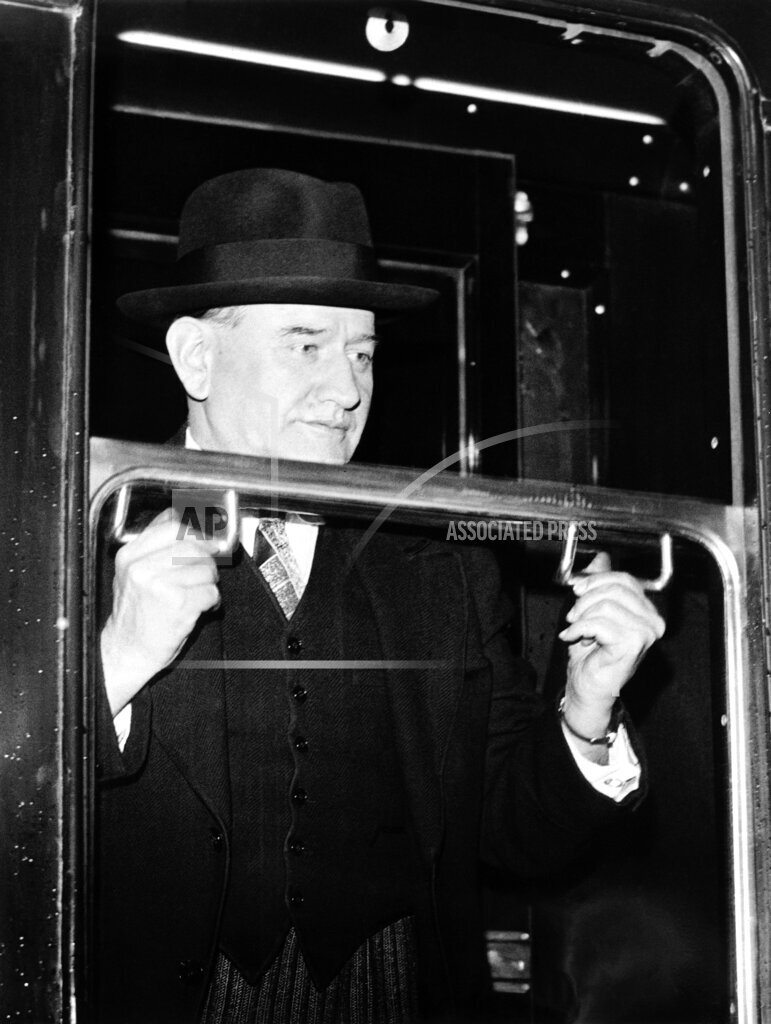
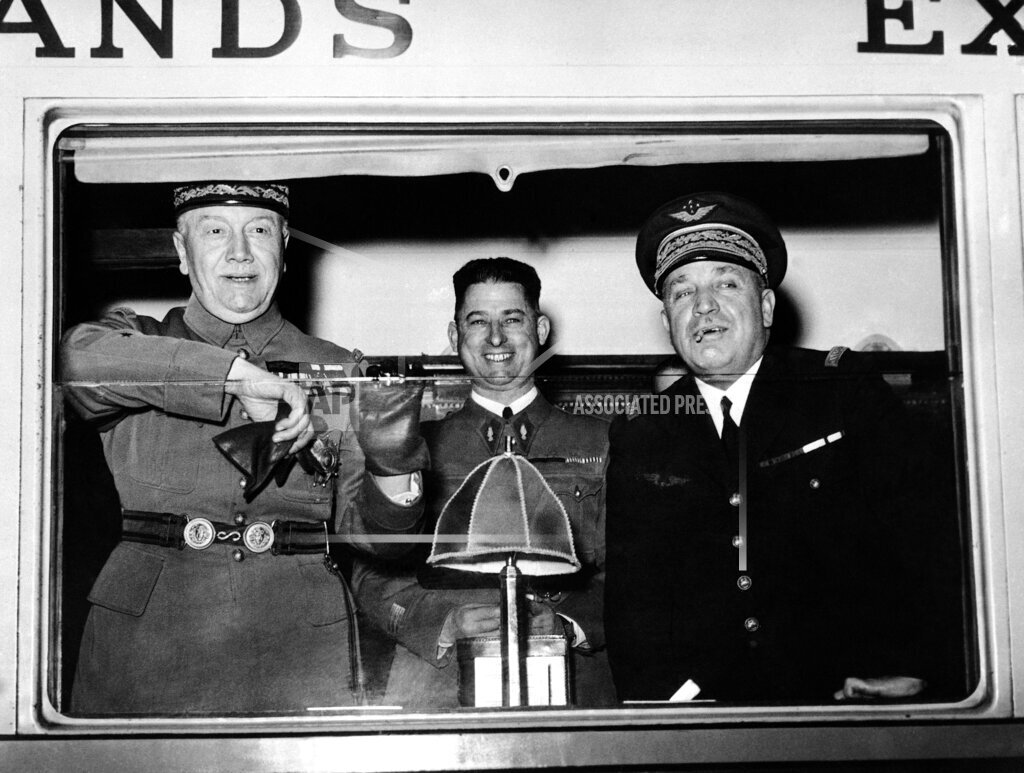
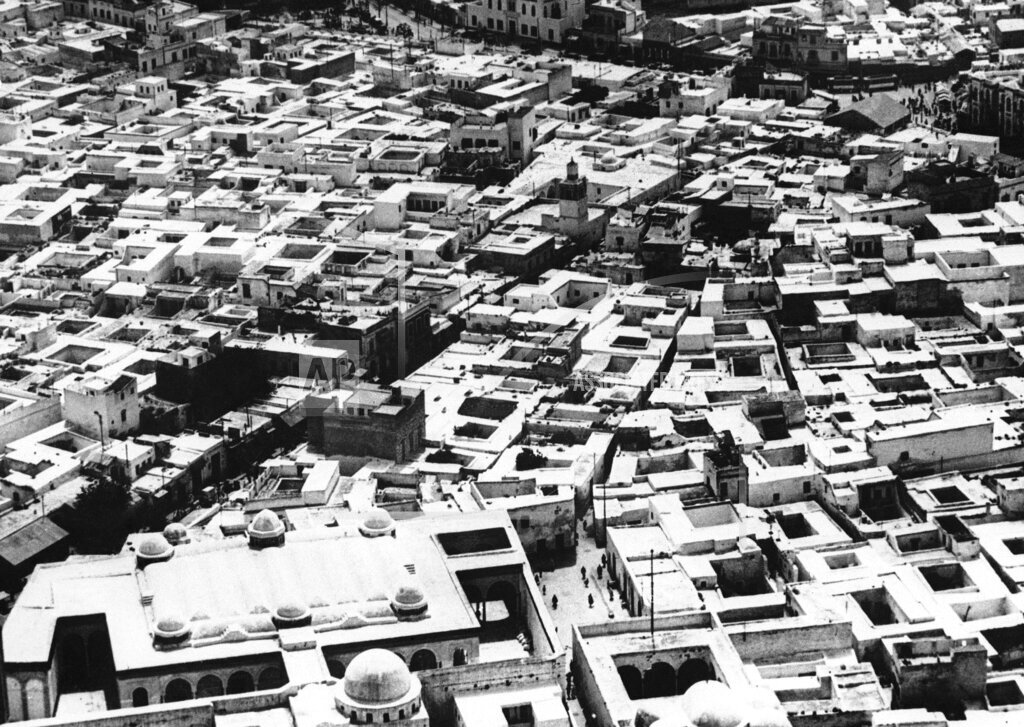
Premier Édouard Daladier today departed to proclaim France’s firm hold on her empire after intervening personally in parliament to settle conflicts over the 1939 budget. Delayed two hours by the debate in the Chamber of Deputies, Daladier finally entrained at noon for Toulon. There he boarded the cruiser Foch which sailed at 11 p.m. to carry him to Corsica and Tunisia, both mentioned in Italian agitation for French territory.
When the premier left, parliament had not enacted the budget, but both chamber and senate completed the legislative action in quick succession a few hours later. Final ordinary budget figures were established at $1,746,000,000 in estimated receipts, as against $1,745,000,000 in expenditures. Parliament adjourned until January 10. Daladier put the question of confidence to the chamber five times, risking the life of his government to force the deputies into line in the New Year’s Day debate. Rather than precipitate a cabinet crisis, the chamber accepted the government’s ruling on two major points. “Hatchet committee” decrees for economy cuts were authorized until September 30, 1939. The application of an article requiring banks to declare accounts to the government for taxation was postponed until 1940.
French Official Visit to Corsica and Tunisia: Premier Édouard Daladier of France conducted an official visit to Corsica and Tunisia to demonstrate France’s claims on these territories in the face of Italian demands. The warm Tunisian reception for the French premier demonstrated that the Arabs had little enthusiasm to exchange French rule for Italian colonization. Tensions between the French and Italian governments remained high as the French refused to discuss any cessation of French territory to the Italians.
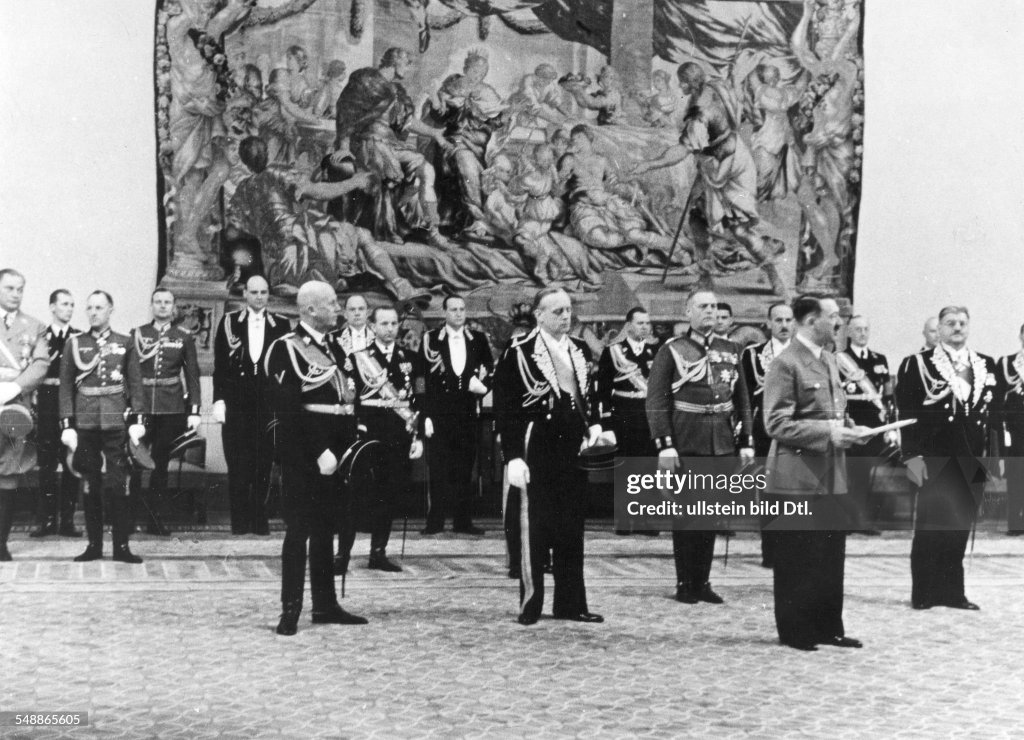
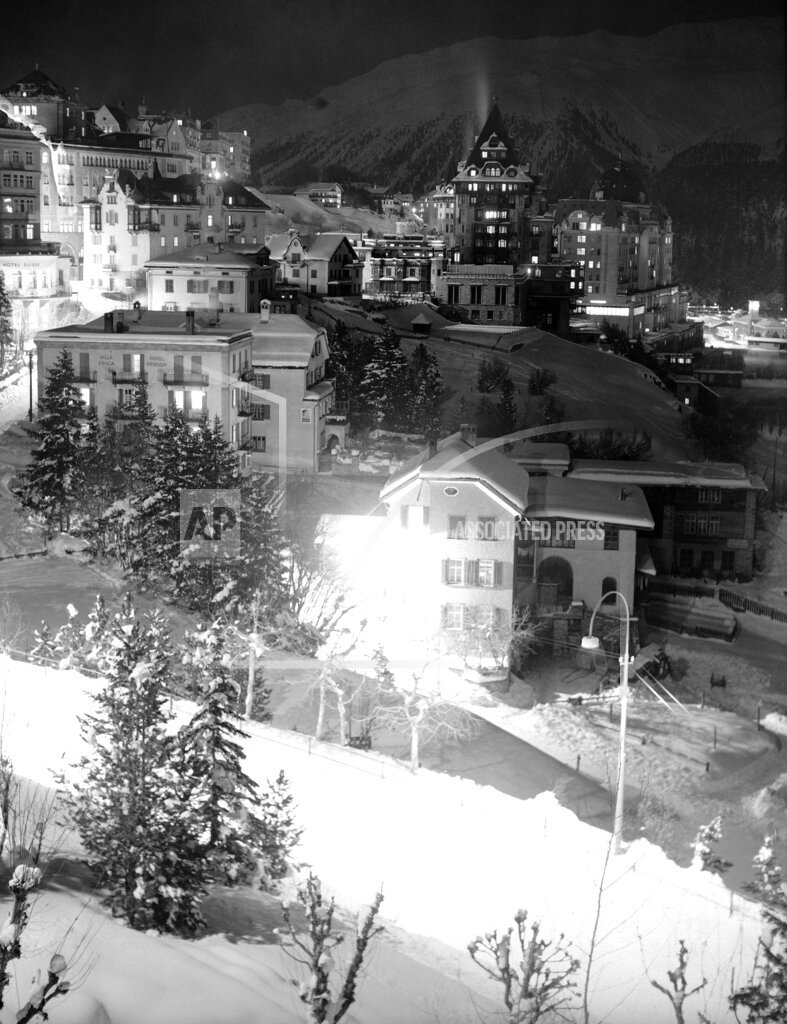
Adolf Hitler saw the new year in at his Obersalzberg retreat in the Bavarian mountains early today. Natives boomed a traditional half-hour cannon salute in his honor in front of the Berghof. They greeted the Führer promptly at midnight with a salvo and singing of national hymns.
New German laws ostracizing Jews are effective today. A decree is published eliminating Jews from the German economy. Jewish shopkeepers and artisans are banned from any commercial activity.
An arms factory sells controlling interest to the Czechoslovakian government for $10.3 million; the country will manufacture arms for Germany.
The Ahnenerbe is officially incorporated into the SS and its leaders absorbed into Himmler’s personal staff. At that time, it has 50 branches under the direction of Professor Wurst, an expert on ancient sacred texts who had taught Sanskrit at Munich University.
Propaganda Minister Joseph Goebbels calls 1938 the year of the “Great German Reich.”
The Fallschirm-Infanterie Battalion (army paratrooper battalion) is officially transferred to the Luftwaffe as the 2nd Battalion of the 1st Parachute Regiment, II/FJR 1.
Britain attempts to find homes for refugee German and Polish children; Germany wishes to remove 150,000 young Jews from the country.
The International Peace Conference of Women Leaders postpones its conference for one year.
Britain intends to terminate trade pact with Russia.
There are over 1.8 million unemployed in Britain.
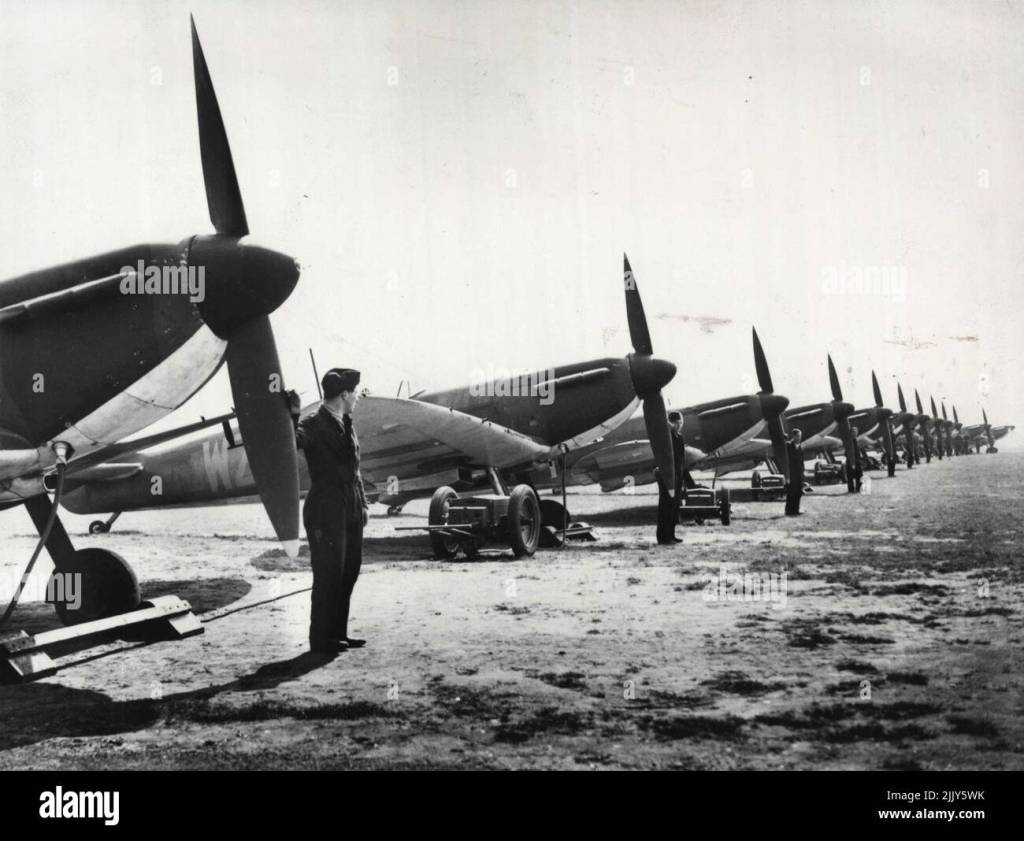
The RAF enters the year with 49 Spitfires. They still lack gun heating.
The RAF’s 611 (West Lancashire) Squadron Royal Auxiliary Air Force is re-designated as a fighter squadron but equipped with Hawker Hinds.
With the capital filling with legislators tonight for the opening of the 76th Congress on Tuesday, President Roosevelt announced the appointment of former Governor Frank Murphy of Michigan to succeed Homer S. Cummings as attorney general. Mr. Murphy will be sworn in tomorrow noon at a White House ceremony attended by the President. Supreme Court Justice Stanley F. Reed will administer the oath. The former governor, defeated for reelection for his toleration of sitdown strikes and therefore to a peculiar degree a symbol of the popular repudiation of the New Deal in the November elections, thus receives a recess appointment by a margin of 24 hours and is not required to await confirmation by the Senate before entering upon his duties. Once Congress is in session, however, his tenure will be subject to Senate approval or rejection.
There is considerable opposition in the Senate to confirmation of both Mr. Murphy and Harry L. Hopkins, recently named secretary of commerce. Mr. Murphy will be called before the Senate Judiciary Committee to explain his attitude toward sitdown strikes just as Mr. Hopkins will be asked to explain to the Commerce Committee his reputed philosophy of “spend and spend, tax and tax, and elect and elect,” which he has disowned. Eventually, however, both appointees will be confirmed. President Roosevelt did not decide definitely to appoint Mr. Murphy until he had sought and obtained from Vice President Garner assurance that the Garner influence would not be exerted in opposition to the appointee. This was the culminating evidence of the emergence of the Vice President as the boss of the new Congress in consequence of the election results.
Nearly half of federal funds are spent on job recovery; still 11 million people are unemployed.
Congress is to review criticism of New Deal farming programs.
Political leaders request a reduction in WPA funding.
A man denied a higher pension spends his last 21 cents to buy rope to hang himself.
President Franklin Roosevelt and the new Congress must negotiate a revival of the fourth New Deal.
Lieutenant Governor T. Frank Hayes is indicted for defrauding Waterbury, Connecticut, of $1 million.
First Lady Eleanor Roosevelt asks the nation to heed the voice of youth.
Congress considers broadening Social Security; making lynching a federal crime; and increasing veteran pensions.
The nineteen men rescued this morning from the flaming No. 6 mine of the Crescent Coal company at Centenary, five miles west of Clinton, Indiana, are recovering tonight in their homes. They were brought to the surface at 6 a.m. after being trapped 168 feet below ground for seventeen hours. One man died in the smoke and gas filled workings before rescue squads could reach the trapped men. This was the second fatality in the mine’s twenty-six years of operation, according to Mrs. Paul Thompson, part owner of the mine.
The American Institute of Architects predicts an increase in building.
The largest mass flight of “flivver” planes is set to begin.
Record lows are noted in infant mortality and deaths of mothers in childbirth.
Vannevar Bush became president of the Carnegie Institution for Science in Washington, D.C.
The U.S. Army cancels its participation in a war games exercise in Puerto Rico and the Caribbean, citing cost and time factors.
The Department of Commerce tests a new fuel-efficient diesel aircraft engine.
Newsreel editors set a self-regulatory code to avoid offensive material.
A Brooklyn museum exhibit features Hans Holbein and Pablo Picasso.
In a garage in Palo Alto, California, the Hewlett-Packard partnership was formed and a coin toss determined the order of the company name.
The eighth Pan-American Conference sets goals: solidarity against aggression, peace, and reduced trade barriers.
First Conference of American National Committees on Intellectual Cooperation: To promote intellectual cooperation in Latin America, the League of Nations hosted a conference in Santiago, Chile.
Unofficial Chinese quarters in Chungking, the Chinese central government capital, reported tonight that Generalissimo Chiang Kai-shek had arrested 200 government party and military leaders in a swift purge of the followers of former Premier Wang Ching-wei. The generalissimo’s action was reportedly directed against members of Wang’s”peace party” and others allegedly only lukewarm in support of China’s cause against Japan.
Ex-Premier Wang was expelled from the Kuomintang (Nationalist) party and relieved of all official positions for “deserting his post and suing for peace in contradiction to national policy.” The action was taken by the standing committee of the central executive committee of the Kuomintang at a special session at Chungking. It was reported he had secretly attempted to gain the support of Szechuan and Yunnan province military leaders for his program of making peace with Japan. He also was said to have communicated repeatedly with General Wu Pei-fu, reported to be the choice of the Japanese general and political manipulator, Kenji Doihara, to head a new Chinese central government. Generalissimo Chiang Kai-shek was believed to be thoroughly aroused and determined to smash the peace clique by a determined cleanup.
Military experts note Japanese “achievement” and China’s “seeming ineptitude” in a review of Sino-Japanese hostilities. Experts see great improvement in Japanese bombing abilities.
Sydney, Australia, swelters in 45 ˚C (113 ˚F) heat, a record for the city.
Born:
Bud Whitehead, AFL safety and cornerback (AFL Champions-Chargers, 1963; San Diego Chargers), in Marianna, Florida.
Luther Hayes, AFL end (San Diego Chargers), in San Diego, California (d. 2017).
Phil Read, English motorcycle racer (World Championship 125cc 1968, 250cc 1964-65, 68, 71 & 500 cc 1973-74; Formula TT 1977), in Luton, England, United Kingdom (d. 2022).
Michèle Mercier, French actress (“Angelique”, “Marquise des Anges”), in Nice, France.
Naval Construction:
The Marine Nationale (French Navy) Agosta-class submarine Ouessant is commissioned.
The Marine Nationale (French Navy) Agosta-class submarine Sidi Ferruch is commissioned.
 History Diaries