The Spanish rebel offensive against Catalonia was reported tonight to have broken through the government central front at Balaguer and rolled back the right flank through Granadella. The day’s most important and violent action was at the Balaguer bridgehead, in a vital zone on the Segre River front about fifteen miles northeast of Lérida. There, the rebels said, Generalissimo Francisco Franco’s planes, tanks and men finally battered a breach in the fortified line to which government troops had clung stubbornly against all attacks since the rebels’ general offensive started on December 23. The width of the gap was not stated. A government communiqué acknowledged that the rebels had occupied the Montero heights of the Balaguer sector after a series of “costly ” infantry attacks. On two flanks, the government communiqué said, the rebel offensive was held at a standstill, with the southern battle raging around Bobera, just southwest of Granadella.
Lloyds’ agent at Gibraltar reported today that an SOS had been received from the 4,236-ton British steamer Marionga, which read: “Bombed. Crew took to boats.” The steamer’s position was between Castellon, on Spain’s eastern coast, and the Balearic Islands, where Palma, on Mallorca, is a big Spanish rebel air base. The French vessel Oued Yquem steamed to the rescue of the Marionga. The Marionga formerly was of Greek registry, named at one time Grelstine and later Eddystone. carried a crew of about thirty. The freighter left Oran, Algeria, on Saturday, and her owners, Neill and Pandelis of London, said she was carrying a general cargo to Barcelona and had an observer for the nonintervention committee aboard.
More than 1,500 German refugee children are now in Britain and arrangements are complete to bring 600 more from the Polish border area of Zbąszyń.
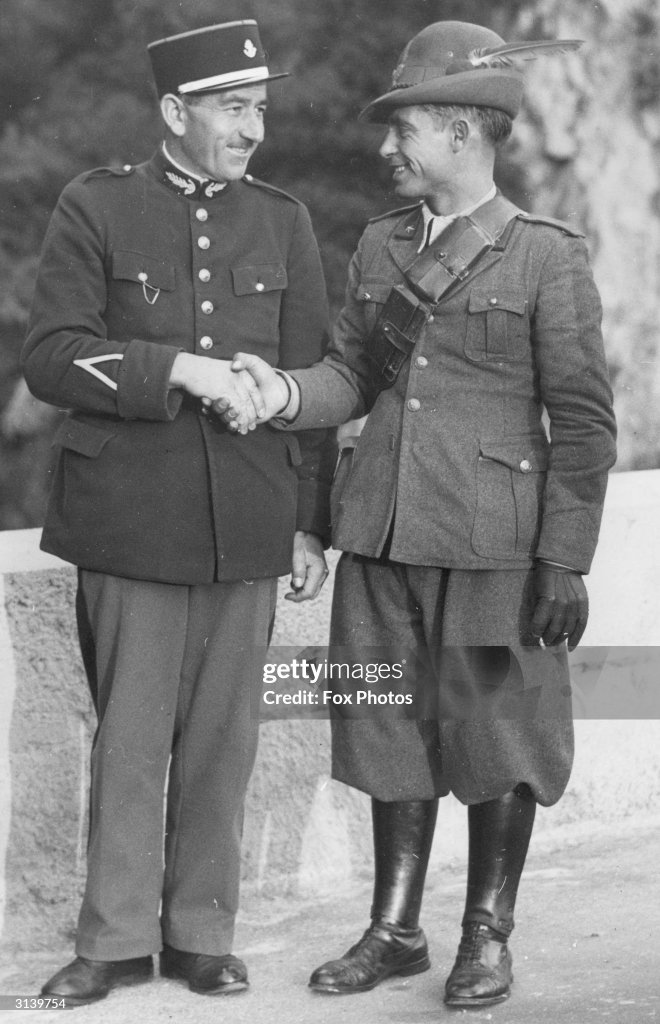
The British government tonight appeared to be making clear to Premier Mussolini that it has no intention of furthering Italy’s claims to African territories at the expense of the French unless Italian troops are withdrawn from Spain. Considerable alarm has been felt here by the disclosure that nine Italian divisions are operating in the present offensive of Generalissimo Francisco Franco, rebel commander-in-chief. British officials do not believe there is anything particularly alarming in the row between the Italians and the French. But they apparently hope that the situation can be used to put pressure on Mussolini to carry out his promises to get out of Spain. The British, it was indicated, are giving Mussolini to understand that Prime Minister Neville Chamberlain I will not act as mediator in the Italian-French dispute when he goes to Rome on January 11. They also are letting it be known that Il Duce will have no chance to play the game with regard to France’s African empire which Adolf Hitler played in central Europe. Chamberlain presumably is telling Italy she had better drop the theatrical demonstrations and enter direct negotiations.
For an affair with the beautiful wife of one of Germany’s leading motion picture actors, Dr. Paul Joseph Goebbels, Nazi minister of propaganda, was beaten almost to death seven days ago, it was reported tonight. Since December 22 Goebbels has been confined in a closely guarded Berlin clinic, his head cut and bruised, both eyes blackened, and with at least one of his teeth missing. The scandal has caused his wife, Magda Goebbels, official hostess of Reichsführer Adolf Hitler at most state functions, to prepare to go to Denmark. It was reported she plans to sue for divorce.
Goebbels was “ordered to bed” a week ago today because of an attack of acute intestinal influenza, DNB, the official German news agency, announced. His Christmas activities, DNB said, had been canceled. But Goebbels was taken to the hospital, it was learned, because friends of Gustav Froelich, actor husband of Lida Baarova, the actress, surprised him in the Froelichs’ apartment and there sought to avenge the imprisonment of Froelich in a concentration camp so that Goebbels might make love to the Czech beauty. Only the intervention of Goebbels’ chauffeur, it was said, saved the cabinet member’s life. Other sources denied Froelich had been placed in a concentration camp. Some residents of Berlin said they saw him on the streets this month. The amazing story, of which no word dare be uttered in Germany, has almost official confirmation. Hitler’s displeasure is indicated by the fact that all films in which Miss Baarova appears have been withdrawn without explanation. Goebbels, according to rumors, previously had sought to elevate her to stardom.
A scandal hit the French film industry when the bankrupt Pathé studio obtained warrants charging Bernard Natan and three other former associates of the company with fraud and conspiracy. The alleged embezzlement was estimated to total at least 140 million francs.
Greek police arrest several prominent citizens, and charge them with trying to arrange a coup d’état. Police say a foreign power was involved in the plot, and promised territory for its help.
The semi-official Polish newspaper Gazeta Polska today reported a new border incident in the Teschen territory, which Poland acquired from dismembered Czecho-Slovakia. It charged that hand grenades and machine guns fired from the Czecho-Slovak side gravely wounded two Polish frontier guards and a Polish policeman at Freistadt, on the Polish side of the frontier.
British representatives arrive in Berlin for talks with the Reich on amending naval treaties.
Learning that France will not honor a promise for full independence in 1939, Syria’s Independent Nationalist Party demands that the Syrian Premier ask for independence immediately.
Iran cuts off diplomatic relations with France, offended over newspaper articles that they feel mock the Shah.
The U.S. Chargé d’affaires in Germany delivers a note asking if U.S. citizens are included in the December 23 decree, barring Jews from management.
President Roosevelt made it clear on the day he entered the White House, March 4, 1933, that he would not hesitate to seek dictatorial power if Congress failed to enact the measures he deemed necessary for the nation’s welfare. In his first inaugural address he said the necessity for immediate action might call for a “temporary departure” from “the normal balance of executive and legislative authority.” In the event Congress failed to deal satisfactorily with specific proposals, the President said he would demand “a broad executive power to wage war against the emergency, as great as the power that would be given to me if we were in fact invaded by a foreign foe.”
In his annual message to Congress on January 3, 1936, the President gave his opponents an opportunity to charge that his administration was almost admittedly a dictatorship. He said his administration had built up “new instruments of public power,” which, in other hands, “would provide shackles for the liberties of the people.” The 76th Congress, which convenes next Tuesday, will have an opportunity to consider and perhaps repossess some of these “new instruments of public power,” including the so-called emergency powers which can be exercised entirely at the discretion of the President. These are legislative powers unlike any authority ever before vested in an American President. Under them, the President may issue proclamations having the same force of law as the decrees of the ancient Roman emperors or the modern European dictators. Under the Thomas amendment to the Agricultural Adjustment Act of 1933 and the Gold Reserve Act of 1934, the President may revalue the dollar any time he chooses between limits of 50 and 60 percent of its former gold content.
Judge Cotillo’s injunction against picketing expires at midnight, so pickets from two CIO unions appear at 12 stores owned by Busch Jewelry.
Brokerage head Joseph Sisto is expelled from the New York Stock Exchange for inflating and profiting from his own stock.
Pictures of gas molecules and the smallpox virus, taken through an ultramicroscope — or electron microscope — are shown to scientists in Virginia by Dr. Vladimir Zworykin of RCA, one of the inventors of television. The electron microscope was completed in April at the University of Toronto.
Construction on the Lake Washington Floating Bridge, in Seattle, begins.
Threats that London, Paris, and Berlin — and by implication Chicago and New York — can be destroyed by aerial bombs and their populations slain wholesale were branded empty boasts today. Military authorities in Washington said practice has shown such attempts to be so costly that they are unsound. Air corps officers said studies of world war bombings and of more recent aerial bombardments in China and Spain have shown that indiscriminate aerial bombardment of civilian centers is an entirely worthless expenditure of money, bombs, and aircraft. Such indiscriminate bombing, they said, generally has stiffened resistance and had an opposite effect from that intended.
Studies of bombings during the war of 1914-18 in London and Paris, and recently in Madrid and Barcelona, Spain, and Chinese cities, have shown that civilian populations became accustomed quickly to air attacks. Instead of being terrified by bombings, civilians became enraged at the destruction caused by bombers and generally strengthened their morale. These studies also indicated that the economic results of bombing have not justified the costs of such raids. Instead, according to air corps reports, the damage done by bombardment and the numbers of killed and wounded by bombing have been far less than lurid estimates made by fiction writers and by other persons unfamiliar with the possibilities of such attacks. “There is no question,” said an army air corps officer, “that the threats of indiscriminate air attacks on London and Paris have been used to frighten civilian populations who do not know what to expect from air attacks.
At the Parliament of Science, 280 anthropologists unanimously approve a resolution stating that there is no scientific basis for theories of racial superiority.
Al Simmons moves to the National League when Boston buys him for $3,000 from Washington.
Chinese positions are shelled in Shansi, especially where the Fen joins the Yellow River.
Service on north-south lines of the Peiping-Hankow Railway is suspended to allow Japanese troop transport.
A devastating air raid on Kweilin burns and blasts large parts of the city. The American Baptist Hospital is destroyed by incendiary bombs.
Meanwhile, severe guerrilla fighting along the Tsientang River in Chekiang province southwest of Shanghai was said by Chinese to have caused 1,000 Japanese casualties. The Japanese said 254 Chinese were killed and 62 captured during a two-day drive against guerrillas around Soochow, 50 miles west of Shanghai. Another development today was the statement of a Japanese naval spokesman that the American-owned Shanghai University would not be returned to its owners, despite Tokyo’s promises to the United States, while hostilities continued in China. The spokesman said the adjoining area was being converted into a military zone, making it impossible for foreigners to enter. The property — 53 acres on the Whangpoo (Huangpu) River five miles below Shanghai — was occupied by Japanese in the 1937 campaign.
M. S. Bates, American professor of history in Nanking University, reported today that “armed chaos” existed in the Nanking region, which the Japanese occupied on December 13, 1937. “During the last year the area has been thoroughly plundered, with the process continuing; privation is common, with life maintained on a distressingly low level,” Bates said in a report of findings during a survey of crop and economic conditions in the former Chinese capital and the surrounding countryside. The investigation was made for the International Relief Committee.
The war office in Tokyo announced tonight the removal of Major General Kazumoto Machijiri as chief of its military affairs bureau on a charge of losing “important military papers.” General Machijiri, a former aide de camp of Emperor Hirohito, had held the post since October 5, 1937. Two of his assistants, a colonel and a major, were suspended on the same charge. The announcement did not disclose the time or place the documents disappeared and authorities refused to comment whether they believed the papers had been misplaced or had fallen into the hands of foreign spies.
Dow Jones Industrial Average: 153.62 (+2.17).
Born:
Jon Voight, actor (“Deliverance”, “Midnight Cowboy”), in Yonkers, New York.
Wayne Huizenga, American businessman, CEO (Waste Management, Blockbuster), and sports team owner (Miami Dolphins, Florida Panthers, Florida Marlins), born in Evergreen Park, Illinois (d. 2018).
Gianluigi Saccaro, Italian fencer (Olympic gold épée team 1960; silver épée team 1964; bronze épée 1968), in Milan, Italy (d. 2021).
Naval Construction:
The Nihon Kaigun (Imperial Japanese Navy) armed merchant cruiser Aikoku Maru (愛国丸) is laid down by the Mitsui Tamano shipyard (Tamano, Okayama Prefecture, Japan).
The Вое́нно-морско́й флот СССР (ВМФ) (Soviet Navy) Project 7U-class (Storozhevoy-class) destroyers Statny (Статный, “Stately”) and Stroyny (Стройный, “Orderly”) are laid down by Zhdanov (Leningrad, U.S.S.R.) / Yard 190.
The Kriegsmarine (German Navy) fleet tender Hela is launched by Stülckenwerft, Hamburg.
The Kriegsmarine (German Navy) Type IIC U-boat U-57 is commissioned. Her first commanding officer is Oberleutnant zur See Claus Korth.


 History Diaries