A rebel tank assault near Balaguer in Spain follows the bombing yesterday. Fighting and bombing continues at Borgas Blanca, as well as points north and south. General Francisco Franco’s grand offensive in northeastern Spain appeared tonight to have developed into two broad flanking movements designed to capture Barcelona’s outlying defense line without a frontal assault. Dispatches from the Catalonian front indicated Franco was concentrating the greatest force on the southern flank of the thirty-one-mile line which guards the main approaches to Barcelona between Balaguer and Borjas Blancas. The line is about seventy miles west of Barcelona. The flanking maneuver had been developing more slowly on the south than on the north, where the textile town of Artesa and the Balaguer bridgehead were the objects of bitter contests. The government still held Artesa, about fifteen miles northeast of Balaguer.
The rebel command announced its forces had smashed through government fortifications north of the Balaguer bridgehead. The loyalists said the rebels sent their infantry and tanks to attack in continuous waves from 1 p.m. until 7 p.m. after six hours of artillery and air bombing preparation, but government officers declared the attacks were “totally repulsed.” On the southern flank of the Catalonian battlefront, dispatches from the government side said four divisions of rebels, reported to be Italians, attacked again and again with all their force on the Castelldans sector in an attempt to reach Borjas Blancas, but were met with equal fire from government lines. The rebels struck from behind a high ridge facing bomb ruined Castelldans, twelve miles southwest of Borjas Blancas, and down the road from Cogull toward Soleras, Granadella, and Bobera.
Borjas Blancas, severely punished by aviation before the six-day-old drive began, is a deserted and ruined ghost town like Tortosa on the lower Ebro River. Castelldans, a small bleak village, is a mess of smashed masonry, timber, and wire. Today’s actions. were fought in a cold, sharp wind. An official rebel communiqué hailed a “great air victory” in which rebel planes were reported to have shot down at least twenty loyalist planes and perhaps five more. Loyalist reports said two rebel planes were downed in air battles and three more by anti-aircraft fire. The action took place above the southern battlefront. The rebels said a squadron of twenty-four fighting planes clashed with a government formation of sixty-one fighters and bombers over Alfes, a town a few miles south of Lerida. The report said machine gunners kept up a steady fire until the loyalist planes turned southeastward, taking the fight over the Valls airdrome near Tarragona.
Rumania has followed America’s example and recalled her Berlin minister, Radu T. Djuvara, for an indefinite period, it was learned today. The recall was due partly to attacks made by the German press on King Carol II of Rumania in connection with the slaying of Corneliu Zelea Codreanu, leader of the outlawed Fascist Iron Guard, and thirteen of his lieutenants. They were shot November 30 by police who reported that the Iron Guardists had tried to escape while being taken from the Rumnik-Sarat prison to Bucharest for questioning.
.
Nazi papers insinuated that Carol had ordered the shooting of the Iron Guardsmen and that he had done so under the influence of Madame Magda Lupescu, Carol’s red haired Jewish mistress. The papers soon were ordered to cease their attacks. Rumania, which suspects Germany of continuing her support of the Iron Guard, recalled the minister nevertheless. While no official German comment was available on Djuvara’s departure, Nazi circles asserted that “Djuvara will, in any case, soon be replaced by a diplomat who enjoys the confidence of the German government as well as that of King Carol. Under Djuvara’s successor the Rumanian legation will be raised to the rank of an embassy.”
Although the Nazi press continued to comment in an unfriendly manner on American affairs — in a more reserved manner compared with recent outbursts — it is understood that Reichsführer Adolf Hitler is refusing to follow the advice of his more radical counselors and break off diplomatic relations with the United States. The Nazi papers continued to ignore the German protest against a speech by Harold L. Ickes, United States secretary of interior, in which he called Nazi treatment of the Jews bestial, and also to ignore rejection of the protest by Washington, D.C.
Persons close to the British government indicated tonight that when Prime Minister Neville Chamberlain goes to Rome on January 11, he will ask Premier Mussolini to stop boasting about Italian intervention in the Spanish civil war. The sudden and effective reappearance of Italian Black Shirts in the van of rebel Generalissimo Francisco Franco’s Catalonian offensive and glorification of their exploits by the controlled Italian press have annoyed British officials. Therefore, it was said in informed quarters, the prime minister will tell Il Duce that these events, together with his recent heightened agitation in the Mediterranean, are contrary to the letter and spirit of both the European agreement for nonintervention in Spain and the Anglo-Italian accord on Mediterranean and Spanish questions which came into force on November 16. Chamberlain is expected to tell Il Duce that he expects him to withdraw more troops from Spain and that he cannot count on British neutrality in case of serious Franco-Italian trouble in Africa.
Rumania begins separate negotiations with its German and Hungarian minorities. At issue are language, schools, religion, and civil rights.
A protest is lodged and Hungary apologizes for the violence at Surany, promising that all responsible will be punished.
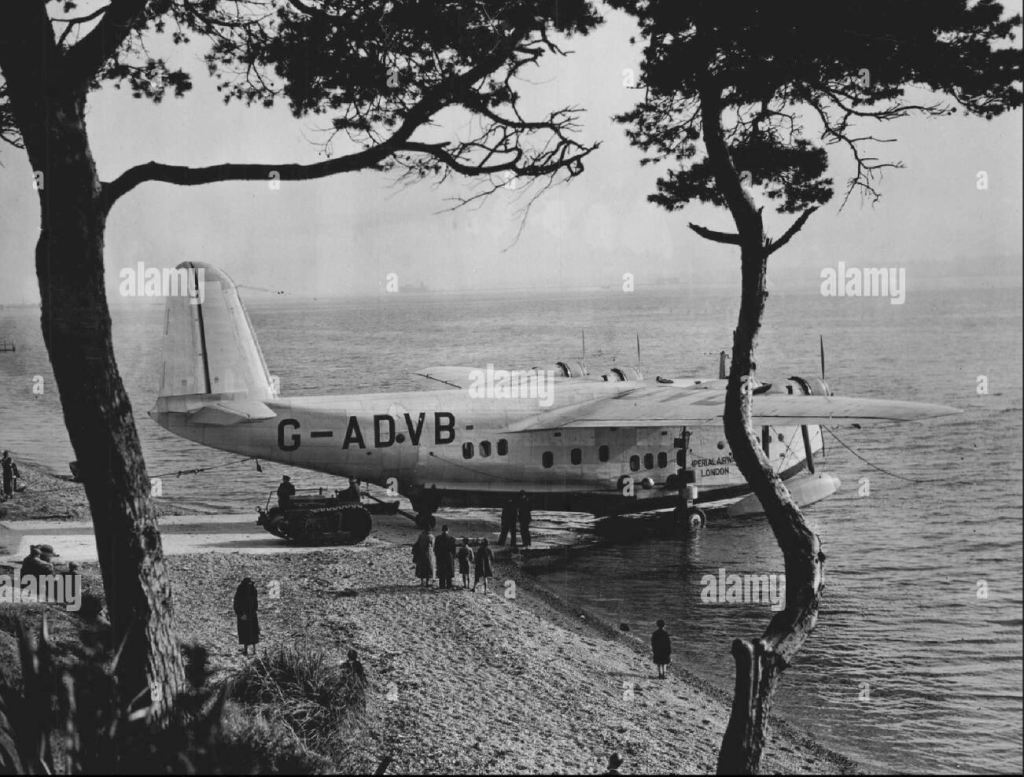
The British de Havilland DH.95 Flamingo transport aircraft took its maiden flight.
After exposing past abuses, Soviet officials tighten labor regulations. Maternity leave is cut; vacation and disability insurance is tied to length of employment. The Soviet Union issued a new decree aimed at slackers and frequently absent workers. The new law threatened executives with removal or arrest if they failed to deal harshly with “disorganizers of production”. Maternity leave was reduced and workers were to get no vacations until they had been on the job for at least one year.
France deploys a second warship to the port of Jibuti in French Somaliland. In addition, 1,000 Senegalese troops will depart from Marseilles on December 31, to join the 1,500 troops already in French Somaliland. The battalion of 1,000 Senegalese sharpshooters — hardy African warriors who defend France’s colonial empire — today prepared to sail from Marseilles December 31 for Djibouti, capital of French Somaliland. The soldiers will reinforce the garrison of 1,500 troops at that strategic port on the Red Sea. A second warship was ordered to proceed to Djibouti. The vessel was the 2,441-ton destroyer Epervier of the eastern Mediterranean fleet. The 1,969-ton dispatch boat D’Iberville, mounting three 5.5-inch guns, left Beirut, Syria, yesterday for Somaliland. The Epervier is capable of thirty-seven knots and was expected to reach Djibouti before the slower D’Iberville, which reached the Suez Canal today.
The sailing orders to the Senegalese warriors and the departure of the two warships for Somaliland is France’s military reply to reports — unconfirmed but not lightly dismissed by the French government and general staff — that Italian troops not only are concentrated on the borders of the East African colony but also have occupied desert territory of that possession. The move also may be interpreted as part of a backdrop the French government is trying to arrange for the conference between Premier Mussolini of Italy and Prime Minister Neville Chamberlain of Great Britain in Rome next month. The French are taking the potential threat behind Italy’s campaign for a slice of their colonial empire with full seriousness. Their concern over the possibilities in the near future hardly has been lessened by the decision of Chamberlain and Viscount Halifax, British foreign secretary, not to stop over in Paris on their way to Rome.
Five deported Palestinian Arab leaders, released from the Seychelle Islands, are refused entry to Lebanon and Syria by French authorities.
A critical epoch in American history, the consequences of which may involve such momentous questions as a third term for President Roosevelt, war or peace, and the future form of our government, will begin next Tuesday when the 76th Congress convenes. The struggle between the President and the Congress over the restoration of a normal, constitutional balance between executive and legislative authority, begun in 1937 under the leadership of independent Democrats, will be resumed with a greatly augmented Republican opposition. Two immediate questions involved in this struggle are:
- Will President Roosevelt, blocked by the November elections from a further expansion of the New Deal, be able to maintain the experiments in collectivism already spread upon the statute books?
- Will Congress, encouraged to a new sense of responsibility by the last elections, take away from the President the extraordinary grants of discretionary legislative power voted during the last six years on the continuing pretext of emergency?
In the aggregate, these discretionary lawmaking powers vested in the President, in the New Deal commissions and in a multiplicity of government corporations, have carried the government a long way from the true republican form prescribed by the constitution. The extent to which we have traveled in the direction of totalitarianism will be the subject of a later article in this series. No responsible member of Congress expects Mr. Roosevelt to change any basic policy, to accept fundamental revision of any New Deal law or voluntarily to surrender any of his discretionary powers as a result of the November political reverses. According to the President’s intimates, he refuses to accept the election results as a repudiation of his administration, insisting that local and state politics and conditions were responsible for the defeat of outstanding New Dealers and the large Republican gains.
President Roosevelt’s lone success in his attempt to purge Congress of independent Democrats has not removed the House Rules Committee as a stumbling block to New Deal legislation of the extreme or experimental type, House veterans revealed today. When John J. O’Connor, chairman of the committee, was defeated for reelection last November 8, there was gloating among the President’s advisers. But, despite O’Connor’s absence, the committee will have a majority of anti-New Deal members. No matter what administration leaders may do, the committee is proof against packing with rubber stamp legislators. This was the most discussed discovery of the day, which saw large groups of senators and representatives drifting back to the capital. These arrivals brought increasing evidence that the coming session will be a stormy one.
Among the day’s developments were:
- The Senate Campaign Expenditures Committee completed a rough draft of its report and included a unanimous attack upon the use of WPA funds to influence elections. The report will be made public next Tuesday.
- Senator Rush D. Holt (D-West Virginia) announced that he had received numerous pledges of support, “most of them from the Democratic side,” for his resolution to place the Senate on record against a third term for President Roosevelt.
- Senator Frederick Van Nuys (D-Indiana) said he would reintroduce his anti-lynching bill during the first week of the session, and predicted it would be reported favorably to the Senate in a short time. This bill produced a near record filibuster at the last session.
Frank Murphy, outgoing governor of Michigan, will be appointed U.S. Attorney General.
Congressmen hint at their plans for the coming session; all expect a new reorganization bill, and Senator Van Nuys will try again for an anti-lynching bill. Speculation about new defense spending fuels the most talk.
Bethlehem Steel says it will contest the NLRB report. The company says it follows the spirit of the Labor Act and that the NLRB findings are counterproductive.
The scientists gathered in Virginia hear about the newly discovered role of histamines in allergies and asthma, and Dr. S.A. Korff discusses his latest research on cosmic rays.
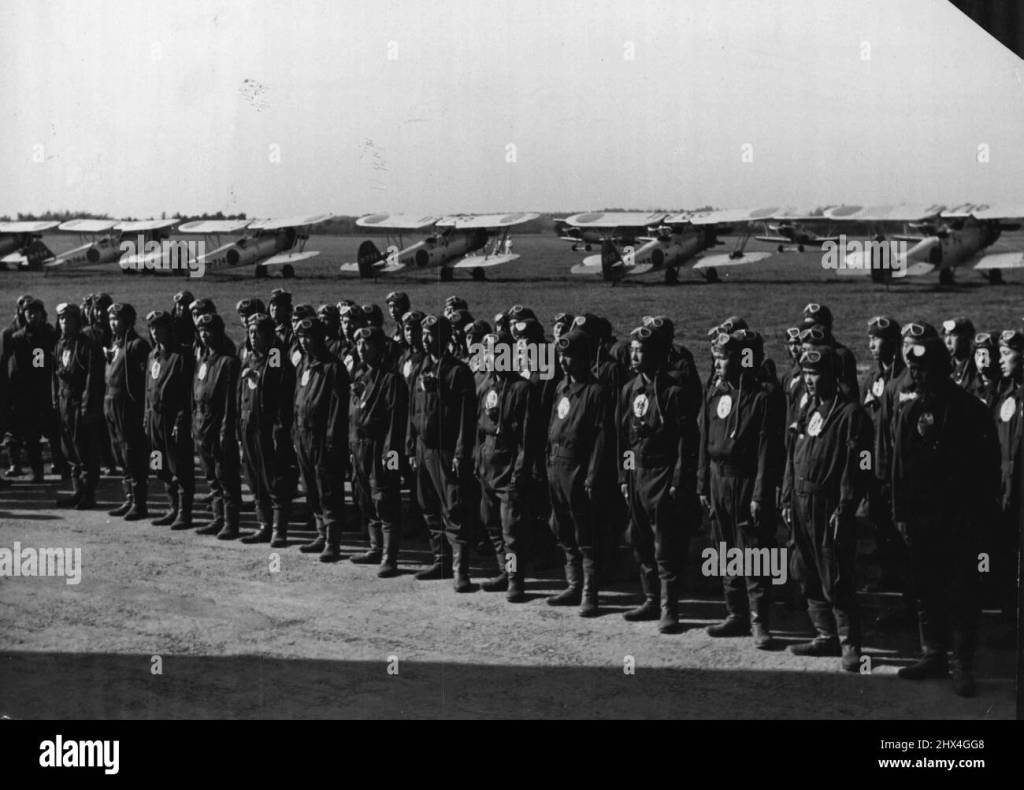
Fighting goes on in Shansi province, with Japanese columns and planes attacking Chinese positions along the Fen River and rail lines. Severe fighting is also reported in Chekiang, southwest of Shanghai, and in Soochow. Four Japanese columns assigned to mop up southwestern Shansi province were reported today to be routing an army under General Yen Hsi-shan, who is considered by the Chinese as governor of the province. The mop-up forces were driving westward from the Shansi railroad and the Fen River with Yen’s reorganized army between them and the Yellow River, where it forms the boundary between Shansi and Shensi provinces.
The Japanese reported capture of Puhsien and several nearby villages. They continued their drive against Taning, Yen’s headquarters, about twenty miles northwest of Puhsien and about fifteen miles from the Yellow River. Japanese planes bombed Taning and other Chinese concentrations. Meanwhile, another Japanese column was said to have skirted Chinese defenses and to have occupied the Chienchianchen ferry across the Yellow, cutting the Chinese line of retreat.
The fighting covered a wide area which the Japanese presumably had conquered months ago in a major offensive southward through Shansi, indicating that the Chinese had reorganized and reoccupied numerous towns and highways. Along the Canton-Hankow railroad, southwest of Hankow, the Chinese reported they were slowly forcing the invaders to withdraw northward to the outskirts of Yochow, Yangtze River port 122 miles upstream from Hankow.
Dow Jones Industrial Average: 151.45 (+1.02).
Born:
Charles Neville, American musician (The Neville Brothers), in New Orleans, Louisiana (d. 2018).
Bruce Yarnell, American actor (“Outlaws”) and singer, in Los Angeles, California (d. 1973).
Died:
Florence Lawrence, 52, Canadian-American stage performer and film actress (Confidence), committed suicide by poison.
Naval Construction:
The Nihon Kaigun (Imperial Japanese Navy) No. 4-class submarine chaser Ch-4 is commissioned.

 History Diaries