France tells Italy that if the 1935 treaty is null, new talks between their two countries alone should be initiated. France told Italy today that she accepted the Italian note renouncing the 1935 Laval-Mussolini territorial treaty, but that the accord must stand as the only basis for negotiations between the two Powers. Thus, the next move in the colonial issue was put squarely up to Italy. Premier Édouard Daladier, despite Fascist cries of “provocation,” disclosed plans to make his tour of Corsica and Tunisia a mighty “hands off” demonstration to Premier Mussolini’s legions. The French note was sent to Count Galeazzo Ciano, Italian foreign minister, by Andre François-Poncet, French ambassador to Rome. It answered Italy’s note which declared the 1935 pact annulled. The pact gave more than 44,000 square miles of territory to Italian Libya and Italian Somaliland at the expense of Tunisia and French Somaliland.
Daladier arranged to travel by warship and to review huge parades in Corsica, France’s Mediterranean island department, and Tunisia, her North African protectorate, in a tour of military fanfare. Both territories have been prominent in the Fascist territorial clamor raised in the Italian chamber of deputies, November 30. The Italian cries for French lands were given official encouragement by the Italian government’s renunciation of the 1935 treaty, which also assured citizenship rights of Italian subjects in Tunisia until 1965. Daladier announced his trip, tentatively scheduled to start January 2, after the tension over colonies arose and touched off angry demonstrations on both sides.
Fighting is heavy today near Borjas Blancas, Spain, 16 miles east of Lérida, after heavy shelling.
The Spanish rebel military command reported tonight the capture of Borjas Blancas, a strategic town 16 miles southeast of Lérida on the main Catalonian highway to Tarragona on the Mediterranean coast. Rebel radio stations broadcast a report from Generalissimo Francisco Franco’s general headquarters that this important position fell in the fourth day of their general offensive into the heart of Catalonia. Borjas Blancas is approximately 35 air miles from Tarragona and is at the southern end of the defense line extending to Balaguer which the loyalists built as a protection for Barcelona, the government capital.
Just south of Borjas Blancas, the rebels reported they penetrated the province of Tarragona in the vicinity of the Llena mountains, where the government had erected a strongly fortified line. In making the drive the rebels occupied two important towns, Cogull, on the river Set, and Granadella, on the slopes of the Sierra de la Llena. Cogull and Granadella both straddle roads connecting Lérida and Tarragona. Cogull is also a strategic town on rail lines between the two towns. The rebel columns in the mountains and those at Borjas Blancas apparently were endeavoring to form a junction at Montblanch, twenty miles to the east, for a combined push against Tarragona. Montblanch is a junction point on the curving main Lérida-Tarragona highway.
Rebel planes cooperated in the drive and Borjas Blancas was heavily bombed before it was captured. Loyalist dispatches also said the rebels bombed a number of rear guard towns, killing at least thirty-five persons and wounding more than seventy. Nine persons were killed at Reks, which is about ten miles from Tarragona on the highway. Pons, forty miles up the Segre River from Lérida, and Torre del Barra and Sama in the Tarragona sector, were among the places attacked. A fast rebel plane bombed the port zone of Barcelona. Workers unloading food ships were wounded. One raid was made in far southwestern Spain. Madrid reported that nine rebel planes killed several persons and wounded fifty in a noon raid on the village of El Viso. The village is approximately 150 miles southwest of Madrid. Forty buildings were destroyed.
Elsewhere in Catalonia, Franco’s troops reported a slow but steady advance. Rebels operating north of Lérida reported they penetrated loyalist lines four-and-a-half miles and captured 1,000 prisoners. The government, however, asserted that its defenses were holding firm east of Tremp, a principal hydroelectric station, against relentless rebel assaults. Italian soldiers were reportedly taken prisoners in the upper Segre River sector. Rebel reports said that of twenty-seven divisions taking part in the Catalonian offensive, only one was made up of Italians.
The battle lines, along which were arrayed 500,000 men on both sides, began to take clear form as General Franco used his time-tried tactics of surrounding and slashing off broad government sectors in a criss-cross progress toward his final goal. South of Tremp, ninety miles northwest of Barcelona, veteran Navarrese forces and Moroccans cut deeper into government territory on the southern skirts of the Monsech mountains. The central spearhead has been driven 15 miles east of the Noguera Pallaresa River to Peralba in the campaign to swing around the government’s strong Monsech mountain fortifications. The government’s extreme northern fortifications, which have been described by neutral military experts as the finest erected during the 30 months of the civil war, apparently were keeping the upper Pyrenees impregnable.
Spanish insurgents announce the arrest of 50 for espionage, including British and French subjects.
The executive committee of the world Jewish congress today accused the government of the Free City of Danzig of organizing a pogrom to drive Jews out of the highly Nazified city. The accusation was made in a telegram to the foreign ministers of Great Britain, France, and Sweden. The foreign ministers of these nations are members of the league of nations committee of three on Danzig affairs. The message demanded the league committee take energetic steps to end “the cruel persecution of Danzig Jews” as the league guarantees the constitution of the free city, which includes a clause promising equality of rights to all citizens. “The government of the free city of Danzig has organized a pogrom,” the telegram read, “and has introduced racial legislation, obliging finally the whole of the Jewish population to leave the free city in a short time, without the league having taken any action up to now.”
Pravda editor Mikhail Kolzoff has been arrested, Soviet papers reveal.
An official announcement tonight said an exchange of notes had approved documents and maps defining and marking the 600-mile frontier between Finland and the Soviet Union. The notes exchanged by Vladimir P. Potemkin, assistant commissar of foreign affairs, and the Finnish minister, Baron Yrjo Koskinen, approved the border demarcation drafted by a Soviet-Finnish commission. Formerly a part of czarist Russia, Finland proclaimed her independence and suppressed a communist movement after the bolshevist revolution. Finland frequently has protested alleged violations of her border by soviet fighting planes. There have been occasional border clashes. In 1932 Finland and the soviet signed a three-year non-aggression treaty which guaranteed the existing frontier as established by the 1920 Treaty of Dorpat. The Dorpat treaty recognized Finland’s independence, declared an end to hostilities and ceded to Finland an outlet to the Arctic Ocean. In 1937 Rudolph Holsti, then Finnish foreign minister, visited Moscow and concluded a “good neighbor” treaty.
[Ed: Such “good neighbors.” Expect them to come for a visit in the coming year.]
Violence in Palestine increases: a deputy of Fakhri Nashashibi is killed, and a cousin’s home is bombed; a Jewish carpenter is killed by a sniper and two Arab police are wounded by a bomb. A British banker is believed kidnapped.
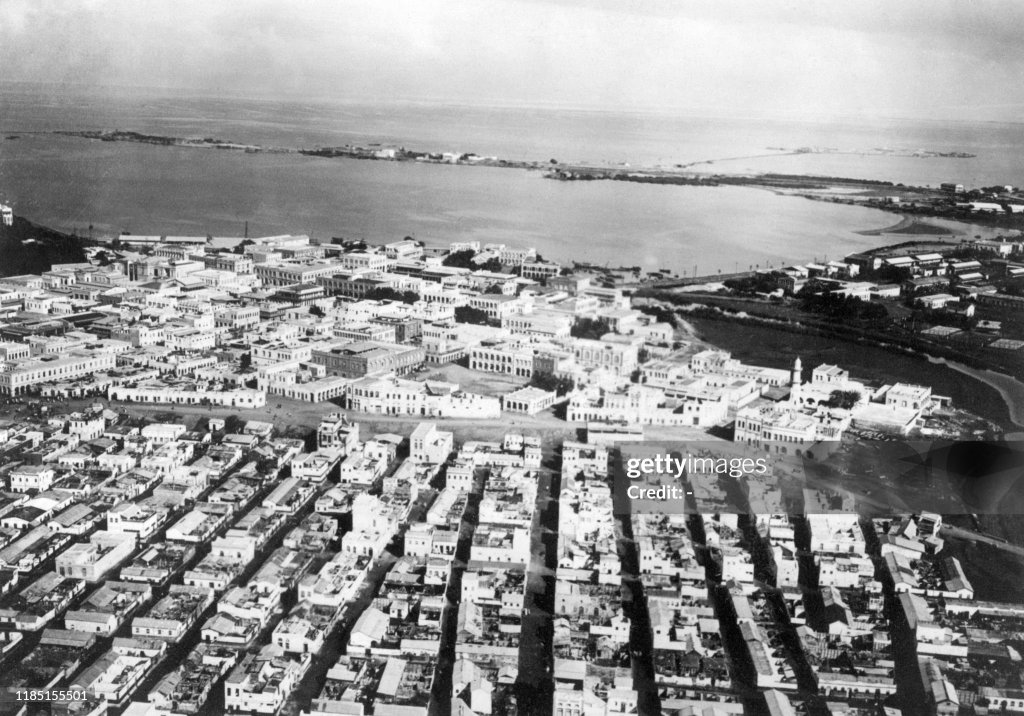
Italians broadcast rumors into French Somaliland, inciting the population against the French. Italian troops have manned posts on the border with Eritrea since January, stirring up trouble.
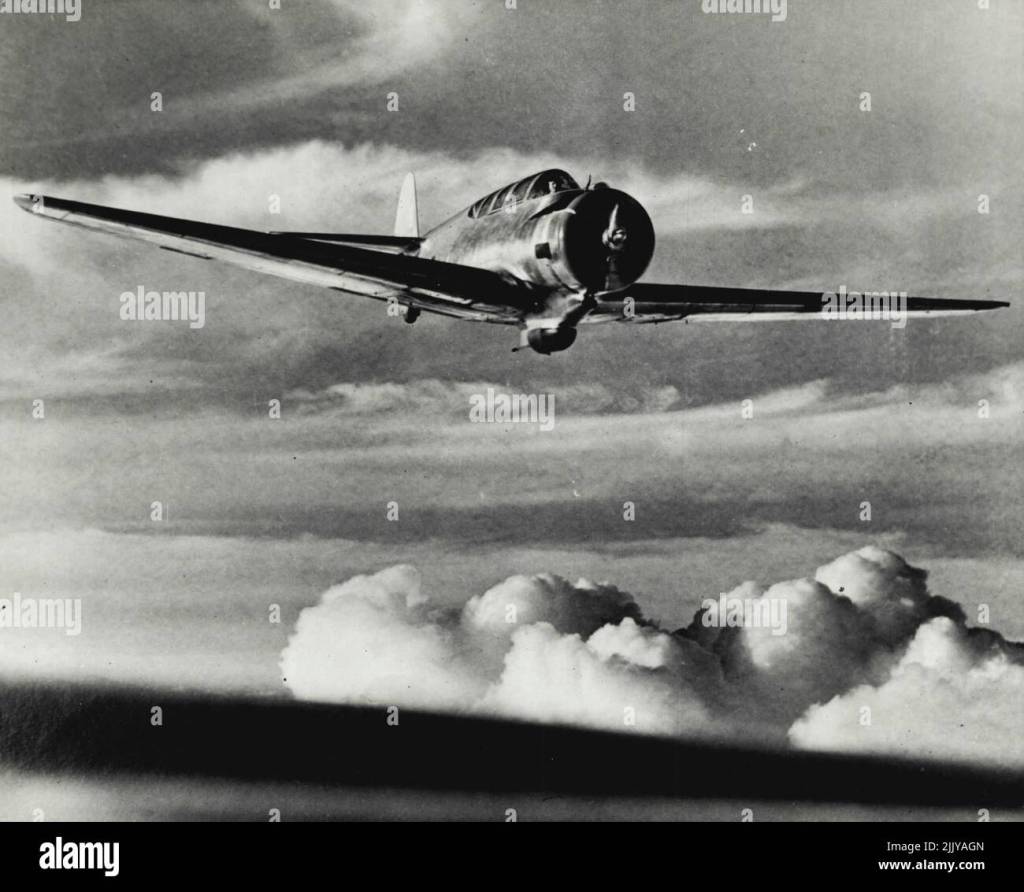
The airplane has been assigned a heavy role in President Roosevelt’s redefinition of American defense problems to include not only the United States and its possessions, but the entire western hemisphere. It has been reported that Mr. Roosevelt will seek to step up the army air corps to 9,000 modern planes and the navy air force to 3,000 planes. This would make the United States the greatest air power in the world, with a strength of 12,000 fighting craft. However, the wisdom of building such a vast number of planes, in view of the fact that aircraft become obsolete faster than any other weapon of war, is being questioned by army and navy high commands and by private industry.
While it is acknowledged that the present American air force is inferior in strength to the reported powerful air forces of aggressor nations, the opinion of many experts is that a force of 12,000 planes is more than sufficient to meet any emergency this nation might have at home or in going to the defense of its American neighbors. Throughout the world, American planes are considered superior in quality to any other, and America’s facilities for manufacture are known to be far ahead of other powers. Yet the administration program would necessitate setting up, alongside existing private plants, military production plants which eventually might smother private industry. It is felt that Mr. Roosevelt is being influenced toward the heavy air development program because the airplane is the most spectacular of all weapons of war, and because the bombing in China and Spain have brought home to civilized populations everywhere the horrors incident to war.
Although the U.S. air transportation industry carried its heaviest loads of mail and passengers during 1938, there were profits at the end of the year for only five of the twenty-four companies operating both within and outside domestic borders. A sixth company probably will end the year about even on its books. But despite this gloomy summary the industry’s immediate future appears bright. Most of the large companies took paper losses by creating heavy reserves for insurance and depreciation of flying equipment. The entire situation can and probably will be changed early in 1939 with the revision of air mail pay rates.
These were the indications yesterday with the completion of a survey of the transportation phase of the aviation scene. It is noteworthy that profits this year were made over short air routes between large cities on a relatively large volume of passenger traffic. For 1938 passenger revenues represented roughly 65 percent of total income. The lines that will show a profit for the year’s operations are Northwest Airlines, Pan-American Airways, Chicago and Southern Air Lines, Pennsylvania-Central Airlines, and Eastern Air Lines. The company that probably will break even is American Airlines.
Actor Errol Flynn’s 31 GRT yacht, the Sirocco, is determined to be larger than allowed to be owned by an alien in the United States. Flynn’s intention to become a citizen is held irrelevant; the yacht is seized by U.S. Marshals in San Pedro harbor.
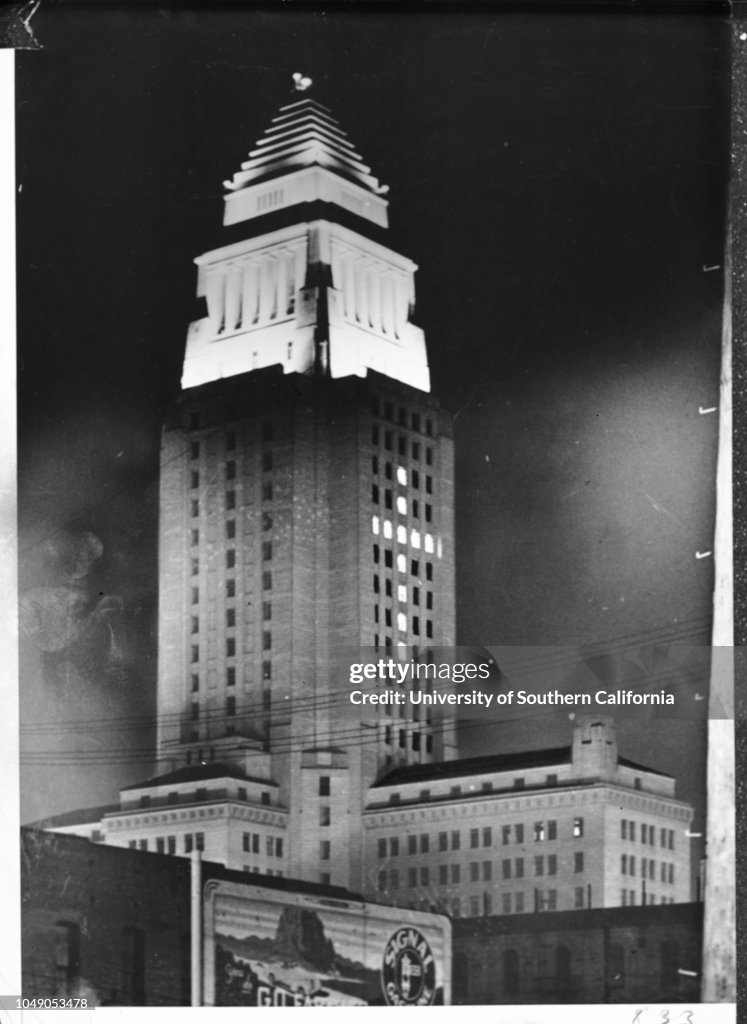
The Earl Carroll Theatre opened on Sunset Boulevard in Hollywood.
Hosted by Cecil B. DeMille, the Lux Radio Theatre presented a live Hollywood performance of “Snow White and the Seven Dwarfs.” Not only did some of film’s original voice actors return to reprise their roles for the show, but Walt Disney himself was on hand to be interviewed by DeMille for both the intermission and at the end of the broadcast.
U.S. Ambassador John Grew in Tokyo registers protests over bombing of American property in China on 10 separate occasions.
An attempt to bomb Chungking (today Chongqing) is driven off by Chinese planes. Japanese bombers attacked Chungking, China during the day; this was the first time the temporary capital was bombed during the daylight hours
Japan opens an offensive in Shansi, 75 miles from Linfen, and bombs Chinese positions there. The Japanese, striving to pacify unconquered south Shansi province, in North China, announced today their forces had captured four towns and killed 600 Chinese in a new offensive. They reported they had won control of hilly regions north of the Fen River radiating from Linfen, a city which lies about 60 miles east of the Yellow River and about 200 miles northwest of Kaifeng. Severe fighting was reported under way near the juncture of Shansi, Shensi, and Honan provinces, near the point where the Yellow River turns eastward after flowing from the north. The Chinese were reported to have attempted unsuccessfully to recapture Fenglingtu, opposite Tungkwan, about 175 miles southwest of Linfen. Japanese forces operating from Fenlingtu were said to be threatening to cut the east-west Lunghal railway and sever communications between Loyang and Sian.
Wang Ching-wei disappears. Reports that Wang Ching-wei, former president of the Chinese executive yuan, was en route to Hong Kong to discuss “truce” terms with Japanese emissaries have caused lively discussion in diplomatic circles. First reports were that Wang, who is head of the so-called “peace party,” would arrive today, but tonight his whereabouts was a mystery. He has left Chungking, provisional Chinese capital, on a “sick leave,” and was supposed to be coming here by way of Hanoi, French Indo-China. The reports of impending “truce” negotiations could not be confirmed. It was reported on good authority that Wang, as China’s “peace party” leader, can be regarded as having a “definite purpose” in visiting Hanoi and possibly Hong Kong aside from any need of medical attention. Beyond this only speculation is possible.
The Japanese Diet opens; its only task is to obey the emperor by passing the 8 billion yen budget. Emperor Hirohito opened the 74th Japanese Diet today and in an imperial rescript commanded parliament to approve the 1939 budget, the largest in Japanese history, with special military expense estimates, by taking into consideration the gravity of the present situation.” A portion of the emperor’s decree said, “We deeply appreciate that the relations of the empire with its friendly powers are growing in amity. Our officers and men have conquered and pacified important areas in China by overcoming difficulties.”
Born:
Bahram Beyzai, film and theatre director, in Tehran, Iran.
Naval Construction:
The Royal Navy Net-class boom defense vessel HMS Planet (Z 50) is launched by Lobnitz & Co. Ltd. (Renfrew, Scotland).
The Вое́нно-морско́й флот СССР (ВМФ) (Soviet Navy) Project 7U-class (Storozhevoy-class) destroyer Stoyky (Стойкий, “Steadfast”) is launched by Zhdanov (Leningrad, U.S.S.R.) / Yard 190.


[Ed: We will never see such a display again in our lifetime. And I find that tragic.]
 History Diaries