The Nationalists launched the Catalonia Offensive. Insurgents launch three separate attacks on the Segre River, from Seros north to Tremp, in Catalonia, Spain. Having cut the Spanish Republican forces into two the Spanish Nationalists now launched an offensive against Catalonia. A frontal assault by six Nationalist armies proved too much for the already exhausted Republicans, who would soon retreat towards Barcelona.
The Spanish government announced tonight that insurgents had launched a long-awaited general offensive against Catalonia; northeastern section of government Spain. A communiqué from Barcelona, government capital, said Generalissimo Francisco Franco’s troops, backed by heavy artillery and airplane bombardments, had attacked in the Tremp sector, northwest of Barcelona.
Insurgent dispatches reported that Franco’s forces had advanced an average of six and one-fourth miles by nightfall and had taken more than 1,000 prisoners as well as a huge quantity of arms, munitions, and tanks. A violent battle in the drive with which insurgents hoped to end the thirty-month-old civil war continued tonight. Earlier dispatches from both sides had agreed that there had been a series of insurgent attacks along the east bank of the Segre River, near Tremp, the government’s first line of defense against a drive from the northwest. The long-awaited insurgent drive, in which Franco was said to be using a number of Moroccan troops, apparently had been delayed by an espionage investigation in insurgent ranks.
The government communiqué said the attackers had been repulsed with heavy losses, but insurgent reports asserted Catalan defenses had been broken at several points. Insurgents who attempted to cross the Segre near Lérida were said by government reports to have been driven back. Several divisions described as Italian were reported in government dispatches as having lost heights near Seros in a government counterattack. The extent of operations indicated that insurgents had only started their drive.
Today, the Italians and the Navarreses crossed the Segre at Mequinenza, broke the Republican lines, and advanced sixteen kilometers, but they were stopped by the V and XV Republican corps led by Lister on 25 December. On the left flank, Muñoz Grandes and Garcia Valiño advanced towards Cervera and Artesa, but they were blocked by the 26th Republican Division. On the south, Yagüe’s troops were held back by the Ebro’s floodwater. The Republicans had stopped the first Nationalist attack; nevertheless, they had lost 40 aircraft in the first ten days of the battle. Unfortunately for the loyalists, the Nationalists are only getting started. The offensive is renewed in January, and the collapse of Catalonia soon follows; and the fate of the Spanish Republic is soon sealed.
Germany’s newest decree bars Jews from serving as managers in business or industrial offices.
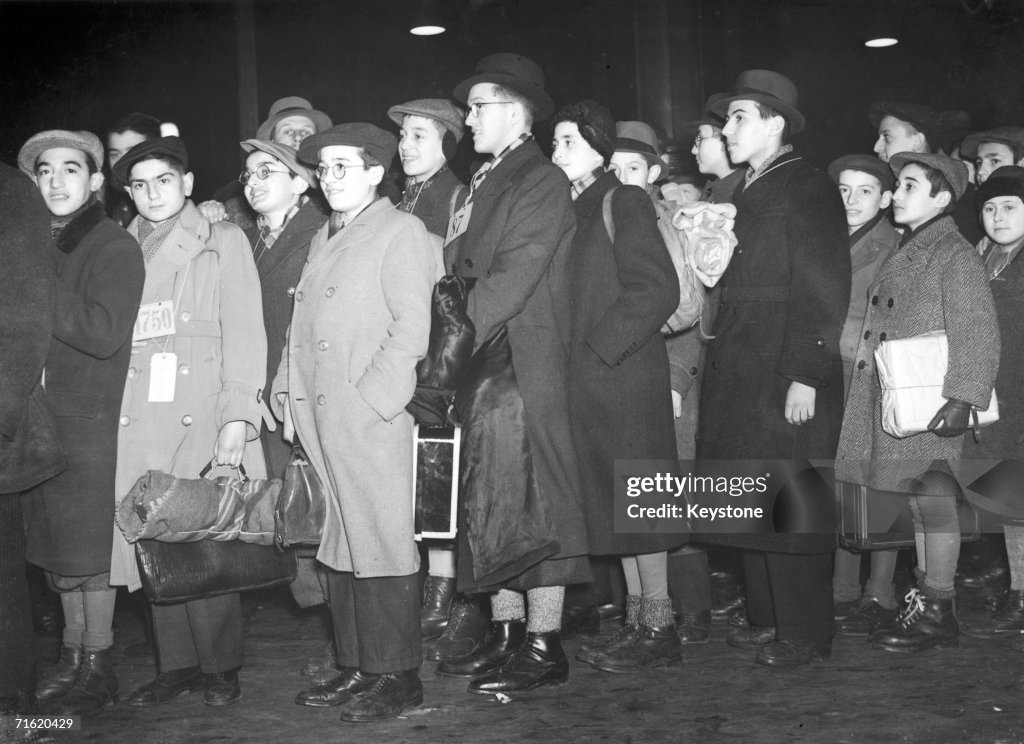
Thousands of Jews — many of them suffering from severe frostbite or bandaged for other injuries — have returned home from concentration camps within the last two weeks. Exactly how many Jews have been released since the raids which followed the synagogue burnings last November 10 was not disclosed. Jewish sources, however, set the figure for all Germany at about 7,000. Preference for release was given to world war veterans, especially those holding military decorations.
All those who left the camps before the beginning of a cold wave on December 18 had their heads shaved. Plaster or bandages on many indicated that they had met with “accidents” in camp. They seemed to recuperate quickly, however. But the story was different with men released during and after the freezing weather. There were reports of men who had frozen limbs amputated. The concentration camps were not prepared for the cold, with the result that there were not only hundreds of cases of frozen arms and legs, but also hundreds of pneumonia patients.
German officials in Berlin today expressed “pained surprise” at the “rude and aggressive manner with which the United States refused yesterday to apologize for the anti-Nazi speech made by Secretary of Interior Harold L. Ickes last Sunday at Cleveland. Ickes, speaking before the Cleveland Zionist society, called the Nazi treatment of the Jews “bestial.” It was indicated here that as a result of the American government’s attitude Germany may delay the return of Ambassador Hans Dieckhoff to Washington, D.C. It was added, however, that the final decision is up to Reichsführer Hitler. Apparently, the German press is under orders to ignore the incident until further notice. To vent their anger the Nazi papers seized upon the award of the 1938 American Hebrew medal to President Roosevelt. Headlining its front page with the words: “Pan-Judah Presents Roosevelt with the Hebrew Medal,” the official Voelkischer Beobachter stressed that the President was awarded this decoration “at a moment when Judah tried to agitate the American nation into a war psychosis against Germany and to exploit it for Jewish dreams of world mastery.”
Reichsführer Hitler today departed for Munich where he is accustomed to stay on Christmas eve. While his aides are all on leave only a few members of his bodyguard share with the Führer his small Munich flat on this night. Hitler, however, will remain in a room by himself, passing the time by reading newspapers and books. Early the following morning he will go to his Alpine residence in Berchtesgaden.
Hungary’s Parliament debates anti-Jewish laws.
Poland deports 100 Czechs from Teschen in retaliation for border terrorism incidents.
A discussion by the foreign ministers of France and Poland of Germany’s reported designs on Poland’s Ukrainian-inhabited provinces was said in informed circles today to be scheduled to be held shortly in Paris. Colonel Joseph Beck left Warsaw this morning for France and conferences with Foreign Minister Georges Bonnet were understood to be in prospect. Beck visits France each year at Christmas time, but this visit was considered especially important in view of recent demands of Ukrainians in Poland for autonomy. Many observers have seen this as a first step in plans of Adolf Hitler to split off the Polish and Russian Ukraines to be merged into one Ukrainian state under German domination.
In France, the aunt and uncle of Herschel Grynszpan are released from prison. His murder trial is ongoing; his attorneys urge him to say that vom Rath, the German Embassy official killed, had seduced him. Grynszpan refuses.
The German press has a field day with the fact that President Roosevelt is given the American Hebrew Award, for promoting understanding between Christians and Jews. Reich newspapers attack Secretary Ickes, Senator Pittman, and the influence of Jews in the United States with sarcastic and colorful words.
A month ago, the general staff of the U.S. Army was satisfied that it had perfected an ideal program for the development of the American army to a minimum effective strength for the protection of the nation. The plan was based on the traditional American policy that the army would fight only on American soil and would not again go overseas to battle. President Roosevelt knocked the plan haywire in a few sentences when he promulgated a defense policy based upon the broadest interpretation that has been given the Monroe Doctrine in years. Defense has ceased to be a national problem, the chief executive said, and has become a continental problem, embracing the western hemisphere from Hudson Bay to Cape Horn. The commander-in-chief’s pronouncement forced an entire restudy of the defense program. In increasing the scope of defense to a point where the army may be called from the country’s shores to enforce a “hands off” policy in the new world, sizable increases are demanded in every branch of the service.
The needs stressed by Major General Malin Craig, chief of staff, before congressional committees at the last session become more imperative than they were before such a thing is possible considering that the army is by far the weakest numerically and in weapons of any major power. At the time General Craig called for 300 million dollars in additional funds as a minimum and suggested $500 million additional as desirable. The study of the needs in the light of the revamping of policy has not been completed, but it is expected the minimum will soar far above what it was. Because there is a decided lack of material now, it follows that the lack will be more acute if the United States is to take the role of protector of the western hemisphere. Personnel increases will be necessary because a “continental solidarity” program cannot be a reality without a potential expeditionary force. For an expeditionary force bases are necessary. The army high command envisions an entire overhauling of the military system from the Philippines to the Virgin Islands and the Panama Canal Zone. The army revamping is related to that also enforced on the navy and the combined air fleets of the two arms of the service.
Responding to a perceived threat in Europe, the Navy Department makes permanent the U.S. Atlantic Squadron. Under Admiral William Leahy, the squadron had been temporary.
Harry Hopkins, head of the WPA, is named new Secretary of Commerce. He succeeds Daniel C. Roper.
A general house cleaning of Kansas City, which has acquired the reputation in recent years of one of the most politically corrupt cities in the country, was ordered today by Governor Lloyd C. Stark of Missouri. In a letter to Attorney General Roy McKittrick, the governor ordered ouster proceedings filed against any officials who refuse cooperation in the cleanup. This move, authorized by the state constitution, may have a potent effect in launching an inquiry that will get something done, it was said. The governor included a cleanup of St. Louis in his order, but he centered his fire on Jackson County and particularly Kansas City, the stronghold of his political foe, Democratic Boss T. J. Pendergast. Stark charged that there is a definite breakdown of law enforcement in Kansas City. He directed the attorney general to send his assistants into Jackson County to aid in the investigation and prosecution of law violations.
The President’s committee of experts on the railroad delivers recommendations. Among them: establish national policy and a Transportation Board, and centralize regulations nationwide under the Interstate Commerce Commission.
An Appeals Court in New York upholds Judge Cotillo’s right to enjoin all pickets, based on his decision that the right to picket was abused.
An army bombing plane reported to be carrying eight men crashed into a field near Uniontown, Alabama, during a rainstorm and burst into flames tonight. Four bodies were found and a search was being made for the four others. One of the bodies, hurled clear of the wreckage, was 250 feet away. It was believed that the others might have been thrown clear or that some of those on board might have attempted to bail out with parachutes and were killed some distance from the point of the crash. The accident occurred as the bomber, of the B-18 type, was flying to Maxwell field, Montgomery, Alabama, from March field, Riverside, California. Frank Glass, a witness, said that the ship was flying low in a heavy rain and that the pilot apparently was searching for a suitable landing place. Glass said that an explosion ripped the ship apart as it fell. Three of those aboard were trapped in the blazing cabin and had no chance to get out had they survived the crash.
Margaret Hamilton’s ‘Wicked Witch’ costume catches fire during the filming of “The Wizard of Oz,” forcing her to take a six-week hiatus to recover from burns.
A small explosion and fire on the new U.S. Navy aircraft carrier USS Enterprise (CV-6) injures nine men, one of them seriously.
Dow Jones Industrial Average: 151.39 (+0.86).
Born:
Bob Kahn, Internet pioneer, in Brooklyn, New York, New York.
Naval Construction:
The Nihon Kaigun (Imperial Japanese Navy) Type C (C1 sub-class) cruiser submarine I-22 is launched by Kawasaki, Kobe, Japan.
The Вое́нно-морско́й флот СССР (ВМФ) (Soviet Navy) Project 7-class (Gnevny-class) destroyer Gnevny (Гневный, “Angry”) is commissioned.
The Вое́нно-морско́й флот СССР (ВМФ) (Soviet Navy) Project 7-class (Gnevny-class) destroyer Gordy (Гордый, “Proud”) is commissioned.



 History Diaries