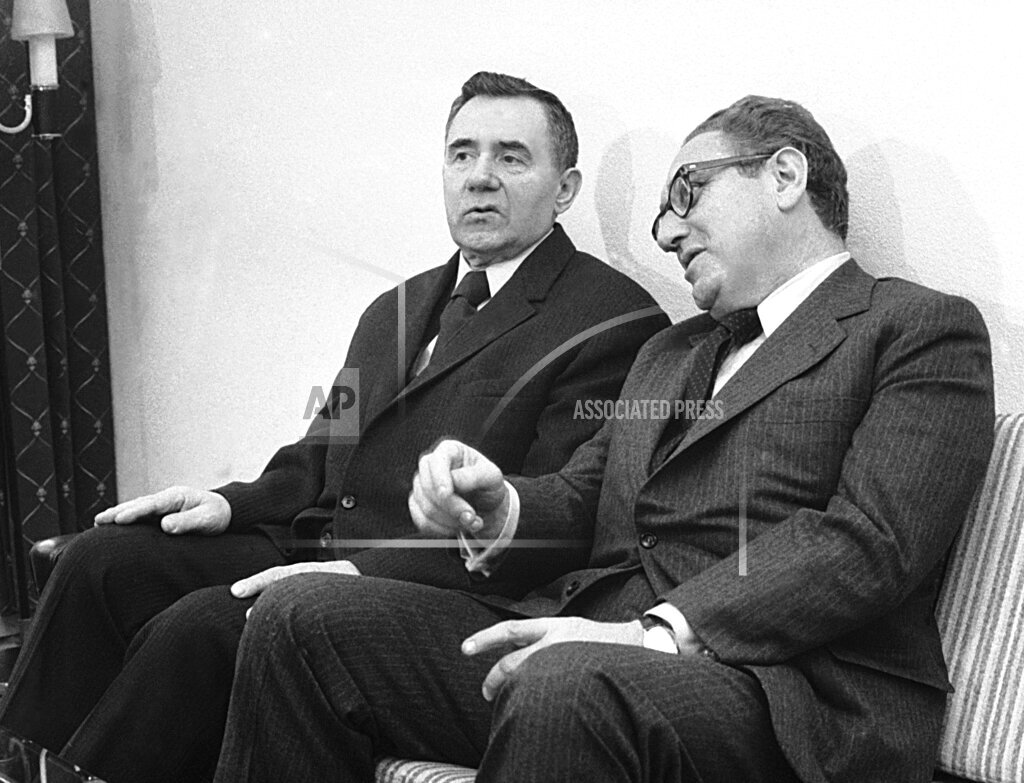
The Middle East peace conference ended its first round with a quick agreement on moving “forthwith” toward talks on separating Israeli and Egyptian forces now tangled along a jagged front on both sides of the Suez Canal. There was general satisfaction among the participants about the cordial atmosphere of today’s session, which lasted only about 20 minutes. The mood in the closed session was described as much more relaxed and businesslike than in the first meeting Friday, when Israel and Egypt engaged in sharp exchanges.
In separate news conferences, spokesmen for Israel and Egypt offered similar, cautiously optimistic appraisals of the opening round of the Middle East peace conference. Remarkably, considering the bitter enmity between the two countries, Abba Eban, Israel’s Foreign Minister, and Tahsin Bashir, spokesman for the Egyptian delegation, avoided polemics and name‐calling. Their similarly subdued presentations reflected the new and promising mood that permeated the conference’s second session.
Secretary General Waldheim of the United Nations said that he was “very happy” with the opening phase of the Middle East peace conference. It showed that the United Nations “is still a useful instrument if it is used in the right way and if we do our share,” he said in an interview. He was acutely conscious of the argument about the United Nations’ role that delayed the opening of the conference by three days, but he said he believed that the United Nations presence had been an important help in getting an agreement on how to proceed after only a day and a half of formal meetings and some private talks.
The OPEC Gulf Six decides to raise the posted price of marker crude from $5.12 to $11.65 per barrel effective January 1, 1974.
American sympathy for Israel has grown, instead of diminishing, following the outbreak of the Middle East war and the subsequent Arab oil embargo against the United States and other countries, according to the Gallup Poll. The poll appears to indicate that the fear of some Jewish leaders that the war and the oil shortage would bring a backlash against Jews has thus far been without foundation. At the same time, a check by correspondents of The New York Times found no significant expression of anti-Jewish sentiment, although there have been efforts by groups and individuals to fan a reaction against American Jews.
The Palestine Liberation Organization was negotiating with Kuwait to gain custody of the five Palestinian gunmen who killed 31 people at the Rome airport Monday and then flew to Kuwait in a hijacked Lufthansa airliner. Palestinian sources in Beirut said that Ali Yasin, the head of the guerrilla organization’s office in Kuwait, flew to Damascus to confer with Yasser Arafat, the Palestinian leader, who has asked that the men be turned over to his organization for trial.
The Japanese cabinet approved what it termed an “austerity” budget for the 1974 fiscal year, calling for the smallest annual increase in spending in four years as part of the government’s intense new effort to combat inflation and the oil shortage. Earlier in the day, Premier Kakuei Tanaka left a hospital where he was under treatment for an ear infection to attend a special cabinet meeting and to declare a state of emergency. He ordered a 20% cut in the supply of oil and electricity in major industries, effective Jan. 1.
The Cambodian Army command said today that a general and two colonels had been suspended and that 20 lower‐rank servicemen and civilians had been arrested in connection with the illegal sale of American‐made brass shell casings. It was the biggest scandal affecting the Cambodian Army since the discovery of 50,000 “phantom soldiers” for whom commanders had pocketed wages over a two‐year period. The command said that it had seized 57 tons of shell casings earmarked for illegal sale and export, while other sources said that about 150 tons had already been exported. It said that the commander at Takeo, a general, and the subdivision commanders of Koh Kong and Kampot, both colonels, had been relieved. Military sources added that some of the traffickers, not content with collecting empty shell casings, emptied the explosive charges from unused shells and sold them, too.
As the Laotian neutralists, rightists and Communist‐led Pathet Lao struggle toward the formation of a coalition government, it seems clear that whatever structure they produce will still be within the Kingdom of Laos and that the kingdom will have a King. Both the ceasefire of February and the protocols of September between the Government and the Pathet Lao make frequent reference to the King, and he seems destined to retain the largely ceremonial powers he has. In Luang Prabang, the royal capital for all Laotians — the administrative capital is Vientiane — the people say that the present King, Savang Vatthana, is an intelligent man and a good man, but that he is unable to do as much as he would like for his country because, he is restricted by the Establishment.
All 106 people aboard a Royal Air Maroc flight were killed when the Sud Aviation SE-210 Caravelle was preparing to land at Tangier in Morocco on a flight from Paris in France. The aircraft crashed into the side of Mount Mellaline, near the town of Tetouan, at an altitude of 2,300 feet (700 m).
The Spanish security police announced tonight that they had “indisputable” evidence that Basque terrorists assassinated Premier Luis Carrero Blanco. The police broke their silence in the investigation by naming six members of the most aggressive section of the Basque nationalist group known as E.T.A. as participants in the killing. While the regime continued to mourn the loss of the man Generalissimo Francisco Franco had chosen to carry on his authoritarian kind of government, with the 81‐year‐old chief of state making his first public appearance since the assassination, the police placed tight control over the frontier with France, where they said the E.T.A. group was based.
The Premier was killed on Thursday when a bomb hurled his car into the air outside the church where he had just attended mass. The complexity and precision of the attack — the bomb was planted in a tunnel dug under the street and triggered from a distance — made many observers believe it was the work of the Basque group, long engaged in a guerrilla war with Spain and the most experienced organization here in bombing attacks. A statement claiming responsibility was issued Thursday night in the group’s name in Bordeaux, France.
The Basques, estimated to number about one million in northern Spain and southwestern France, are of uncertain origin with a language and culture not definitely linked to any other on the continent. Through history, they have been fiercely independent-minded and jealous of their own laws and customs. As such, they have always been a thorn in the side of Spanish governments determined efforts to keep essential power in Madrid. To gain their support, the Spanish Republican Government, shortly after the outbreak of the civil war in 1936, granted the Basques local autonomy. But this was quickly and harshly stamped out by General Franco’s nationalist forces as soon as they gained control of the area.
Another attempt by Honduras and El Salvador to settle their differences arising from the 1969 “soccer war” has ended in failure after three months of negotiations in Mexico City. The deadline for a peace agreement passed quietly last weekend with the two Governments agreeing that no significant progress had been made. A new round of negotiations is expected to begin in April. Several attempts at a settlement have been made over the last four years through the mediation of the other Central American governments and the Organization of American States, but neither Honduras nor E1 Salvador has so far budged from her original bargaining position.
In the meantime, the Central American Common Market has been badly weakened by the dispute and trade boycott involving two of its five members. In December, 1970, Honduras withdrew from the pact, demanding that it be restructured to take account of Honduras’s lesser degree of development. El Salvador was in turn forced to find new markets for the manufactured products that were traditionally sold to Honduras.
Respectable Sydneyites were relieved in 1900 when the government of New South Wales took over a rat-infested slum quarter known as the Rocks and demolished most of the tumble‐down buildings after an outbreak of bubonic plague. The same neglected neighborhood, which remained drab and depressed in the decades that followed, is now the site of a $750‐million restoration project — the biggest in the country — that is already helping Australians rediscover the nation’s past. It was at the Rocks that Australia was founded on Jan. 25, 1788, when the first colonists, mostly convicts deported from Britain, landed among the rugged sandstone outcroppings that gave the area its name.
The 93rd Congress adjourned its first session after abandoning efforts to pass major legislation giving President Nixon sweeping powers to impose gasoline rationing and take other emergency steps to conserve energy. Unless called back into session by the President or Congressional leaders, Congress will not reconvene until Jan. 21. The adjournment was quiet in contrast to the stormy session in which the House, early Saturday morning, killed a modified emergency energy bill that had been stripped of provisions curbing “windfall profits” in the oil industry.
The Rev. Billy Graham, an old friend and occasional adviser of President Nixon, has accused the President of errors in judgment and of keeping himself in “isolation” in the White House. In an interview in the January 4 issue of Christianity Today, released yesterday, Mr. Graham said that “until there is more proof to the contrary, I have confidence in the President’s integrity, but some of his judgments have been wrong and I just don’t agree with them.” He added: “I think many of his judgments have been very poor, especially in the selection of certain people.”
The committee with the clumsy name that President Nixon has asked to review his tax returns is hardly a committee at all in the usual Congressional sense. It rarely meets. Few can remember when it last held a hearing. Its very existence is not much known outside of Congress and those who carefully follow tax legislation. Yet despite its anonymity, the Joint Committee on Internal Revenue Taxation includes some of the most influential members of Congress and is served by a technical staff whose ability and nonpartisanship have earned widespread confidence. Accordingly, what the joint committee decides about Mr. Nixon’s taxes will probably be accepted as a fair decision by the majority of Congress. Temperamentally and politically, almost all of the committee’s members are conservative, leading some here to suspect that Mr. Nixon—in asking the committee to decide whether, to use his own word, he is a “crook” as a taxpayer — might have been seeking a friendly judge and jury.
President Nixon demanded today a report on why some 5,000 students in southern California had not received veterans’ benefit checks, some for as long as four months. Mr. Nixon acted after Kenneth R. Cole, president of California State University at Long Beach, complained in a telegram to Mr. Nixon that “Southern California veterans are hurting severely, especially at Christmas.” Mr. Cole reported that some student veterans, mostly from the Vietnam war, had not received G. I. education benefits since the fall term began. The White House said it had determined from the Veterans Administrator, Donald Johnson, that about 5,000 area students were affected.
President Nixon signed the Menominee Restoration Act into law, returning federally recognized sovereignty to the Menominee Indian Tribe of the U.S. state of Wisconsin, and reversing the Menominee Termination Act of 1954.
President Nixon went to Camp David, Maryland, by car today for a weekend at his mountaintop retreat. Mr. Nixon had before him 33 bills passed in the final days of this session of Congress and 21 more were expected at the White House in the next few days. The White House said that Mr. Nixon would not sign today the 11 percent increase in Social Security benefit passed by Congress yesterday. There was no indication how soon he would act on it and the other bills.
Senate Democratic Presidential hopefuls are moving toward the right on a number of defense spending issues and taking an increasingly critical stance on the Nixon Administration’s policy of détente with Moscow. One Senator who did not want to be identified said, “Scoop is pulling the Democrats with national ambitions along with him” on national security matters. “Scoop” is the nickname for Senator Henry M. Jackson, Democrat of Washington, who has become a frequent challenger of the Administration’s foreign policies. The Senate Democrats with possible Presidential ambitions for 1976 include Walter F. Mondale of Minnesota, Edward M. Kennedy of Massachusetts and Lloyd M. Bentsen of Texas. None of the three have gone so far as Senator Jackson in assailing White House positions, but many Senate sources and observers see each as moving in that direction.
Part of the answer to the Midwest’s shortage of natural gas may lie in the enormous deposits of lignite coal under the rolling prairie lands of western North Dakota, a thousand miles from here. Already, the Michigan‐Wisconsin Pipeline Company of Detroit and the People’s Natural Gas Company of Chicago have announced plans to turn North Dakota lignite into a synthetic gas. They say it cannot be distinguished from natural gas. The North Dakota authorities have given tentative approval to Michigan‐Wisconsin, which controls 3.5 billion tons of lignite, to build four gasification plants. The company plans to have one operating by 1980 and to build three more plants during the nineteen‐eighties.
Miami of Ohio’s defense throttled Florida tonight and the Redskins wrapped up a perfect season with a 16‐7 Tangerine Bowl victory. David Draudt’s three field goals and the running of Chuck Varner at fullback accounted for Miami’s scores. Most of the offense on a bitterly cold night was generated by Varner when Florida defenders keyed on Bob Hitchens. Powering over the middle for 156 yards, including a 3‐yard plunge for Miami’s only touchdown, Varner carried the Mid‐American Conference champions to their first bowl victory since 1950 and was named most valuable back in the game.
NFL Divisional Playoffs:
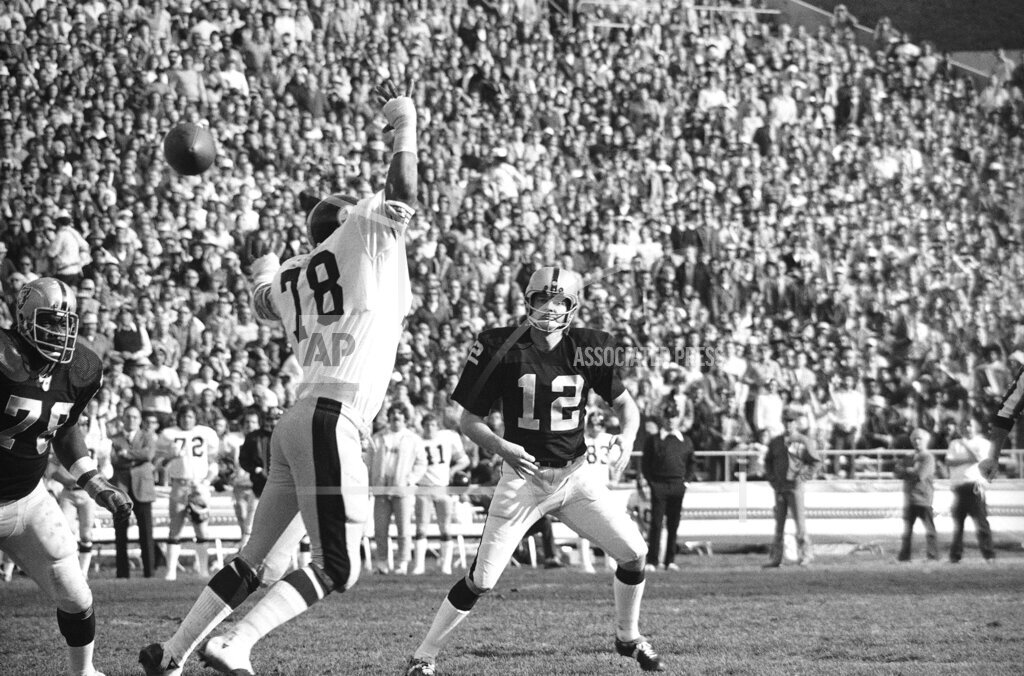
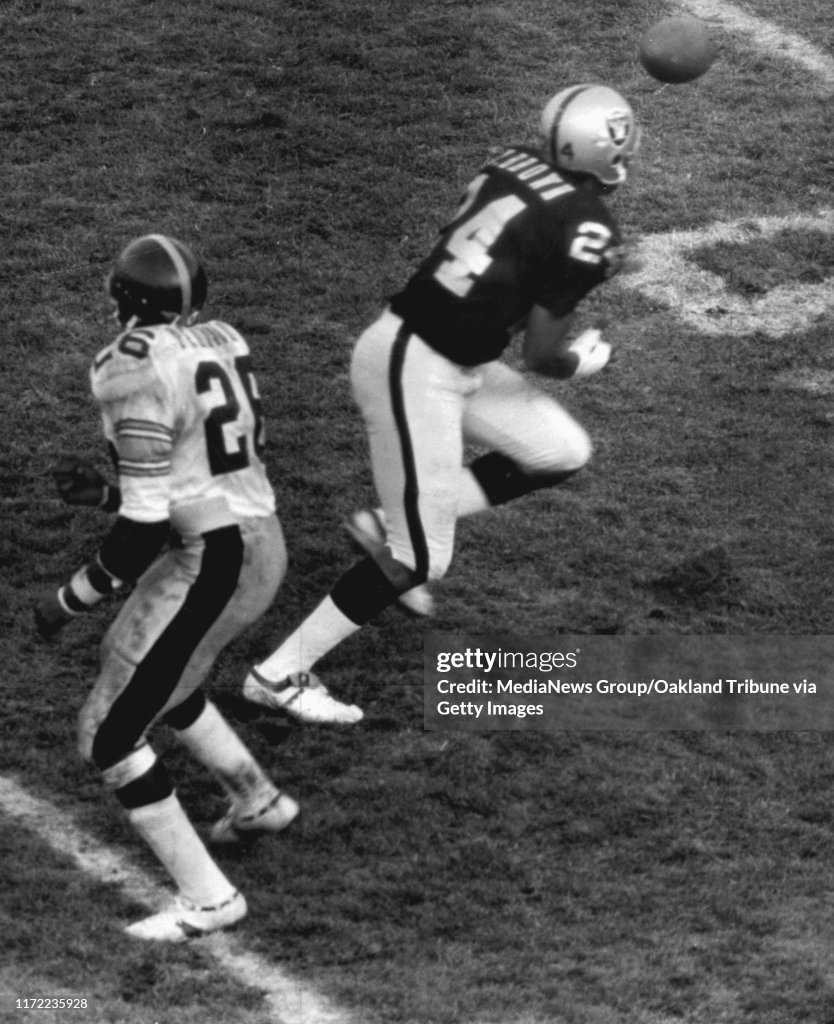
The Oakland Raiders outgained Pittsburgh in total yards 361 to 223, forced three turnovers without losing any on their side, and scored 16 unanswered points in the second half to defeat the Steelers, 33—14. After forcing the Steelers to punt on the game’s opening drive, Oakland drove 82 yards in 16 plays, including a 20-yard burst by running back Marv Hubbard, to go up 7—0 on Hubbard’s 1-yard touchdown run. In the second quarter, Pittsburgh drove into Raiders territory, only to lose the ball when Terry Bradshaw’s pass was deflected by Otis Sistrunk into the arms of linebacker Phil Villapiano for an interception. A 21-yard completion from Ken Stabler to receiver Mike Siani on the ensuing drive set up a 25-yard field goal by George Blanda, increasing the Raiders lead to 10—0 with 8 minutes left in the half. The Steelers were forced to punt on their next drive, but their defense subsequently forced the Raiders to go three-and-out. Then safety Glen Edwards returned Ray Guy’s 40-yard punt 20 yards to the Oakland 45-yard line. On the next play, Bradshaw completed a 24-yard pass to running back Preston Pearson. Bradshaw eventually threw an incomplete pass on third down, but a 15-yard roughing the passer penalty gave the Steelers a first down on the Oakland 7. Following a 3-yard running play, Bradshaw finished the drive with a 4-yard touchdown toss to Pearson, cutting the score to 10—7 going into halftime.
Oakland dominated the second half with 16 consecutive points. After Clarence Davis returned the second half kickoff 30 yards to the Raiders 32, a 15-yard roughing the passer penalty against Pittsburgh and a 17-yard completion from Stabler to Hubbard led to Blanda’s 31-yard field goal. The Steelers had to punt on their next drive, and George Atkinson returned the ball 13 yards to the Oakland 43, sparking a drive that ended with another Blanda field goal that gave the Raiders a 16—7 lead. Pittsburgh seemed primed to respond when Frank Lewis caught a 17-yard reception that put them in Raiders territory, but on the next play, Willie Brown intercepted a pass from Bradshaw and returned it 54 yards for a touchdown. With the Steelers now facing a 23—7 deficit, the situation continued to unravel as Bradshaw was intercepted again on the next drive, this time by Atkinson, who returned it 8 yards to the Raiders 37. Oakland running back Charlie Smith then took off on a 40-yard run to the Steelers 22, setting up Blanda’s third field goal that gave them a 26—7 lead.
With 9:12 left in the fourth quarter, Pittsburgh got one last chance to get back in the game as Bradshaw’s 26-yard touchdown pass to Lewis cut the score to 26—14. But after a punt from each team, Oakland put the game away, mainly due to Hubbard, who rushed for gains of 16, 15, 9, and 2 yards before finishing the drive with a 1-yard touchdown run, giving the Raiders a 33—14 lead with 14 seconds left on the clock. Stabler completed 14 of 17 passes for 142 yards. Hubbard rushed for 91 yards and two touchdowns, while also catching a 17-yard pass. Smith added 73 yards rushing and 10 yards receiving. Bradshaw was held to just 12 of 25 completions for 167 yards, with 2 touchdowns and 3 interceptions. Future Hall of Fame running back Franco Harris was held to 29 yards on 10 carries. This was the second postseason meeting between the Steelers and Raiders, with Pittsburgh winning last year’s meeting.
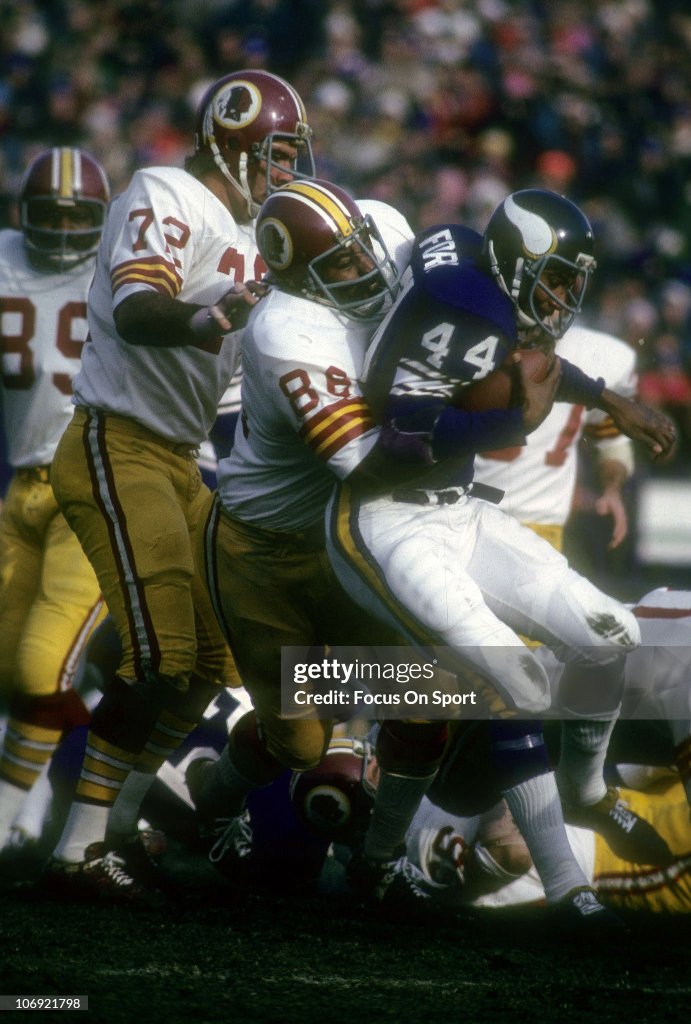
Minnesota scored 17 points in the fourth quarter to overcome a 13—10 deficit, including two touchdowns in a span of 1:05, to beat the Washington Redskins, 27—20. Both offenses struggled in the first quarter. The Vikings were completely unable to move the ball, finishing the quarter without any first downs, while Washington kicker Curt Knight missed two field goal attempts. One miss was from 49 yards and the other from 17, spoiling an impressive drive that saw the Redskins drive from their own 14 to inside the Vikings 10-yard line. Minnesota finally managed to get rolling in the second quarter, with a 50-yard completion from Tarkenton to running back Oscar Reed setting up Fred Cox’s 19-yard field goal. But with 3:30 left in the half, Vikings cornerback Bobby Bryant fumbled a punt return that was recovered by Redskins running back Bob Brunet on the Minnesota 21-yard line. Billy Kilmer then completed a 17-yard pass to Charley Taylor before Larry Brown scored on a 3-yard touchdown run to give the Redskins a 7—3 lead. Minnesota responded with a drive into field goal range, but Mike Bass intercepted a pass from Tarkenton to maintain Washington’s lead going into halftime.
The Vikings then took the opening kickoff of the second half and marched 79 yards, including a 46-yard run by Reed, to score on fullback Bill Brown’s 2-yard rushing touchdown. To make matters worse for Washington, star cornerback Pat Fischer suffered cracked ribs on the drive and was replaced by Speedy Duncan, an 11-year veteran who normally only played as a kick returner. Still, the Redskins managed to take back the lead with Knight’s two third quarter field goals, first tying a playoff record from 52 yards, and the second from 46 yards on the first play of the fourth quarter. Now facing a 13—10 fourth quarter deficit, the Vikings stormed back with two quick touchdowns. First they drove 71 yards in 8 plays to score on Tarkenton’s pass to John Gilliam, who beat single coverage by Duncan for a 28-yard touchdown catch. Then on the first play of Washington’s ensuing drive, Nate Wright intercepted a pass from Kilmer and returned it 26 yards to the Redskins 8-yard line, setting up a 6-yard touchdown pass from Tarkenton to Gilliam that made the score 24—13. With 5:28 left, Washington got back to within four points, getting good field position due to Ken Stone blocking a Vikings punt and converting it into Kilmer’s 28-yard touchdown pass to Roy Jefferson. But the Vikings managed to burn up 4 minutes with their ensuing drive, finishing it off with a 30-yard Cox field goal that gave them a 27—20 lead. The Redskins had less than two minutes to drive for a tying touchdown, and ended up turning the ball over on downs at the Vikings 42-yard line.
Tarkenton completed 16 of 28 passes for 222 yards and two touchdowns, with 1 interception. Reed had 17 carries for 95 yards and caught 4 passes for 76. Brown rushed for 115 yards and a touchdown, while also catching 2 passes for 13 yards. “Sometimes they’re not concentrating on me,” said Oscar Reed, in reference to his big plays in the game. “Since early in the season they’ve been keying on Chuck Foreman. I’m not the world’s greatest pass catcher or runner, but given a little room, I’ll use what I’ve got.” This was the first postseason meeting between the Redskins and Vikings.
Pittsburgh Steelers 14, Oakland Raiders 33
Washington Redskins 20, Minnesota Vikings 27
Born:
Annie Pelletier, Canadian diver (Olympic bronze, 3m Springboard, 1996), in Montreal, Quebec, Canada.
Stanley Pritchett, NFL fullback (Miami Dolphins, Philadelphia Eagles, Chicago Bears, Atlanta Falcons), in Atlanta, Georgia.
Damien Robinson, NFL safety (Tampa Bay Buccaneers, New York Jets, Seattle Seahawks, in Dallas, Texas.
Jamel Williams, NFL safety (Washington Redskins), in Merrillville, Indiana.
Cordell Taylor, NFL defensive back (Jacksonville Jaguars, Seattle Seahawks), in Norfolk, Virginia.
Traci Dinwiddie, American actree (“Supernatural”, “The Walking Dead”), in Anchorage, Alaska.
Nikolai Arkadievich Dudin, Soviet Russian serial killer of 13 people in the small town of Furmanov between 1987 and 2002; in Ivanovo Oblast, Russian SFSR, Soviet Union.
Died:
Dewey Brown, 74, the first African-American member of the Professional Golfers’ Association of America (PGA). Brown was a member from 1928 until 1934, when the PGA amended its bylaws to limit itself to white members only. The “Caucasian only” clause stood until 1961; Brown was readmitted to the PGA in 1965.
 History Diaries