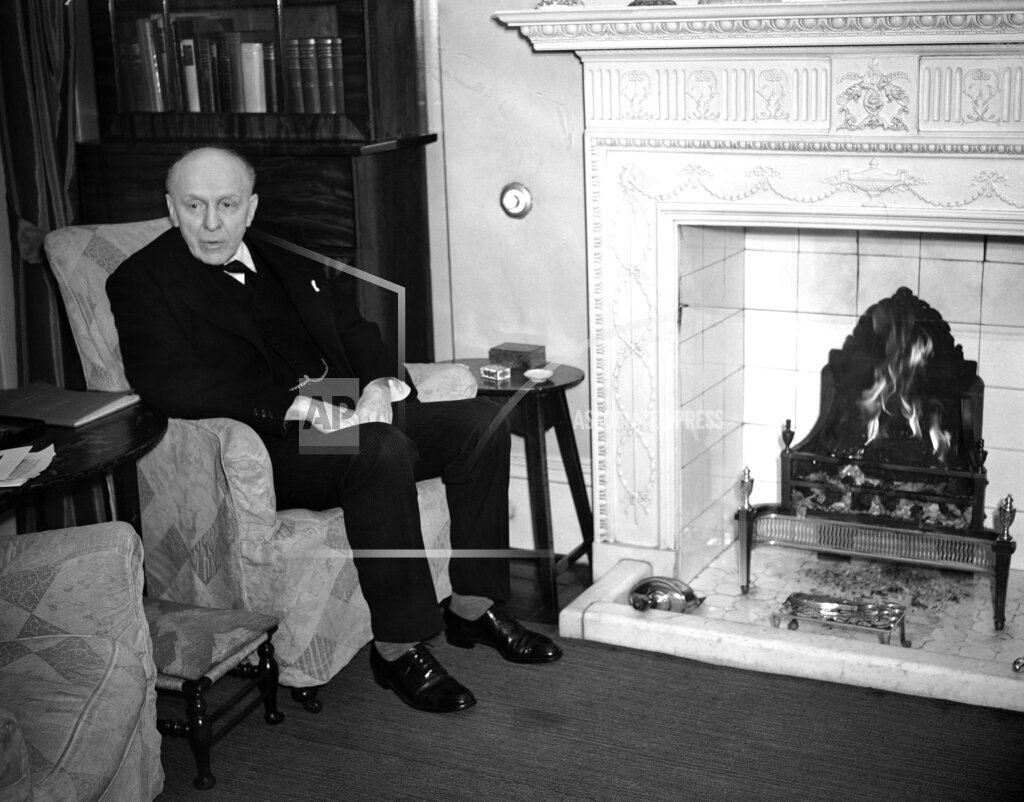
Germany invites George Ruplee, director of the Inter-Governmental Committee on Refugees, to Berlin for conferences on expediting Jewish emigration from the Reich. Rublee, a native of Madison, Wisconsin, international lawyer and Veteran advisor to the United States government, was expected to present counter proposals to a scheme brought to London last week by Dr. Hjalmar Schacht, president of the Reichsbank.
All of the thirty-two governments represented on the committee will be asked for their approval before Rublee leaves London for Berlin, probably next week, on the invitation of Field Marshal Hermann Wilhelm Göring. The latter is Adolf Hitler’s right hand man and chief of the Nazi four year economic self-sufficiency plan. Schacht’s plan for sending Jews out of the Reich into lands willing to give them haven was said to turn on the willingness of other governments to help finance the migration by accepting more German exports. One of the German ideas was reported to include permission for Jews to take as much as 20 percent of their wealth out of Germany instead of the present small amount ($4). However, this, too, depended on the willingness of countries accepting the emigrants also to take more German goods.
At least 25 people have died from cold in Britain. In Paris, the temperature is 10 degrees at night. Jewish refugees are still living in tents, stables, and fields in regions just beyond the Reich’s borders.
The proposal of U.S. Senator James Hamilton Lewis (D-Illinois) and others that Great Britain might easily pay its $4,000,000,000 war debt to the United States by ceding to it islands in the Caribbean received a cold shoulder from the British today. Not only is Great Britain not going to cede these islands to the United States, to whom they would be valuable as naval bases, but furthermore, the British are going to reorganize their grip on their Caribbean holdings. They plan to group all the West Indies into another dominion. The proposal is to make a federation of British Honduras, the Bahamas, Jamaica, the Leeward Islands, the Windward Islands, Barbados, Trinidad, and British Guiana.
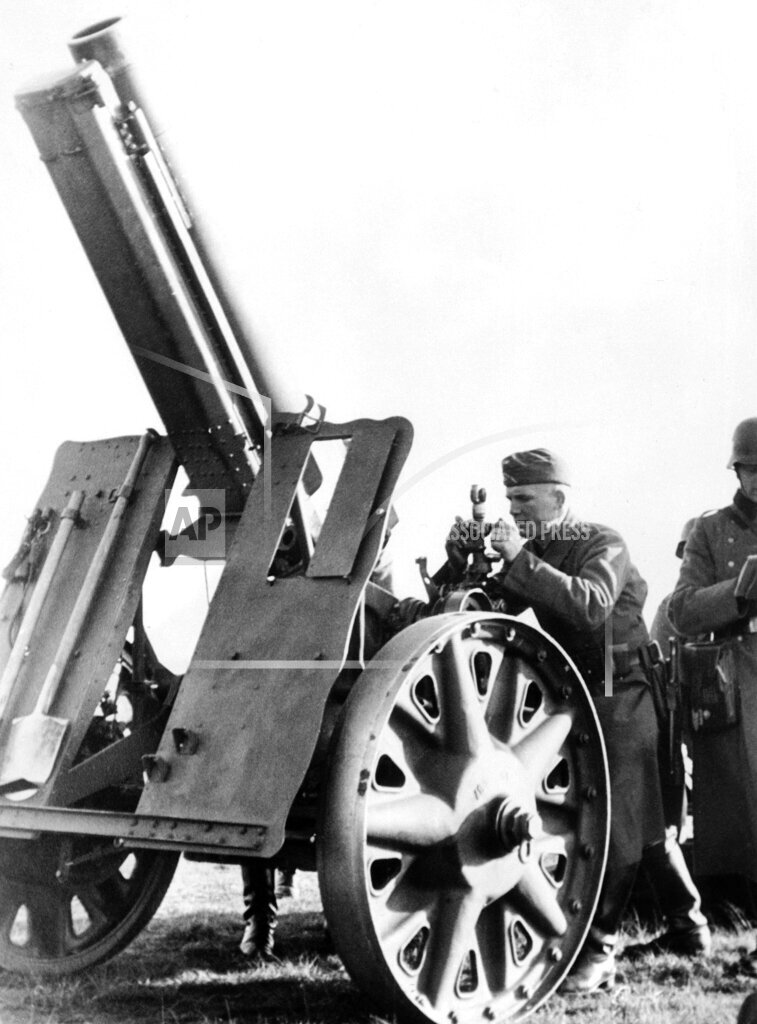
Anton Denikine, White Russian general, charged today that Nazi Germany has plotted a line of march eastward through the Soviet Ukraine to cut off all the rich southern provinces of the Soviet Union. Himself a bitter enemy of the Soviet government, Denikine disclosed what he called the secret ambitions of Reichsführer Hitler in an effort to check the break of his followers away from the old imperial Russian forces to Nazi ranks. It was Denikine who led the White Russians in their final struggle against the Bolsheviks in 1918.
Denikine said that several years ago a group of White Russian generals, including himself, obtained the entire plan of the German eastward drive from Hitler himself. The plan, Denikine said, would tear the provinces of Ukraine, Georgia. and Azerbaijan from Russia, cut the Soviet Union off from the Black Sea, and carry Nazi influence east to the Caucasian mountains and the Caspian sea — 1,800 miles east of Berlin. The strategy submitted to the White Russians, the general explained, was to “create a Ukraine independent of Moscow, in the service of Germany. and through which they (the Nazis) could march on Georgia and Azerbaijan.”
Friends of Denikine said he would continue his attempts to impress upon White Russians his belief there is a Nazi peril to their country. He condemned “any so-called Russians” who would join Hitler to fight the Soviet Union and declared before an audience of Soviet-hating White Russians that “White or Red, our fatherland remains our fatherland.” Denikine’s blast came on the heels of the departure for Germany of Grand Duke Vladimir Cyrillovitch, pretender to the nonexistent Russian throne. The grand duke, who is 21 years old, insisted he was going to Germany merely on a private visit. There had been reports that he would see Hitler concerning the future status of the Ukraine and that he might be set up as ruler of a new independent Ukrainian state made up of parts of Russia, Poland, Rumania, and Czecho-Slovakia.
New purges in Soviet Ukraine result in the dismissal of five executives of the Young Communists Organization. In Moscow the newspaper Soviet Ukraine today disclosed a purge of the leadership of young communists in the Ukraine. The paper said five high executives were dismissed in a cleanup of “a bloody, triple cursed gang of fascist degenerates” who succeeded in making some young communist workers “tools of foreign intelligence services.”
New York City Mayor Fiorello H. La Guardia was attacked from behind on the steps of City Hall and knocked down by a discharged WPA worker, 48-year-old James F. Hagan. La Guardia suffered a welt to his right cheekbone and a black eye but was not seriously hurt. The assailant gave mostly incoherent responses to questioning by authorities and maintained that La Guardia knew the reason for the attack, even though the mayor said he’d never seen him before.
A large part of the millions pirated from the McKesson & Robbins Drug Company was spent in lobbying throughout the country for legislation to fix liquor prices, federal officials said tonight. They announced that an investigation of this new phase in the gigantic swindle is now under way in Washington, D. C., and in numerous other points on a trail leading across the country to the Pacific coast. In this connection it was recalled that official Washington was stirred by revelations that Congressman Wright Patman (D-Texas) received $4,800 from McKesson & Robbins for a series of speeches on behalf of the Miller-Tydings price maintenance bill, which would have been advantageous to the company.
Philip Musica, the former convict who ruled the big company as president under the name of F. Donald Coster, participated in far flung bootlegging activities during the prohibition era and was dealing illicitly in alcohol right up to his suicide last Friday, the officials said. Brien McMahon, assistant United States attorney general leading the inquiry into the amazing fraud, said that after repeal the drug company’s liquor trade grew until it accounted for about one-third of the company’s $175,000,000 gross business. It is also believed that Musica and his three surviving brothers, all operating under assumed names, turned to the illegal liquor business and attempted to trade in munitions with foreign countries — a risky but highly profitable venture — in an effort to get money to cover up their gigantic swindle in operating the drug company.
Bethlehem Steel and other, smaller companies contend that the minimum wage proposed on November 5 by Secretary Perkins and the Labor Board would hurt their industry, and thus hurt defense. They claim Secretary Perkins exceeds her authority by proposing such a change.
A Washington, D.C., grand jury indicts the American Medical Association, three other groups, and 21 leading physicians and surgeons under the Sherman Anti-Trust Act, for “restraint of trade.” The charge claims that organized medicine unfairly suppresses medical groups and cooperatives.
Jewish organizations ask the United States to relax its rules and grant, in advance, the 56,000 visas it would allow for 1939 and 1940 to immigrants from the Reich.
Germany tells the United States that legacies and inheritances of American Jews will be respected, and that exchange in full will be provided.
The CIO is broke again and Dictator John L. Lewis has levied another half-million-dollar assessment on his United Mine Workers’ union. The treasury of the mine workers is short of funds because Lewis already has siphoned more than 2 million dollars out of it to finance the CIO organization efforts in other industries. In a confidential letter to the officers and members of all local unions of the UMWA, Lewis, as president, has announced that “an assessment of one dollar per member for the month of January, 1939, is officially levied on all members working the required time of five or more days… in the month of January.” The claimed membership of the mine workers is 600,000 and all members working as many as five days next month must kick in a dollar in addition to the regular dues. Such special assessments usually bring in about $500,000.
An 11,000-mile commercial phone and radio link opens for the first time between Washington, D.C., and Australia.
Russian-American inventor Vladimir K. Zworykin received a patent for the iconoscope, fifteen years after filing a patent application.
Paulette Goddard and Vivien Leigh take technicolor screen tests for “Gone with the Wind” — the only actresses to do so.
The White Sox sell veteran catcher Luke Sewell to Brooklyn.
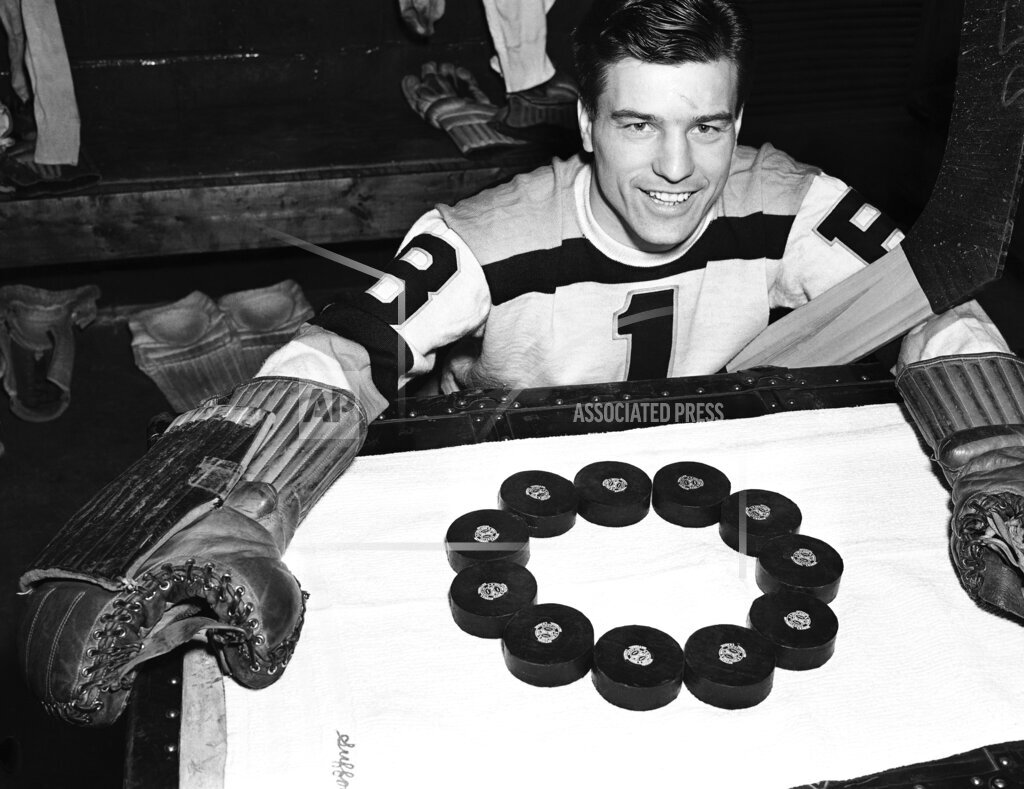
Boston Bruins rookie goalie Frankie Brimsek records his 3rd straight shutout with a 3-0 win over the New York Americans, making it his incredible sixth shutout in his first 8 NHL games.
If the United States wants to maintain harmony and reach a resolution on continental solidarity and defense in this Pan-American conference, it will have to bow to the wishes of Argentina and supporting nations, insiders of the conference declared today. The committee for the organization of peace has prepared several draft resolutions based on proposals submitted by Brazil and Peru. These resolutions are viewed as leaning toward the wishes of Argentina, which maintains that there is no threat to the Americas from abroad and opposes passing a strict resolution. The draft resolutions differ slightly in wording. One draft, titled “The declaration of Lima,” draws a line between aggression by nations outside the Americas and by nations within. To meet aggression from outside, nations of the Americas would be expected to aid a sister nation without being asked. This is a task which the United States now accepts alone under the Monroe doctrine. In case of aggression within the Americas, the attacked nation would have to call for aid from other American nations.
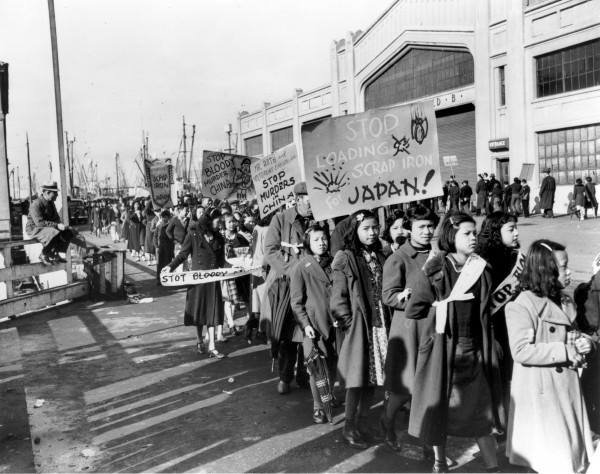
Disruption of railway traffic on the Peking-Mukden line because of heavy troop movements is reported by reliable sources. It was said five divisions of Japanese troops had moved from North China to Manchukuo in the last few days because of apprehension over the Russian-Japanese situation. The forces were drawn from Shantung, Southern Hopei, and Shanei provinces. As a result, the projected Japanese drive northwestward to cut the supply route between Russia and China has not materialized. The most serious dispute between Japan and the Soviet Union at present is over Tokyo’s demand that the fisheries treaty between the two countries be renewed without change. The dispute over the fishing grounds off Siberia became so serious last week that the Japanese embassy in Moscow demanded a favorable reply before “Monday or Tuesday.” The Japanese foreign office, however, stressed that the demand was not an ultimatum.
Three days of bombardments of Chinese positions from the port of Pakhoi in extreme South China to the Shantung promontory in the north by Japanese air and naval forces were reported tonight by a Japanese spokesman. The attacks were directed at guerrilla concentrations behind Japanese lines, particularly southeast of Chefoo and other Shantung province centers. Japanese army officers, outlining a five-year campaign to pacify North China and establish a Chinese government friendly to Japan, said wiping out such irregulars was the start of the pacification plan.
Neutral estimates were that the Japanese actually control seventy-nine of the 344 districts in Hopei, Shansi, Shantung, and northern Honan provinces, with Chinese guerrillas holding the rest of the 200,000 square miles north of the Yellow River and the Lunghai railway. The irregulars constantly harass Japanese communications and prevent effective economic and political control. In South China Japanese marines and aviators claimed today they destroyed dugouts along the Canton (Pearl) River and bombed Chinese positions west of the Portuguese colony of Macao and northward along the Canton-Hankow railroad. The harbor defense of Pakhoi, the southernmost port of the Chinese mainland, was reported to have been bombed heavily. Independent sources confirmed that the Chinese command recently rushed strong forces to Pakhoi, in Kwangtung province, in anticipation of a Japanese attempt to land troops there before advancing northwestward into Kwangsi province.
Japan installs the “Kwangtung Provincial Government” in Canton, with collaborator Pang Tung-yen as Chairman.
Burma begins a program of civil disobedience against imperialism. In Rangoon, hundreds are injured when British troops rush a sit-down demonstration in the streets by students and children. Police said the strikers, mostly students, threw shoes and stones at them.
France continues to enforce its ban on goods traveling to China through Indo-China. In return, Hainan Island is left alone by the Japanese. Shipments to China now come through Burma to Yunnan province.
Dow Jones Industrial Average: 150.46 (+0.08).
Born:
John Harbison, American composer (“The Flight Into Egypt”), in Orange, New Jersey.
Died:
Annie Armstrong, 88, American Southern Baptist denominational leader.
Naval Construction:
The Royal Navy “L”-class destroyer HMS Lively (G 40) is laid down by the Cammell Laird Shipyard (Birkenhead, U.K.).
The Royal Navy “U”-class submarine (First Group) HMS Ursula (N 59) is commissioned. Her first commanding officer is Lieutenant Commander George Chesterman Phillips, RN. Ursula is transferred to the Soviet Navy in 1944, becoming the V-4.
The Regia Marina (Royal Italian Navy) Soldati-class (1st series) destroyer Carabiniere is commissioned.

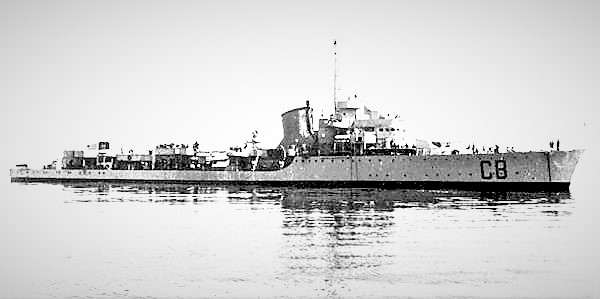
Served first with the axis and later the allied side during the war.
As early as of May 1945, the Carabiniere had been prepared and refitted with a new radar and camouflage scheme to operate in the Indian and Pacific Ocean against the Japanese Empire, in collaboration with the Allies, as the 14 July 1945 declaration of war by Italy on Japan was impending. Departing under the command of captain Fabio Tani, after a troublesome voyage the Italian crew reached their new base in Trincomalee. By August 1945, the Carabiniere had undertaken 38 missions of anti-aircraft and anti-submarine escort to British warships and SAR operations. They thoroughly impressed Admiral Arthur Power of the Eastern Fleet during combat and in defending the fleet against kamikaze attacks, and he offered captain Tani a golden watch with 38 rubies, one for each mission, as a prize for their valour. Captain Tani kindly declined and requested that an Italian POW for each ruby be released instead, which was granted by the Admiral.
She survived World War II to be scrapped in 1978.
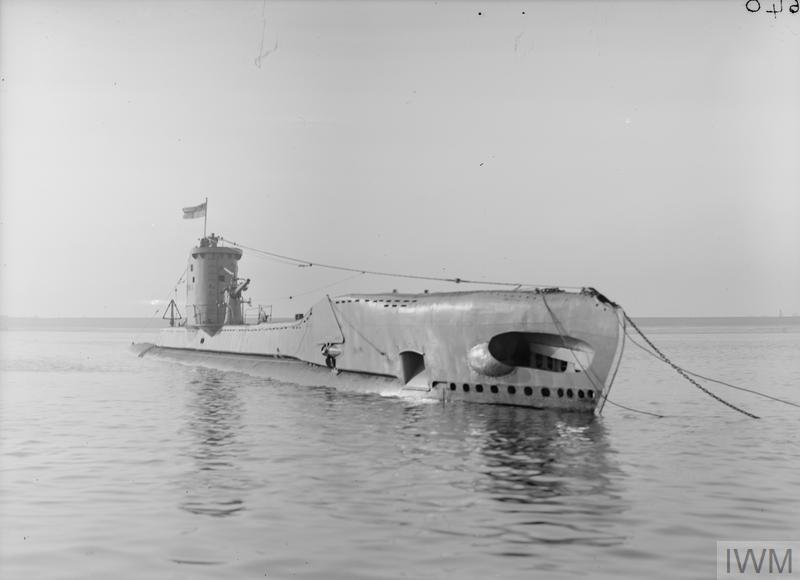
At the onset of the Second World War, Ursula was a member of the 6th Submarine Flotilla. From 26-29 August 1939, the flotilla deployed to its war bases at Dundee and Blyth. Ursula started the war operating in home waters. On 9 September 1939, she fired the first British submarine torpedoes of the war when attacking the German submarine U-35. The U-boat escaped, but was sunk about two months later.
On 14 December 1939 Ursula was on patrol off the Elbe estuary when she sighted the German light cruiser Leipzig, escorted by six destroyers. Leipzig was returning to Kiel to undergo repairs, having been torpedoed and damaged by the submarine HMS Salmon.
In spite of the shallow waters, Ursula dived deep enough to remain undetected and close the distance to the cruiser. Upon surfacing, Ursula launched a close-range attack on Leipzig and her escorts, before diving again to escape. Ursula’s commander, Lt.Cdr. G.C. Phillips, was awarded the Distinguished Service Order and promoted. Leipzig had in fact been missed and the torpedoes had instead hit F9. Leipzig reached port and underwent repair.
Ursula continued to harass enemy shipping in the North Sea, sinking the German merchant Heddernheim, before being reassigned to operate in the Mediterranean. There she sank the Italian auxiliary submarine chaser V 135 / Togo and the German merchants Sainte Marguerite II (a former French vessel) and Odysseus (the former Norwegian Gran). She also damaged the Italian merchant Sabbia, but was herself damaged by depth charges during a counter-attack by the Italian torpedo boat Generale Carlo Montanari. She also launched unsuccessful attacks against the German transport ships Brook and Tilly L.M. Russ, the Italian troop transport Vulcania and the German submarine U-73. She also attacked and damaged the Italian tanker Beppe, which had to be towed to Tripoli.
Ursula was transferred on loan to the Soviet Union on 26 June 1944. She was renamed V-4 “Soviet Svanetia” by the Soviets after a mountainous province in Georgia where the submarine’s new commander Yaroslav Iosseliani came from. On 20 October 1944 she sank the German submarine chaser UJ-1219. She survived the war, was returned to Britain in early 1950, and scrapped at Grangemouth in May 1950.
Battle Honours: NORTH SEA 1939 – NORWAY 1940 – MEDITERRANEAN 1941 – MALTA CONVOYS 1941 – ARCTIC 1942 – NORTH AFRICA 1942
 History Diaries