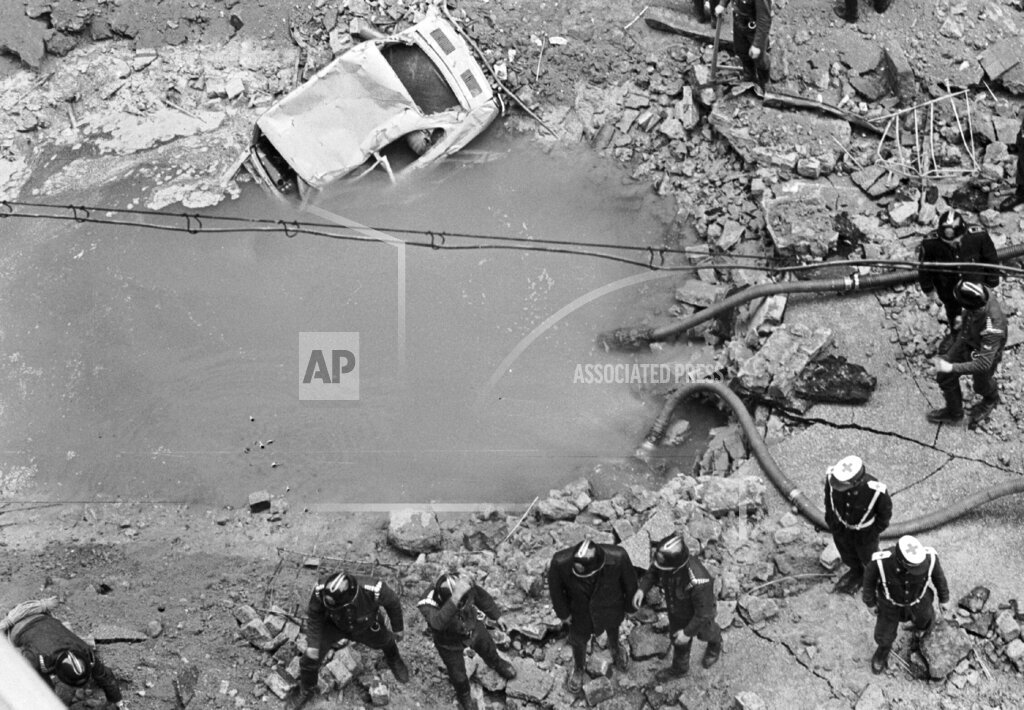
Spain’s Prime Minister Luis Carrero Blanco was assassinated in Madrid by the Basque terrorist organization ETA, which had set a bomb on a street and detonated it as Carrero was departing Mass at the Cathedral of San Francisco de Borja near Madrid. Carrero, who had been governing in the name of Spain’s aging chief of state, Francisco Franco, was assassinated in a violent explosion that lifted the Premier’s car five stories into the air as he was being driven from a Madrid church. The police said the assassins may have been Basque terrorists, who reportedly claimed responsibility for the killing.
Carrero was killed along with his chauffeur and a police bodyguard. Oracuto Fernandez Miranda was appointed as the interim premier until a permanent replacement could be selected. Investigators learned that the assassins had rented a basement apartment across from the church and dug a tunnel to a point under the street in order to place explosives beneath Carrero’s route. Police identified Jose Benaran as the person who detonated the bomb, and Jose Abaitua as the person who dug the tunnel.
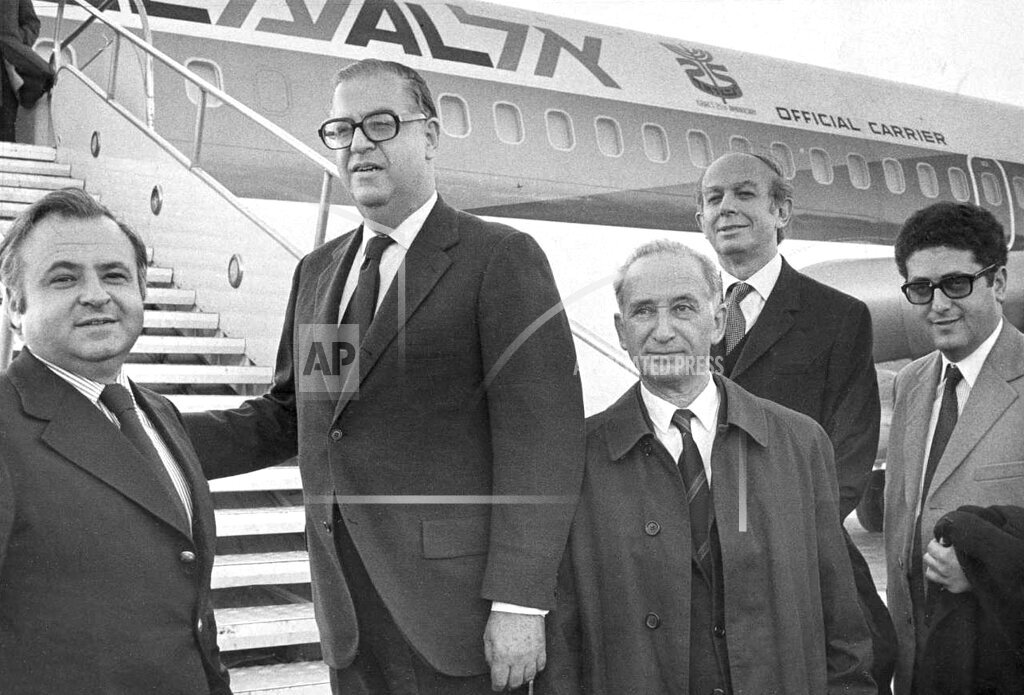
On the eve of the scheduled opening of the Middle East peace conference in Geneva, neither the Arabs nor the Israelis predicted an early agreement to end 25 years of hostility that has led to four wars. Both sides, however, pledged to talk in good faith despite the considerable distance between their preconference positions.
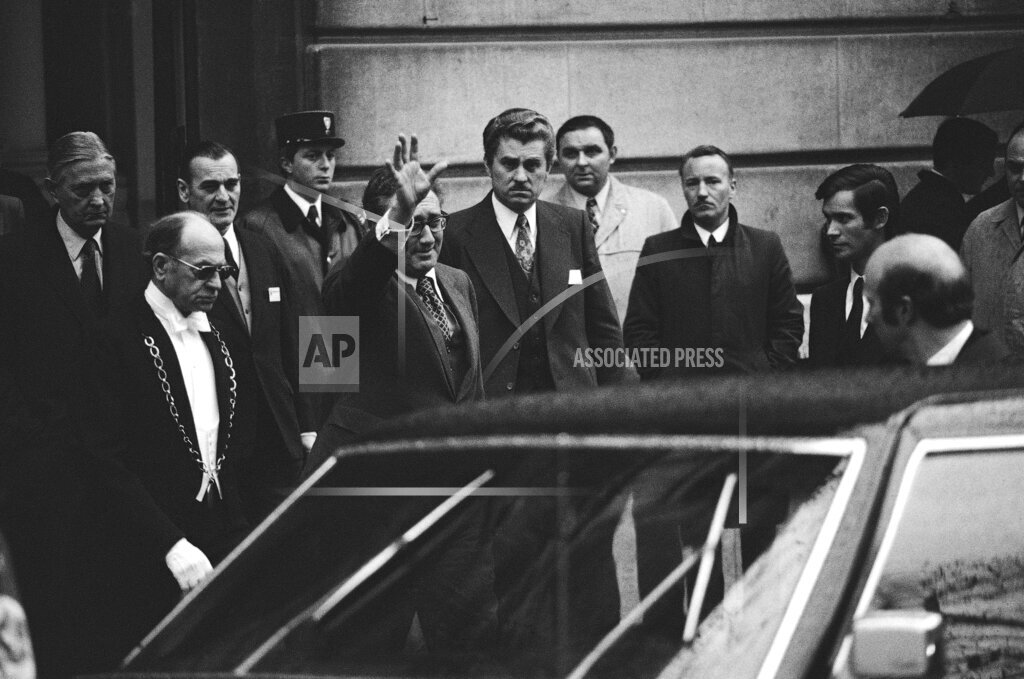
Kissinger then arrived in Geneva for the beginning of the Mideast peace conference. He stated that the conference will try to end the uneasy cease-fire and bring true peace to the Mideast. Both Israel and Egypt have developed tentative (but different) plans for troop withdrawal. Kissinger and conference co-chairman Andrei Gromyko discussed Israel’s and Egypt’s plans.
The countries involved in the Middle East conflict have tended, publicly at least, to state their demands in the most sweeping terms. Their real positions are known to be somewhat more flexible. Following are the basic negotiating stances as described by correspondents of The New York Times, of the three main participants in the Geneva conference and of Syria, which has thus far refused to send a delegation to Geneva.
The Egyptians demand a full withdrawal of Israeli forces from Egyptian territory in exchange for a “peace agreement” and de facto recognition. This is the basic position. Egypt demands the implementation of Security Council Resolution 242 of November 22, 1967, which called for Israeli withdrawal from Arab territories occupied in the six‐day war and gave each state in the area — including obviously Israel — the right “to live in peace within secure and recognized boundaries.” Egypt is expected to draw special attention to the resolution’s preamble, which stipulates “the inadmissibility of the acquisition of territory by war.” The creation of demilitarized zones is acceptable to Egypt, but she will not accept the demilitarization of the entire Sinai Peninsula. She insists that the zones be on both sides of the Egyptian‐Israeli border. She is expected to demand the restoration of her sovereignty over Sinai, including Sharm el Sheik, but will accept the stationing of a United Nations military force at Sharm el Sheik. This force would not include Israeli troops; big power forces would be welcome.
The Israelis seek a full and formal peace treaty, involving recognition of their sovereignty within agreed and open borders, and normal diplomatic and commercial relations. In exchange for that Israel has indicated willingness to withdraw from much of Sinai, providing it is demilitarized and open to joint Israeli-Egyptian inspection. But Israel wants to maintain a military presence at Sharm el Sheik. Israel — also in exchange for recognition of her sovereignty and the related demands — would withdraw from the populated areas of the West Bank of the Jordan while retaining a line of security settlements along the Jordan River Valley; the West Bank would be demilitarized. Gaza town and most of the Gaza Strip could be turned over to, and linked with, a Jordanian‐Palestinian state, which would assume sovereignty over the populated areas of the West Bank. Israel would also be willing to withdraw from the Syrian positions acquired during the October war while retaining most of the areas seized in the Golan taro former populated places, such as the deserted city of El Quneitra, could be returned.
The Jordanians want to regain control over the territory west of the Jordan lost to Israel in 1967, but they are concerned about the question of who will govern it, if and when it is returned. King Hussein does not want to lose control to the Palestinians, the big majority in the area, except under some framework in which Amman’s supremacy would be recognized. The other area of prime concern is Jerusalem, which involves not only Hussein but other Arab leaders, particularly King Faisal of Saudi Arabia. Because the Israelis hold East Jerusalem, where Muslim holy places are, Faisal shows religious fervor in wanting to restore Arab control. The Israelis are just as firm against allowing Jerusalem to be divided again.
The Syrians insist on full Israeli withdrawal from all Arab territories occupied in the 1967 war and the October war and recognition of the Palestinians’ right as set forth in United Nations resolutions, to return to their homes in what is Israel or to be compensated. This stand was reinforced by the decision of the Arab summit conference in Algeria last month that any territory on the West Bank and in the Gaza Strip relinquished by Israel be turned over to a Palestinian, state. Syria refuses to consider Israeli demands for the return of war prisoners except within the framework of an over‐all Middle East peace agreement.
In a turbulent special session of Parliament, Premier Golda Meir today explained and defended Israel’s decision to participate in the Geneva peace conference opening tomorrow. Opposition members, shouting and thumping their desks, gave voice to the many doubts and misgivings that have beset Israeli in the decisive period since the indecisive war. It was noted that the same doubts existed in the governing Labor party and were put forcefully by Mrs. Meir herself earlier this week to Secretary of State Kissinger during his overnight stop.
Presumably because of Mr. Kissinger’s assurances of American sympathy for Israel’s desires and because of the necessity for Israel to attend the conference despite the persistent misgivings, the 75‐year‐old Premier rode out the angry debate and expressed confidence that going to Geneva would not damage the country’s vital interests. Parliament, voting along party lines, sustained her stand in a show of hands. Members of the religious bloc abstained to show opposition to the fact that the second day of the two‐day opening phase will fall on the Sabbath. A number of speakers focused on the issue.
The commander of the United Nations forces in the Middle East issued sharp protests to both Israel and Egypt as new outbreaks of heavy fire endangered Finnish troops stationed at the cease‐fire line. According to the United Nations spokesman in Cairo, the headquarters of a Finnish supply company was struck during a series of exchanges of rifle, machine‐gun and mortar fire, but there were no casualties.
Kuwaiti officials are considering turning over the Arab terrorists who murdered over 30 people at the Rome airport earlier in the week to the Palestine Liberation Organization for trial. Italy also requested that the terrorists be delivered to them.
Secretary of State Henry Kissinger met with North Vietnam’s Lê Đức Thọ in Paris to discuss the crumbling Vietnam cease-fire. No details of the meeting were released.
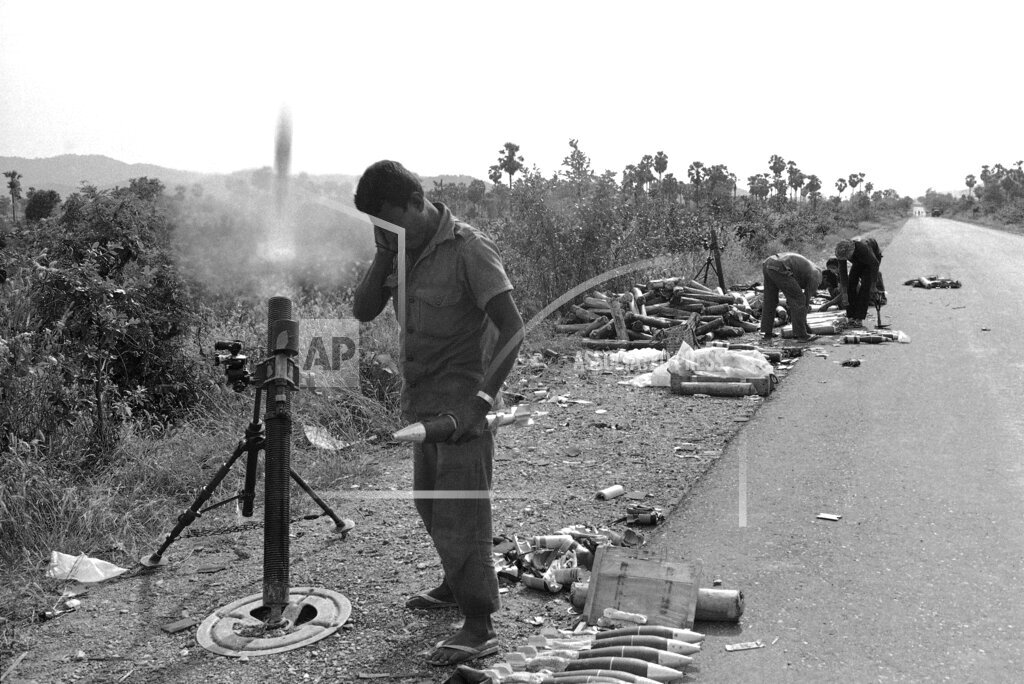
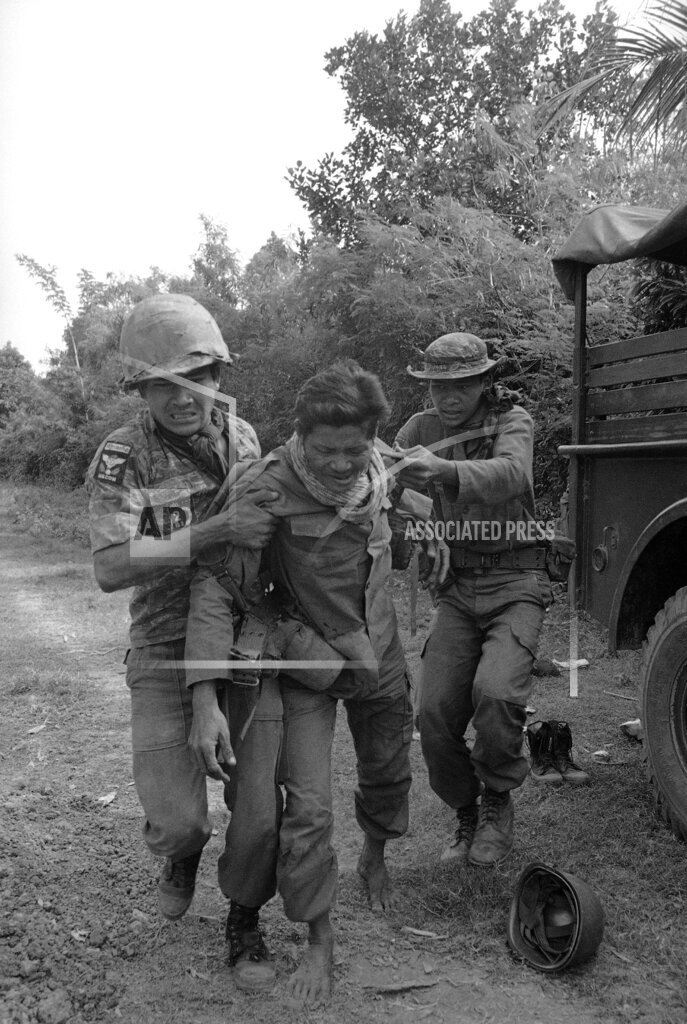
A team of 20 Chinese Nationalist pilots, recruited recently by the Cambodian Air Force, began active service this week, according to informed sources here. Cambodian pilots at Phnom Penh’s Pochentong air base say, however, that the Chinese pilots from Taiwan are being limited to flying transport operations in old DC‐3’s, and will not be flying combat missions in the little World War II T‐28 piston-engine fighter‐bombers used by the Cambodian Air Force.
The air force uses the DC‐3’s mainly for freight and armament transport, but many are armed with 12.7‐mm or 20‐mm. cannon and fly support strafing missions. They also fly loudspeaker propaganda flights low over Phnom Penh. The Chinese pilots have yet to be seen in Phnom Penh and it is believed that they are living in the barracks formerly used by American pilots based in Thailand who landed at Pochentong for refueling while flying bombing runs in Cambodia. These raids were halted August 15.
Premier Souvanna Phouma said today that the current meeting between Secretary of State Kissinger and Lê Đức Thọ of North Vietnam could lead to the imminent formation of a coalition government in Laos by the Royal Laotian Government and the Communist‐led Pathet Lao. Prince Souvanna Phouma, the neutralist leader who would be Premier in such a coalition, said in an interview that the new administration could be formed as early as next month. The two sides signed a ceasefire agreement in February and have been negotiating the creation of the new government since September. The prince suggested that the Pathet Lao side was waiting for the results of the meeting between Mr. Kissinger and Mr. Thọ before taking the final steps to form a coalition.
Speaking in French at his home here this morning, the prince was careful to make no firm predictions about the timing of events in Laos. But he apparently sought to give the impression of confidence in a peaceful solution to Laotian problems, and he also indicated that he felt any relaxation of the fighting in South Vietnam would have a naturally favorable effect here. The prince discussed his plans to visit Hanoi, Peking and Moscow, and a possible meeting in Washington with President Nixon, all after the formation of a new government. He said it was “unthinkable” that either side would try to seize power by force once a coalition was established, and he denied that his side had made excessive concessions to the Pathet Lao in the negotiations.
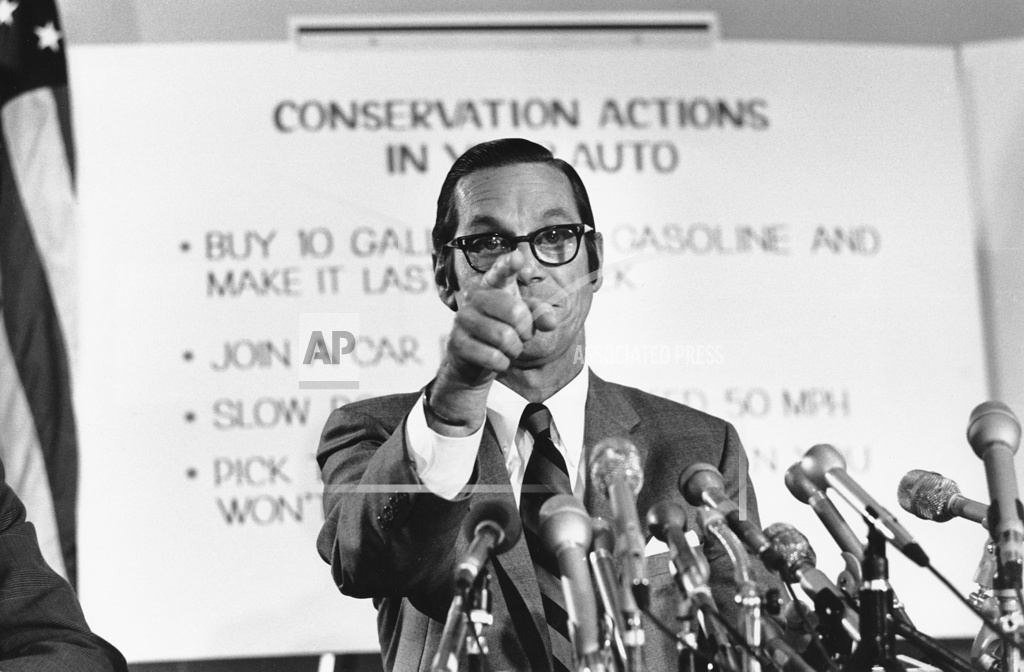
Federal energy czar William Simon announced guidelines for voluntary gasoline limits. Simon requested that station owners sell only 10 gallons of fuel per car, and he asked drivers to use only 10 gallons per week. If the voluntary system works, gasoline rationing won’t be needed. Simon skirted the issue of President Nixon and Vice President Ford failing to conserve energy with their holiday plane trips.
Jet fuel will be allocated to airlines to help them get through the holiday season by diverting fuel from the military to the airlines. The Pentagon is furious over energy czar William Simon’s decision; Secretary of Defense James Schlesinger is extremely irritated. Simon allegedly ordered the action without consulting the Pentagon. Two weeks ago, the chairman of the Joint Chiefs of Staff, Admiral Thomas Moorer, predicted a slump in combat readiness if fuel restrictions on the military continued.
American Airlines and Pan American World Airways announced an agreement on the most far‐reaching exchange of routes ever proposed. If approved by the Government, American would swap major trans-Pacific routes for some of Pan American’s Caribbean services, eliminating competition on some runs and thus saving fuel.
The Airlines Pilot Association decided to delay its threatened strike which was to be a protest of fuel cutbacks.
A joint committee of Congress completed its study of the White House “enemies list” and their tax returns. Former White House counsel John Dean requested former IRS commissioner Johnnie Walters to audit the tax returns of 500 persons on a list supplied by the White House. Treasury Secretary George Shultz told Walters to ignore the request.
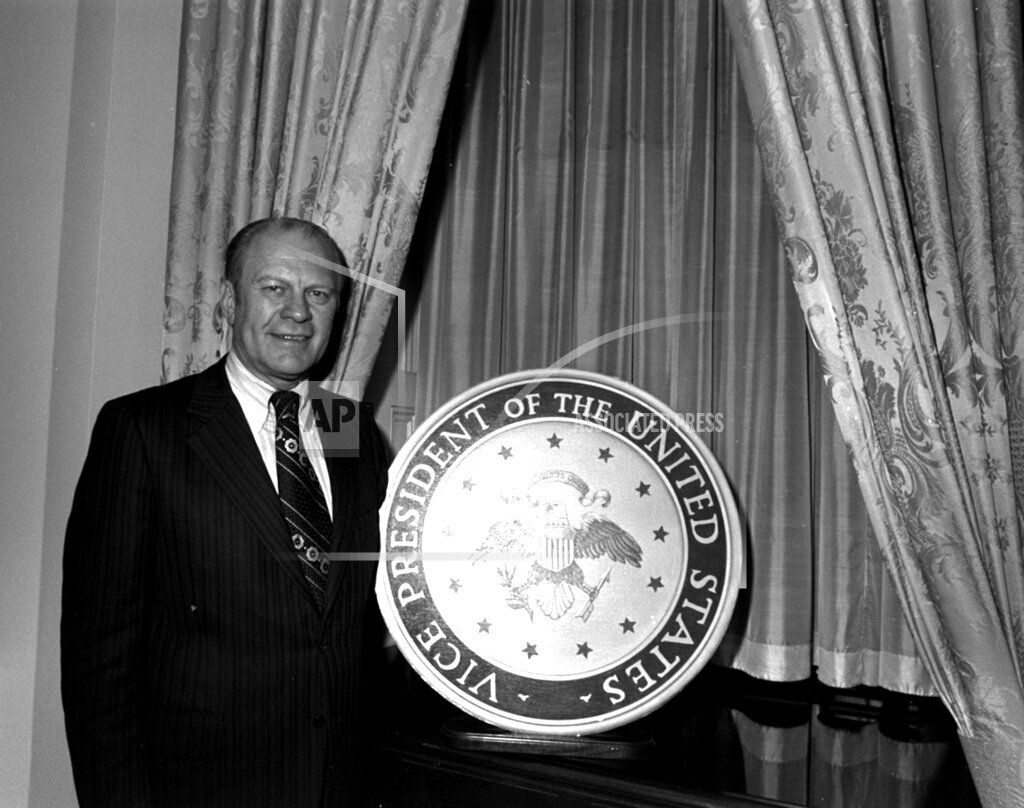
John M. Doar, a Republican who served as Assistant Attorney General in the Eisenhower, Kennedy and Johnson Administrations, was named special counsel to the House Judiciary Committee in its inquiry into the possible impeachment of President Nixon. The House Judiciary Committee named John Doar as special counsel to head the Nixon impeachment resolution probe. Doar’s ties to the Kennedy family run deep through his political life, but Doar claimed that he will be fair and objective in his new job. Mr. Doar, who pledged a fair and thorough investigation, was named as counsel to the entire committee, the senior Republican member said that he did not consider Mr. Doar a bipartisan choice. Committee Republicans hope to hire a special counsel of their own. Vice President Ford asserted that no sufficient evidence for President Nixon’s impeachment exists.
Watergate conspirator E. Howard Hunt revealed that he spied on Senator Barry Goldwater’s 1964 presidential campaign on behalf of President Lyndon Johnson.
A government study showed that 40% of persons receiving welfare are either completely ineligible or receive too much money.
President Nixon’s friend Bebe Rebozo discussed the President and Watergate in a CBS interview. Questioned about the “arrogant” attitude of the Nixon administration, Rebozo insisted that the President himself isn’t arrogant, though some in his administration may have deserved that adjective at certain times. Asked about how the talk of impeachment is affecting the Nixon family, Rebozo said that he hates to see the President endure personal agony, but doesn’t think he will resign. Regarding Watergate, Rebozo stated that Nixon’s fault lies in having too much loyalty to his people, and he believed his aides when they denied being involved.
Congress passed major defense and foreign aid appropriations bills and compromise manpower legislation as it struggled toward midterm adjournment set for today. A Senate‐House conference committee reached agreement on a bill to increase Social Security benefits by 11 percent. Both the Senate and the House postponed until today final action on a compromise emergency energy measure.
The U.S. House of Representatives voted, 355 to 4, to pass the Endangered Species Act of 1973. The only opposing votes were from Congressmen Earl Landgrebe of Indiana, H. R. Gross of Iowa, Robin Beard of Tennessee and Bob Price of Texas.
Joanne D. Chesimard, the suspected Black Liberation Army member who was ousted several times for courtroom outbursts during her first trial for bank robbery, was ousted again yesterday for her outbursts. This time, Mrs. Chesimard was protesting Judge Arnold Bagman’s refusal to delay the second trial. As she was led away from the courtroom in the Federal Court House, Mrs. Chesimard shouted that Judge Bauman was a “fascist pig” wearing a “black nightgown.” Minutes earlier, her co‐defendant, Fred Hilton, had been ejected for the same reason. He shouted that the application for a delay had been denied “because of our militant‐political background.” Mr. Hilton also is reputed to be a member of the Black Liberation Army.
The General Motors Corporation announced today the recall of 843,000 of its automobiles and trucks of the 1974 model year because a key part of the suspension could work loose and cause tires to squeal and the steering to pull to the right or left. General Motors said that, even though this might happen after a car or truck had been driven for some time, the vehicle “is still controllable.” “Moreover, there is no danger of a wheel coming off,” it added. General Motors also said that the driver would usually hear a squeaking or rattling noise when applying the brakes, and that this would serve as a warning that the control arm of the front suspension system was in danger of breaking. Such a break would affect the steering.
Many homes in the Northeast are still without power after the New England snowstorm. Now a new storm has dumped snow unmercifully on the Midwest. Fifteen inches of snow fell in some areas, in the worst Midwestern storm in many years.
Thirteen harness racing drivers were arrested for allegedly conspiring to fix Superfecta races at Roosevelt and Yonkers Raceways in New York.
American League president Joe Cronin refuses to allow Dick Williams to manage the New York Yankees.
Montreal Canadien Henri Richard scores his 1,000th NHL point.
Dow Jones Industrial Average: 828.11 (-1.46, -0.18%).
Born:
Cory Stillman, Canadian NHL left wing (NHL Champions, Stanley Cup, 2004-Lightning, 2006-Hurricanes; Calgary Flames, St. Louis Blues, Tampa Bay Lightning, Carolina Hurricanes, Ottawa Senators, Florida Panthers), in Peterborough, Ontario, Canada.
Barry Stokes, NFL tackle and guard (Miami Dolphins, Green Bay Packers, Cleveland Browns, Atlanta Falcons, Detroit Lions), in Flint, Michigan.
Muadianvita Kazadi, African-American NFL linebacker (St. Louis Rams), in Kinshasa, Republic of Zaire.
Jenny Boucek, WNBA guard (Cleveland Rockers) and NBA assistant coach (Indiana Pacers), in Nashville, Tennessee.
Died:
Bobby Darin (stage name for Walden Robert Cassotto), 37, American pop music singer (“Mack the Knife”; “Splish-Splash”; “Beyond the Sea”), died after heart surgery to repair artificial heart valves he had received almost three years earlier.
Luis Carrero Blanco, 69, Prime Minister of Spain (1973), assassinated by ETA.
 History Diaries