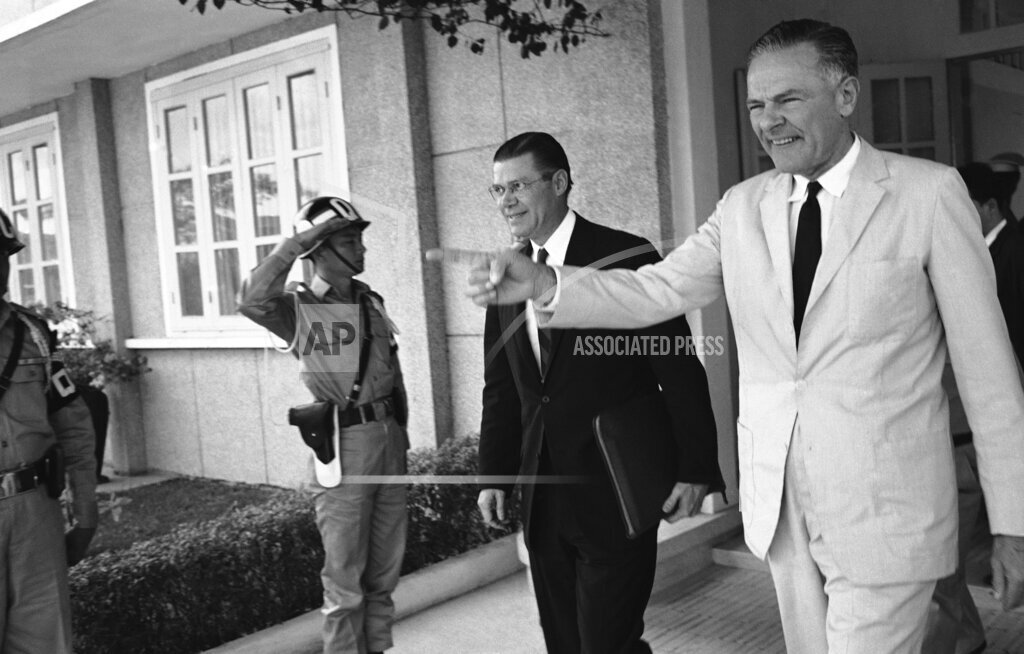
U.S. Secretary of Defense Robert McNamara arrives in Saigon to evaluate the new government’s war effort against the Viet Cong. Defense Secretary McNamara arrived in Saigon yesterday to survey the military situation and was given an unusually blunt assessment of South Vietnam’s struggle against Communist-led guerrillas in the Mekong Delta area. Grave fears about the wars conduct have been expressed by United States officials who hope that Mr. McNamara, in talks today, will give new energy to the country’s ruling junta as well as reassurance of Washington’s support.
Publicly optimistic, in a complete about-face from the previous year, he privately tells President Lyndon Johnson that the situation is “very disturbing.” McNamara feels that unless conditions change in the next two or three months, current trends “will lead to neutralization at best or more likely to a Communist-controlled state.” He finds the U.S. officials in Saigon grouped into warring factions headed by Ambassador Lodge and General Harkins.
Communist North Vietnam was reported today to be suffering from a shortage of food and a generally depressed economy. Reliable information has reached Laos that the North Vietnamese regime has instituted austerity measures to cope with its economic difficulties. North Vietnam’s support of the Viet Cong guerrilla operations in South Vietnam and its aid to the pro-Communist Pathet Lao forces in Laos are said to be taxing the Communist country’s resources.
Many of the problems in the North Vietnamese economy are said to stem from two basic sources. One is agriculture. The tillable area of North Vietnam is inadequate to feed the population. The movement of the rice surplus of the Mekong Delta in South Vietnam to the North has been suspended since the division of the country in 1954.
One factor believed to be motivating the North Vietnamese in their support of the Viet Cong guerrillas is the realization that a viable economy cannot be established without the unification of Vietnam. The other major source of North Vietnam’s economic plight is the ideological dispute between Communist China and the Soviet Union. The proximity of North Vietnam to China and its determination to foment revolutionary action in South Vietnam and Laos have tended to make it lean to China at the sacrifice of its immediate economic interests.
In Moscow, the Supreme Soviet retained Leonid I. Brezhnev as chairman of its Presidium, his country’s equivalent of President, the first time such an official has also held a top Communist party post.
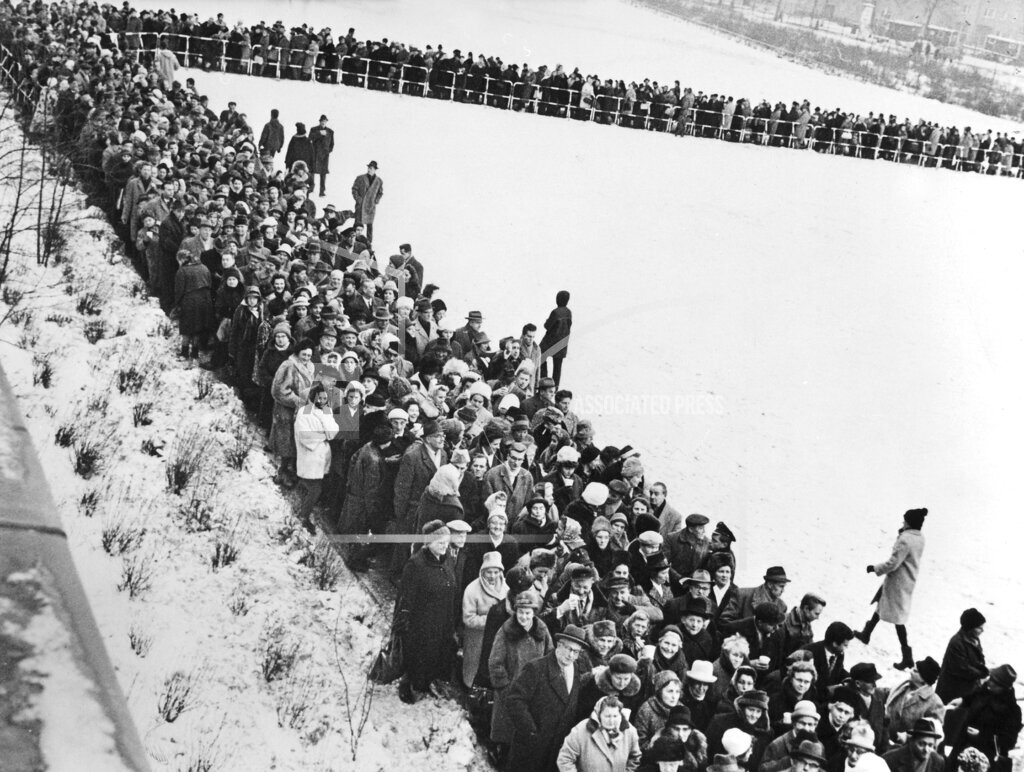
A small happy band of West Berliners, Communist passes in hand, entered East Berlin to visit relatives. They were a day ahead of the main rush for which East Germans widened crossings. A stream of West Berliners began passing through the Berlin wall today for a Christmas reunion with East Berlin relatives they had not seen for 28 months. East German guards, still under orders to shoot to kill if any East German tried to escape to the west, opened the barriers two hours ahead of schedule. Clutching the one-day permits, the first West-Berliners arrived at 5 a. m. Although the permits did not become valid until 7 a. m., the guards, submachine guns slung over their shoulders, let them through.
With some 30,000 expected to cross today, the guards obviously were under orders to admit the West Berliners as speedily as possible to avoid long queues. Approximately 40 West Berliners, loaded with festively packed gifts, went through the wall last night. They had the first permits issued by the communist authorities. They had to be back in the west by midnight. One of the first across was Peter Klaus, 28, a clothing designer. He went to see his grandparents, Fritz and Anna Klaus, both in their 80s. He was clutching boxes of candy, a bag of fruit (very scarce in the east), coffee, and a bottle of liquor.
East Berliners still cannot enter West Berlin, and Eastern guards captured an East German trying to flee to West Berlin yesterday. A young man tried to swim the Spree River near the Brandenburg Gate. He was spotted by guards on the wall and a river patrol boat chased him. Police in the boat fired two shots. The man stopped swimming and was hauled into the boat. A worker who saw the incident from the old Reichstag building in the British sector, said the refugee was not injured.
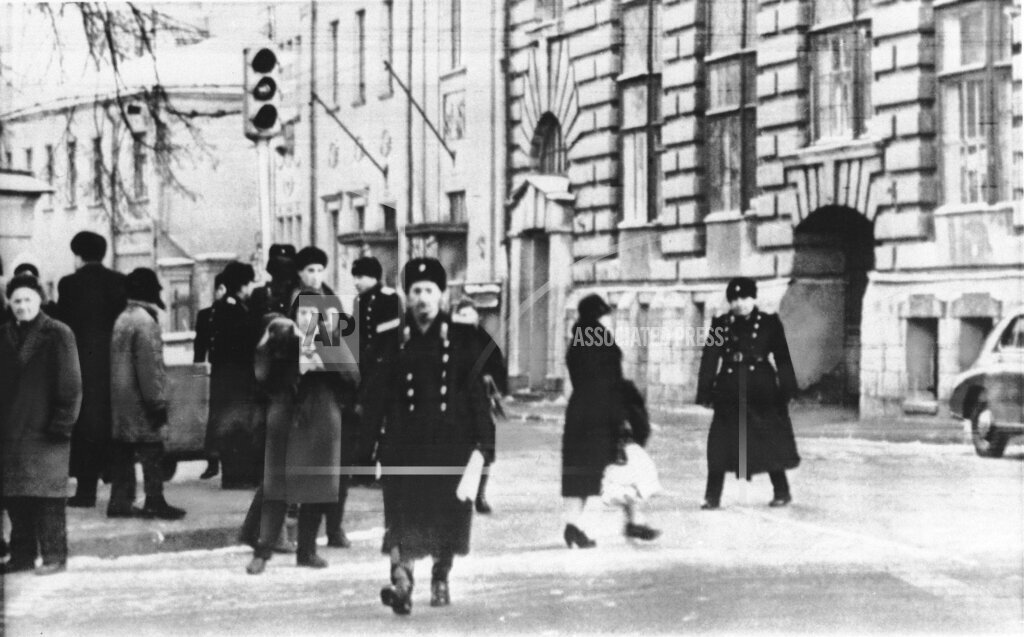
Russian policemen seal off Ghana’s embassy in Moscow and hurl back African students trying to force their way in to protest the mysterious death of a student from Ghana. Three African students are hurled out into the snow, but there are no reports of arrests or injuries.
France’s year-end deadline for setting next year’s grain prices in the six-nation European Common Market drew closer today without agreement. It will be impossible to fix prices before December 31, Belgian Foreign Minister Paul-Henri Spaak predicted to reporters. A proposal to unify grain prices throughout the Euromart next year was received coolly by foreign ministers of the six countries — France, West Germany, Belgium, Italy, Holland, and Luxemburg. They instructed a committee of experts to study repercussions on their national economies which would result.
Single prices for wheat and other grains would be a compromise between Germany’s high price supports and France’s relatively low prices. The price drop in Germany would slash farmers’ income 140 million dollars a year. A price rise in France would boost bread, meat and poultry prices 3 percent. A German spokesman commented that his country opposes a higher price in France out of fear that it would encourage over-production, and leave no room for imports of cheaper American grains. The United States might retaliate by raising tariffs against German factory goods, he said.
Cuban leaders are calling their form of government “musical socialism.” Reuters correspondent tells how a top young aide of Premier Fidel Castro took him to one of several night clubs still open in Havana, where they heard troubadours singing Marxist creed in calypso style. The writer says the Cuban leaders explained that “we are Communists, but we are retaining our national and Latin American characteristics — our love of gaiety and humor.”
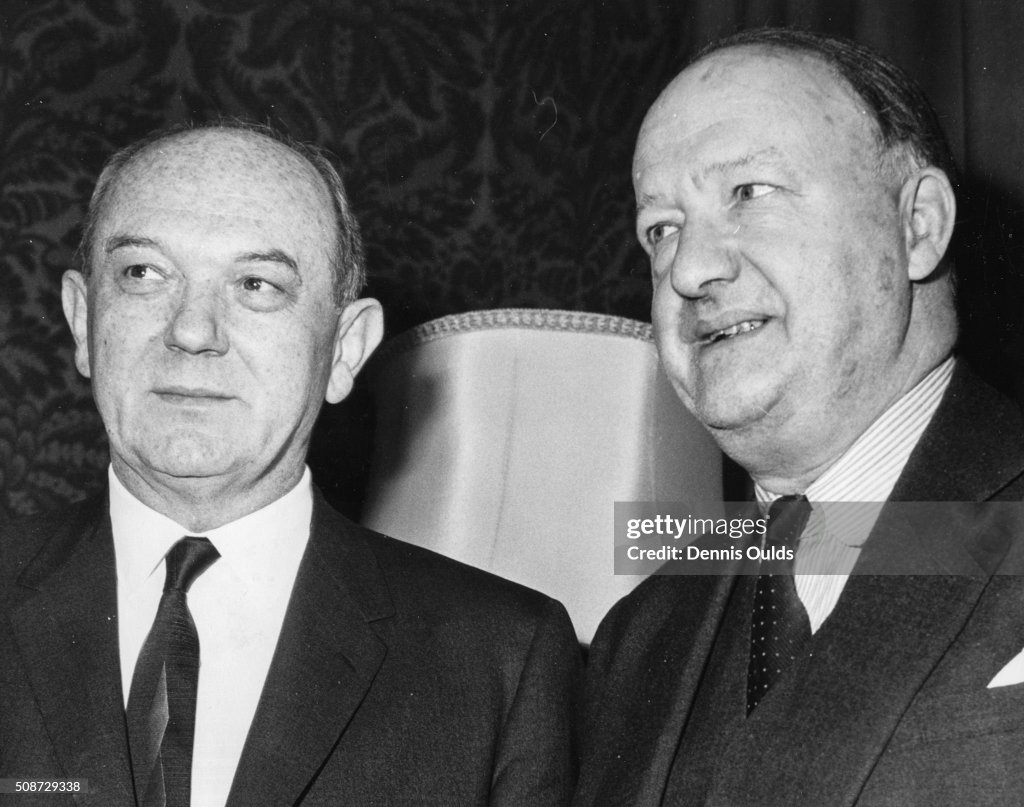
In a high-level London meeting, Secretary of State Rusk was said to have informed Britain of new Cuban attempts to subvert Latin-American governments, and that Washington will place the matter before the Organization of American States.
The Arabs appeared today to be divided on the action they should take to stop Israel from diverting the waters of the Jordan River. An indication that Cairo is not ready to go to war with Israel over this issue has evoked angry reaction in several Arab capitals. The indication came in an article this week in Cairo’s influential weekly Rose al Youssef, which is believed to reflect official sentiment in Egypt. The article came in the wake of a conference in Cairo earlier this month at which the chiefs of staff of 13 member states of the Arab League considered the Arabs’ course of action in the event that Israel went ahead and diverted the course of the Jordan.
The resolutions of the conference remain secret. They are to be discussed when the league’s defense council meets in Cairo early next month. The Cairo magazine revealed new thinking in Cairo’s approach to a second Arab showdown with Israel. It said total Arab political union should precede such a showdown since only in that way could Egypt guarantee other Arab military fronts. The anti-Cairo regimes in Jordan, Syria, and Saudi Arabia would like to see Egypt embroiled in war with Israel so that they might have their chance of “stabbing her in the back,” the weekly said. “But Egypt will not get embroiled” and will choose the time and place for the “destruction of the Zionist state,” it added.
A flurry of Arab indignation followed the appearance of the article. Sherif Hussein ibn Nasser, Premier of Jordan, denounced it yesterday as “an insult to Jordan.” He said Jordan was fully prepared to carry out her responsibility in the face of “Israeli danger.” The Baathist regime in Damascus found it strange that Cairo should link “the battle over the Jordan River” with the question of Arab union. The Syrian daily Al Baath, which speaks for the ruling Baathist Socialist party, warned President Gamal Abdel Nasser of the United Arab Republic that “the people will punish all rulers who fail to carry out their duties against Israel.”
President Sukarno said that a United States plan to move elements of the Seventh Fleet into the Indian Ocean would not deter Indonesia’s anti-Malaysia policy.
Beating down $310 million worth of cuts and a ban on selling wheat to the Soviet Union, the Senate passed a $3,272,500,000 foreign aid bill to a Congressional conference committee. Driving for adjournment, the Senate voted to pass the bill by 80 to 25. It was only a formality after the striking of a House amendment prohibiting Export-Import Bank underwriting of private credit sales to Communist countries. The Senate measure provided 471 million dollars more than the 2 billion, 801 million dollars voted by the House. The bill was returned to the recessed House, which reconvened briefly and appointed conferees headed by Rep. Otto Passman (D-Louisiana) to meet tomorrow with Senate conferees headed by Senator John O. Pastore (D-Rhode Island). The major differences between the legislative versions passed by the two houses must be worked out in conference. Adjournment plans of the 88th Congress were in doubt. The House appeared adamant in retaining the credit curb as the price for passage of the foreign aid bill before adjournment tomorrow.
The Senate vote against the House rider, prohibiting the Export-Import bank from extending or guaranteeing credit to communist countries purchasing commodities from the United States, was 52 to 32. Just before the record roll call, the majority leader, Senator Mike Mansfield (D-Montana), announced he had been hearing rumors that the House would refuse to pass the foreign aid bill without the communist credit prohibition in it. “Let us not be subject to threats of that kind,” he said.
Senator Karl Mundt (R-South Dakota) led a floor fight for approval of the House action. He argued that it was “international idiocy” to ask American taxpayers “to underwrite with their money the good faith and credit of communist conspirators.” Mansfield read to the Senate a letter from President Johnson which strongly urged against endorsement of the House rider, “I strongly urge the Senate to reject the amendment preventing the use of facilities of the Export-Import bank in connection with trade with communist countries,” Johnson said in the letter.
President Johnson today gave 34 souvenir pens to a group of senators and congressmen and then told them to hurry back to Capitol Hill and go to work. He had used the pens to affix his signature to a bill establishing new programs costing 527 million dollars a year to give job training to unskilled youths and illiterate adults. The President opened the ceremony with formal remarks hailing the bill as a major step in “a manpower revolution that may have more far reaching effects than the industrial revolution of the last century.” There are only 14 letters in “Lyndon B. Johnson,” but the President was able to use 34 pens to write his signature. He had a half dozen left, which he carried back to his office after the cabinet room ceremony.
President Johnson tonight approved legislation appropriating 5.1 billion dollars for the federal space agency but took a slap at Congress for blocking American participation with other countries in moon flights. Congress wrote into the bill a provision prohibiting the use of the money for “participating in a manned lunar landing to be carried out jointly by the United States and any other country without the consent of Congress.” The President said in a statement that he believed the restriction was undesirable in principle. The 5.1 billion dollars for the National Aeronautics and Space administration — 600 million dollars less than requested by the Kennedy administration — was included in a total of 13.2 billion dollars for independent agencies of the government.
By a 10-to-8 vote, the Senate Finance Committee approved full tax deductibility for any trip combining business and pleasure, even it the business part of it is incidental. If enacted, the amendment would effectively re-establish the old rule on travel deductions that existed prior to this year.
Officials of the U. S. Travel Service said that a 40 percent slash in budget funds will mean a large cutback in the program to encourage foreign visitors.
Under orders from President Johnson, the Budget Bureau directed that many Government officials who drive Cadillacs, Imperials, Continentals and the like will have to settle for smaller cars. For the sake of economy, 75 percent of the luxury models were ordered replaced, leaving only 20 top officials with chauffeurs.
Irénée du Pont, former president of E. I. du Pont de Nemours & Co., the large chemical concern founded by his great-grandfather, died in Wilmington, Delaware, at the age of 88.
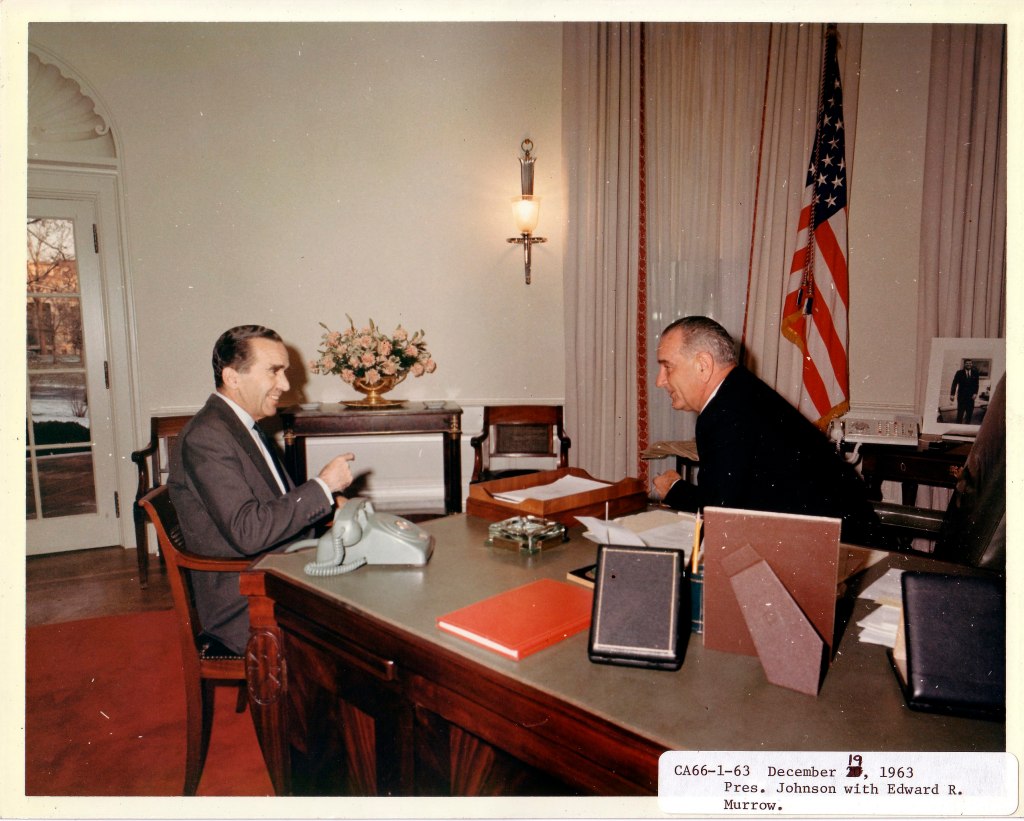
Legendary American broadcaster Edward R. Murrow resigned from his job as director of the United States Information Agency, after being diagnosed with lung cancer, and retired from public life. He would die of complications from the illness 16 months later, on April 27, 1965.
American lawyer Mark Lane, who had recently served as a state representative in the New York State Assembly, became the first of many “Kennedy conspiracy theorists” to publish opinions that the November 22 assassination of President John F. Kennedy had been a conspiracy rather than the work of a lone gunman. Lane’s 10,000-word article, “Oswald Innocent? — A Lawyer’s Brief”, was published in the December 19 issue of an American leftist weekly newspaper, National Guardian, and started with the sentence, “In all likelihood there does not exist a single American community where reside 12 men or women, good and true, who presume that Lee Harvey Oswald did not assassinate President Kennedy,” then went on to note that this was indicative of “the breakdown of the Anglo-Saxon system of jurisprudence”, given “the sacred right of every citizen accused of committing a crime to the presumption of innocence”. He then outlined 15 points that were asserted as evidence of guilt, but that could be questioned beyond reasonable doubt. Lane would follow with the 1966 book “Rush to Judgment” bestselling criticism of the Warren Commission.
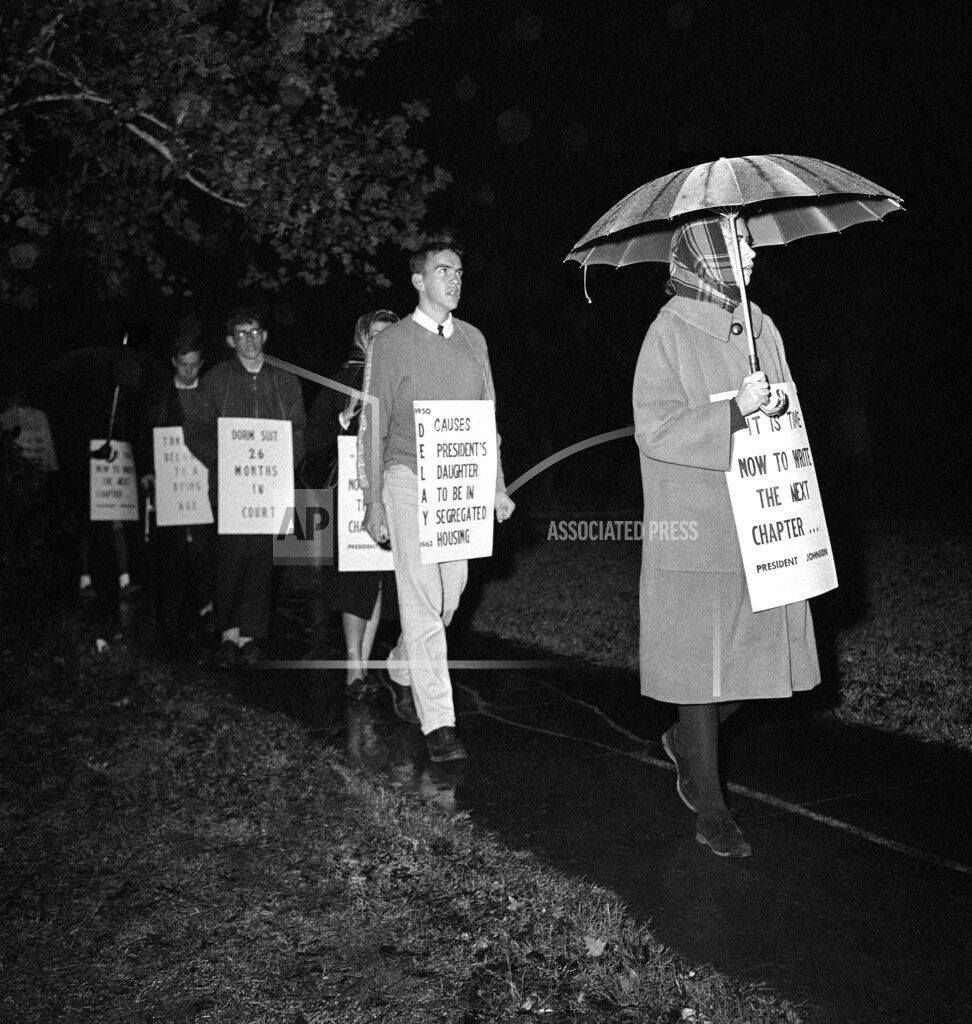
Four federalized national guardsmen are arrested on charges of setting off explosions last month near a dormitory housing the University of Alabama’s only Black student. The prosecutor says more arrests are imminent. The first blast went off a block from the hall where Black student Vivian Malone lives.
Christmas will be a sad but prosperous holiday this year for the family of J. D. Tippit, Dallas policeman slain in the search for the assassin of President Kennedy. Donations from all over the nation have brought the family $312,250, and police say they have yet to count nine mailbags of contributions. A crew of five policemen and a stenographer have processed 11 bags of mail.
Record-breaking cold keeps the Midwest and most of the East in a frigid grip and spreads through the South to the gulf coast. Snow squalls continue in the Great Lakes states, blocking roads and forcing schools to close. Fresh snow hits New England.
Physicist Juris Upatnieks and electrical engineer Emmett Leith, both professors at the University of Michigan, perfected the technique of using lasers for photographic holography by creating three-dimensional images that could be viewed with the naked eye.
The Indians sell 27-year-old first baseman-outfielder Walt Bond to Houston. Bond spent most of the last two seasons in AAA, but did hit .380 for Cleveland in 12 games this year.
Dow Jones Industrial Average: 763.86 (-3.35).
Born:
Jennifer Beals, American actress (“Flashdance”; “The Bride”; “The L-Word”), in Chicago, Illinois.
Greg Ramsey, NFL defensive end (Seattle Seahawks), in San Francisco, California.
Died:
Irénée du Pont, 88, former president of E. I. du Pont de Nemours & Co. (1919-1925).



 History Diaries