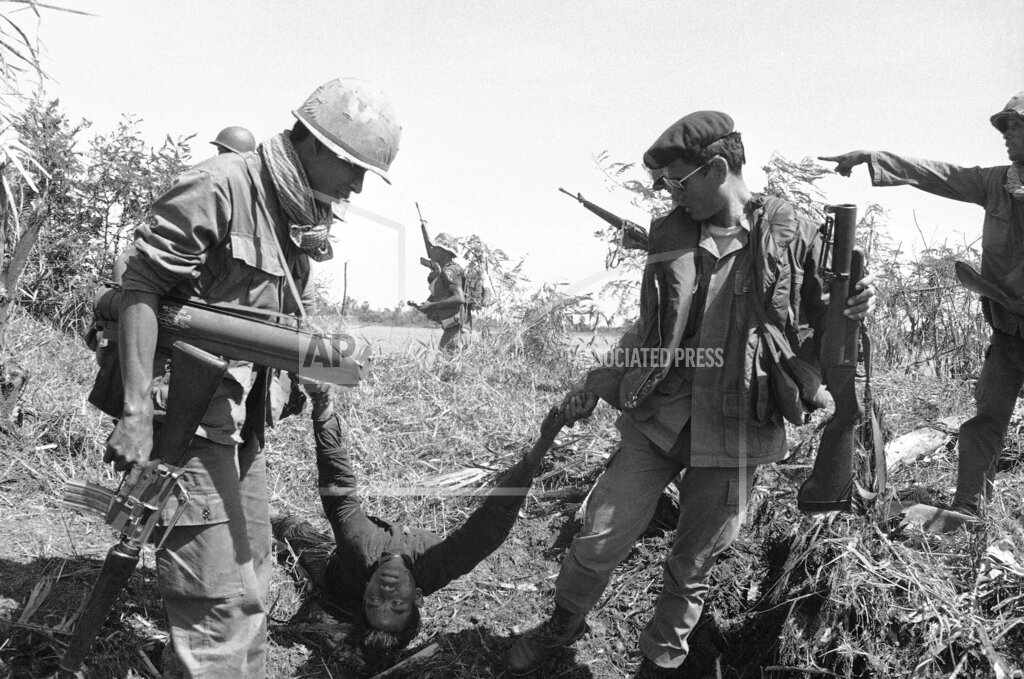
Israeli Prime Minister Golda Meir stated that she is willing to accept new borders in the area between the 1967 borders and the new cease-fire lines. Israel also charged that Syria has massacred Israeli POWs. Secretary of State Henry Kissinger was told by Syrian President Assad that Israeli POWs are being treated well.
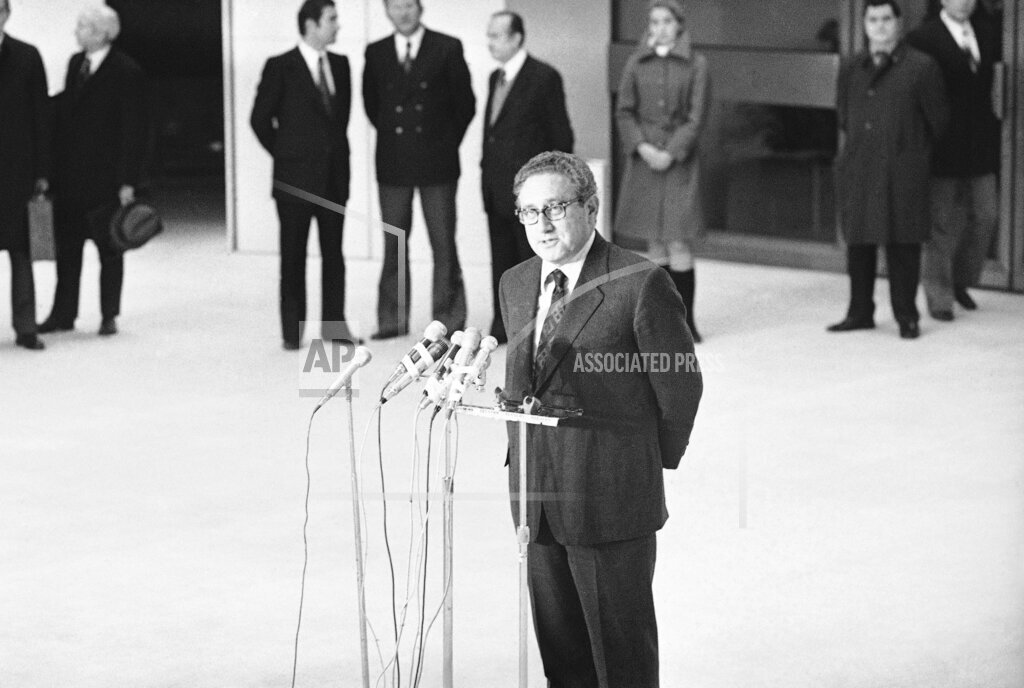
President Hafez al‐Assad of Syria told Secretary of State Kissinger in Damascus on Saturday that he could inform Israel that all Israeli prisoners held by Syria were being “well‐treated,” a senior American official said today. But Mr. Assad, in the six‐hour session, did not tell Mr. Kissinger how many of the 120 prisoners Israel believes to have been captured by Syria in October were still alive. He did, however, deny to Mr. Kissinger that Syria had committed atrocities as charged by Israel, the official, who is traveling in the Kissinger party, said. This information was given by Mr. Kissinger to Israeli officials in Jerusalem on Sunday night but it apparently did not relieve them of what the senior official called the Israeli “nightmare” about the fate of the men. Syria has refused to turn over a list of names of the prisoners and yesterday announced that she would not attend the Middle East peace conference, which begins in Geneva on Friday, after having earlier indicated that she would.
The Government of Kuwait said it had no plans “at the moment” to try the five Arab terrorists who hijacked a jetliner from Rome to Kuwait in the guerrilla operation that left 31 dead in Rome and one in Athens. Kuwait’s Interior Minister said the attack was still being investigated and suggested that the hijackers might be turned over to the Palestine Liberation Organization if it asked for such a move.
The Middle East peace conference began to take shape as the Foreign Ministers of Egypt and the Soviet Union arrived in Geneva and began strategy talks. The Israeli, Jordanian and American delegations are due today, along with Secretary General Waldheim of the United Nations, who is scheduled to convene the talks tomorrow.
Jews in Israel and throughout the world lit the first of the eight candles to be kindled in ascending number during Hanukkah, popularly known as the Festival of Lights. The eight-day celebration commemorates the successful revolt of Judas Maccabeus’ Jewish freedom fighters against Syrian rulers of Palestine more than 2,100 years ago. Like Christmas, the Jewish festival is marked by the giving of gifts.
U.S. Senate-House conferees agreed on a $5.67 billion foreign aid appropriations bill, including $2.2 billion in emergency military aid for Israel. The conferees also recommended $150 million for emergency military aid to Cambodia, principally to replace ammunition for government forces fighting Hanoi-supplied insurgents. The bill is subject to final House and Senate approval later this week.
The only known American prisoner of the Vietcong was freed at a remote hamlet in the Mekong Delta today, two and a half months after he was captured in a Communist ambush. Homer L. Elm, 43 years old, of Arcadia, South Carolina, walked to freedom accompanied by two South Vietnamese companions near Cần Thơ, 75 miles southwest of Saigon. Mr. Elm, a civilian employed by Pacific Architects and Engineers, was attached to the International Commission of Control and Supervision at the time of his capture October 6.
On South Vietnamese battlefields, fighting intensified. The Saigon military command reported 141 Communist violations of the cease‐fire for the 24‐hour period ended at noon. This was the highest level since June 15, when 170 incidents were reported.
The European Common Market has deferred serious consideration of the United States proposal for international collaboration to resolve the energy crisis. Officials of the Common Market have held two meetings since Secretary of State Kissinger made the proposal Dec. 13, but the plan has received little attention so far, partly because of preoccupation with the Middle East peace conference and other problems.
An authoritative Soviet journal has indicated that Moscow’s proposal for a new strategic arms agreement with Washington calls for reductions in some parts of both countries’ strategic arsenals. The current issue of the monthly magazine U.S.A., often used for policy statements on Soviet‐American relations, asserted that not only limitations on strategic arms development but “adoption of measures for reducing armaments” were key objectives of the current round of Soviet‐American negotiations at Geneva. In September, the Soviet delegation reportedly put forward a draft treaty. Although the contents have not been disclosed, many American officials and members of the Senate have been reported critical of the Soviet proposals on the ground that they seek one‐sided advantages for Moscow.
All 109 people aboard a Lufthansa jetliner were able to escape alive after the Boeing 707 crashed at New Delhi and burst into flames. Ten people had minor injuries. The West German Lufthansa jetliner carrying 109 persons crashed and burned while attempting a landing in heavy fog at Palam Airport in New Delhi. The Boeing 707 was destroyed but all aboard escaped alive. An airline spokesman said 10 persons received minor injuries. The jet, en route from Tokyo to Frankfurt, touched down short of the runway, bounced onto it and then burst into flames. The plane carried 98 passengers and a crew of 11.
Ten railway commuters were killed and 94 injured when the train they were on derailed in the London suburb of Ealing while en route from London to Oxford. The train was crowded with almost 600 people when the locomotive and the first four-passenger cars ran off the rails, struck and embankment, and overturned.
The Central Council of the British Trades Union Congress rejected a proposal by union militants to call an emergency labor conference to organize opposition to the Government. Instead, the leadership decided to take up the matter of fighting the Government’s austerity policies at a meeting of union heads next month. The decision and a cautious speech by Employment Secretary William Whitelaw suggested that both sides still hope to avoid a full‐scale confrontation.
The Irish Republican Army has launched a major recruiting campaign among Roman Catholic women in Northern Ireland to fill its depleted ranks with female guerrillas, British army sources reported. Posters calling for women volunteers appeared on walls in Catholic districts of Londonderry this week. Military sources said women, as well as children, already are playing an increasing role in IRA bombings and shootings.
Dublin housewife Mary McGee, 28, won a court battle to overturn the Irish Republic’s ban on importing contraceptives as unconstitutional. Mrs. McGee, mother of four and wife of a fisherman, began the action 18 months ago after a contraceptive device was seized from her by customs men. She argued that her life would be in danger if she had more children. The Supreme Court ruling means contraceptives may be freely brought into the country, but for the time being it is still illegal to sell them.
A Socialist, Rolando Calderon, who served briefly as agriculture minister under the late Chilean President Salvador Allende, was shot in the forehead at the Cuban Embassy in Santiago, where he had sought political asylum, according to a Swedish diplomat. The shot was fired from the second floor of a house across the street from the walled Cuban compound. Calderon was taken to a private hospital, the diplomat said, but was seized and transferred under guard to a military hospital. Sweden handles Cuban affairs in Santiago since Chile and Cuba severed diplomatic relations after the armed forces coup against Allende.
A group of 2,261 delegates in Thailand gathered at the Royal Turf Club, a horseracing track in Bangkok, to select 299 of their group to serve in a constitutional assembly. All of the delegates had been picked by King Bhumibol Adulyadej “with careful attention paid to making it a representative cross-section of prince-to-peasant among Thailand’s 34 million people.” The track’s parimutuel computer, normally used to calculate wagers and returns, identified the 299 candidates who received the most votes.
All 40 crewmen died when the Oriental Monarch, a Liberian-registered cargo ship, foundered in the north Pacific Ocean, 150 nautical miles (170 mi) off the coast of British Columbia. Searchers spotted four lifeboats — all empty — in the stormy North Pacific where the freighter with a crew of about 40 men sank earlier. No survivors have been picked up. The ship was believed to be carrying four lifeboats and a number of inflatable life rafts. The Canadian Search and Rescue Coordination Center said six merchant ships were at the scene searching for survivors.
President Nixon proposed an emergency tax on windfall oil profits caused by the energy crisis and increased the ceiling price of crude oil. The President stated that he proposed the new tax on oil producers in order to make the hardships of the energy crisis more equitable. Treasury Secretary George Shultz outlined the revenue which is expected to be generated from the new tax, but added that the tax won’t have an adverse effect on the consumer. The Nixon Administration cleared the way for a general price increase for oil and gasoline products while asking Congress to levy a “windfall profits” tax on oil producers. The action on the price increase came from the Cost of Living Council, which authorized a dollar‐a‐barrel rise in the price of crude oil and estimated that it would add 2.3 cents to the cost of a gallon of gasoline and fuel oil by February 1. In their White House news briefing, neither President Nixon nor Secretary of the Treasury Schultz mentioned the subject of gasoline rationing.
The Administration plans to ask service stations to limit gasoline sales to 10 gallons a customer per purchase, according to William E. Simon, the President’s chief energy adviser. Mr. Simon reportedly disclosed the plan to members of a Senate‐House conference committee, who later approved a compromise emergency bill. Under the plan motorists could sidestep the limit by going from one station to another.
White House energy chief William E. Simon has asked the Pentagon to divert 1 million barrels of jet fuel — 42 million gallons — to the commercial airlines over the holiday period to help avoid disruptions due to the fuel shortage. Pentagon spokesman Jerry W. Friedheim, asked about the request, said the matter was under study by the Joint Chiefs of Staff and that the Defense Department “hopes” it can comply. The airlines have planned to fly a full schedule during the holidays before putting extensive cuts in service in effect on January 7.
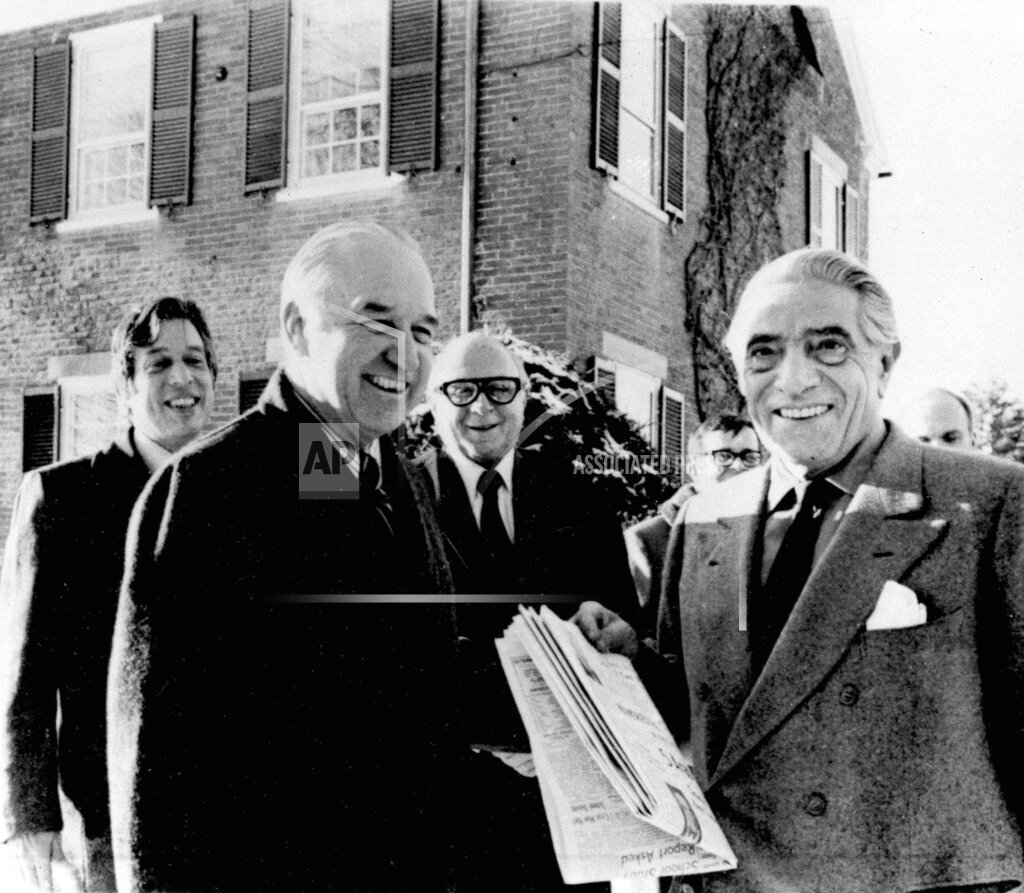
New England has been hard-hit by the fuel shortage. In Durham, New Hampshire, Aristotle Onassis conferred with state officials regarding the construction of the first oil refinery in New England. Environmentalists don’t want a refinery in the area, but others think that New England should be grateful for the chance at having a refinery, especially now because of the energy crisis.
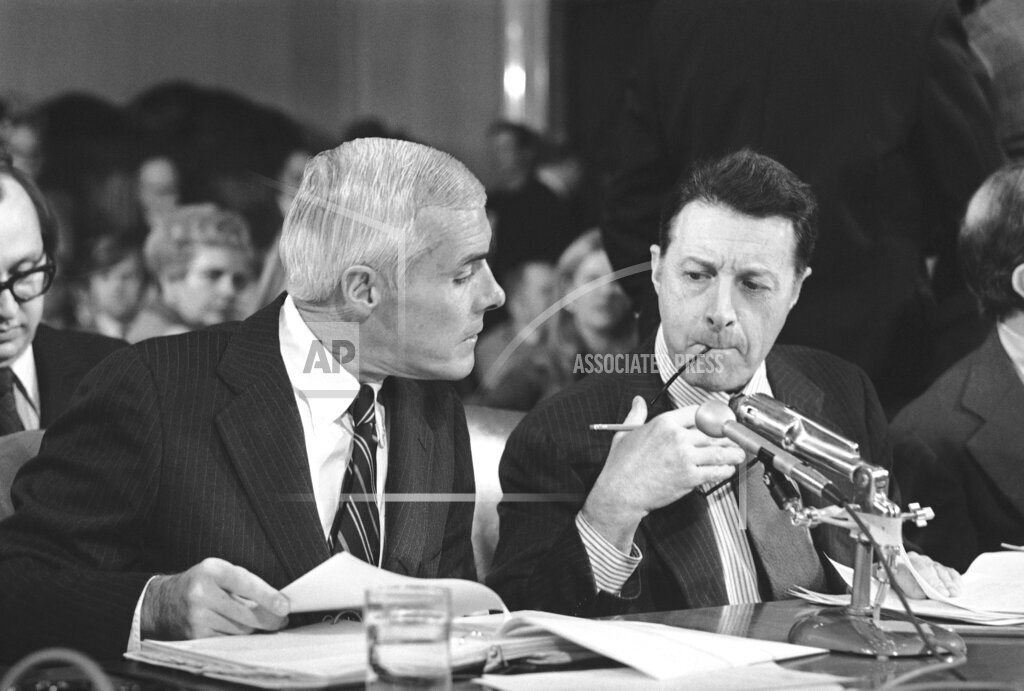
Charles “Bebe” Rebozo, President Nixon’s closest friend, granted CBS an interview to “clarify” certain issues. Rebozo said that the President was aware of the interview, but he offered no advice.
Rebozo was questioned about why Howard Hughes chose him to forward a campaign contribution to the President’s 1972 re-election campaign. Rebozo replied that Hughes gave the money to him because of his close friendship with President Nixon, and noted that many contributors wanted to be sure money got directly to the President through his best friend. Rebozo claimed that all investigations into such matters have revealed no wrongdoing and pointed out that no favors were requested in return for campaign contributions.
Senator Sam Ervin announced that he will not run for re-election in 1974. Ervin said that he intends to go fishing, read books and listen to records after he and his wife return home to North Carolina. Ervin’s announcement caught many North Carolina politicians by surprise. Representative Wilmer Mizell and state Attorney General Robert Morgan are looking at Ervin’s job longingly.
White House counsel Melvin Laird announced his resignation. Laird denied that White House aides will soon begin a mass exodus from Washington, and also denied that the President mainly confers only with press secretary Ron Ziegler. Laird said that Congress should vote on an impeachment resolution soon, and he believes that the vote would be against impeachment.
House Judiciary Committee chairman Peter Rodino said that he expects the inquiry into President Nixon’s impeachment to be complete by April 1.
President Nixon will release some impounded funds, giving up $1.1 billion for the Department of Health, Education and Welfare. Assistant press secretary Gerald Warren revealed that the funds are being released in the “spirit of compromise.” The President acted after signing a bill appropriating $32.9‐billion for programs under the Department of Health, Education and Welfare and the Labor Department.
Judge John Sirica stated that he agrees with the administration’s decision to withhold some of the White House tapes because of executive privilege. Sirica will send back to the White House portions of tapes which do not deal with Watergate. Chief Judge John J. Sirica ruled that nearly all of two of the subpoenaed White House tapes and part of a third would not be turned over to the special Watergate prosecutor because they contained “nothing” related to Watergate. The ruling, the President’s first real victory in the legal struggle over the tapes, largely sustained his description of the tapes’ contents.
Another judge requested William Dobrovir, an attorney for Ralph Nader, to appear in court to explain the presence of a White House tape at a Washington, D.C. party. Dobrovir admitted playing the tapes for the party guests. White House attorneys and aides were shocked by Dobrovir’s actions. (Dobrovir had the help of a CBS reporter in making a copy of the tape; ABC exposed the incident on its news broadcast of 12/20/1973.)
The Senate Watergate committee served three subpoenas on the White House.
Another Senate‐House conference committee agreed on legislation to restructure seven bankrupt railroads under a new Government corporation. The new, trimmed‐down system east of the Mississippi would be financed by $1.5‐billion in guaranteed Government loans and an outright grant of $558.5‐million.
The CEO of the Carnation company pleaded guilty to making illegal contributions to President Nixon’s 1972 Campaign. The company and chairman H. Everett Olson received fines.
W. A. (Tony) Boyle, former United Mine Workers president, began serving a three-year sentence for misusing union funds. The sentence was reduced from five years primarily because of Boyle’s poor health. Boyle also faces arraignment on murder charges today. “They are going to take him to Washington, Pennsylvania, for arraignment on his way to the federal prison hospital at Springfield, Missouri,” a Justice Department spokesman said. Boyle faces three state murder indictments for the 1969 slayings of his union rival, Joseph A. Yablonski, and his wife and daughter. Boyle also has been indicted on a federal conspiracy charge in connection with Yablonski’s death.
Ohio Governor John Gilligan named Howard Metzenbaum to complete Senator William Saxbe’s term in the Senate.
A federal court in Detroit found Ford and General Motors innocent of charges involving a conspiracy to fix prices in fleet sales of autos.
“Molly” closes at Alvin Theater NYC after 68 performances.
Dow Jones Industrial Average: 829.57 (+0.08, +0.01%).
Born:
Zulfiya Zabirova, Uzbek professional cyclist and 1996 Olympic gold medalist for the women’s time trial event, later the 2002 world champion in the same event; in Tashkent, Uzbek SSR, Soviet Union.
José Silva, Mexican MLB pitcher (Toronto Blue Jays, Pittsburgh Pirates, Cincinnati Reds), in Tijuana, Mexico.
Andreas Salomonsson, Swedish NHL right wing (New Jersey Devils, Washington Capitals), in Ornskoldsvik, Sweden.
Kebu Stewart, NBA power forward (Philadelphia 76ers), in Brooklyn, New York, New York.
Died:
Povilas Plechavičius, 83, former commander of the Army of Lithuania, and leader of the 1926 military coup d’état that overthrew President Kazys Grinius.




 History Diaries