Having seized a Lufthansa airplane, Flight 303, in Rome and murdering one hostage, Palestinian terrorists ordered the crew to fly to Athens, and then to Damascus and Kuwait, where the five hijackers released their 12 remaining hostages and were allowed to leave the plane. A band of five Palestinian guerrillas surrendered in Kuwait after their deadly rampage which began at the Rome airport; 32 persons are known to have been killed. One hostage was killed at the Athens airport after Greek officials refused to comply with the terrorists’ demands. The Arab world, including the Palestine Liberation Organization, condemned the murders. The Soviet Union and the United States also denounced the violence.
More than a year later, the hijackers were turned over by Kuwait to the Palestine Liberation Organization in Egypt, which had promised to put the group on trial for carrying out an “unauthorized operation”. Their subsequent fate remains unknown.
Syria announced that it intends to boycott Friday’s Middle East peace talks in Geneva. Syria, accusing the United States and Israel of “maneuvers that would lead us into an endless wilderness,” declared that she would not attend the Middle East peace conference that is about to open in Geneva. At the same time, the United States and the Soviet Union announced that the conference would begin Friday.
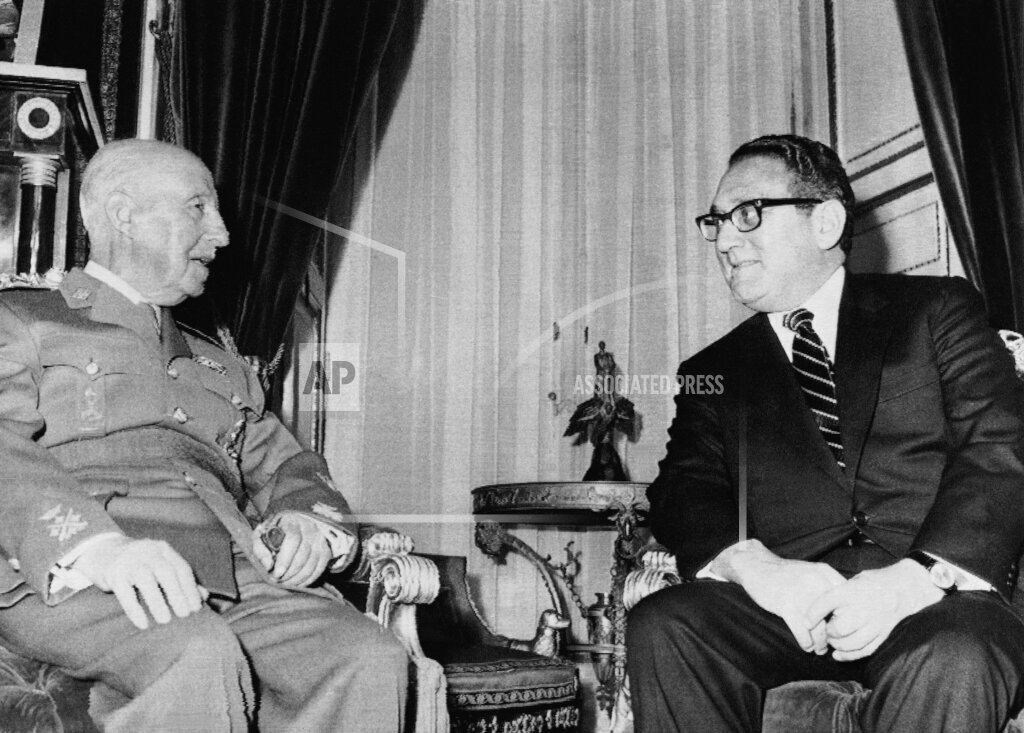
Secretary of State Henry Kissinger arrived today in Spain under extremely heavy guard. Kissinger later met with dictator Francisco Franco.
Kissinger is concerned with salvaging the Middle East peace conference. Egypt, Israel and Jordan still plan to attend. Kissinger and the Soviet Union’s Andrei Gromyko will serve as co-chairmen for the conference. Arab sources believe that Egypt may now be more reluctant to make any decisions at the conference for fear of offending Syria. American military sources believe that Syria murdered Israeli POWs. That is the stated reason for Syria refusing to attend the peace conference.
The Senate Foreign Relations Committee approved a House passed bill authorizing $2.2 billion in emergency military aid for Israel. The committee vote was 15 to 2, with Chairman J. William Fulbright (D-Arkansas) and Senate Majority Leader Mike Mansfield (D-Montana) casting the negative votes. The Senate has passed and sent to a conference with the House a $5.5 billion foreign aid appropriations bill that increased military aid for Israel to a total of $2.6 billion. In federal money matters, two bills are required — one appropriating the funds and the other authorizing their expenditure.
Twelve leading oil-producing nations meeting in Vienna decided to start basing oil prices on supply and demand.
The Islamic Development Bank was created as a specialized agency of the Organization of the Islamic Conference, effective August 12, 1974.
Reacting to Arab oil power, Deputy Premier Takeo Miki of Japan said in Cairo, after meeting with President Anwar el-Sadat, that Tokyo was eager to extend to Cairo a 25‐year‐loan of $140‐million to assist in widening and deepening the Suez Canal. He also indicated that Japan would like to participate in a wide range of economic and industrial projects in Egypt, including joint venture factories.
A House-Senate conference restored money in two Pentagon projects to a $73.8 billion defense spending bill. The conferees voted $110 million for a new antiballistic missile and $8.3 million for research on Project Sanguine. The Sanguine long-wave antenna system would require burying hundreds of miles of high-voltage cable in either northern Wisconsin or the Texas Panhandle to send signals to nuclear missile submarines at sea. The conferees also exempted U.S. forces in Thailand from a ban on Pentagon fuel shipments to Indochina.
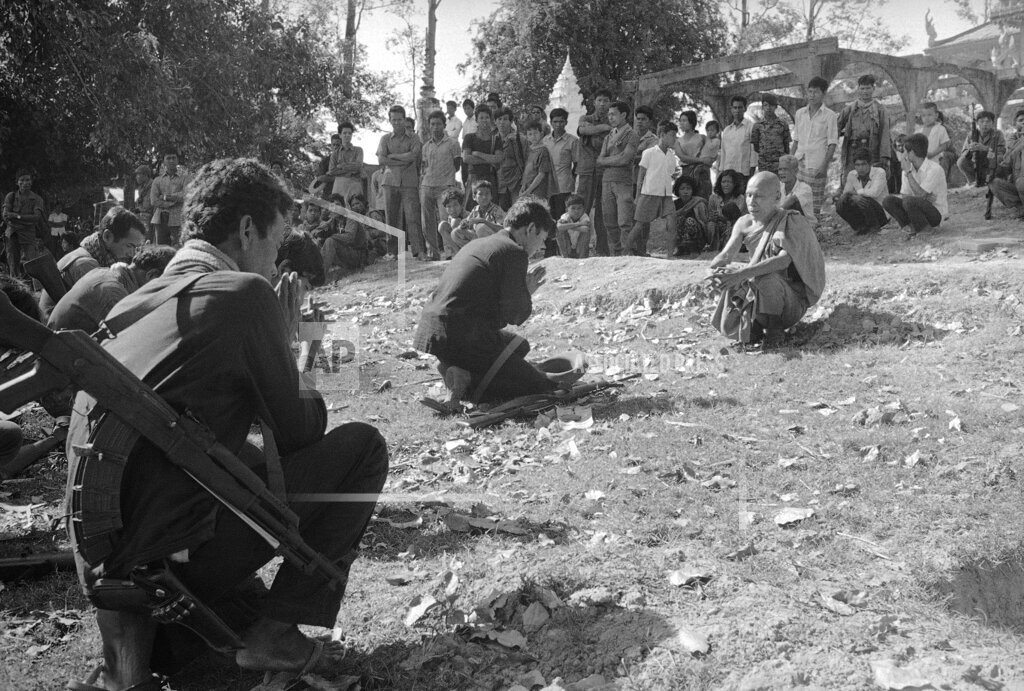
The United States and South Vietnam walked out of a meeting of the four-party Joint Military Team to protest an ambush killing last week of an American and a Vietnamese officer. The head of the U.S. delegation to the truce team demanded that the Communists identify and openly punish all those directly responsible for the attack on three unarmed truce helicopters searching for the body of an American war victim 12 miles from Saigon.
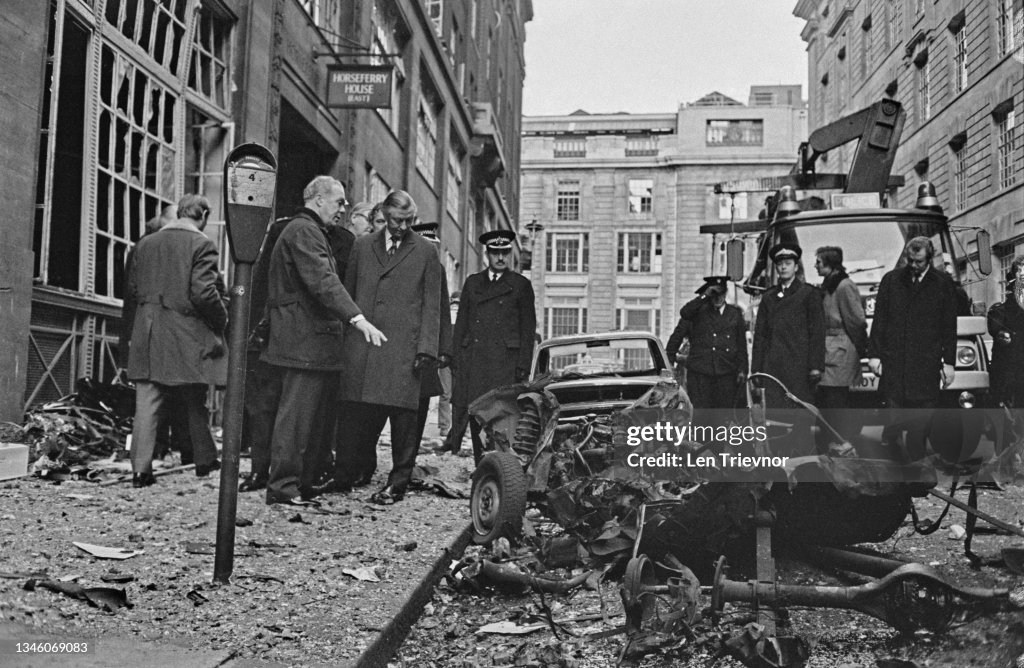
Terrorist bomb explosions rocked London. The most damaging bomb exploded inside a parked car, injuring pedestrians who were walking near the car. Scotland Yard believes the IRA was behind the bombings and Home Secretary Robert Carr condemned the IRA’s action. A member of the London bomb squad said he hopes that sufficient warnings and correct identification of bomb sites will be given if the bombings continue, and he admitted that London is at the terrorists’ mercy.
British Prime Minister Edward Heath put off indefinitely his New Year’s trip to Peking, another casualty of Britain’s power crisis. The visit, first ever by a British prime minister, has been postponed, Heath told the House of Commons, because “of the difficult and indeed grave situation facing the British nation.” Officials reported that the Chinese were understanding and the change in plans would have no effect on Anglo-Chinese relations.
A deadlock between Britain and West Germany over aid to underdeveloped European regions brought a high-level meeting of the Common Market in Brussels to a virtual standstill. Talks by foreign ministers of the nine market nations broke off and a British spokesman said they would be resumed either December 30 or early in January. Until then, he said, Britain will veto market progress for the second stage of its most important project, economic and monetary union.
A Soviet airliner on a domestic route crashed on Sunday with an unknown death toll, Western German sources said. It was the second crash of a Soviet plane this month. The sources said Russian officials told the Bonn Embassy in Moscow of the death of a West German on board the plane, which was flying from Moscow to Vilnius, the capital of Lithuania.
The Soviet Union launched Soyuz 12 into orbit as the first crewed mission to be tracked by the new RKA Mission Control Center, based in the Moscow suburb of Kaliningrad (now Korolyov in Russia). The launch marked the first time in Earth spaceflight that American astronauts (Gerald Carr, William Pogue and Edward Gibson on Skylab 4) and Soviet cosmonauts (Pyotr Klimuk and Valentin Lebedev on Soyuz 12) were in outer space at the same time. An unprecedented five people would be in orbit over the next eight days until the return of Soyuz 12 to Earth on December 26. The Soviet mission carried the Orion 2 Space Observatory.
Two former senior officials in a Chilean government agency which supervised insurance and other private companies were arrested when they stepped outside their Honduran Embassy refuge to carry out garbage cans, diplomatic sources said. Police guards seized the two — both wanted for alleged common crimes and handed them over to military authorities. The two had sought asylum in the embassy after the military coup which overthrew President Salvador Allende September 11.
The Senate voted 54 to 37 to reimpose the embargo against chrome ore imported from Rhodesia. The measure will now go to the House, where its fate is uncertain. Earlier, the Senate cut off a filibuster that had blocked the measure, paving the way for final approval. The sanctions were originally imposed in 1967 as a result of U.N. actions against the white-minority government of Ian Smith. The Nixon Administration supported congressional efforts to reimpose the embargo against the chrome imports.
A House and Senate conference committee voted to give President Nixon the power to order gasoline rationing if necessary. Senator Henry Jackson predicted that rationing is inevitable. Senate and House negotiators agreed to give President Nixon unrestricted authority to implement gasoline rationing, without Congress’s approval. They also agreed to allow the President to order other energy conservation measures until June 30, subject only to veto by either house. After June 30, the President would have to seek specific legislation for any further energy conservation moves except gasoline rationing.
The energy crisis has caused the Teamsters union to demand that its contract with trucking firms be reopened. Teamster president Frank Fitzsimmons is seeking to negotiate speed limits and fuel availability. The Teamsters union demanded that its national contract with the trucking industry be reopened to increase the wages of over-the‐road truckers whose earnings are being eroded by the fuel shortage. The union will seek to raise the per‐mile pay of long‐haul drivers, now averaging 16 cents, to compensate for lower earnings resulting from reduced speed limits.
Former Vice President Spiro Agnew appeared before federal judges in Annapolis, Maryland, who are considering Agnew’s disbarment. Attorney Alfred Scanlan represented the American Bar Association, which is seeking the disbarment; Agnew pleaded against such action. Agnew asked Maryland’s judiciary to suspend rather than disbar him, giving him a second chance at the practice of law—a chance, he said, to “resume a useful place” and, perhaps, “attempt to bring credit” to his state and profession.
The Senate Watergate Committee voted to subpoena a vast amount of White House tapes and documents after Congress passed a law awarding wide subpoena power to the committee. There was no word on whether the White Houses will accept the subpoenas. Committee counsel Sam Dash threatened that subpoenas would be served on the President if all else fails.
The Watergate special prosecutor has decided not to call Mrs. Dita D. Beard as a witness before the Watergate grand jury, following two psychiatric examinations of the former lobbyist for the International Telephone and Telegraph Corporation. Mrs. Beard had been considered a potentially important witness in establishing the company’s controversial relationship with the Nixon Administration.
Democratic officials preparing for the 1974 Congressional elections are fearful that if the Republican elephant stumbles over Watergate, it may fall on top of some Democrats. Despite widespread Republican dread that the Watergate scandal and a troubled economy represent potential disaster for the Republicans next year — and general Democratic glee over that prospect — Democratic strategists are far from sanguine.
The General Accounting Office recommended that a limit be placed on the number of presidential residences given permanent protective facilities. The General Accounting Office, reporting on its review of Federal spending on President Nixon’s private residences, called for Congressional action to provide closer control over and greater public disclosure of such expenditures in the future. The agency also asked Congress to consider limiting the number of private residences of a President that may be protected at public cost.
A federal grand jury finally began the long-delayed probe into the 1970 Kent State killings. Former Attorney General John Mitchell refused to make an investigation 3½ years ago, but the Justice Department now declared that new evidence warrants further investigation. A 23‐member Federal grand jury was sworn today and immediately began hearing evidence in the killing of four students May 4, 1970, at Kent State University, 35 miles southeast of Cleveland.
Sgt. Myron Pryor of the Ohio National Guard is accused of conspiring to shoot students. Pryor insists that his gun wasn’t loaded, and was only used to scare students. When questioned about the identities of Guardsmen who did fire their guns, Pryor stated that he will reveal those identities if asked to do so by the grand jury.
The nation’s most costly energy‐research project — aimed at developing a commercial version of a “breeder” nuclear power plant by the mid‐nineteen‐eighties — is suffering delays and large cost overruns that have forced re‐examination of the effort’s pace and scope. An advisory panel of the Atomic Energy Commission, headed by Dr, Hans Bethe, a Nobel prize physicist at Cornell University, has strongly endorsed the basic objective of the breeder — to avoid wasting all but 2 percent of the potential fuel value of the world’s uranium supply — but it has harshly criticized recent United States steps toward this goal. Development of breeders, which produce more nuclear fuel than they consume, has been considered vital to long term solutions to the energy crisis facing Industrially‐advanced countries. The Soviet Union, France and Britain built large‐scale breeder reactors years ahead of the United States, which commissioned its first small-scale breeder in 1951 and continues to operate a versatile experimental model, commissioned in 1963, at the National Reactor Testing Station in Idaho.
In a telephone interview yesterday, Dr. Bethe said that efforts toward building practical breeder power plants would be “long, expensive and still worthwhile,” but that management of the United States program had “not been very imaginative” and had given the entire concept of the breeder an undeserved “bad name.” Dr. Bethe’s panel recommended to the commission changes in design and emphasis for both major construction projects in the United States breeder program — a test reactor being built in the State of Washington and a demonstration power plant to be built in Tennessee. Cost overruns of hundreds of millions of dollars have already appeared for the Washington project and are regarded as certain for the reactor in, Tennessee. Experts such as Dr. Bethe attribute the overruns more to cumbersome management than to inflation.
Two gunmen stole two Rembrandt paintings from the Taft Museum in Cincinnati. Two 300‐year‐old Rembrandt paintings, valued at $330,000, were stolen from the Taft Museum today by two masked gunmen. The police said the pair seized the night watchman and then lifted the pictures off the walls. The pictures, “Portrait of an Elderly Woman” and “Man Leaning on a Sill,” were first valued by the police at up to $6‐million, but they later revised the figure to $330,000, saying that was the amount at which the two paintings were insured.
TWA flight attendants approved a contract to end their 45-day strike. The walkout was the longest in the history of T.W.A., the nation’s second largest air carrier. “It was ratified by a comfortable margin,” a spokesman of the Air Line Stewards and Stewardesses Association announced in Chicago. The spokesman said the exact ratification vote was not immediately available. A preliminary count of returns from Kansas City, Chicago, San Francisco and New York showed the contract winning with returns from Los Angeles still out.
The New York Yankees announce the signing of Dick Williams as manager, precipitating a legal showdown with Charlie Finley. Two days later, American League president Joe Cronin rules that the Yankees cannot sign Williams
Dow Jones Industrial Average: 829.49 (+18.37, +2.26%).
Born:
Eric Stokes, NFL defensive back (Seattle Seahawks), in Hebron, Nebraska.
Tim Colston, NFL nose tackle (Carolina Panthers), in Tampa, Florida.
 History Diaries