
Wilhelm Keitel issued a secret directive on behalf of Hitler stating that preparations for the “liquidation of the rump Czech state” were to be carried out “on the assumption that no appreciable resistance is to be expected. Outwardly it must be quite clear that it is only a peaceful action and not a warlike undertaking.” Keitel ordered that the invasion of the remainder of Czechoslovakia must be done by a peacetime German Army that was not reinforced by mobilization.
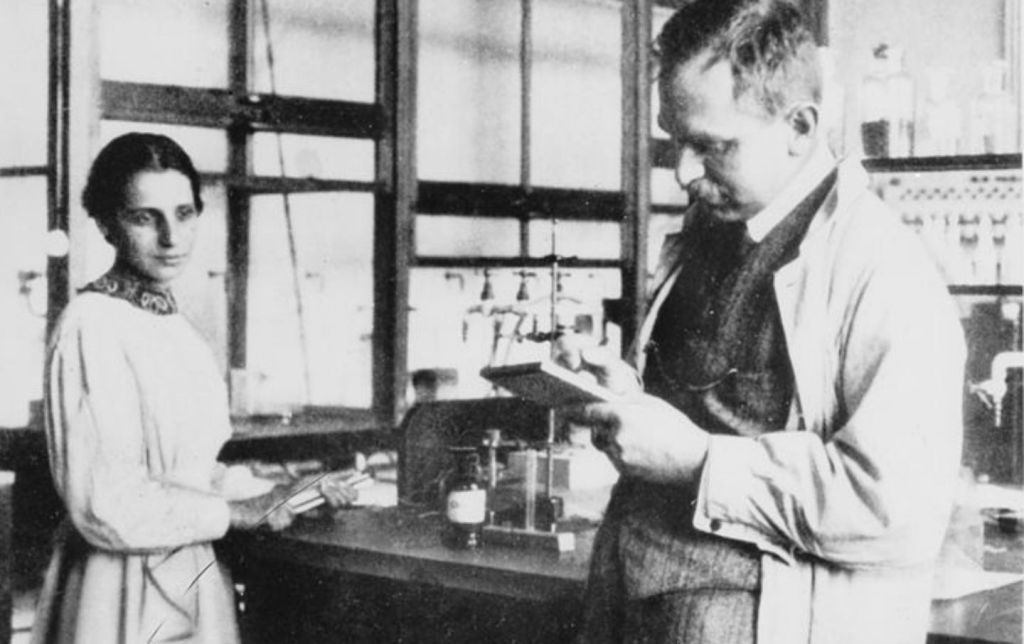
Otto Hahn and his assistant Fritz Strassmann discovered nuclear fission at the Kaiser Wilhelm Institute in Berlin but did not realize it at the time. Hahn and Strassmann, continuing their experiments bombarding uranium with neutrons, found what appeared to be isotopes of barium among the decay products. They couldn’t explain it, since it was thought that a tiny neutron couldn’t possibly cause the nucleus to crack in two to produce much lighter elements. Hahn sent a letter to Lise Meitner describing the puzzling finding.
Over the Christmas holiday, Meitner had a visit from her nephew, Otto Frisch, a physicist who worked in Copenhagen at Niels Bohr’s institute. Meitner shared Hahn’s letter with Frisch. They knew that Hahn was a good chemist and had not made a mistake, but the results didn’t make sense. They went for a walk in the snow to talk about the matter, Frisch on skis, Meitner keeping up on foot. They stopped at a tree stump to do some calculations. Meitner suggested they view the nucleus like a liquid drop, following a model that had been proposed earlier by the Russian physicist George Gamow and then further promoted by Bohr. Frisch, who was better at visualizing things, drew diagrams showing how after being hit with a neutron, the uranium nucleus might, like a water drop, become elongated, then start to pinch in the middle, and finally split into two drops.
After the split, the two drops would be driven apart by their mutual electric repulsion at high energy, about 200 MeV, Frisch and Meitner figured. Where would the energy come from? Meitner determined that the two daughter nuclei together would be less massive than the original uranium nucleus by about one-fifth the mass of a proton, which, when plugged into Einstein’s famous formula, E=mc2, works out to 200 MeV. Everything fit. Frisch left Sweden after Christmas dinner. Having made the initial breakthrough, he and Meitner collaborated by long-distance telephone. Frisch talked briefly with Bohr, who then carried the news of the discovery of fission to America, where it met with immediate interest.
Meitner and Frisch sent their paper to Nature in January. Frisch named the new nuclear process “fission” after learning that the term “binary fission” was used by biologists to describe cell division. Hahn and Strassmann published their finding separately, and did not acknowledge Lise Meitner’s role in the discovery.
Scientists quickly recognized that if the fission reaction also emitted enough secondary neutrons, a chain reaction could potentially occur, releasing enormous amounts of energy. Many scientists joined the efforts to produce an atomic bomb, but Meitner wanted no part of that work, and was later greatly saddened by the fact that her discovery had led to such destructive weapons. She did continue her research on nuclear reactions, and contributed to the construction of Sweden’s first nuclear reactor. Hahn won the Nobel Prize in chemistry in 1944, but Meitner was never recognized for her important role in the discovery of fission.
Italy sent a diplomatic note to France indicating that the Franco-Italian Agreement of 1935 was invalid because ratifications had never been exchanged.
For 10 days, Spanish loyalists have anticipated a large insurgent offensive. Because of poor weather, the only activity has been air bombardment of towns in loyalist territory. The insurgents finished the twenty-ninth month of their revolt today fully determined, officials said, that there could be no end to the war except in unconditional surrender of the Barcelona government. Rain on all fronts prevented major land fighting and there was nothing to indicate when the next insurgent drive would start. Insurgent bombing raids continued, however. Rebel bombers continued today to blast at warehouses, munitions stores, piers, and the coastline from Alicante to Barcelona. Three bombardments in Perello, near Tortosa, in the last two days destroyed 150 of the town’s 500 houses and caused an undetermined number of casualties.
Britain tells Czech negotiators that any loans to Czechoslovakia hinge upon provisions for emigration of refugees.
International rivalries again are stirring the blue waters of the Mediterranean and threaten a storm. Ostensibly, the question of Tunisia is between France and Italy. In reality, it affects the British empire and its vital trade to a vast degree. The Mediterranean is a long and comparatively narrow sea. It has two lobes, or basins, which are separated near the middle by a narrow stretch of water less than 100 miles across. Through this sea runs the greatest of the British empire trade routes — the route which carries all the trade to the east. Ninety percent of the jute and hemp on its way to Egland. 94 percent of the rubber, 97 percent of the tea, and 62 percent of the tin, copper, lead, and manganese passes through the Mediterranean.
And then there is the question of oil supplies. In 1936 a quarter of the British petroleum supply passed through the Suez Canal. The Iraq oil pipeline, with its terminal at Haifa, has increased the proportion of British oil supplies which comes through the Mediterranean, and the importance of these supplies has been increased by the passing of the American neutrality acts. All this trade passes through the narrow waters between Sicily and Tunisia. And these central narrows are within easy striking distance, by air forces, from Sicily and the mainland of Italy and Tunisia. Moreover, they are within easy radius of the entrance to the Adriatic and the Tyrrhenian seas. These central narrows of the Mediterranean are guarded by the British island of Malta. The extent to which Malta could be made untenable by air attack cannot be foretold. It is safe to say that Malta would be rendered exceedingly unpleasant by repeated raids, but it is also safe to say that it could not be entirely conquered from the air. One must, however, face the fact that the usefulness of Malta as a naval base might be seriously impaired.
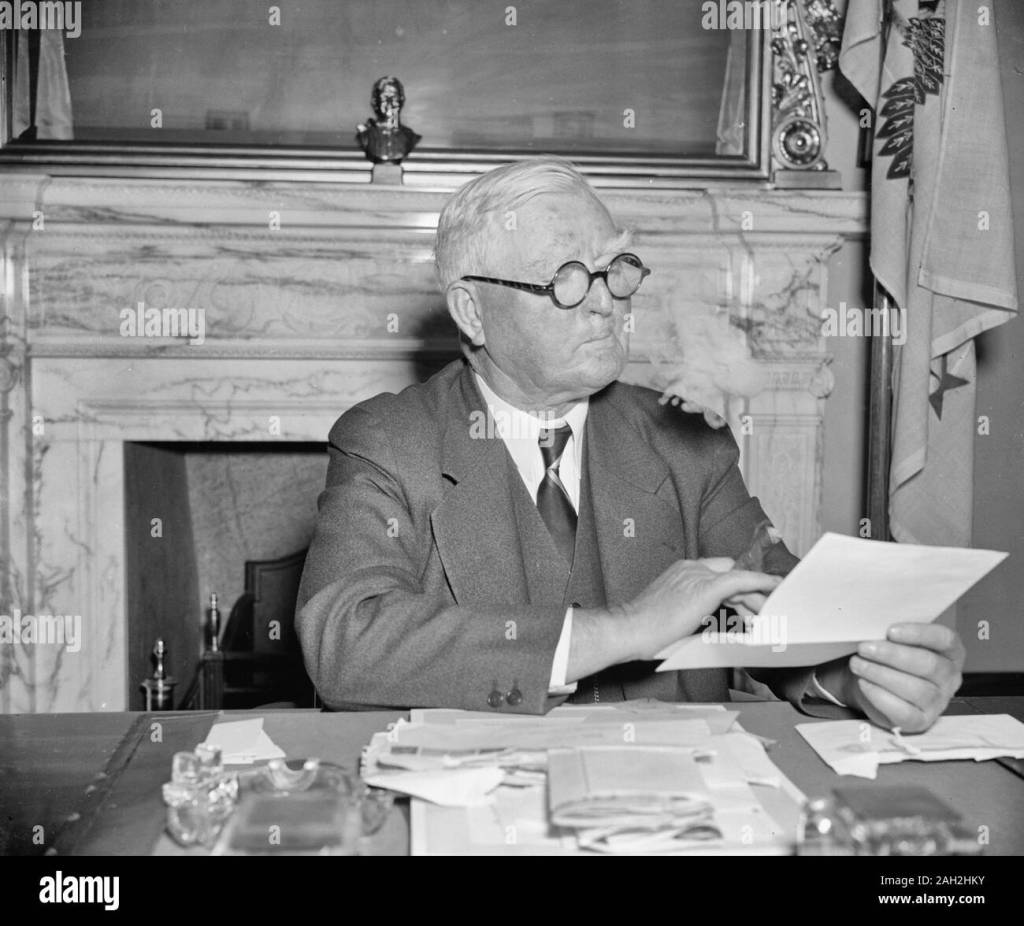
At the end of a two-hour conference in which they discussed politics and legislation, President Franklin Delano Roosevelt and Vice President John Nance Garner tonight were as far apart as Hyde Park, New York, and Uvalde, Texas. His silver eyebrows twitching after his showdown with his chief, Garner stalked through an aisle of newspaper men without a single comment on the conference. The vigor of his stride and the glint of his eye verified reports that the sage of Uvalde had unburdened himself to the squire of Hyde Park. The vice president, according to the reports, warned that continuation of the administration’s spending spree and hasty social reform legislation spelled defeat for the Democratic party.
He also delivered a warning that Mr. Roosevelt can expect trouble and plenty of it from the new congress in which Republicans and conservative Democrats hold the balance of power as a result of the November Republican landslide and the collapse of the “brain truster” purge program. Although he pulled no punches in his meeting in the oval study, Garner was publicly just as silent as he has been in his pecan groves or at his hunting grounds on the Anacaho. The White House, too, was silent. But for a different reason — publication of Garner’s stinging analysis of the administration might upset the White House legislative apple cart.
The FBI begins to interview family members and sort through the fraudulent dealings of the Musica brothers, including bootlegging and arms smuggling. The McKesson and Robbins Company survives as McKesson Corporation.
Investigation into the McKesson & Robbins drug swindle took a startling turn tonight. Gregory F. Noonan, acting United States attorney, declared that the government had conclusive proof that the drug concern’s promoters had smuggled munitions to foreign countries on a huge basis. Officials of two foreign countries and several prominent persons in the United States were involved in the smuggling operations, according to reports from other sources. One large warehouse in New York was said to be under surveillance as the shipping point for the export trade in guns and ammunition in boxes labeled milk of magnesia.
Picket lines of 1,000 concerned citizens — women, children, Chinese, and Caucasian — picket a Greek ship in San Francisco. Longshoremen will not cross the lines to load the ship; its cargo is scrap iron for Japan.
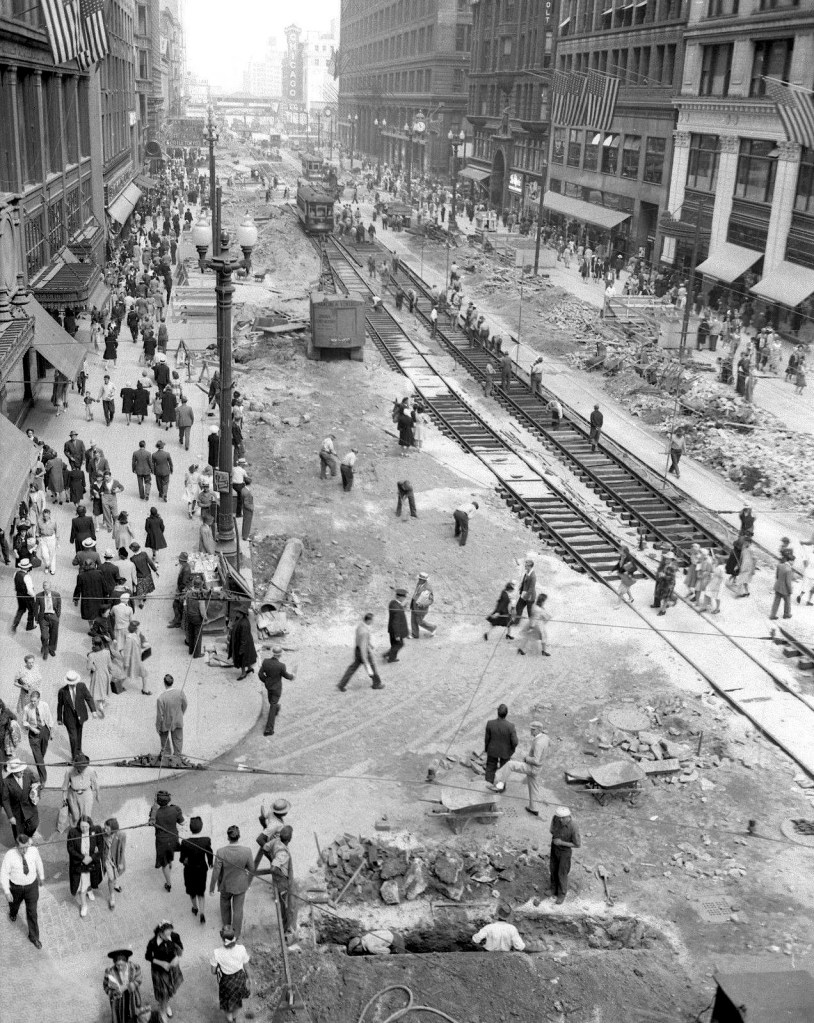
The first dirt is turned in the $40 million project to bring a subway to the city of Chicago, a project that has been in the discussion stages for over 50 years. Thousands of citizens on the sidewalks of LaSalle Street follow a parade of local officials and city leaders to just south of Chicago Avenue where the ceremonies convene on State Street. In 24-degree weather Public Works Administrator Harold L. Ickes delivers a 3,000-word speech, saying, “Today we are able to come together to inaugurate the most portentous civic undertaking since this city shook off the ashes of the great fire and started hopefully and determinedly to build again for the future … The subway that we inaugurate today will be only a beginning. As the city is able to extend it, this will be done, until Chicago will have as complete an underground traction system as any city in the world.”
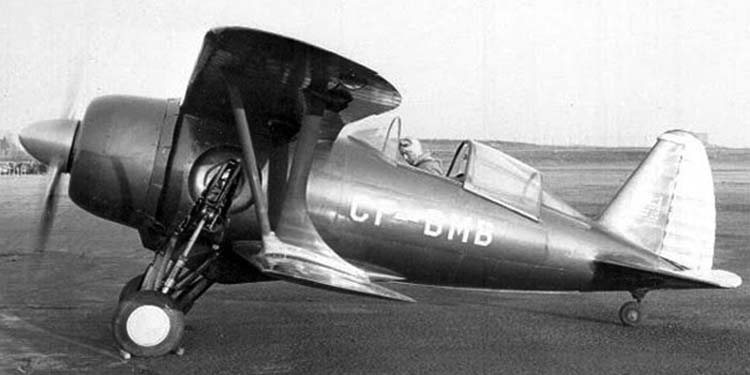
First flight of the Gregor FDB-1. Canadian biplane fighter prototype, manufactured by Canadian Car and Foundry, advanced and innovative design, incorporating all-metal construction with flush riveting, retractable undercarriage.
Chile, Argentina, and Mexico block Secretary Hull’s efforts for a policy on diplomatic options for land expropriations, deferring the issue for the next Pan-American Conference in five years.
Thirteen Spaniards, directors of the Casa de Cultura de Espana (Spanish Culture House) were arrested today in Santiago, Cuba. Police charged they distributed pamphlets to arouse inhabitants against permitting the crew of the German cruiser training ship Schleswig-Holstein to land. It is expected tomorrow. German Consul Anton Heisinger protested that the pamphlets insulted Reichsführer Hitler.
Locusts destroy Nicaragua’s bean crop, but leave the rice alone.
Hundreds of boys of high school and college ages have set themselves the task of arousing Argentina’s 12,000,000 people to “the perils of Yankee imperialism.” They are backed by Fascistic higher ups and are trained in the salutes of Reichsführer Hitler of Germany and Premier Mussolini of Italy. Their placards on street corners warn Argentina that President Roosevelt’s good neighbor policy is “a farce” and “a blind.” Despite police bans, they attempt to hold meetings in the broad squares of Buenos Aires.
The agitators against the United States are banded together in the Nationalist Youth Alliance, fledgling of the Argentine Civic Legion. Juan Queralto, 18 years old, is president of the alliance. The Civic Legion is a Brown Shirt movement founded by the late General Jose Felix Uriburu, who ruled the country as a military dictator from 1930 to 1932. Members of the Civic Legion recently commemorated the movement’s eighth anniversary with a dinner at which the Legion president, Carlos Ribero, assailed democracy and pledged the organization to fight liberalism and communism.
Ribero condemned Argentine participation in the Pan-American Conference in Lima, where Argentine concern over future United States foreign policy has appeared as a strong factor in the controversy over a conference declaration against aggression. Members of the youth alliance wear no uniform shirts since a government decree forbade their use. But they still greet each other and salute their leaders with the outstretched arm of the German Nazis, denounce communism, and speak threateningly of “a day of reckoning” for Argentine Jews.
New Yellow River floods inundating six districts of northern Kiangsu province were reported today in dispatches from the endangered area. It is approximately 400 miles northwest of Shanghai. Flood waters were said to have breached river dykes near Kaifeng, Honan province, and poured as far southward and eastward as Kiangsu’s northernmost tip. Meanwhile, Chungking dispatches quoted General Chen Cheng, Chinese vice minister of air, as estimating Japanese casualties at 270,000 men during fighting in the Yangtze valley from June through September. Of these 96,000 were killed in action, he said.
Chen asserted that 30,000 Japanese soldiers had been sacrificed to gain fifty miles along the Nanchang railway since the fall of Kiukiang on July 26. The Chinese official estimated that, in all, 1,000,000 Japanese were at present engaged in fighting and garrisoning the already captured territory. Of these 600,000 are fighting in the Yangtze valley, he added. He asserted replacements would soon be a vital Japanese problem because of China’s continued use of guerrilla tactics and because of increasing illness among Japanese soldiers due to severe winter weather.
Three days of air and naval bombardments by Japan begin, focused on Chinese guerrilla positions. Among the targets are Pakhoi, a port in southern Kwangsi, sites along the Pearl River, and areas south of Chefoo in Shantung.
Britain makes a £450,000 credit available to China to build roads from Burma. This will be charged against a £10 million credit from the British Board of Trade, which now awaits Parliament approval.
The foreign office in Tokyo said today the government was deliberating whether to issue a formal statement on the United States Export-Import bank’s decision to lend $25,000,000 to China. The newspaper Asahi said in an editorial that America was pouring oil on fire and seeking to retaliate for closing by Japan of the “open door” to Chinese trade. “These actions cannot be interpreted other than as a malicious determination to prolong hostilities in China,” the editorial concluded. The newspaper Hochi said Japan might ask the United States to “reconsider.”
Dow Jones Industrial Average: 150.36 (-0.53).
Born:
Leo Cárdenas, Cuban MLB shortstop and third baseman (All-Star, 1964-1966, 1968, 1971; Cincinnati Reds, Minnesota Twins, California Angels, Cleveland Indians, Texas Rangers), in Matanzas, Cuba.
Gilles Tremblay, Canadian NHL hockey left wing (Stanley Cup champions-Montreal, 1966, 1968; NHL All-Star, 1965, 1967; Montreal Canadiens), and French-language broadcaster, 1971-1997, in Montmorency, Quebec, Canada (d. 2014).
Peter Snell, New Zealand athlete (Olympic gold 800m, 1960, 1964; 1,500m, 1964), in Opunake, New Zealand (d. 2019).
Carlo Little, rock drummer (Screaming Lord Sutch & the Savages), in Shepherd’s Bush, London, England, United Kingdom (d. 2005).
Naval Construction:
The Kriegsmarine (German Navy) Type VIIB U-boat U-47 is commissioned. Her first (and only) commanding officer is Oberleutnant zur See Günther Prien.
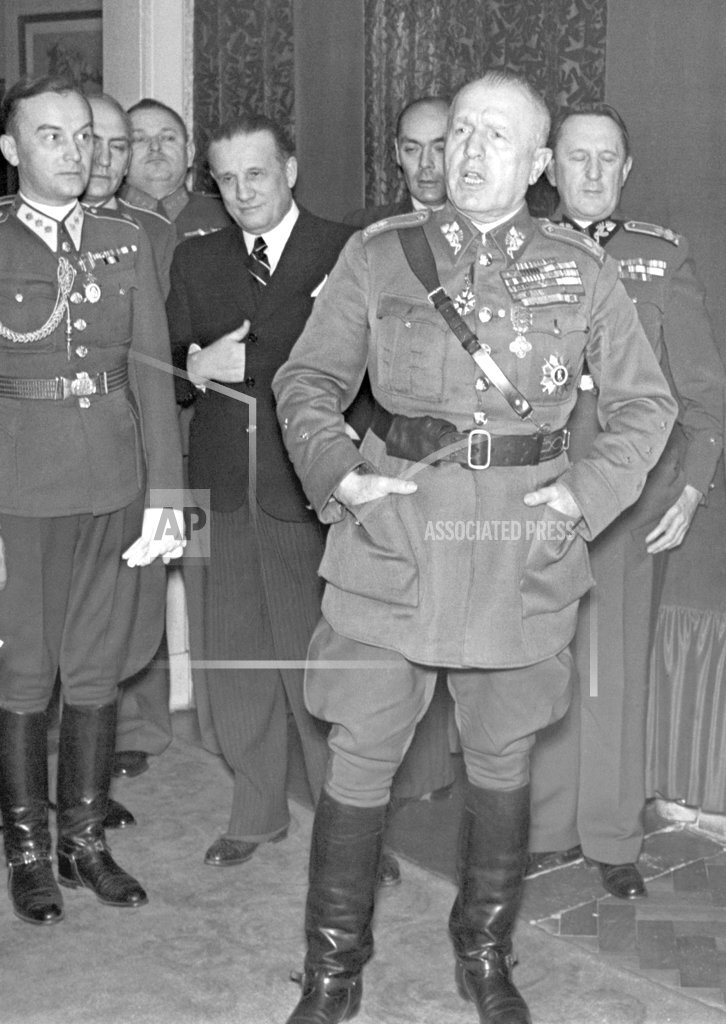
He served in the French Foreign Legion for 28 years, before joining the Czechoslovak Army. He saw service in World War I, the Poland–Czechoslovakia war over Cieszyn Silesia and in the war with the Hungarian Soviet Republic over territories in what is now Slovakia. On 20 November 1938 he was appointed commander of the National Gunners Guards. He was still living in Bratislava on the establishment of the Slovak Fascist State on 14 March 1939, and two weeks later he was removed from his position as commander of the National Gunners Guards. He left for exile in France on 2 June, resuming active military duty in 1940 with the Czechoslovak Exile Army. When France was defeated by Nazi Germany he went to French North Africa, where he died on 13 May 1945, in Casablanca.
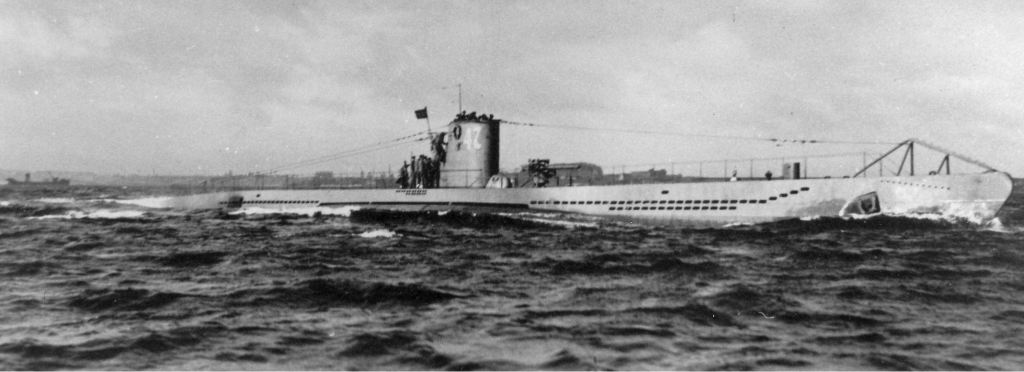
In 10 war patrols, U-47 sank 30 cargo ships (total tonnage 162,769 GRT), and one warship, the Royal Navy battleship HMS Royal Oak (29,150 tons) on 14 October 1939. She damaged a further 8 ships (62,751 GRT).
Lost circa 8 March 1941. Missing since 7 March 1941 in the North Atlantic south of Iceland, in approximate position 60.00N, 13.00W. 45 dead (all hands lost). U-47 sent its last radio message at 0454hrs on 7 March 1941 while chasing the convoy OB-293 and was then reported missing after it repeatedly failed to report its position. There is presently no certain explanation for its loss. Possible reasons for the loss of U-47 include mines, by its own torpedoes or by an attack by British corvettes HMS Camellia and HMS Arbutus.
https://en.wikipedia.org/wiki/German_submarine_U-47_%281938%29#Service_history
 History Diaries