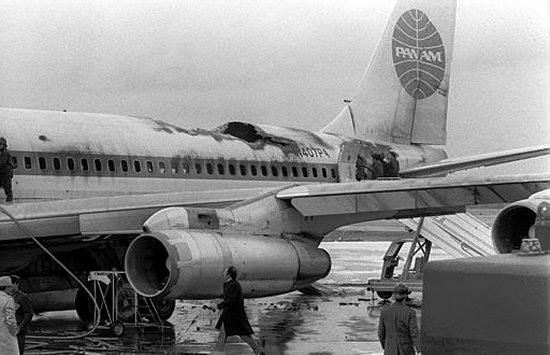
Palestinian terrorists killed 32 people after seizing the terminal building at the Leonardo da Vinci Airport near Rome, then throwing grenades through the open doors of a Pan American Boeing 707 which had 177 people on board. Pan Am Flight 110 had been preparing to taxi for departure. Two of the civilian deaths took place inside the airport terminal. Another group of five gunmen stormed a Lufthansa Boeing 737, bringing aboard 10 hostages and also taking hostage the crew of four. They then hijacked then West German airliner to Athens with a number of hostages aboard and reportedly began executing them one by one to back their demands for the release of two Palestinian terrorists being held in Greece. In Athens, guerrillas reportedly executed as many as 5 [actually one and one policeman on the ground] hostages. Greek sharpshooters destroyed the tires on the plane as the day ended; guerrillas then threatened to blow up the plane.
The remains of the Pan Am passengers weren’t removed until hours after the bombing. The Palestinians seem to be warning the world against the upcoming Mideast peace conference. One American was killed in the crossfire between terrorists and police. An unknown number of Americans were among the 28 who were killed on the Pan Am jet; four Moroccan officials were also killed.
Secretary of State Henry Kissinger ended his Mideast tour. He met with Israeli Prime Minister Golda Meir in Tel Aviv, where it was announced that Israel has agreed to attend the Mideast peace conference.
Israeli officials said that their country’s agreement to participate in the Middle East peace conference in Geneva had been given in exchange for assurances from Secretary of State Kissinger that American support in the talks would be firm.
The Mideast peace conference is scheduled to begin Friday. Syria is considering refusing to attend the conference. Henry Kissinger was in Portugal to thank the Portuguese for supporting airlifts to Israel during the Mideast war.
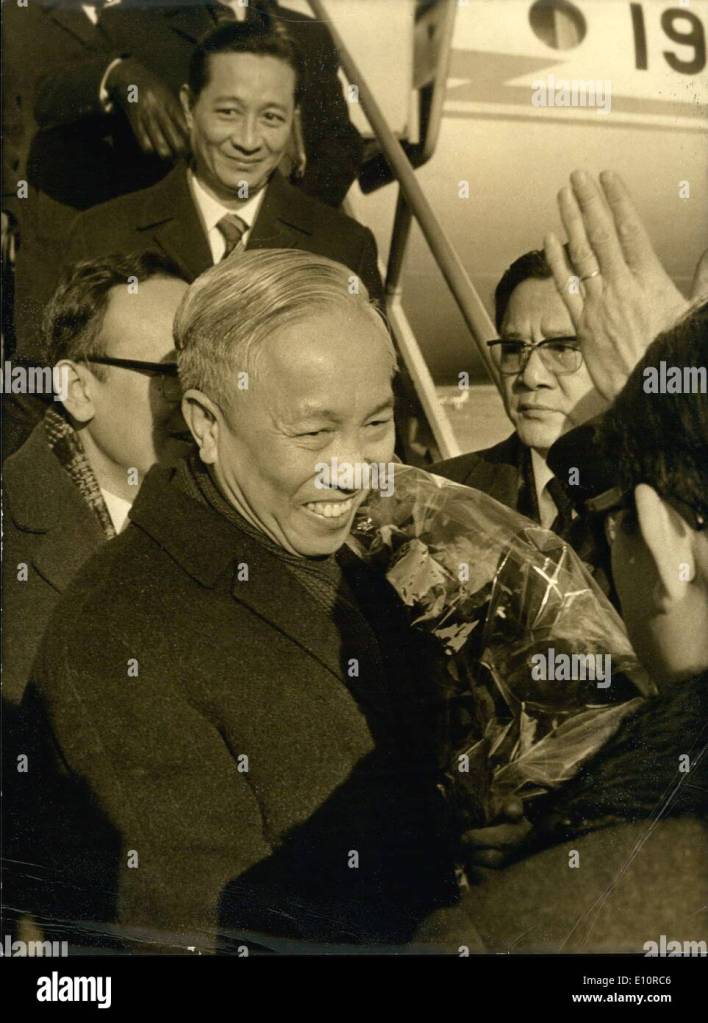
Kissinger will meet with North Vietnam’s Lê Đức Thọ in Paris on Friday to discuss Southeast Asia and peace. Thọ blasted the U.S. during a speech in Paris today. Thọ, Hanoi’s chief negotiator for the Vietnam peace agreements, arrived in Paris for more discussion with U.S. Secretary of State Henry A. Kissinger on fighting in Vietnam. A meeting is scheduled for Thursday with Thọ saying that further developments would depend on how the session goes. Contrary to reports from Washington and Saigon, Thọ said that the United States had asked for the meeting.
South Vietnamese forces killed 97 Communist troops in heavy fighting for rice harvests in the Mekong Delta, a Saigon military spokesman said. The government forces, backed by artillery and planes, chased away the enemy units after three hours of fierce fighting in the outskirts of the district towns of Cái Lậy, 46 miles southwest of Saigon, and Cái Bè, 60 miles southwest of the capital. The government suffered four killed and 12 wounded, the spokesman said.
The Soviet Union charged today that the countries of the Atlantic alliance had impeded the first phase of the troop‐reduction talks in Vienna by advancing proposals calculated to alter the balance of power in Central Europe. Such proposals, Pravda asserted, contradict the principle of undiminished security for all participants in the talks, as agreed upon in preliminary discussions. In its first assessment since the talks were recessed last week, Pravda, the Communist party newspaper, contended that the proposals by the North Atlantic Treaty Organization dealt only with the initial pullback of Soviet and American troops and would leave other “well‐trained” NATO forces strategically situated in central Europe.
The Soviet party newspaper, which speaks for the leadership here, also echoed the recurring Soviet complaint that the NATO proposals dealt only with conventional land forces and not critical nuclear units and aircraft. The Western insistence upon a proportionately greater reduction of the numerically superior Warsaw Pact forces was termed a “maneuver” to get more Soviet troops to pull out.
The British Government abandoned its goal of economic growth and chose instead a policy aimed solely at economic survival. Faced with widespread labor disruptions and an energy crisis, the Government announced the largest budget reduction in British history, imposed restrictions on consumer credit and said additional taxes would be levied on high‐income earners and some realty developers.
An incendiary bomb exploded in a Londonderry branch of the Woolworth department store chain but there were no injuries. Later a gunman placed a bomb on a bar in Londonderry and ran to a car. A barman raced out with the bomb and hurled it at the car, striking it, but the bomb failed to explode. A bomb placed in a milk churn ripped through a pub in the Irish Republic six miles from the Ulster border Sunday but the area had been cleared and no one was hurt.
Two Northern Ireland sisters serving life sentences for their part in a guerrilla bombing campaign in London are being force-fed in jail, their attorney said. Dolours and Marian Price, aged 22 and 19, began a hunger strike November 16, the day they were sentenced, Brixton Prison officials said they were being fed through tubes forced down their throats. Their attorney, Bernie Simons, said the sisters had been granted permission to appeal against their treatment.
Poul Hartling, a former foreign minister, was named to form a Liberal Party minority government that will rule Denmark with the slimmest parliamentary base in Danish political history. The Liberals lost eight seats in the December 4 elections and now hold only 22 seats in the 179-seat Folketing. Hartling, 59, was foreign minister in a non-socialist, three-party government from 1968 to 1971. Outgoing Prime Minister Anker Joergensen, a Social Democrat, will remain in a caretaker capacity until Hartling presents his cabinet to the queen, probably Wednesday.
Greek security forces mobilized in downtown Athens to prevent a potentially explosive memorial demonstration for persons killed in last month’s abortive student-worker rebellion against former President George Papadopoulos. Student sources said police rounded up students from their homes for the second day in a row even while the last of more than 300 persons detained since the uprising were being released.
The U.N. General Assembly ruled for the first time that Portugal’s U.N. delegates represent only the metropolitan nation and not its African territories. By a vote of 94 to 14 with 21 abstentions, the assembly adopted an amendment to a report. on delegates’ credentials specifically excluding the “Portuguese-dominated territories of Angola and Mozambique” and the territory of Portuguese Guinea, where African guerrillas recently proclaimed the independent state of Guinea-Bissau. The amendment was introduced by the Tanzanian representative and cosponsored by Guinea, Madagascar and Senegal.
Pentagon spokesman Jerry W. Friedheim said a report in the Christian Science Monitor that the Russians have begun unloading 40-ton medium tanks in Peru is “basically correct.” He said the Pentagon thought that the tanks had been either promised or delivered but what their long-range intentions might be or what the size of that sale might be, we just don’t know.” It is the first time the Soviet Union has sent military equipment to a Latin American country outside of Cuba, the Pentagon said.
Canada and Denmark signed a treaty delimiting the division of their territorial waters between Canada’s northernmost region (Ellesmere Island, now part of the Canadian Territory of Nunavut) and Greenland, now a self-governing Danish “constituent country”. The treaty did not resolve the claims by both Canada and Denmark to the uninhabited Hans Island.
The Senate voted to delay the enforcement of automobile emission standards for one year. The Senate voted 85 to 0 to extend to 1976 the 1975 interim standards for pollution controls on automobiles. The bill providing the one‐year delay in more stringent emission control devices was an amendment to the 1970 Clean Air Act. The White House had favored a two‐year postponement, but the Environmental Protection Agency had endorsed only a one‐year delay. Environmental organizations protested the delay.
House and Senate conferees, after reaching a compromise with the Administration, gave final approval to a multi‐billion‐dollar comprehensive manpower act that includes an emergency public employment program. The White House, which had planned to let the Federal public employment program die, is now supporting it because of fears that the energy crisis will create a sharp rise in joblessness, officials explained.
Federal energy czar William Simon told farmers that they will be on the priority list for gasoline, but diesel fuel will be harder to get.
A Senate committee heard from drug manufacturers regarding the effect of the fuel shortage on the drug industry. Without emergency fuel allocations, life-giving drugs will soon be in short supply. Requests were made for special allocations to continue production for items such as syringes and tubing which are needed for modern health care. Otherwise, hospitals will start to feel shortages early next year.
The Senate confirmed the nomination of Senator William Saxbe as Attorney General. In a quick and friendly proceeding, the Senate voted to confirm Senator William B. Saxbe, Republican of Ohio, as Attorney General. The vote was 75 to 10, with Senator Saxbe voting “present.”
Another showdown between the Senate Watergate Committee and President Nixon is likely. Unless the President acts by midnight, the bill becomes law which allows the Watergate committee to go to the courts to try to obtain presidential tapes and documents. Committee chairman Sam Ervin called for a closed meeting to vote on issuing subpoenas tomorrow.
The President said that despite his strong objections to the bill granting the Federal District Court in Washington jurisdiction over any suit on Watergate subpoenas, he was letting it become law without his signature.
Senator Barry Goldwater criticized President Nixon’s handling of the Watergate scandal.
The Federal Home Loan Bank Board made it a policy that savings and loan institutions may no longer discriminate against women or families dependent on a working wife’s income in making mortgage loans. The board’s policy statement does not technically have the force of law, but it is being accepted as binding by the savings and loan banks regulated by the board.
The government partially accounted for money spent on behalf of former Vice President Spiro Agnew since his resignation. The General Accounting Office revealed a financial report regarding the upkeep of Agnew’s office and staff since his resignation. Democratic representative John Moss requested the report. Moss stated that Secret Service protection of Agnew is no longer called for, and said that the government’s money was being used to maintain Agnew’s lifestyle and avoid unwanted exposure.
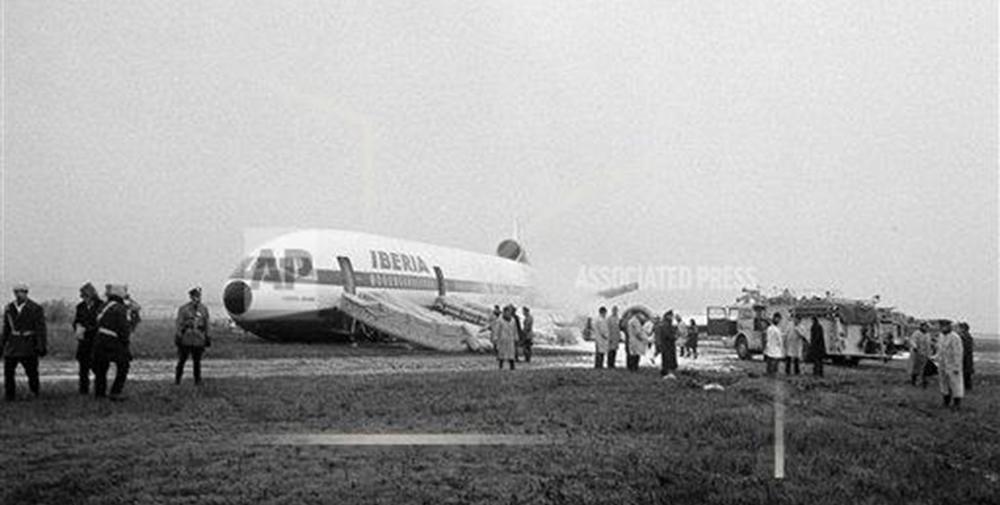
An Iberian Douglas DC-10 crash-landed at Boston’s Logan airport; no fatalities were reported. On approach to runway 33L at Boston-Logan Airport, the crew encountered marginal weather conditions with rain falls and a limited visibility to 3/4 mile in fog. While passing from IFR to VFR mode on short final, the captain failed to realize that the airplane lost height when the right main gear struck a dyke and was torn off. The airplane struck the runway surface, veered off runway to the right then lost its undercarriage and came to rest in flames. All 168 occupants were evacuated, six of them were injured. The aircraft was destroyed.
A federal team investigating the Saturday crash of a Christmas tree-laden cargo plane into a Miami neighborhood was told that all necessary repairs had been completed before takeoff. The 15-year-old Super Constellation, carrying a 10-ton load, slammed into a group of houses seconds after takeoff. The three crewmen and five persons on the ground were killed. H. B. Robinson, business agent for Aircraft Pool Leasing Corp., met with members of the National Transportation Safety Board and said he had been told by the plane’s flight engineer, killed in the crash, that all needed repairs had been completed.
Skylab 3 astronauts have grown up to an inch or more in height and lost some inches around the waist since they left earth, Dr. Story Musgrave, an astronaut-physician, said. Gerald P. Carr, William R. Pogue and Edward G. Gibson have all grown between three-fourths and one and three-fourths inches since. they were launched into space November 15, according to medical studies. Musgrave also told the astronauts that their physical fitness was as good as before they left earth. He said the height increase was thought to be caused by spinal discs taking up more water and expanding. Musgrave said the same thing must have happened to other space crews but that these were the first astronauts to be measured and documented.
The House approved and sent to the Senate legislation to extend the loan-making authority of the Small Business Administration for six months and make it a crime to use political pressure to influence loans. The bill would increase the loan ceiling from $4.3 billion to $4.875 billion. An earlier Senate vote would increase the loan-making authority by $2.3 billion during the next two years.
Sixteen of General Motors’ 24 North American car assembly plants were closed in the start of a one-week shutdown that some observers fear might be a common occurrence in 1974. The shutdown idled 137,000 workers in the first response to the energy crisis that has scared many Americans away from big cars. The automakers are responding by switching plants to small car production.
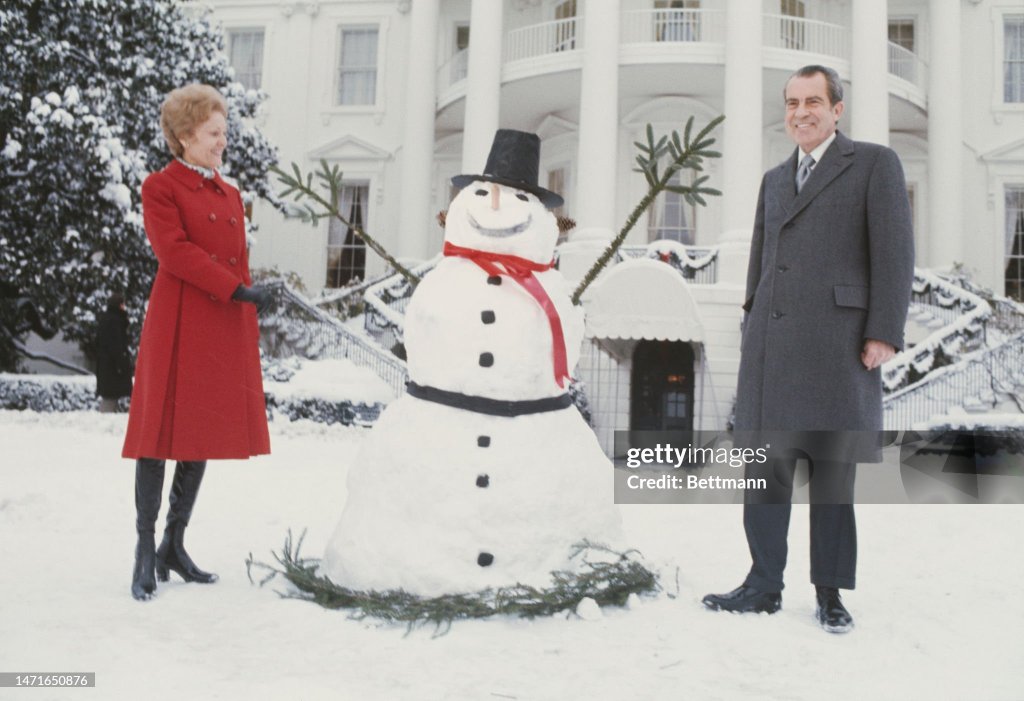
A major snowstorm hit the Northeast and Atlantic coast. Commuters find transportation extremely difficult in New York City; in Washington, DC, the storm slowed the pace of government somewhat. President and Mrs. Nixon were enticed out into the snow to pose beside a snowman. Shutdowns due to the snow accomplished energy conservation in Washington quicker than all of the President’s emergency energy bills.
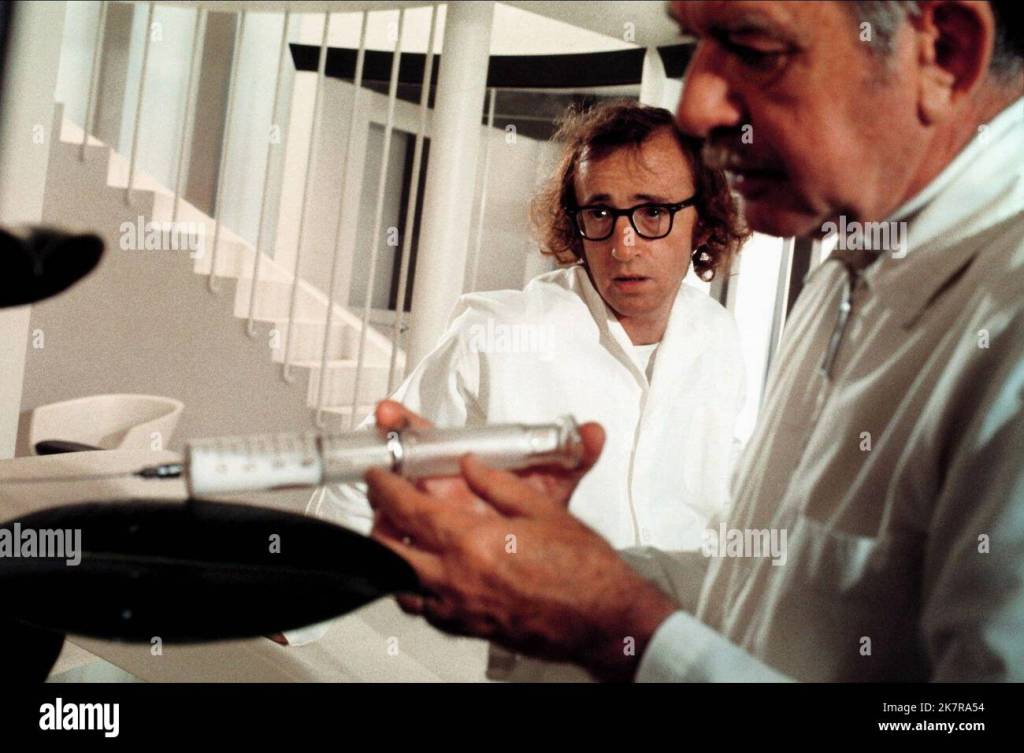
The Woody Allen film “Sleeper,” a satire film starring Allen as a cryogenically frozen man waking up in the year 2173, premiered with a screening in the United States.
The British Broadcasting Company introduced “Radio Scotland” on its BBC Radio 4 station, initially as an hourly news segment and “a two-hour current affairs programme” every morning. The success of the program would lead to the founding of BBC Radio Scotland as a full-time network on November 23, 1978.
Dow Jones Industrial Average: 811.12 (-4.53, -0.56%).
Born:
Rian Johnson, American filmmaker known for directing “Star Wars: The Last Jedi” in 2017; in Silver Spring, Maryland.
Reinard Wilson, NFL linebacker and defensive end (Cincinnati Bengals), in Gainesville, Florida.
Paula Radcliffe, English long-distance runner and three-time winner of the women’s division of the London Marathon (2002,2003, 2005) and of the New York Marathon (2004, 2007, 2008); in Davenham, Cheshire, England, United Kingdom.
Martha Érika Alonso, Mexican politician who served for 10 days as governor of the state of Puebla before being killed in a helicopter crash after her inauguration; in Tecamachalco, Puebla, Mexico (died 2018).
Died:
Patrick Hadley, 74, British classical music composer.


(The Midnight Special, December 7, 1973)
 History Diaries