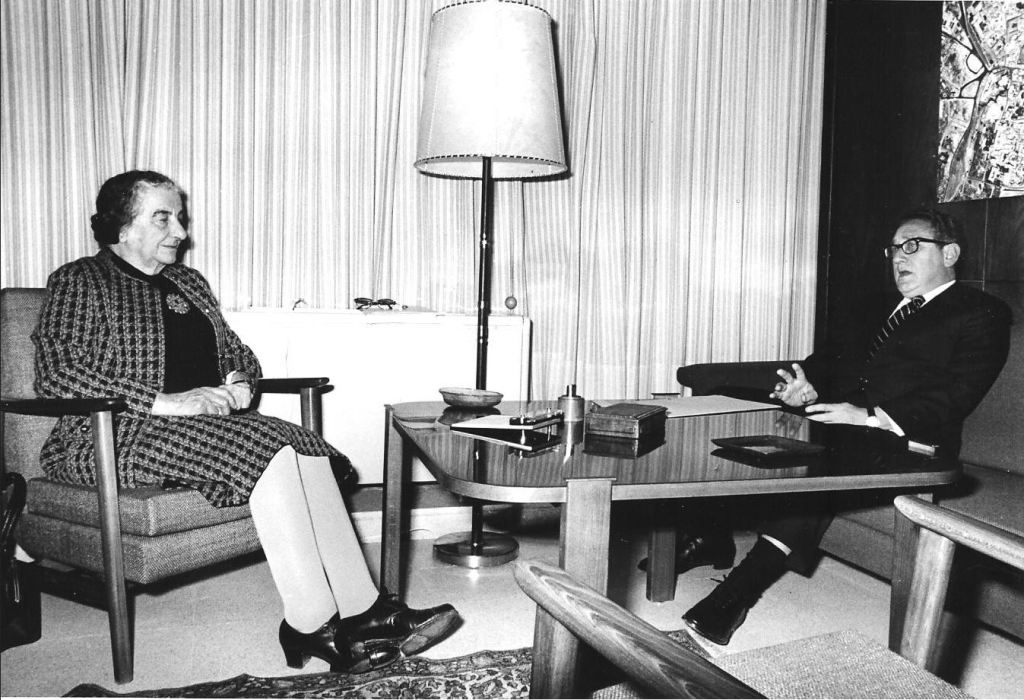
Secretary of State Kissinger conferred with Premier Golda Meir and other Israeli officials in an attempt to ease Israel’s concern about the projected Middle East peace conference, and to try and ensure that the conference begins in Geneva on Friday. Later Mr. Kissinger termed the talks “very friendly, very warm and very constructive.” He was optimistic about getting the peace talks moving.
The United States has started a program to equip its tens of thousands of tactical nuclear weapons, maintained in many foreign countries, with advanced electronic controls designed to prevent their misuse even if terrorists or hostile armies overrun an overseas base. The safeguards will go well beyond the increased guard forces, stronger fences and many other security measures taken this year at scores of weapons depots after the Arab terrorist action at the 1972 Olympics.
Food shortages are expected in Britain next year because of the three-day work week ordered by the government to conserve fuel. The food problem will be brought about by an expected scarcity of packaging. The reduced supplies of tinplate, paper and cardboard that will eventually result from the three-day work week will affect food, industry officials said.
Syria is holding off a final decision on taking part in the Middle East peace conference until she gets clarification about Israel’s intentions on several issues raised with Mr. Kissinger in his meeting Saturday with the Syrian President, Hafez al-Assad. Mr. Kissinger said that they had had a “very frank talk,” but Syria still believes Israel is reluctant to reach a settlement.
Egyptian officials expressed satisfaction with the progress of preparations for the Middle East peace conference. The postponement of the conference’s opening from Tuesday to Friday was not welcomed in Cairo because Egypt is eager to begin the peace negotiations to press for withdrawal of Israeli troops in the Suez Canal area. But the disadvantage of the conference’s delay, Egypt believes, is far outweighed by new developments, mainly that the conference will be held under United Nations auspices.
A few weeks ago, the Spanish were patting themselves on the back because they were such good friends of the Arabs and were therefore sheltered from oil restrictions and all their consequences. The mood has changed dramatically as little by little the country discovers that the pro-Arab policy, which extends to not recognizing Israel, is no guarantee against trouble. Worry approaching panic in some cases has displaced the smugness. No gasoline or other fuel restrictions of the kind put into force in other countries have yet been applied here as oil supplies and reserves remain high. But such restrictions‐are generally expected despite assurances by Arab oil‐producing states that Spain will be spared. One reason cited is that Spain depends for supply on the big American and international companies that control the tankers and may be subjected to rationing if supplies become tighter.
The Soviet Union reaffirmed support for North Vietnam and the Viet Cong, demanding an end to violations of the Vietnam cease-fire by the Saigon government, Tass news agency reported. Konstantin Katushev, secretary of the Communist Party Central Committee, issued the statement at a meeting with Lê Đức Thọ, North Vietnam’s chief peace negotiator who stopped in Moscow on his way to Paris talks with U.S. Secretary of State Henry A. Kissinger. Tass said that Thọ told Katushev that the North Vietnamese and Viet Cong were strictly observing the cease-fire in the discussion which was described as taking place in a friendly, heartfelt atmosphere.
For the first time since the Vietnam cease‐fire accord was signed last January, the United States today protested to the International Commission of Control and Supervision. It requested an investigation of the Communist attack yesterday on a group of unarmed American soldiers searching for the remains of a helicopter crewman shot down in 1966. One American, Captain Richard M. Rees, 32 years old, was machine‐gunned as he held his hands over his head in surrender, according to survivors. A South Vietnamese helicopter pilot was also killed. Three South Vietnamese and four Americans were wounded. Captain Rees, of Kent, Ohio, was the first American soldier to die in Vietnam since the United States completed the withdrawal of its forces after the Paris cease‐fire agreement.
About 400 South Korean Roman Catholics demonstrated in downtown Seoul two hours after their cardinal, Kim Soohwan, publicly urged President Park Chung Hee to restore free democracy or face the possible destruction of the nation. The Catholics, including many students, marched from the Seoul cathedral about two blocks before they were turned back by police. Cardinal Kim told a joint meeting of Catholics and Protestants that the government should heed the rightful demands made by students in recent demonstrations.
All 51 people aboard Aeroflot Flight 2022 were killed when the Tupolev Tu-124 crashed in the Soviet Union near Karacharovo while approaching Moscow from a flight from Vilnius, at the time in the Lithuanian SSR. The Soviet press did not report the disaster, but Soviet officials informed the West German embassy in Moscow of the death of a German national on the airplane. Many of the passengers were Lithuanian physicians who were flying from Vilnius to a conference in Kursk.
Greek military authorities released more persons detained as a result of November violence in Athens. Newspapers said that since Friday more than 200 of about 300 persons arrested had been released in Salonika and Patras as well as Athens. Those arrested, mostly students and workers, were rounded up when violence swept the city and ended with a tank assault on the Athens Polytechnic Institute. Shortly thereafter, an army coup deposed the regime of President George Papadopoulos. The new rulers said that as a gesture of goodwill and with confidence in the security of the new regime it was releasing most of those arrested.
Belfast police theorized that the man killed in a bomb blast at the border between the Republic of Ireland and Northern Ireland was a militant member of the Irish Republican Army on his way to a bombing mission in Ulster. Earlier, the hooded and bound body of Ivan Johnston, 34, a former Northern Ireland policeman, was found on a border road in County Armagh. Johnston had been kidnaped at gunpoint Thursday.
Britons begin this week in a more wretched state of uncertainty about their immediate future — let alone their long‐term prospects — than at any time since the Germans seemed to be winning the war back in 1940. “Within a very short time,” The Sunday Times wrote today, “if the 40 percent cut in output is maintained, most of the props of our social universe — prosperity, justice, work itself — will be knocked aside.” There is not so much a definable reaction to the drastic measures announced Thursday by Prime Minister Heath as a numbing sense of shock. For weeks, as the oil reductions began to bite, and the miners and electrical workers began their slowdown, the government insisted that these were simply difficulties that would in no case throw the country off course. Now, of course, with the imposition of a three‐day work week and other austerity measures the targets have abruptly, if perhaps temporarily, expired. Mr. Heath’s drastic turnabout had its economic rationale. The labor slowdowns plus the oil shortage meant that the nation’s electrical capacity was threatened and a radical cut in the use of power was necessary to avoid paralysis.
Soviet scientist Benjamin Levich expressed fear in an open letter handed out in Moscow that his son, serving a one-year term in the army in northern Siberia, might meet with an “accident.” His son, Yevgeny, was accosted in a Moscow street seven months ago by plainclothesmen and inducted into the army. Levich called it a “severe reprisal for the Levich family’s decision to apply for visas to emigrate to Israel.
The political party Partido de la Liberación Dominicana (PLD), which would later dominate the Dominican Republic, was founded by former president Juan Bosch. By 1996, Leonel Fernández would become the first PLD member to be elected president.
A democratic resistance movement has been organized in Chile, the eldest daughter of the late President Salvador Allende said in Stockholm. Beatriz Allende said supporting the resistance movement are the Chilean People’s Front, the Socialist Party, the Communist Party, the Radical Party and the Christian Left. Miss Allende is in Sweden to discuss the possibility of Swedish aid and cooperation.
Residents of Port Alice, British Columbia, evacuated when tons of mud slithered down onto their tiny Vancouver Island community, began returning to their homes after a break in heavy rains. The slide, which began Saturday, moved at least one house off its foundation and swept away several automobiles. A command center set up by the Royal Canadian Mounted Police to assist in the evacuation reported no injuries or deaths.
Josephus Olivier, a 46-year-old telephone operator who was Dr. Christiaan Barnard’s ninth heart transplant patient, died Saturday, a Groote Schuur Hospital spokesman said in Cape Town, South Africa. Olivier received his new heart December 2. The spokesman said he died of a condition which affected him before the transplant, but did not elaborate.
John M. Doar, who led the government’s drive against racial discrimination in the 1960’s, is a leading candidate to direct the Congressional inquiry into President Nixon’s conduct in office. The Democratic chairman of the House Judiciary Committee, Representative Peter Rodino of New Jersey, reportedly has narrowed his search to five or six lawyers. Mr. Doar was described as the likely prospect.
The new national commission that was established to review federal and state wire-tapping practices is expected to begin looking into the administration’s use of so-called national security wiretaps, some of which have become a focal point of the Watergate scandals. The commission, authorized by Congress as part of a 1968 law that first permitted court-ordered wiretaps by law enforcement officers, was initially conceived as an overseer body.
Fearing a substantial decline in gasoline tax revenues next year, state governments across the nation are developing contingency plans to suspend or delay hundreds of millions of dollars’ worth of proposed road projects. In New York, the projected annual loss will be $80 million to $130 million, according to an official’s estimate.
The bicentennial of the Boston Tea Party of 1773 was celebrated in Boston. In a scheduled presentation, a group of men in colonial period costuming climbed aboard the replica ship Beaver II and tossed crates labeled ‘Tea” into the harbor. A few minutes later, an unscheduled protest followed as a group of people calling themselves the People’s Bicentennial Commission boarded the same ship and tossed empty oil barrels overboard.
Members of the National Petroleum Council, which advises the federal government on oil policy, contributed more than $1.2 million to President Nixon’s reelection campaign, said Rep. Les Aspin (D-Wisconsin). “It’s bad enough,” he said, that the government depends on an industry group for policy recommendations and statistics, “but it really makes big oil’s political clout overwhelming with so many big Nixon contributors on the council.” Of the 125 council members serving during 1973, Aspin’s research showed, 70 gave a total $1,202,248 to Mr. Nixon’s campaign. Aspin said council members contributed to Democratic presidential candidates also-a total of $1,562.50.
Most of the truckers who had parked in protest over high fuel prices and low speed limits were back on the nation’s highways, but there were scattered pockets of holdouts who refused to restart their engines. One observer said the protest had “just about lost all its steam.” But there were 50 trucks still at a truck stop in Kearny, New Jersey, where a driver was stabbed, and in Oklahoma City 150 independent truckers were still blockading another truck stop center.
A $28 million project to turn coal into the better burning, less polluting product of solvent refined coal will get under way next month. The project is funded by a grant from the Office of Coal Research and will be conducted by Pittsburgh and Midway Coal Mining Co., a research subsidiary of Gulf Oil Corp., at a pilot plant in Ft. Lewis, Washington. Scientists will attempt to remove sulfur and ash, the two main pollutants, from the coal.
Senator Daniel K. Inouye (D-Hawaii) warned U.S. citizens against being “attracted to the banner of anti-Semitism” because of the oil crisis. In a speech before 1,000 persons at an interfaith Hanukkah banquet in San Francisco, Inouye said that if the U.S. gives in to the Arab oil “blackmail,” that “it will be the first of many. It may be oil today and oil tomorrow, but the next day it may be tin and the next copper and then bauxite or aluminum,” said Inouye. The Fairmont Hotel dinner raised $150,000 for the Jewish National Fund, a spokesman said.
Flight control experts are becoming increasingly concerned that an ailing control gyroscope on the Skylab space station will fail and lead to an early end of the mission. Astronauts Gerald P. Carr, William R. Pogue and Edward G. Gibson were in the 31st day of their 84-day mission and a failure of the gyro, experts believe, could force them to come home long before their planned February 8 splashdown. The faltering gyro has forced a reduction in instrument-pointing maneuvers and scientific studies. One gyro failed early in the mission and now a second one of the three has developed symptoms of distress. Should it fail, Skylab’s stability and maneuvers could be controlled by the use of gas thrusters but most of that energy source is needed for other functions.
Fernando Pascoal Neves, better known as “Pavão”, was playing as a midfielder for FC Porto against Vitória F.C., in a match in Portugal’s Primeira Liga. Just 13 minutes into the match before a home crowd, Pavão, a member of the Portuguese national team, collapsed on the field and died of a heart attack.
NFL Football:
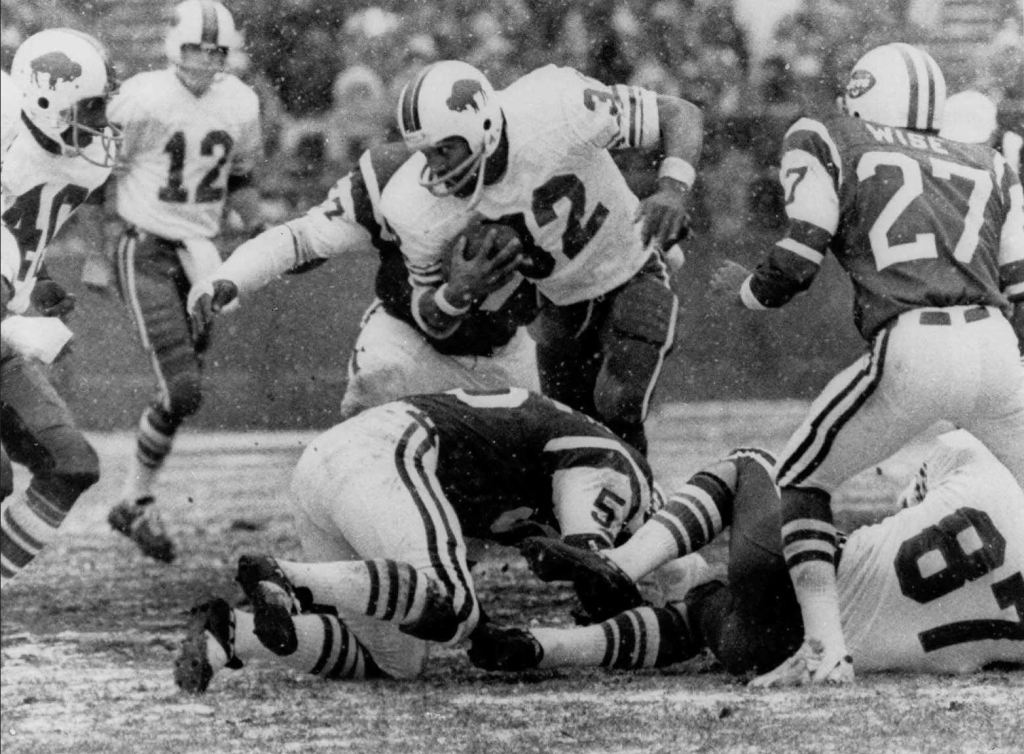
O. J. Simpson of the Buffalo Bills became the first player to rush for more than 2,000 yards in a pro football season, finishing the year with 2,003 after rushing exactly 200 yards in a 34—14 win over the New York Jets. With 1,803 yards before the start of the 14th and final game, Simpson broke Jim Brown’s 1963 record of 1,863 yards rushing in the first quarter. In gaining 200 yards on a snow‐covered field and leading the Bills to their ninth victory against five defeats (the Jets finished with a 4‐10 record) Simpson reached that lofty yardage level for a record third time this season (Brown did it twice in 1963). With Joe DeLamielleure, the rookie right guard, knocking Mark Lomas, the right end, out of the way, Simpson broke through the left side and gained 6 yards before John Little tackled him from behind with 10:34 gone in the first quarter. The game was stopped, the other offensive players pounded Simpson on the back and hugged him. An official handed the ball to Simpson, who took it to the Bills’ bench, where he was mobbed.
The game was tied at 7—7 in the second quarter. But Simpson’s 13‐yard scoring burst with 1:12 left in the first half snapped the tie, and 48 seconds later Bill Cahill took Julian Fagan’s 26‐yard punt and scooted 51 yards for another Buffalo touchdown. The Bills then spent the second half focusing on the attempt to raise O. J. to the unheard‐of plateau of 2,000 yards. At one point early in the fourth quarter, Simpson related, “Joe Ferguson [the rookie quarterback] came in and said I needed 50 yards for 2,000. We broke 20 off right away and we were going after it then.” With 6:28 left in the game, Simpson reached the mark on a 7‐yard smash through left guard to the Jet 13. This time he went to the sideline and was lifted to the shoulders of his excited teammates. He did not return to the game.
Marty Domres passed for two touchdowns and Lydell Mitchell snapped a Baltimore rushing record in the snow as the Baltimore Colts beat the New England Patriots 18—13. Domres connected with Cotton Speyrer in the first period and then teamed with Tom Mitchell, a tight end, on an 18‐yard scoring, pass for the winning points in the fourth quarter. Lydell Mitchell’s 143 yards enabled him to break the 18‐yard‐old mark of Alan Ameche by 2 yards with 963 for the season.
The Los Angeles Rams downed the Cleveland Browns by a final score of 30—17. When Lawrence McCutcheon ran 9 yards around end in the fourth quarter, he broke the Rams’ single‐season rushing record held by Dick Bass. McCutcheon, a rookie, finished‐with 1,097 yards. The Rams, who finished at 12‐2, also had a team scoring mark set by David Ray, their kicker. He booted three field goals and three conversions to increase his season total to 130 points. The Rams put Cleveland away in a 27—10 first half on two touchdown passes by their Most Valuable Player, John Hadl. It wasn’t Hadl’s best game, but Knox this year has developed a team with so much versatility and balance that the Browns didn’t have a chance after fumbling three times to fall out of it in a 13—7 first quarter. The Rams won by outpointing Cleveland in turnovers, 5-0, as linebacker Jack Reynolds recovered two fumbles, special-team player Bill Drake recovered one, cornerback Charlie Stukes made a key interception, linebacker Bob Stein made another and tackle Larry Brooks twice sacked the Cleveland quarterback, Mike Phipps. End Fred Dryer also got him twice, once with the help of the other Ram end, Jack Youngblood, who otherwise was in on two of the three tackles that led to the Cleveland fumbles. Also tackling on those plays were Rob Scribner, Merlin Olsen and Brooks.
At St. Louis, the Dallas Cowboys earned a playoff spot for the eighth straight year and clinched the N.F.C. Eastern Division title with a 30—3 rout of the Cardinals. The Cowboys and Cards were tied, 3—3, after a quarter. Then Roger Staubach put on an aerial show in the second and third quarters as the Cowboys set up a meeting with the Los Angeles Rams next Sunday in Dallas. Staubach, the No. 2 passer in the N.F.C., hit 14 passes in 19 attempts for 256 yards and three touchdowns. Staubach left the game with injured ribs in the fourth quarter, but not before he had set up the rout. Drew Pearson, a rookie wide receiver, caught two scoring passes, his only two of the season. Robert Newhouse took over the heavy‐duty running from Calvin Hill, the conference’s leading rusher. Newhouse picked up 124 yards on 19 carries.
Ken Anderson hit his star wide receiver, Isaac Curtis, for touchdowns twice yesterday as the Cincinnati Bengals defeated the Houston Oilers, 27—24, in the Astrodome and wrapped up the American Football Conference Central Division title. For their efforts, the Bengals gained the dubious honor of meeting the National Football League’s defending champion, the Miami Dolphins, next Sunday at Miami. With Houston leading, 10—3, in the second quarter, Anderson connected with Curtis for a 77‐yard scoring, play. Then Horst Muhlmann hit on a 33-yard field goal and the Bengals led at half‐time, 13—10. Anderson teamed with Bob Trumpy on a 10‐yard scoring play in the third quarter and then found that man Curtis again. The rookie speedster froth San Diego State gathered in the pass for a 67‐yard touchdown. Last week, in the key victory over the Browns, Curtis caught three touchdown passes. But the Oilers weren’t giving up. Their backfield had two former Bengal players, Fred Willis and Paul Robinson, and each scored on 1‐yard runs. With 3 minutes 34 seconds left, the Oilers trailed by 3 points. But Cincinnati held on and won its second division title in four seasons.
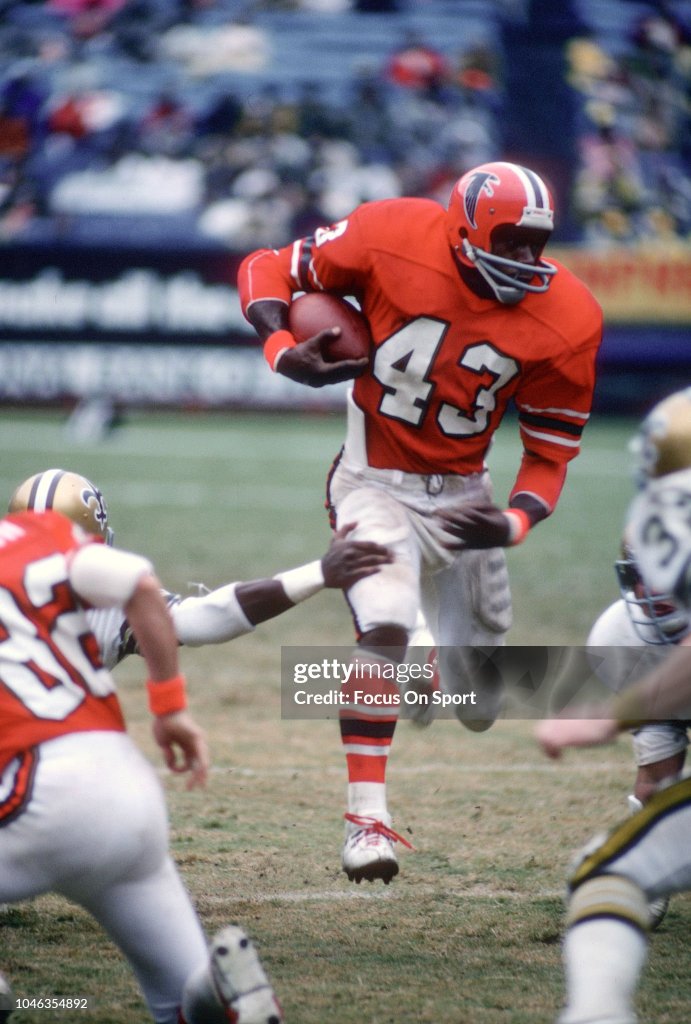
The Falcons finished their best season ever with a 9‐5 record and a feeling of what might have been. They broke two‐game losing streak with their 14—10 victory over the New Orleans Saints. If they had won both games — upsets by the Bills and Cardinals — they would have been the National Conference wildcard team. But now Atlanta can only wait till next year. The. Saints presented some unexpected problems for the Falcons, who had swamped them, 62—7, earlier in the year. Eddie Ray scored twice on 1‐yard runs, but Bobby Scott, a reserve quarterback, led the Saints’ comeback. He connected with Bob Newland for a touchdown and Bill McClard booted an 11‐field goal. But the Falcons picked off two Scott passes and held on. Speaking of what might have been, pity poor Dave Hampton. Last season, Hampton passed 1,000 yards rushing for the season in the final game, but fell short when he was thrown for a loss on his next rush. Yesterday, he needed 87 yards for 1,000 but, despite 27 attempts, he only got to 84.
The frost-free Minnesota Vikings, acting as if the 30-degree snow storm was tropical weather, warmed up for next Saturday’s NFL playoff test by demolishing the New York Giants, 31—7, Sunday with the help of Terry Brown’s 63-yard touchdown run with an intercepted pass. The almost unreal setting, with the frozen fans throwing snowballs and singing “Goodbye, Alex” while the players were slipping and sliding on the snow-covered Yale Bowl grass, was a frustrating end to the coaching career of Alex Webster, who resigned as Giant coach on Wednesday. The Vikings, who practiced in colder weather than this in Bloomington last week, will go into the playoffs with a 12-2 record when they play wild card Washington (10-4) Saturday.
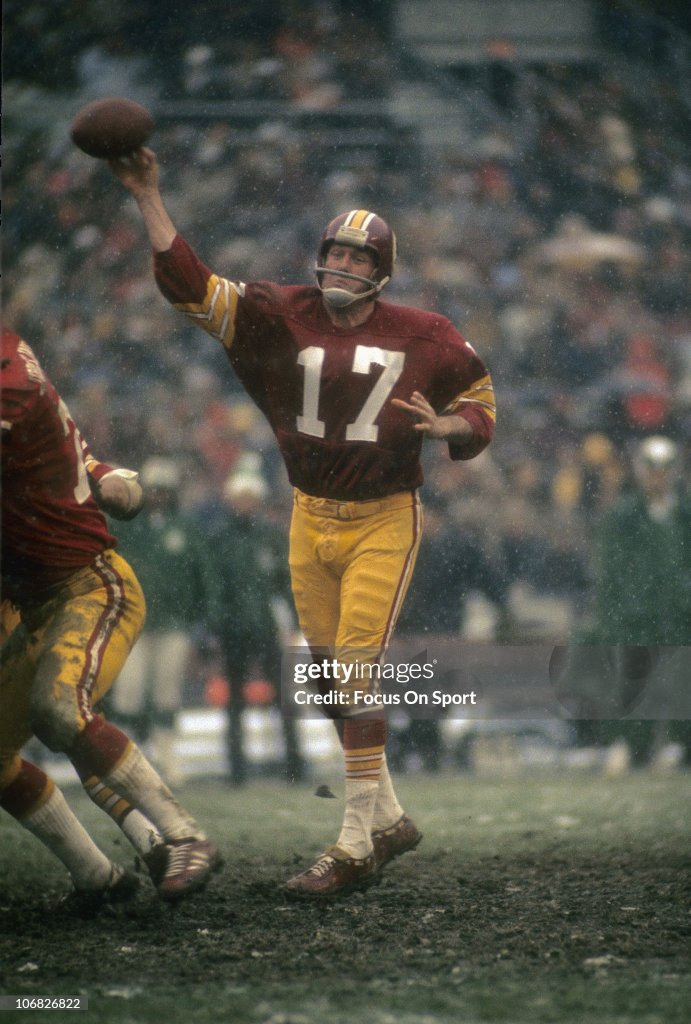
With his best game coming on the last game of the regular season, Larry Brown pulled the Washington Redskins into the National Football League playoffs today as he scored four touchdowns in a 38—20 victory over the Philadelphia Eagles on a slick, snow‐covered field. Brown, the Redskins peerless running back, gained 255 yards running and catching the football as Washington came from behind, 10—0 with 24 points in the second quarter and 14 more in the second half. The Redskins, who won 10 of 14 games, play the Minnesota Vikings, Central Division winners, at Bloomington, Minnesota, on Saturday in the opening game of the playoffs. Although Washington tied Dallas for first place in the Eastern Division of the National Conference, the Redskins go to Minnesota as the wildcard entry in the playoffs, the divisional second‐place team in the conference with the best percentage.
The Green Bay Packers shut out the Chicago Bears, 21—0. Jerry Tagge completed only three passes for Green Bay, but two went for touchdowns to Jon Staggers. Those passes and some sparkling running by John Brockington and MacArthur Lane helped Green Bay, the defending Central Division champion, close its season at 5–7‐2. Brockington gained 142 yards and Lane 101.
The Kansas City Chiefs received 20 gift-wrapped points and Jan Stenerud kicked four field goals Sunday as the Chiefs beat San Diego, 33—6. San Diego mistakes accounted for the Chiefs’ first and last touchdowns and two Stenerud field goals when two fumbles, an interception and a partially blocked kick put the Chiefs in commanding field position. The Chiefs took advantage of the Chargers’ mistakes as they ended their season before record number of no‐shows — 35,793 who had purchased tickets didn’t show up in the 22‐degree weather.
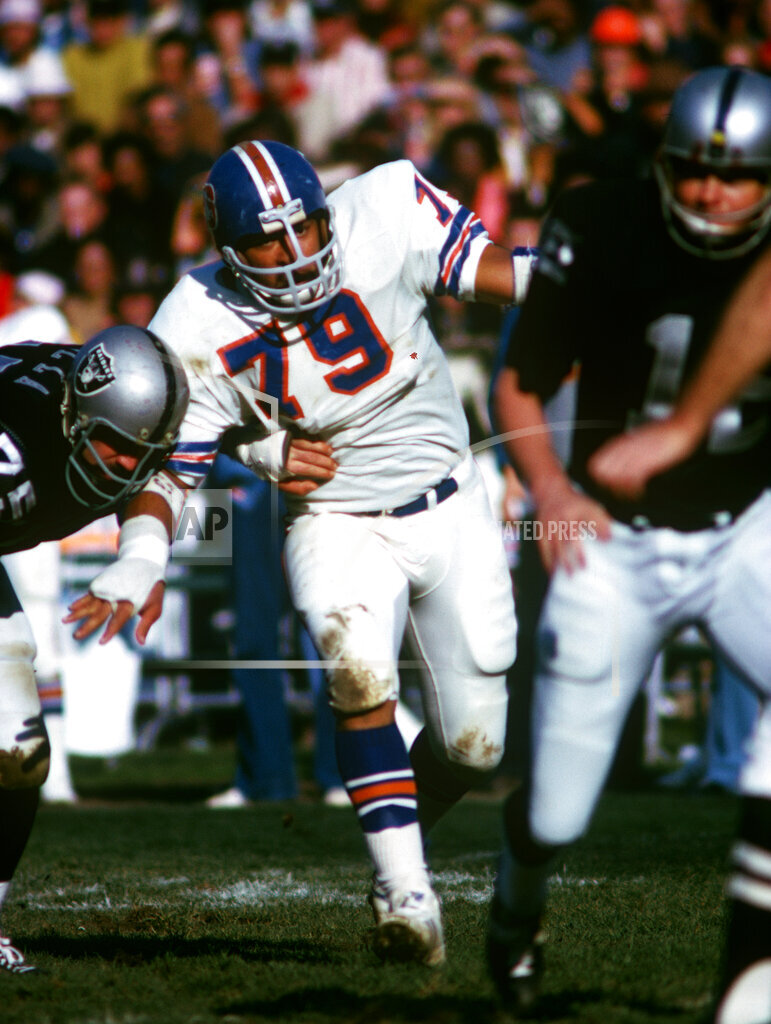
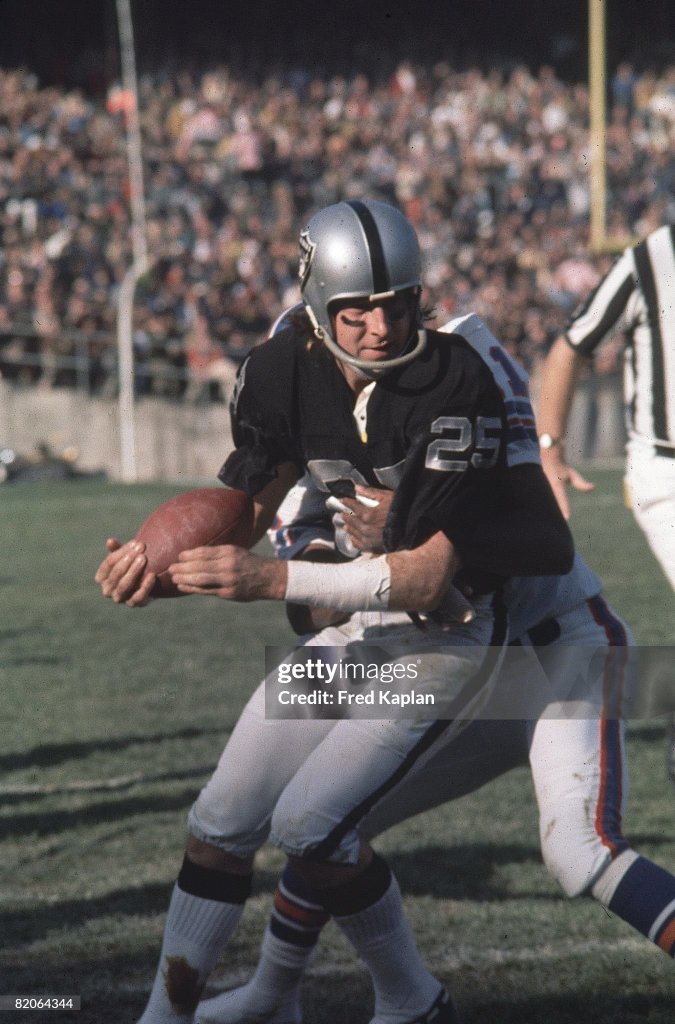
After dominating the first half and surviving some anxious moments in the second, the Oakland Raiders wrapped up their fifth division championship in six years by beating the Denver Broncos, 21—17, today. The Raiders will play Pittsburgh, wildcard entry in the American Football Conference playoffs, here in the Coliseum next Saturday. Last year, the teams met in Pittsburgh, also in the first round of the playoffs, and Pittsburgh won on a freak play in the closing seconds. For Denver, today’s defeat could not tarnish the best season the team has had in its 14 years. It finished with seven victories, five defeats and two ties in the first season under Coach John Ralston. Denver carried the fight to the powerful Raiders right to the end, even though its quarterback, Charley Johnson, was knocked out of action early in the fourth quarter. That was the true turning point. For most of the first half, the Raiders simply overpowered Denver (sacking Johnson five times), and it seemed surprising that their lead was only 14—0 late in the second quarter.
Then two penalties cost the Raiders 6 points, and a holding penalty took them out of field‐goal range inside the last two minutes. When the Broncos crossed midfield for the first time after the ensuing punt, an offside penalty gave Denver a shot at a 50‐yard field goal. Jim Turner’s kick just did get over the bar as time ran out. So it was 14—3 instead of 17—0 when the second half started, and when Charley Smith lost a fumble on the Denver 46, the Broncos put together an impressive 54‐yard drive. Johnson’s pass to Haven Moses from 13 yards out produced the touchdown, and it was 14—10 only midway through the third quarter. The initiative seemed with Denver now, as the Oakland offense went nowhere, and the fourth quarter began with. Denver in a promising position on its 38. A quick first down put the Broncos on their 49 and moving, when everything changed abruptly. One pass by Johnson, who was subjected to a hard rush, was incomplete. On the next one, he was buried just as he got the ball off, and it took a while to revive him and help him off the field. Backup Steve Ramsey made it close, but the Raiders held on to win.
Buffalo Bills 34, New York Jets 14
New England Patriots 13, Baltimore Colts 18
Cleveland Browns 17, Los Angeles Rams 30
Dallas Cowboys 30, St. Louis Cardinals 3
Cincinnati Bengals 27, Houston Oilers 24
New Orleans Saints 10, Atlanta Falcons 14
Minnesota Vikings 31, New York Giants 7
Philadelphia Eagles 20, Washington Redskins 38
Green Bay Packers 21, Chicago Bears 0
San Diego Chargers 6, Kansas City Chiefs 33
Denver Broncos 17, Oakland Raiders 21
Born:
Scott Storch, American record producer and songwriter, on Long Island, New York.
Died:
Sid Barnes, 57, Australian cricketer and batsman with 163 caps for the Australian national side, was found dead of an overdose of barbiturate.
 History Diaries