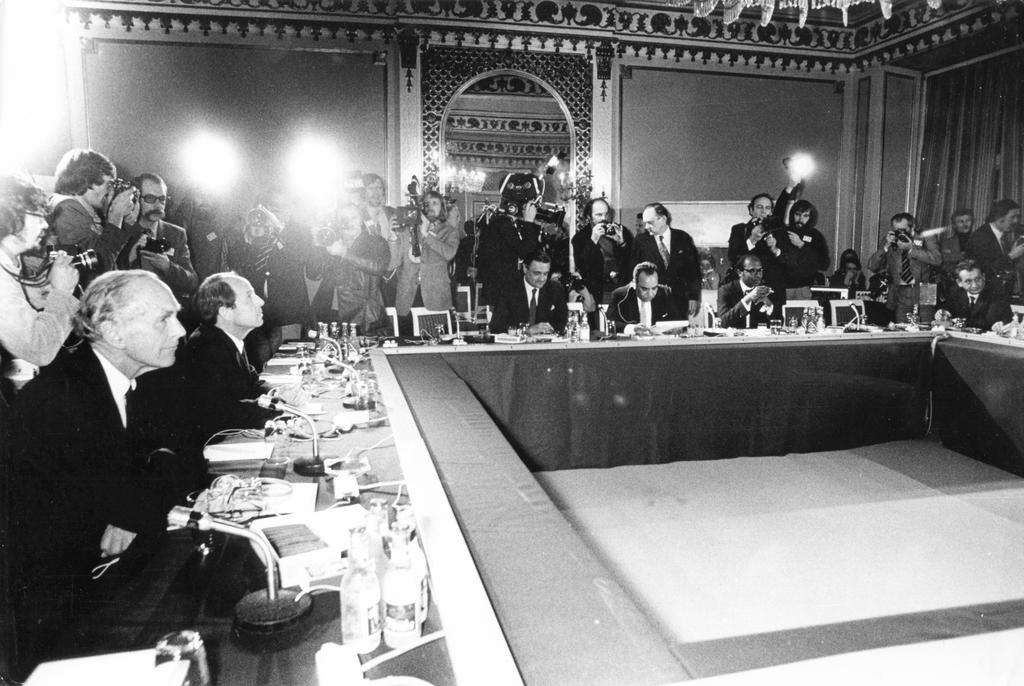
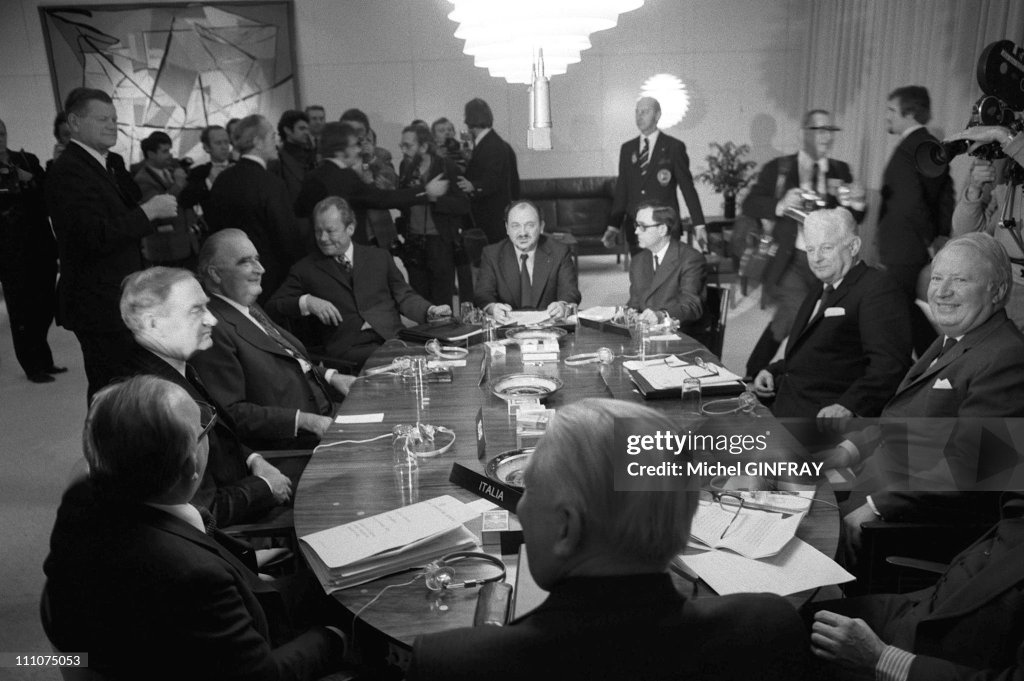
Nine European Common Market nations met in Copenhagen. The energy crisis dominated the conference. Uninvited Arab foreign ministers arrived at the conference and virtually took it over. Arab spokesmen denied any attempt at blackmail. Only the Dutch continue to resist the Arabs.
Four Arab foreign ministers arrived in Copenhagen unexpectedly and brought the European Common Market the message that before the oil embargo can be ended, Europe must do more to influence a Middle East political settlement favorable to the Arab cause. Their arrival brought confusion to the meeting of heads of government of the Common Market nations.
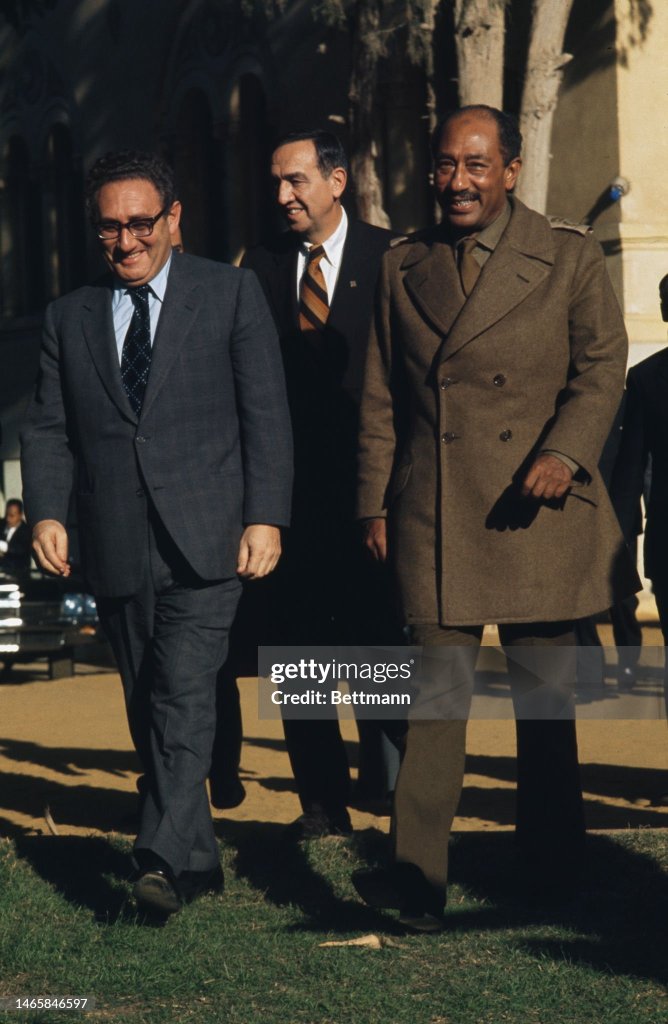
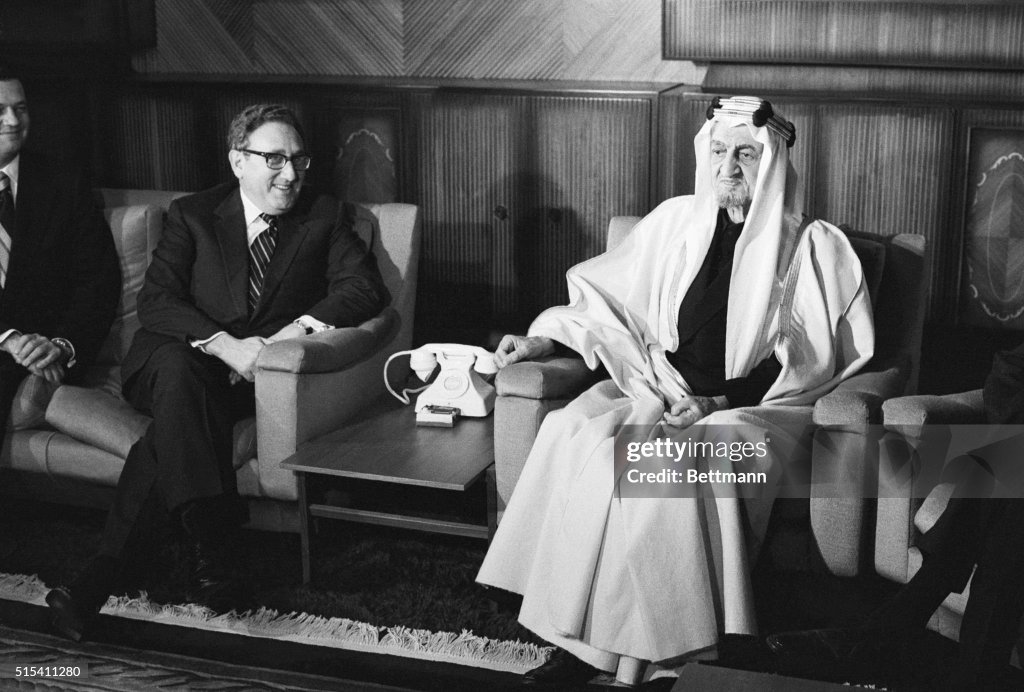
It is being reported that Saudi Arabia’s lifting of the U.S. oil embargo will happen only if significant advances are made at the Mideast peace conference in Geneva next week. Secretary of State Henry Kissinger discussed the conference with President Anwar Sadat of Egypt and Saudi Arabia’s King Faisal. Secretary of State Kissinger conferred for 90 minutes in Riyadh, Saudi Arabia, with King Faisal to inform him of American efforts to move the Middle East crisis to the peace table and to try to convince him that the oil embargo against the United States should now be lifted.
In Cairo, before leaving for Riyadh, Mr. Kissinger had a meeting with President Anwar el‐Sadat and they agreed that “disengagement” between Egyptian and Israeli forces in the Suez area should be the principal subject discussed during the first phase of the Middle East peace conference. This appeared to be an important American concession to the Egyptian desire to get down as soon as possible to the issue of Israeli troop withdrawal from the west bank of the Suez Canal and the Sinai Peninsula.
President Anwar el‐Sadat today ruled out “direct negotiations” with Israel at the Middle East peace conference opening in Geneva on Tuesday. Speaking at a news conference after he and Secretary of State Kissinger had completed more than six hours of talks, Mr. Sadat said in reply to a question that the Egyptian representatives would “gather in the same room” with the Israelis at Geneva. “But if you mean direct negotiations,” he went on, “no.”
In Jerusalem, the cabinet continued debate on Israel’s attendance at the talks. Ellsworth Bunker will head the U.S. delegation at the peace conference.
There was no immediate official Israeli comment on President Sadat’s statement that Egypt would not negotiate directly with Israel in Geneva. Israel’s position has been that she wants direct negotiations with the Arabs but it was believed that Israel would accept some form of indirect talks as the first stage in peace talks.
Pan Am warned that transatlantic flights to London may be cut. British Airways and BOAC stated that flight cancellations are widespread due to the fuel shortage.
Fifteen American, European and Japanese companies have agreed to buy Iranian crude oil at record prices. Iran offered the oil earlier at a much lower price, but the oil companies and the Nixon administration refused. Iran began selling oil to Eastern Europe, Asia and Africa after the U.S. declined to buy it. Iran’s oil minister thinks that Western oil companies must shoulder some of the responsibility for the U.S. energy crisis.
The first blackouts of Britain’s energy crisis darkened extensive parts of London and the rest of the nation last night. Thousands of households in southwestern, western and northern London suffered a loss of electrical current starting at about 10:30. The blackouts in some places lasted up to 90 minutes. One of the areas most affected by the blackouts was the Midlands in central England, where an estimated 100,000 homes had no power.
Some of the several hundred political prisoners held by the military police since last month’s student riots in Athens were released today. They included a dozen professors, journalists, actors and lawyers. Constantine Rallis, a government spokesman, told reporters that all prisoners would be released by Monday, He said that he was unable to say how many were in custody or how many were set free today. More than 1,000 Greeks were arrested and at least 13 killed when the government of George Papadopoulos quelled the riots. A week later, on November 25, a military coup d’état overthrew it and installed the present military‐dominated government.
In Marseilles, France, racial and political tension is high. A bomb was thrown into the Algerian consulate, killing four people. Witnesses said the bomb, which was concealed in brown paper parcel in a ground floor corridor, blasted the heavy main door of the consulate building off its hinges, wrecked furniture, ripped plaster from the ceilings and blew out windows. Except for an Armenian businessman, all the victims were Algerian. Consul General Majdid Gaouar, who arrived at the building only a few minutes before the blast and suffered a slight head wound, said the consulate had received many threatening letters and telephone calls.
In August, an Algerian went berserk on a Marseilles bus and stabbed the French driver to death. Numerous Arabs were attacked and 11 killed in Marseilles, Metz and Paris in violence that resulted. Police reinforcements were sent into Marseilles to guard against a racial explosion. There are 50,000 Arab North Africans in Marseilles and Government officials said that about 125,000 foreign workers entered France last year, many through the city. Of 3.7 million foreigners in France, a total of 755,000 are Algerian, most of them unskilled.
A dormitory explosion at a plastics factory killed 80 teenage apprentice workers in Tachov, Czechoslovakia.
A group of three researchers from West Germany’s Schering Pharmaceutical Company announced in the science magazine Nature that they had found “a simple, practical technique” of separating sperm with the X chromosome from that with the Y chromosome, a process described by the Reuters news agency as “a development of wide implication for human and animal genetics.”
France’s Finance Minister (and future President), Valery Giscard d’Estaing, announced that his government had agreed to accept the massive collection of paintings, sculptures, lithographs and pottery accumulated by Pablo Picasso, relieving Picasso’s heirs from payment of inheritance tax. The donation did not include the artwork of Picasso himself.
In almost a year since the signing of the Paris ceasefire agreement, the morale of many South Vietnamese fighting units appears to have sagged seriously. The drop in morale tends to be sharper in ordinary infantry and militia units than in such élite groups as the air force or the marines. But throughout the country, one can detect a weariness with the fighting that apparently has no end, compounded by soaring prices that make a soldier’s lot an even unhappier one than it has always been. The strain of the 11 months is beginning to show in the armed forces, as in the rest of South Vietnamese society. Soldiers and militiamen are frequently involved in robberies and casual acts of violence. Suicides are not unusual.
In Saigon, a corporal in the vice‐presidential guard was sentenced to 10 days in the stockade for having gone AWOL. On the fourth day of his incarceration, he managed to grab an M‐16 and shot a captain. Then he shot himself to death. An army major who ran out of money burst into the office of his commanding general and, flashing his pistol, asked for a loan. The general complied. In some infantry units, soldiers are reported to be demanding — and getting — leaves at gunpoint. “Only the most submissive go AWOL,” said an officer with first‐hand experiences of this phenomenon. “The others want authorized leaves — whenever they want them.” Another officer, a lieutenant, observed: “It’s the buddy system now. If you want a private to do something, you just use sweet talk and kindly ask him to do this or that favor. If he feels like it, he’ll do it; otherwise just forget it — and never give an order.”
Officially, the South Vietnamese armed forces total about 1.1 million men, in a population of 19 million. There are reportedly 434,000 men in the army, 45,000 in the Navy, 50,000 in the Air Force, and 13,000 in the marines. In addition, there is the militia, with 294,000 men in the well‐armed regional forces and 258,000 in the less important popular forces, most of which operate in their home areas. However, many units are believed to be chronically under strength. Although officially desertion rates have not changed much since January — running about 12,000 a month — some Vietnamese say frankly that since the departure of American officials, who kept commanders relatively honest, the statistics are no longer believable. And in places where soldiers cannot desert such as the encircled city of An Lộc — heroin addiction is spreading rapidly. The Government has begun to accuse the Communists of providing heroin.
The House and Senate passed the bill to place the nation on daylight savings time to conserve power. Congress also passed a national 55 m.p.h. speed limit. The Nixon administration believes that the energy crisis may not be as severe as anticipated; Saudi Arabia may lift its U.S. oil embargo next month. Federal energy officer John Sawhill appeared before Congress today and painted an even more optimistic energy picture. Energy czar William Simon stated that this winter will be less disrupted by the energy crisis than first anticipated.
The House voted to ban shipment of petroleum for military use in Vietnam, Cambodia and Laos as it sought to move toward final action on an emergency bill, Minutes later, it rejected a similar ban on oil shipments to Israel. Earlier, the House voted to allow Congress to override the President if he Ordered gasoline rationing.
President Nixon lit the national Christmas tree and stated that the number of Christmas lights doesn’t measure the happiness of the Christmas season. The President and his aides are considering taking a train for their trip to Florida on the day after Christmas, instead of flying. Experts aren’t sure if the cost would actually be less than flying. Despite President Nixon’s own travel plans, White House spokesman Gerald Warren said that the President still feels that people should spend more time at home to conserve fuel.
Federal energy planners disclosed that the alternatives to gasoline rationing under consideration included a mandatory one‐day‐a-week driving ban and the closing of filling stations on Saturdays as well as Sundays to limit long‐distance driving.
Independent truckers continued to protest their plight in Washington and on America’s highways. Transportation Secretary Claude Brinegar met with truckers and truck stop owners throughout the day. Brinegar stated that he hopes to meet most of the truckers’ demands, and also hopes that trucks will begin moving again without further violence. On Capitol Hill, a more militant group of truckers spent the day with Kansas Senator Robert Dole. J.W. Edwards headed the group and outlined its demands.
Incidents of violence have been aimed primarily at drivers who were unwilling to the support work stoppage. One of the truckers’ leaders was arrested in Delaware today.
Senators Lowell Weicker and Sam Ervin have made their own personal financial statements public. Ervin stated that he released his income tax statements without fear of wrongdoing. The Watergate investigation continues.
A book published by former prostitute Norma Levy charges that President Nixon’s nephew Donald arranged orgies in financier Robert Vesco’s private jet.
The Lockheed Aircraft Corporation, saved from bankruptcy in 1971 by a government guarantee of $250‐million in loans, sought urgent help to save itself from a new financial crisis. The company said it was in danger of running out of cash next year and that it might have to seek new short‐term credits against already built trijets on which the airline’s customers have obtained agreements to delay delivery.
Memorex filed a $1 billion antitrust suit against IBM. The Memorex Corporation, manufacturer of peripheral equipment for computers, and several of its subsidiaries yesterday filed antitrust suits in Federal Court in San Francisco against the International Business Machines Corporation. The suits ask damages of just over $1‐billion, and if successful could bring an award of $3‐billion. The actions charge IBM with attempting to monopolize the “development, production, distribution, sale, leasing and servicing of electronic data processing equipment.” The complaints, before the tripling required under antitrust laws, claimed damages in the amounts of $750‐million for Memorex; $100‐million for the ILC Peripherals Leasing Corporation, and $200‐million for foreign subsidiaries.
The bank‐robbery trial of Joanne D. Chesimard and Fred Hilton ended in a mistrial here yesterday in Federal Court as a single juror held out against the other 11 jurors’ verdict of guilty. Within hours after Judge Lee P. Gagliardi had declared mistrial, the case was assigned to Judge Arnold Bauman. A new trial for the black militants will begin Monday morning. The trial before Judge Gagliardi was in its seventh day yesterday when, just before noon, the jurors sent out a note saying that “after consideration of each count against the defendants and extensive deliberation of the issues involved in the case, we the jury are unable to reach a unanimous verdict.” On three previous occasions when the jury sent out similar notes, Judge Gagliardi made it return to its deliberations. This time, he asked the foreman if the situation was the same. The foreman said, “Yes.” Judge Gagliardi then asked if further deliberation would be fruitless. The foreman said, “Yes.” “Then,” the judge said, “I’m going to declare a mistrial in this case.”
John Cappelletti of Penn State received the Heisman trophy yesterday as college football’s outstanding player. Cappelletti was presented the award by Vice President Gerald Ford. Cappelletti dedicated the trophy to his younger brother who has leukemia.
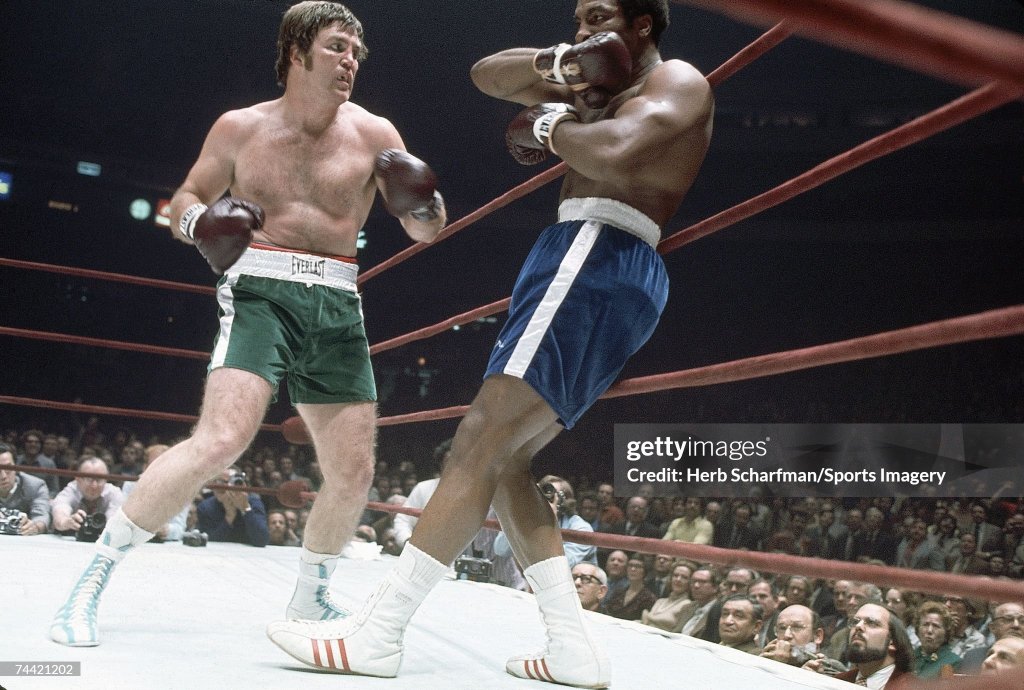
In only 2 minutes and 21 seconds, Jerry Quarry battered Earnie Shavers into a helpless knockout victim at Madison Square Garden last night in a brutal heavyweight bout that attracted 14,962 spectators, including George Foreman, Joe Frazier and Muhammad Ali. Quarry, however, incurred a possible broken bone in his left wrist with a hook that hit high on Shavers’s head. The chunky Californian will go to French Hospital for X‐rays this morning.
Dow Jones Industrial Average: 815.65 (+15.22, +1.90%).
Born:
Thuy Trang, Vietnamese actress, in Saigon, Republic of Vietnam (died 2001).
Pat Burke, Irish-American NBA center (Orlando Magic, Phoenix Suns), in Dublin, Ireland.
Died:
Bill Enis, 39, American sportscaster, died of a heart attack.
 History Diaries