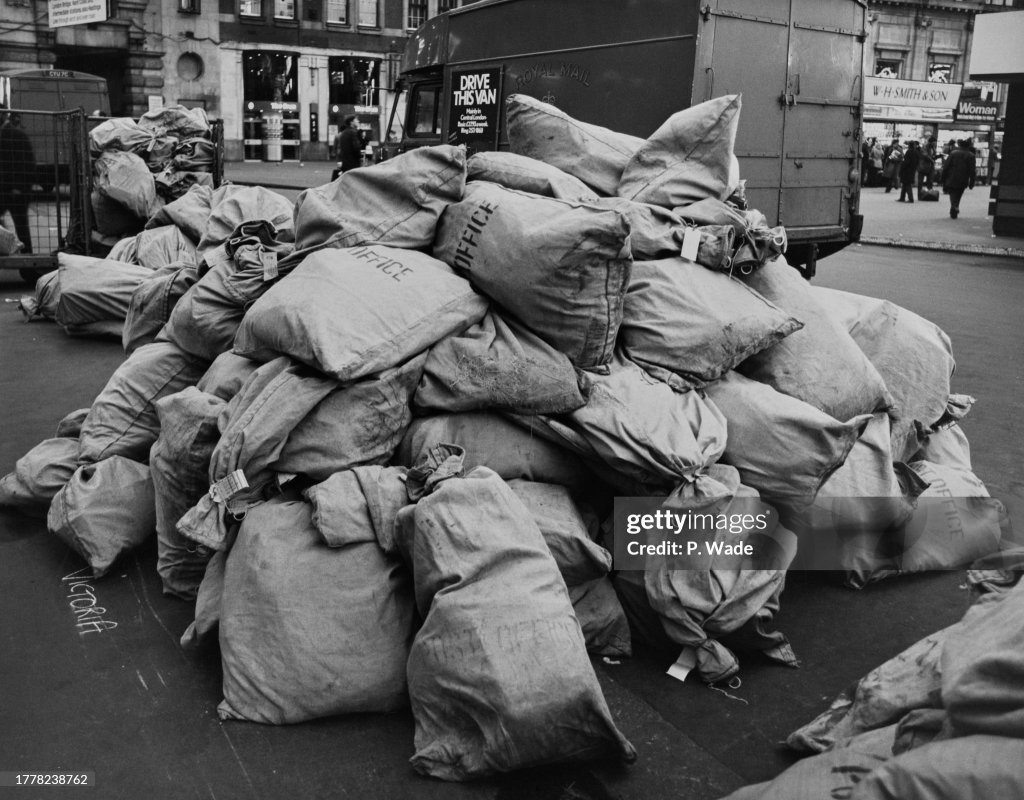
British Prime Minister Edward Heath told the House of Commons that his government had issued an order mandating a three-day work week for industries in the United Kingdom, to take effect on January 1, in order to reduce the consumption of electricity and the demands on coal and oil supplies. Heath, who cited labor strikes by railway workers and coal miners, also announced that the nation’s television stations would be required to sign off the air every evening at 10:30 p.m., beginning on December 17. Prime Minister Edward Heath explained that the government must assure the survival of the nation. Britain was faced with work slowdowns by coal miners, electrical workers and railroaders.
All television programming in Britain will stop at 10:30 p.m. nightly. Britain’s population stabilization group is concerned.
A bomb-laden, hijacked laundry truck exploded outside a rural Northern Ireland police station in the latest in a wave of Irish Republican Army attacks on security forces. The blast damaged that station and nearby homes at Newtown Hamilton in County Armagh, 40 miles southwest of Belfast. The area had been evacuated before the blast.
Negotiators at the East‐West conference on troop reductions in Central Europe recessed today for the holidays, and Poland’s delegate publicly attacked Western proposals made in the first six weeks of discussions. At a news conference presenting what he said was the Soviet‐bloc view, Tadeusz Strulak of Poland criticized an Atlantic alliance proposal for a first phased reduction of Central European forces as “not helpful” and not serious enough. “We cannot contemplate as serious enough,” Mr. Strulak declared, “a program that demands that only United States and Soviet forces are to be reduced”—and these “in an inequitable way.”
An explosion killed more than 80 teenagers staying at a factory dormitory in the town of Tachov in Czechoslovakia. The victims were all apprentice factory workers at a plastic manufacturing company and were sleeping inside the two-story building when the blast occurred at 3:15 in the morning.
Margrethe, queen of the Danes, asked former Foreign Minister Poul Hartling to lead efforts to form a new government after last week’s inconclusive general election. Hartling got the job after acting Prime Minister Anker Joergensen said he had failed in his own attempts to create a government among the 10 parties elected to the parliament. Joergensen’s Social Democrats lost heavily. Hartling’s Liberal Party is one of three making up the non-Socialist opposition in the outgoing parliament, but there were signs that interparty disagreements on both the structure and leadership of a new government persisted.
The Soviet Union barred Olle Stenholm, Moscow correspondent for Swedish Radio and Television, from the country, accusing him of “initiating an anti-Soviet campaign in the Western press.” Stenholm is at present on holiday abroad. The Soviet Foreign Ministry informed the Swedish Embassy it was withdrawing his accreditation and he could not return. Stenholm, 31, last summer obtained one of the first radio interviews with dissident physicist Andrei D. Sakharov.
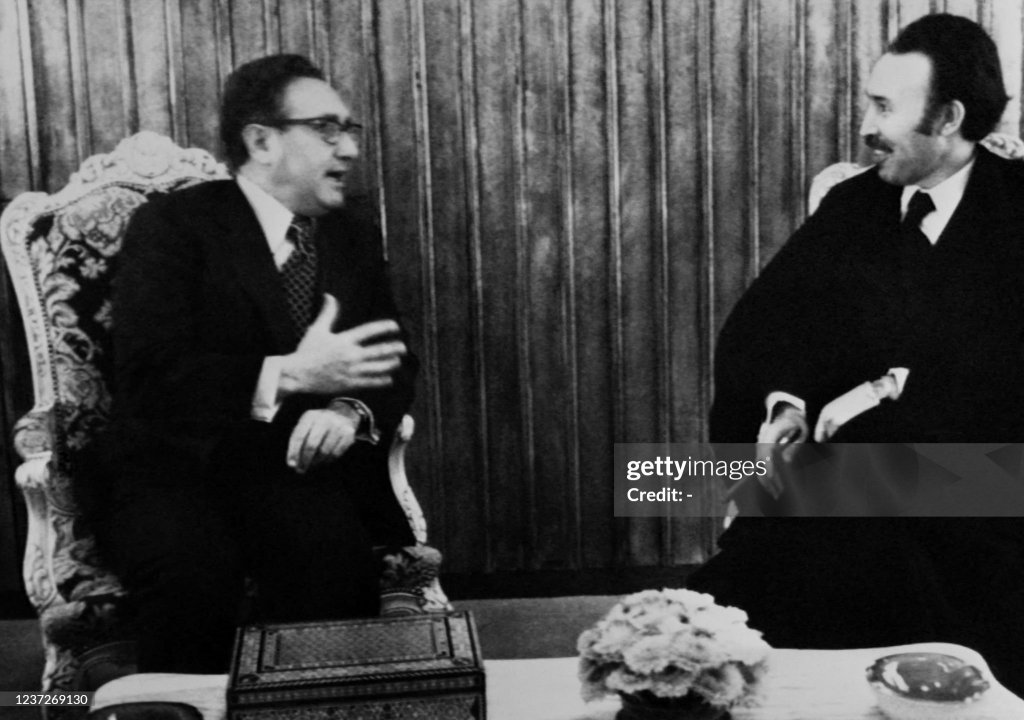
Secretary of State Henry Kissinger is in Cairo, discussing the Geneva peace conference with Egyptian officials. Israeli Prime Minister Golda Meir today expressed doubt that Israel will attend those talks. Earlier, Kissinger visited Algeria. Later this month, Kissinger will meet again with North Vietnam’s Lê Đức Thọ in Paris to discuss peace in Southeast Asia.
The situation in Southeast Asia looks to be threatening. North Vietnamese military troops remain in South Vietnam and an increase in troop strength is likely. The Communists have come up with new developments designed to beat South Vietnam.
The Senate voted to cut off the supply of U.S. oil to South Vietnam. The Senate voted 60 to 33 to cut funds for the shipment of fuel to Indochina from the $73.2 billion defense appropriations bill. The vote was on an amendment by Senator Norris Cotton (R-New Hampshire), who said he was opposed to shipping oil out of the country when the United States faces a fuel shortage crisis. The action was symbolic, however, in that Cotton noted that the amendment would not prevent the Pentagon from using funds already appropriated to requisition a planned 23,500 barrels of fuel oil daily for shipment to Vietnam and Cambodia. The appropriations bill now must go to a conference committee with the House to reconcile differences between the Senate and House versions of the bill.
A group of 15 senior South Korean politicians, educators and religious leaders, including the nation’s only living ex‐President, called for the full restoration of democracy to head off “a grave national crisis.” The statement by the “consultative conference,” avoided direct attack on President Park Chung Hee, but indirectly attacked the restrictive Constitution he imposed last year by demanding return of powers to the National Assembly.
Egypt’s Lieutenant General Saad el-Shazly, praised as a hero in the initial days of the Yom Kippur War, was removed from his position as Chief of Staff of the Egyptian Armed Forces after a dispute with President Anwar Sadat.
Venezuela will use oil as political weapon according to new President Carlos Andres Perez. Venezuela supplies one-third of U.S. oil imports. In a news conference in Caracas, Perez promised not to reduce U.S. oil shipments during the energy crisis, but criticized President Nixon’s foreign policy towards Latin America.
The U.S.-owned Cities Service Oil Co. has evacuated three of its American executives and their 13 dependents from Argentina, U.S. Embassy sources in Buenos Aires said. The move followed receipt of a $10 million ransom demand for the release of Exxon executive Victor Samuelsson who was kidnaped a week ago. The demand for ransom in the form of food, clothing and construction material for the poor came from the “People’s Revolutionary Army.”
A dispute over the Socialist Party’s victory in municipal elections in the southern Mexico city of Jaltipan has led to rioting that left at least three persons dead and hundreds injured. Fires ruined more than 40 houses. The rioting erupted after the Veracruz state congress refused to validate the outcome of the October 7 election. The Socialists, whose candidate won the contest for mayor, said they were trying to work out a compromise with their opponents, Mexico’s traditional ruling party, the Institutional Revolutionary Party (PRI), when 55 policemen broke up the meeting and began removing documents and furniture. At that point, they said, rioting started. All those dead were Socialists.
Uganda freed 33 foreigners held for more than 48 hours on suspicion of being mercenaries, diplomatic sources said in Kampala. The sources said the foreigners — a party of young tourists on an overland trip across Africa — were heading in their own vehicles with a police escort toward Kenya. The party included Britons, Dutch, Americans, Canadians, Australians, a New Zealander and a Japanese.
“There is peace, there is joy.” Those were among the cries of welcome in the Kingdom of Kom as the Afo‐A‐Kom, the statue manifesting the tribal nation’s spiritual and political heritage, was returned to its people after being stolen seven years ago.
Claude Vorilhon, a French sports-car test driver and journalist, moved into a new career after experiencing, as he described it, an encounter with an extraterrestrial being while in a secluded area. Within a year, he published his first book, Le Livre Qui Dit La Verité (“The Book That Tells the Truth”) would change his name to “Raël”, and establish his own cult.
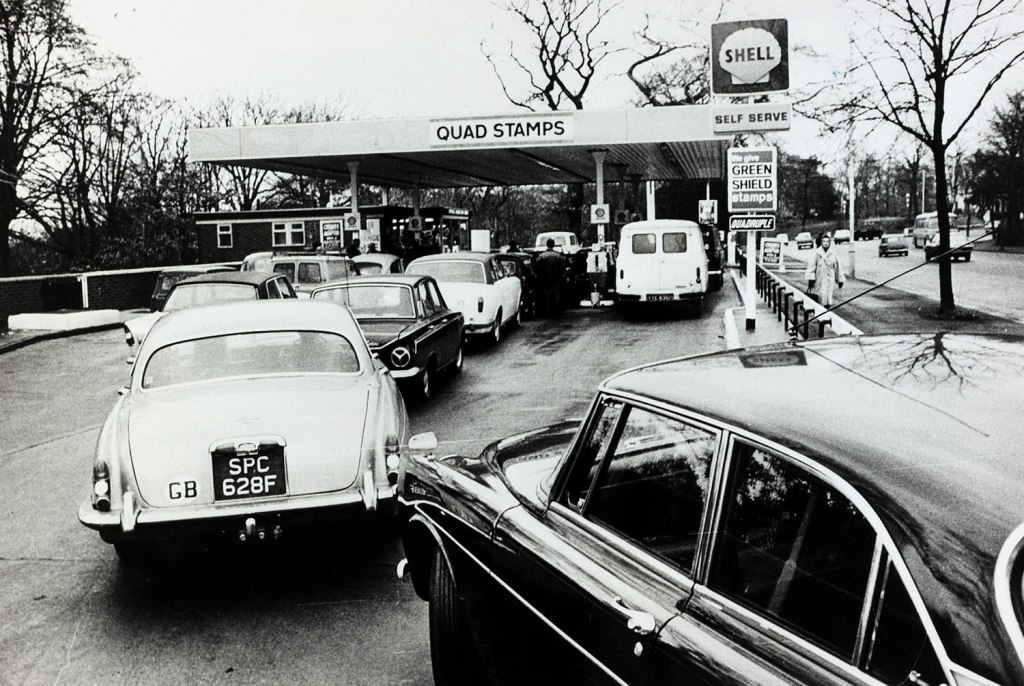
The Nixon administration announced more plans to conserve fuel and electricity. The President declared that voluntary energy conservation programs have been successful, and he praised the response of Americans to the call for conservation. Later, President Nixon and energy czar William Simon met with governors. The Administration proposed new energy-saving measures as President Nixon expressed guarded hope that voluntary conservation would make gasoline rationing unnecessary. In his second recent appearance at a White House energy briefing, Mr. Nixon praised his new energy chief, William E. Simon, who announced the new measures. They include initially voluntary and eventually mandatory lighting reductions at all businesses; a tentative proposal to eliminate highway lighting, subject to safety studies; priority to car pools in the allotment of Government employe parking places and an appeal against the use of electric space heaters by the public.
The government announced erroneously yesterday that gasoline production would be cut 25%. Simon today corrected the figure to 5%. He admitted the mistake and accepted blame for the error. Gasoline rationing may be avoided.
A Senate committee is investigating the reasons behind the energy crisis. Committee staffer LaVern Duffy testified that the Office of Emergency Preparedness failed to increase oil imports sufficiently in 1971 and 1972. Duffy stated that government officials gambled with the energy situation and lost. Investigators for a Senate subcommittee studying the oil and gasoline shortage testified that Administration officials who set import quotas ignored for more than two years warnings that domestic supplies were insufficient to meet rising demand. The investigators said key White House officials “never saw” a 1972 staff report predicting an oil deficit, and that one official intervened at least once to support an industry position against increasing imports to a level that would meet demand.
Former Office of Emergency Preparedness director George Lincoln testified that officials within the organization couldn’t decide on definitive action. Senator Henry Jackson questioned Lincoln about contingency plans for an Arab oil cutoff. Lincoln claimed that a contingency plan was formulated by his department, but he stated that the plan was surrendered to the General Services Administration when the Office of Emergency Preparedness was disbanded.
The House voted to ban the use of fuel to bus children beyond their neighborhood schools. Justified by its supporters as an “essential fuel saver,” the antibusing amendment was attached to an energy bill during an emotionally charged session. Representative John Dingell of Michigan attached the amendment to the emergency energy bill. The legislation is not likely to pass the Senate.
Independent truckers began a two-day work stoppage as strikers harassed those truckers who remained on the job. Most union truckers continued their routes, traveling in convoys. A member of the Joliet livestock exchange stated that the livestock industry and the entire food industry will come to a grinding halt if the strike lasts as long as one week.
Some airline pilots are considering a work stoppage during the peak holiday travel season to protest airline cutbacks. Airlines and the Air Line Pilots Association strongly protested what they called “inequitable” fuel allocations, and scattered pilot groups threatened a holiday work stoppage if airline fuel allotments were not increased. Pan Am laid off more employees today.
The nomination of William J. Casey to be president of the Export‐Import bank was stalled in the Senate Banking Committee over charges that Mr. Casey had tried to conceal information about the relationship between the Nixon Administration and the International Telephone and Telegraph Corporation when he was chairman of the Securities Exchange Commission.
President Nixon plans to spend the week after Christmas in Florida. Plans for traveling by train are under consideration.
Electronics experts filed a report with Judge John Sirica concerning the 18-minute gap on the White House tape which contained President Nixon’s conversation with H.R. Haldeman regarding Watergate. The report concluded that a lamp and typewriter likely did not cause the 18-minute buzz on the tape, as Nixon’s personal secretary Rose Mary Woods theorized. White House attorney Fred Buzhardt said that he accepts the experts’ report.
United Press International reported that aides have urged President Nixon to request that his critics in Congress fully disclose their personal financial records, as the President has done. Senators Lowell Weicker and Sam Ervin were named as targets.
A Gallup poll showed a rise in the approval of President Nixon’s handling of his job. A Harris poll revealed that only 37% agree with the President’s actions, however.
The Senate Judiciary Committee approved the nomination of Attorney General-designate William Saxbe. Senator Sam Ervin voted against Saxbe.
The latest U.S. Air Force jet fighter, the F-16, commonly called the “Viper” though officially identified as the “Fighting Falcon”, was introduced by the General Dynamics Corporation.
There are reports that more than $3 million in ransom has been paid to the kidnappers of John Paul Getty III. Getty’s mother, Mrs. Gail Harris, denied this.
The World Football League grants 1st franchise (Detroit).
Despite an impending legal showdown with Oakland A’s owner Charlie Finley, the New York Yankees announce the signing of manager Dick Williams. American League president Joe Cronin will void the deal a week later.
Dow Jones Industrial Average: 800.43 (-10.30, -1.27%).
Born:
Christie Clark, American TV actress (Carrie Brady-“Days of Our Lives”, 1986 to 2019), in Los Angeles, California.
Shandon Anderson, NBA forward (Utah Jazz), in Atlanta, Georgia.
Died:
Monica Brewster, 87, New Zealand patron of the arts and benefactor of the Govett-Brewster Art Gallery.


 History Diaries