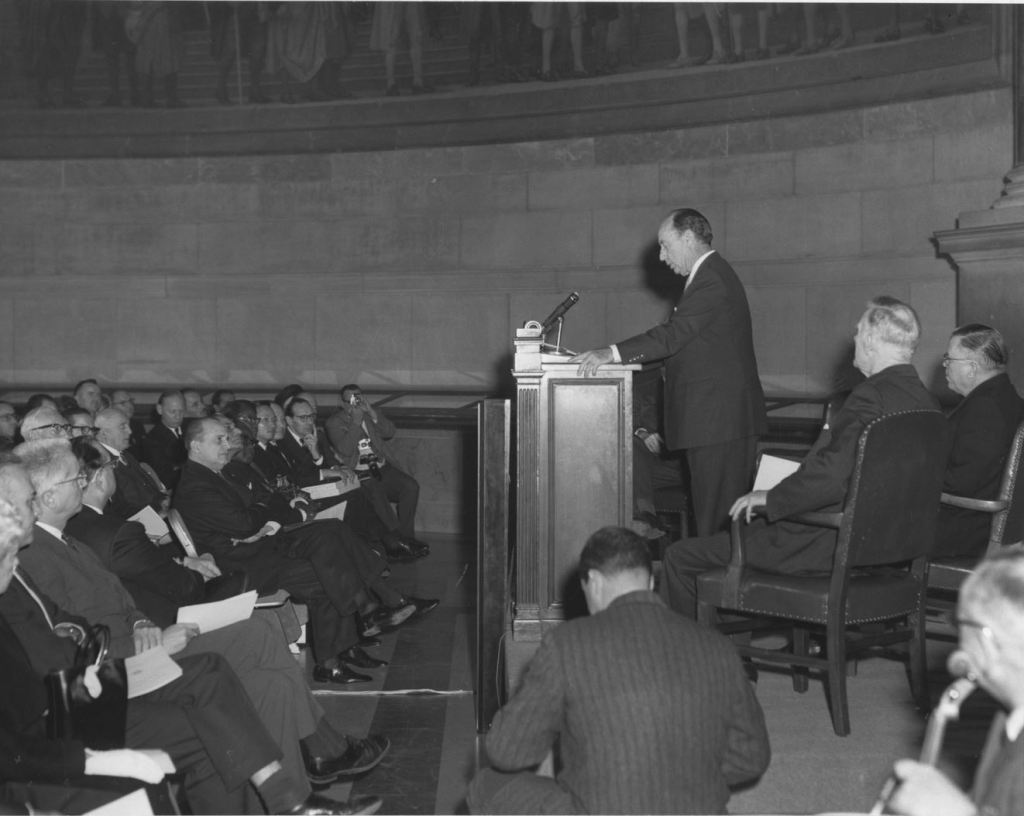
The Soviet army, which crushed the Hungarian revolution seven years ago, plans to leave Hungary in the next few months, diplomatic sources said today. Only a few token units will be left behind under the Warsaw pact agreement, the sources said. Western diplomats interpreted the move as a sign of easing tensions in eastern Europe and of Premier Nikita Khrushchev’s faith in the stability of Hungarian Premier Janos Kadar’s regime. The pullback — signaled by the gradual repatriation of the families of Soviet soldiers still in Hungary — is part of a pattern prevailing over eastern Europe.
There are no Soviet troops in Czechoslovakia, Romania, or Bulgaria. Some forces remain in Poland, and East Germany is heavily garrisoned. But the soldiers stationed in Poland are said to confine themselves to maintaining communications links between Moscow and Berlin and are seldom seen around the country. When Hungary exploded in rebellion in 1956, Soviet soldiers and tanks smashed the uprising. Since then, the Kremlin has kept a large garrison — unofficially estimated at two tank and two motorized divisions — within the nation. Unofficial estimates put Soviet strength at 20 divisions, 10 tank and 10 motorized, in East Germany and 2 divisions, 1 tank and 1 motorized, in Poland.
U.S. and British differences on efforts for the further easing of East-West tensions were inadvertently revealed by Prime Minister Home in the House of Commons.
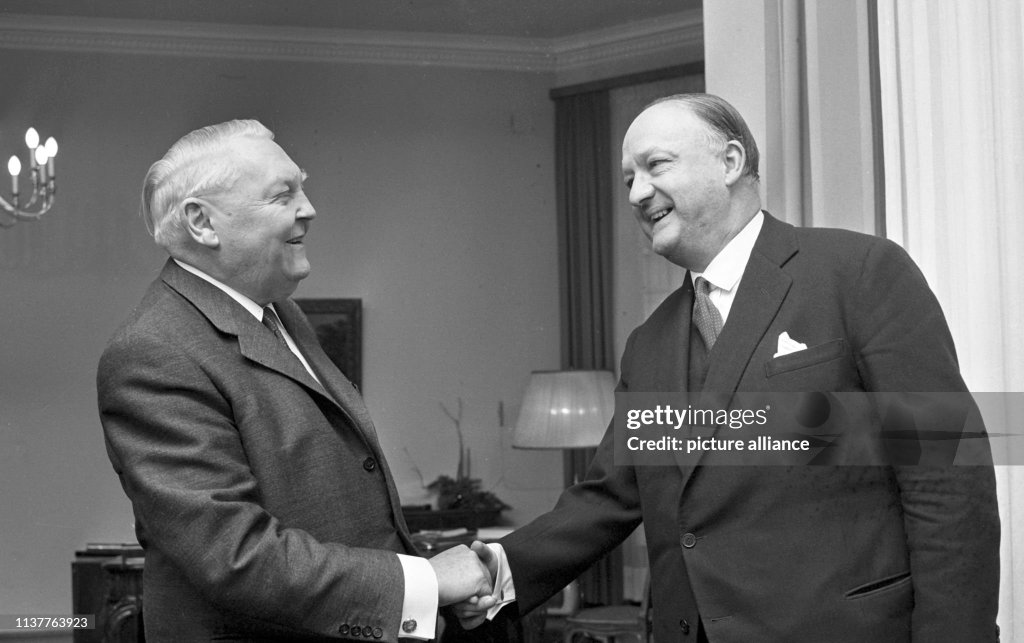
British Foreign Secretary R. A. Butler won a promise from the West German government that it will not supply arms to Indonesia
Zanzibar was granted independence by the British government shortly after midnight in a ceremony attended by Prince Philip, Duke of Edinburgh, the husband of Queen Elizabeth II. The Union Jack was lowered, the prince handed the Sultan Jamshid bin Abdullah, the grant of independence passed by Act of Parliament, and the new flag of Zanzibar (which would be altered 33 days later) was raised.
A grenade was thrown at the British High Commissioner for the Aden Protectorate, Sir Kennedy Trevaskis, as he and his advisers were at the Khormaksar Civil Airport, preparing to board an airplane to London. Forty-one people were injured, two of them fatally, when the grenade was thrown from the airport’s observation deck and landed on the ground near the group walking to the plane. A bystander, Mrs. Jamnadas Bhagavanji of India, died at the scene. Deputy Assistant Commissioner George Henderson, who moved to protect Trevaskis, died of his injuries a few days later. A state of emergency was proclaimed and British troops would wage a war against the Yemeni militants for nearly four years.
The United States, in a formal protest, makes it clear to the Bolivian government that it will be held responsible for the safety of four Americans kidnapped and detained as hostages by communist tin miners. Fear increases for the lives of the Americans and 17 other hostages as it is recalled that four American engineers were slain after being seized in a similar action in 1949.
Four Americans and 18 others are being held as hostages in an 18-by-12-foot room on the ground floor of a so-called miners cultural center in Catavi, Bolivia. Indian women with sticks of dynamite in their aprons feed the prisoners and clean the room once daily. Eight armed miners sit outside the single entrance. The hostages sleep on about a dozen double bed mattresses on the floor. The women who help guard them are members of the Local Parents association, Amas de Casa. The fused dynamite sticks are presumably to blow up the building and hostages if federal troops enter Catavi. Human life is cheap among the tough miners. They killed four American mining engineers held hostage under similar circumstances in 1949. The hostages spend the day playing chess, dominoes and cards. The Americans appeared to be in high spirits and optimistic about their chances of being freed. Vice President Juan Lechin, who is leading the rebellious Catavi miners, said they will be held until two communist union chiefs, Irineo Pimental and Federico Escobar, are released by the government. They are under arrest for murdering a rival union leader.
U.S. Senator John Stennis (D-Mississippi) salutes President Johnson’s order for a review of the Cuban situation, and while carefully avoiding any censure of President Kennedy’s policy toward Fidel Castro and his Marxist regime, says he hopes a “hard, firm, and determined policy” will remove the growing menace and eliminate the Russian occupation at an early date.
Veterans of the armies of Kaiser Wilhelm and Adolf Hitler, 35,000 strong, shuffled and hobbled through the streets of Bonn in a demonstration for higher pensions.
Pope Paul VI, who will leave by plane on January 4 for the Holy Land, plans to make an appeal at the birthplace of Christ to all mankind for peace and unity. A Vatican source says the pontiff, visiting both Israel and Jordan on his pilgrimage, will deliver a major speech in Bethlehem on January 6. The pope expects to celebrate three masses in the Holy Land.
General Thanom Kittikachorn appeared firmly in control of Thailand. He took over dictatorial powers of premier shortly after the death of Prime Minister Sarit Thanarat
Afro-Asian members of the U.N. Security Council renewed and broadened their call for independence for the Portuguese territories in Africa through a new resolution.
At Stockholm, nine Nobel laureates — the most in a year up to that time — from seven nations were awarded prizes. Maria Goeppert-Mayer of the University of California became the second woman in history to be awarded the Nobel Prize in Physics, as a co-winner along with J. Hans D. Jensen of Heidelberg University and Eugene Wigner of Princeton University. Karl Ziegler and Giulio Natta receive the 1963 Nobel Prize in Chemistry for their work on the technology of high polymers. The Nobel Peace Prize for 1963 was awarded jointly to Comité international de la Croix Rouge (International Committee of the Red Cross) and Ligue des Sociétés de la Croix-Rouge (League of Red Cross Societies) “for promoting the principles of the Geneva Convention and cooperation with the UN.”
President Johnson today assured leaders of Congress that the United States has now and will continue to maintain the military power to survive a surprise enemy attack and destroy the aggressor in retaliation. The President assembled Democratic and Republican Senate and House leaders in the White House cabinet room for a top-level briefing on comparative United States-Russian military strength. The hour-long briefing covered conventional as well as nuclear weapons and included projections of relative military power through the 1960s.
John A. McCone, director of the central intelligence agency, summarized Russia’s present military strength and future development for the congressmen. Secretary of Defense Robert S. McNamara gave the briefing on United States power. Secretary of State Dean Rusk gave a situation report on related areas in foreign affairs and policies. “The discussion covered both the status as of today and as it is forecast through the decade of the 1960s,” the White House said in a statement. “The President emphasized that the United States military program will continue to provide for a strategic force sufficiently large to absorb a surprise attack and survive with sufficient power to be capable of destroying the aggressor.”
The Federal Bureau of Investigation establishes conclusively Lee Harvey Oswald’s role in the assassination of President Kennedy by disclosing threads from Oswald’s shirt were found snagged in the reloading mechanism of the rifle that has been firmly established as the slaying weapon. This bolsters the evidence of Oswald’s palm prints found on the rifle and his fingerprints on the cardboard boxes against which he rested the rifle while firing.
The Senate passed and sent to the White House today a bill authorizing appropriation of one billion, 200 million dollars to build new classrooms, laboratories, and libraries at colleges and universities. It was the first educational aid legislation of this type and the first major measure of the late President Kennedy’s program to win the approval of both houses. Democratic leaders had listed it as third in importance, outranked only by tax cut and civil rights bills.
The Rockefeller camp is greatly worried by inside reports that a slate of delegates for Henry Cabot Lodge will be entered in the New Hampshire primary.
The House approved a compromise measure which gives the federal government broad powers in the fight on air pollution. Senate approval of the bill is expected.
In the United States, U.S. Defense Secretary Robert S. McNamara announced that the X-20 Dyna-Soar reusable spaceplane program was cancelled. Pronounced like “dinosaur” and based on the words “dynamic” and “soarer”, the Dyna-Soar had proved to be an expensive program that had cost over $660 million in research and development even before the first X-20 plane could be produced. The research, however, contributed to the later development of the Space Shuttle program. “Had the Dyna-Soar program not been cancelled,” author Colin Burgess would note later, the first manned mission, planned for July 1966, would have been flown by the senior test pilot, James W. Wood.
Secretary of Defense Robert S. McNamara today ordered the air force to develop a vehicle capable of orbiting the earth for a month with astronauts working inside without space suits. He set a manned flight target date of late 1967 or early 1968 and said the military objective would be the development of navigational aids, collection of meteorological data, and other “classified projects.” Speaking at a press conference authorized by President Johnson, McNamara said the new program will mean the end of a less spectacular project known in the Pentagon as Dyna Soar a scheme to send one man through space for a shorter period of time to study the problems of reentering the earth’s atmosphere in a gliding craft controllable like an airplane. At least three astronauts will participate in the new venture, which does not yet have a full price tag. McNamara said that 400 million dollars has been spent on Dyna Soar, and he estimated that the total cost for 12 one-man launchings would have been about one billion dollars.
Spending for the new program called MOL will be about 100 million dollars less during the next 18 months than had been anticipated for Dyna Soar. McNamara would tell reporters only that the total cost for MOL (Manned Orbiting Laboratory) would be in the hundreds of millions of dollars, but he said he would have some specific figures for Congress when the budget is submitted. McNamara said MOL will “consist of an orbiting pressurized cylinder approximately the size of a house trailer” and will “increase the defense department effort to determine the military usefulness of man in space.” Senator Barry Goldwater (R-Arizona), a major general in the air force reserve now on active duty in the Pentagon for two weeks, has been a frequent critic of the defense department for not making more military ventures in space. McNamara said the MOL program has been under consideration for several months. The secretary noted that he and James Webb, administrator of the National Aeronautics and Space administration, are in agreement on the project, and that it will not conflict with or overlap NASA’s moon landing programs.
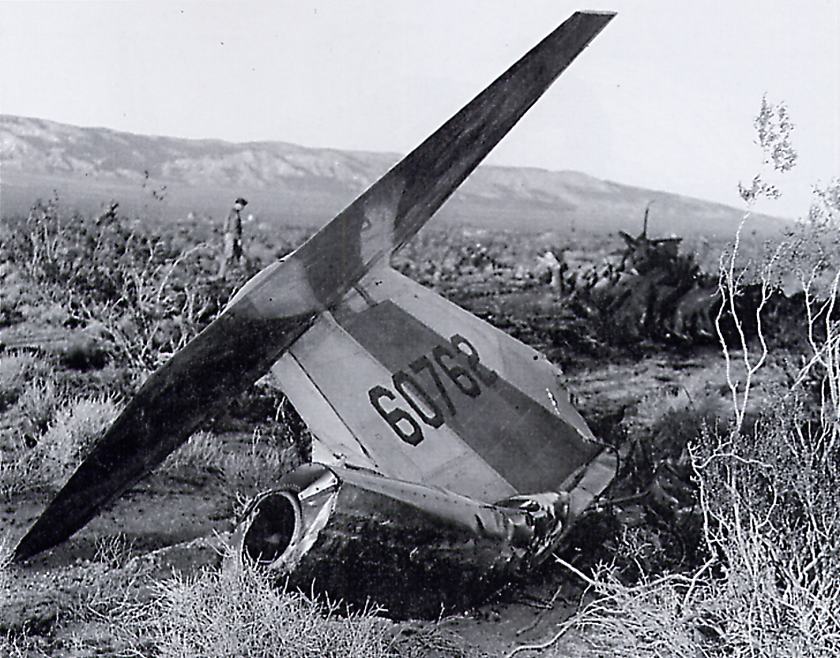
Chuck Yeager narrowly escaped death while testing an NF-104A rocket-augmented aerospace trainer, when his aircraft went out of control at 108,700 feet (33,100 m) (nearly 21 miles (34 km) up) and crashed. He parachuted to safety at 8,500 feet (2,600 m) after vainly battling to gain control of the powerless, rapidly falling craft, becoming the first pilot to make an emergency ejection in the full pressure suit needed for high altitude flights. In an attempt to set a world absolute altitude record, Colonel Charles E. (“Chuck”) Yeager, U.S. Air Force, took a Lockheed NF-104A Starfighter Aerospace Trainer, 56-0762, on a zoom climb profile above 100,000 feet (30,480 meters) at Edwards Air Force Base, in the high desert of southern California. This was Colonel Yeager’s fourth attempt at the record.
The 10 December flight did not proceed as planned. Chuck Yeager reached a peak altitude of approximately 108,000 feet (32,918 meters), nearly two miles (3.2 kilometers) lower than the record altitude set by Major Robert W. Smith just four days earlier. On reentry, Yeager had the Starfighter incorrectly positioned with only a -50° nose-down pitch angle, rather than the required -70°. The Starfighter entered a spin. Without air flowing through the engine intakes because of the spin, Yeager could not restart the NF-104’s turbojet engine. Without the engine running, he had no hydraulic pressure to power the aerodynamic flight control surfaces. He was unable to regain control the airplane. Yeager rode the out-of-control airplane down 80,000 feet (24,384 meters) before ejecting. Chuck Yeager was seriously burned by the ejection seat’s internal launch rocket when he was struck by the seat which was falling along with him.
The search for kidnapped Frank Sinatra Jr. may have shifted to the Los Angeles area tonight as the senior Sinatra made a surprise flight there from Reno to see his first wife Nancy. “Hopefully we will have some good news tonight. Things look a little more encouraging at this moment,” said Jim Mahoney, Sinatra’s press agent. Sinatra and three other men left Nancy’s Bel-Air home soon after his arrival. They returned shortly but did not say where they had been.
The eternal flame that had been burning at the Arlington National Cemetery since the burial of John F. Kennedy on November 25, 1963, was accidentally extinguished. A group of elementary school children “between the ages of 8 and 11” had been visiting the grave site and had been sprinkling holy water on the memorial when the cap came off of the bottle and went into the torch itself. Cemetery officials re-ignited the flame within a few minutes.
FBI agents and military security officers are investigating sabotage at Williams air base, uncovered when a routine pre-flight ground check discloses clipped electrical wiring on 61 jet trainer planes. The base commander grounds all planes of this type, which carry no secret equipment and are not armed. The planes are expected to be back in service shortly.
Cold moving in from the Arctic raises blizzard warnings in the Great Plains area, dumps enough snow to close schools in eastern sections of the nation, and piles up drifts from 5 to 10 inch snowfalls. Fresh snow falls in Ohio and Pennsylvania. Blizzard warnings are extended as far south as Nebraska, Kansas, and the Oklahoma panhandle. Temperatures drop to 10 below zero on the northern plains.
Future pop singer and teen idol Donny Osmond made his national television debut at the age of six, joining his older brothers as guests on “The Andy Williams Show.”
Leonard Bernstein premieres his Third Symphony “Kaddish” with the Israel Philharmonic Orchestra, in Tel Aviv, Israel
Chicago’s second baseman Nellie Fox is traded to the Colt .45s for cash, pitcher Jim Golden, and outfielder Danny Murphy. The veteran infielder bats .265 in two seasons before joining the coaching ranks. A team player, Fox leads the league in sacrifice bunts during the 1964 season while mentoring the young Colts.
Dow Jones Industrial Average: 759.25 (+0.17).
Born:
Luis Polonia, Dominican MLB outfielder (World Series Champions, 1995-Braves, 2000-Yankees; Oakland A’s, New York Yankees, California Angels, Atlanta Braves, Baltimore Orioles, Detroit Tigers), in Santiago, Dominican Republic.
Doug Henry, MLB pitcher (Milwaukee Brewers, New York Mets, San Francisco Giants, Houston Astros, Kansas City Royals), in Sacramento, California.
Gil Reyes, Dominican MLB catcher (Los Angeles Dodgers, Montreal Expos), in Santo Domingo, Dominican Republic.
Rick Wrona, MLB catcher (Chicago Cubs, Cincinnati Reds, Chicago White Sox, Milwaukee Brewers), in Tulsa, Oklahoma.
Chris Kontos, Canadian NHL left wing and centre (New York Rangers, Pittsburgh Penguins, Los Angeles Kings, Tampa Bay Lightning), in Toronto, Ontario, Canada.
Robert Banks, NFL defensive end (Houston Oilers, Cleveland Browns), in Williamsburg, Virginia.
Died:
Frederick Carder, 100, British-born American entrepreneur and co-founder of the Steuben Glass Works, who perfected the system of creating the pure hand-crafted crystal objects referred to as “Steuben Glass”.




 History Diaries