Scattered street disturbances and shooting overnight in Caracas, Venezuela between communist terrorists and police patrols left a 15-year-old girl dead today and seven persons wounded. The girl was hit by a stray machine gun burst while she was watching a skirmish between police and rooftop snipers. The snipers occasionally dropped homemade grenades. A policeman was shot in the leg by his own pistol when he tried to disperse armed and rioting youths in a downtown sector. Pursuing a campaign to overthrow President Romulo Betancourt’s government, the youths set fire to a bus.
The capture of the ranking officer of the underground terrorist organization in Venezuela has brought to light the “unholy alliance” between right-wing and left-wing extremists in that country.
The government of Iraq issued a decree requiring that all of its Jewish citizens, whether living at home or abroad, register themselves within 90 days, or forfeit their citizenship and have their assets confiscated. During the first two years of the decree, the names of more than 400 disenfranchised Jews would be published by the Iraqi press.
Anti-government tin miners in Bolivia seized four Americans, a Dutchman, and 16 Bolivian technicians today and held them as hostages for the release of three communist labor leaders accused of subversion. The miners promised not to harm the hostages. Three of the Americans are United States government officials and the fourth is a peace corps volunteer.
The Central Committee of the Soviet Communist Party will meet Monday in Moscow, followed a week later by a session of the Supreme Soviet. Both, it is safe to say, will give off the usual glow of faith in communism’s “inevitable triumph.” But this will be for public consumption. Behind closed doors the mood almost certainly will be vastly different as the Soviet leaders grope for new policies — or improvement on the old — that will restore the Soviet Union’s lost momentum.
For Soviet Premier Nikita S. Khrushchev, this could well be the winter of discontent, despite the fact that he can point to some successes. Khrushchev’s report to the Communist Party Central Committee Monday is expected to deal mainly with the country’s chemicals and farm problems. The importance of the chemicals problem was underscored by widespread newspaper calls for decisive new efforts to increase the lagging chemical industry, particularly the fertilizer division. Moscow newspapers also told Soviet citizens that the government cabinet, under Khrushchev’s chairmanship, has approved the draft of an economic plan and budget for 1964-65 to be submitted to the Supreme Soviet parliament.
The West Germans, who have been under strong attack from the Communists in the U.N. General Assembly, have quietly launched a diplomatic counterattack
Hopes of West Berliners for a breach in the wall during the Christmas season faded as East Germany rejected a West German offer to negotiate passes.
The Tokyo District Court issued its ruling in the 1955 lawsuit of Shimoda et al. v. State, brought against Japan by Ryuichi Shimoda and four other survivors of the atomic bombings of Hiroshima and Nagasaki in 1945, and concluded that the United States had violated international law by using the weapons in warfare. The parties had stipulated in advance that neither side would appeal the lower court decision; the Tokyo court based its decision in large part on the fact that both cities were undefended, and that neither target had military significance, and that the bombings were contrary to the principles of international law which prohibit “unnecessary and inhumane pain as a means of injuring the enemy”. Nevertheless, the court concluded that the claimants had no legal basis for recovering compensation from the Japanese government. The decision came on the 22nd anniversary of Japan’s attack on Pearl Harbor, though the court did not contrast the two in its opinion.
The visit of Chinese Premier Chou En-lai to the United Arab Republic Saturday has stirred speculation in diplomatic circles, since he reportedly also plans to visit other African nations.
The Chinese Communists sought to paint a bright, bold future for their farms and factories, but the boast is interpreted as a damning recital and admission of failure.
The U.S. Army has nearly doubled early estimates of the cost of deploying its Nike-Zeus anti-missile missile, but still believes the program will be adopted eventually, it was learned today. Current projections indicate it would cost between 16 and 17 billion dollars to mount the atom-tipped missile pillars around major United States industrial areas. Original estimates were between 9 and 10 billion. Army thinking is that the weapons are needed mainly to protect cities and industrial areas rather than strategic bases. Army experts reject Defense Secretary Robert S. McNamara’s contention that such a defense system could always be saturated by heavy concentration of enemy missiles on a few targets.
The U.S. House of Representatives met today in a rare Saturday session that lasted only two minutes but kept alive a drive to get the civil rights bill out of the Rules Committee before Christmas. No action was taken during the brief session but merely by meeting, the leadership cleared the way for filing of a petition Monday that would bypass the committee if signed by 218 members. Although short, the session was somewhat stormy. Speaker John W. McCormack (D-Massachusetts), banged the adjournment gavel at 12:02 p. m. on motion of Acting Majority Leader John Moss, (D-California). Moss leaped to his feet and made the motion after Rep. William K. Van Pelt, (R-Wisconsin) insisted that a quorum, or 218 members, be present for the first Saturday House session this year. Less than 100 were on hand at the time.
Van Pelt and others, including many southerners opposed to civil rights legislation, shouted for a roll call vote on the motion, but McCormack declared the motion carried by voice vote. The session, which started at noon, was an official legislative day, the seventh and final one required under the discharge petition procedure before the petition can be filed. By pushing ahead with the discharge petition the leadership is risking the hard-won bipartisan support for the civil rights bill that rescued it from a stalemate in the Judiciary Committee last September.
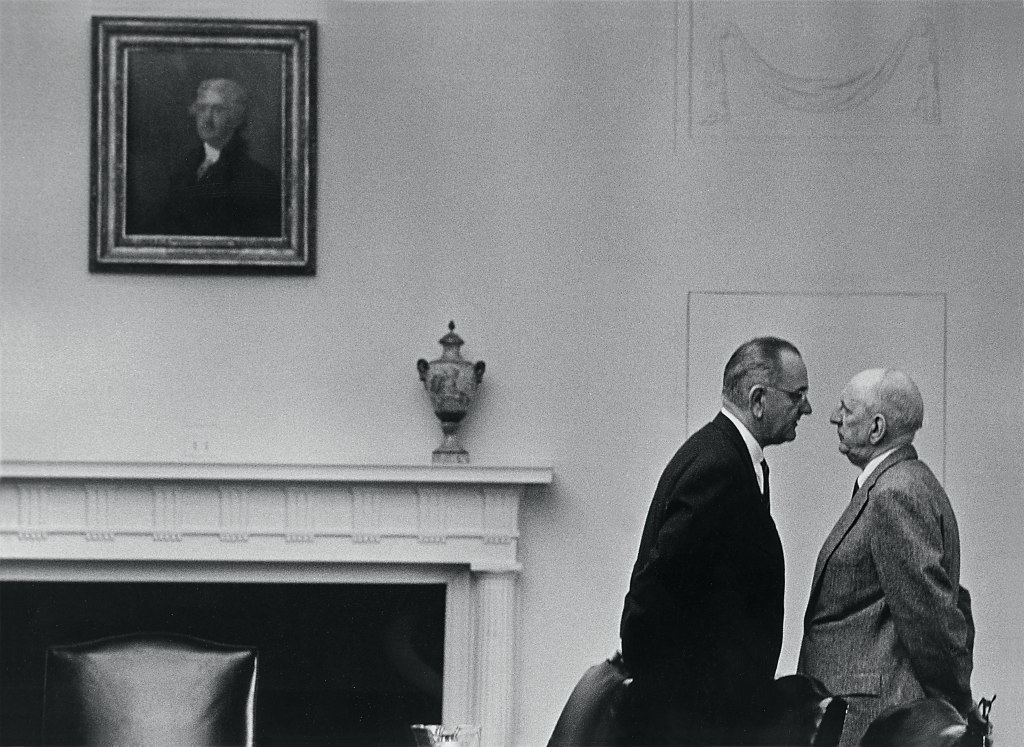
President Lyndon Johnson said today that he will be “pretty much tied down” in the United States, but expects to stress personal contacts in carrying out both the domestic and diplomatic functions of his administration. “What (do) you regard as the biggest single problem facing you as President?” he was asked by one of a small group of reporters. “Being President,” he answered quickly. On an even more somber note, Johnson said, “I feel like I have already been here (in the White House) a year.”
Then, quietly, informally, and in an almost rambling manner, he outlined a number of important points of his schedule for the next several months. Wednesday, he said, he will go to the Pentagon and address the military and civilian leaders of the defense establishment on his proposed belt-tightening there. At noon on December 17, a week from Tuesday, he will address the general assembly of the United Nations. “We just told Mr. U Thant (the U.N. secretary general) that we will go up that morning to make a brief appearance and meet with the delegates before they go back to their respective countries,” Johnson said. “It will not be a long speech but I do want to establish an acquaintance with them and know some of them personally.”
Though Lyndon B. Johnson has been President just a few days over two weeks, there is convincing evidence he is resurrecting the institution of the “kitchen cabinet” that flourished under Franklin D. Roosevelt.
No President could snap his fingers and make Congress do his bidding. No one knows this better than President Johnson, who is dismayed by suggestions that his magic touch will make congressional walls crumble.
President Johnson’s 15th day in office began with an early morning stroll through Washington’s quiet suburban streets and ended in the White House.
President Johnson and Defense Secretary Robert S. McNamara today outlined major economic measures within the nation’s military machinery which they said will save 1.5 billion dollars in next year’s budget, and 4 billion a year by 1967. It was not made clear, however, whether the “saving” would be reflected in a lower total Pentagon budget, or if the money would be spent for other military requirements. Johnson outlined the military belt-tightening generally in his first press conference since becoming President. He then turned newsmen over to McNamara, who gave a detailed explanation.
General Eisenhower asks for a return to the system of having the line of succession to the Presidency go directly from the Vice President to the Cabinet members.
A Kennedy diplomat, deLesseps Morrison, clinched a spot in Louisiana’s Democratic runoff race for governor with three others locked in fight for the other runoff berth.
A vast majority of delegates and visitors to the Sixth General Assembly of the National Council of Churches feels that integration is not proceeding fast enough.
Teamsters’ Union president James R. Hoffa’s role as undisputed leader of the nation’s largest union may be almost over, some observers think.
Admiral Hyman Rickover and Newton Minow agreed that the people have power to grapple with and also control the necessary giant of our times, bureaucracy.
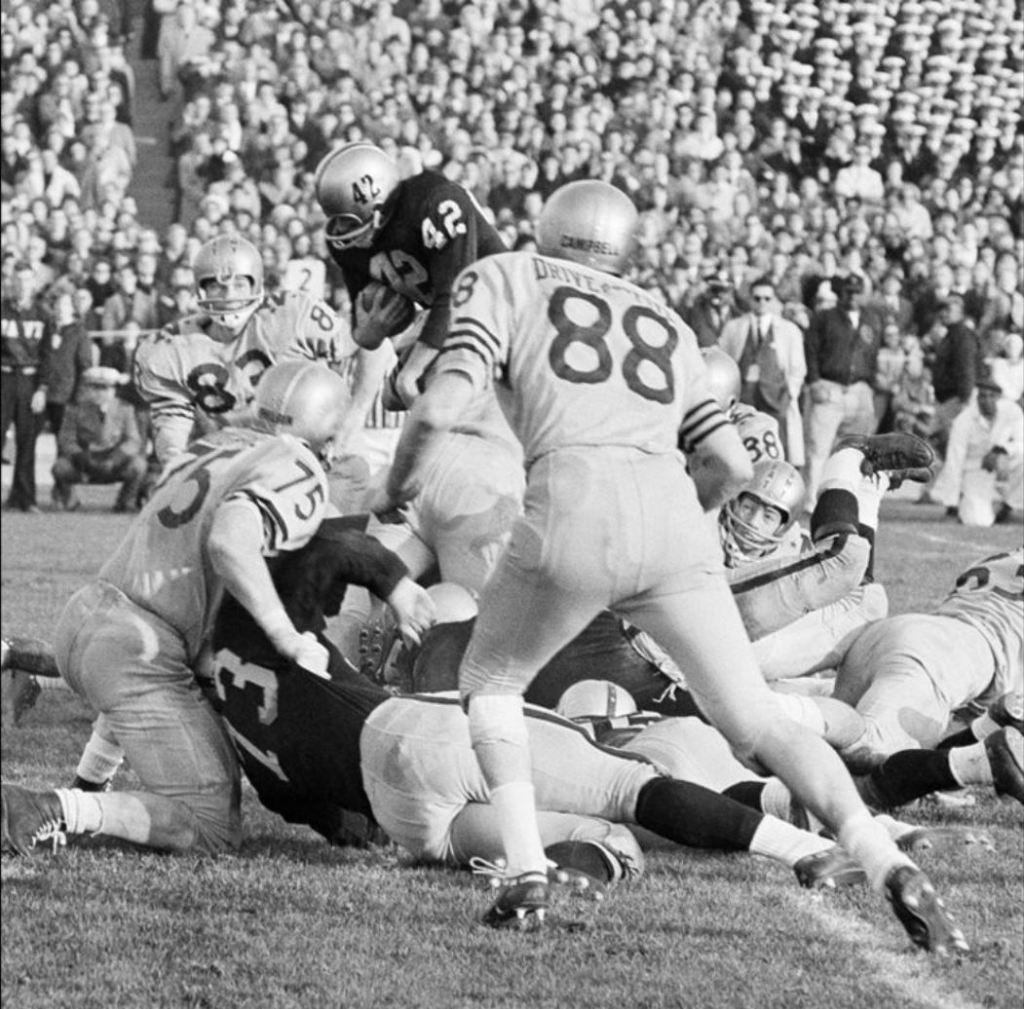
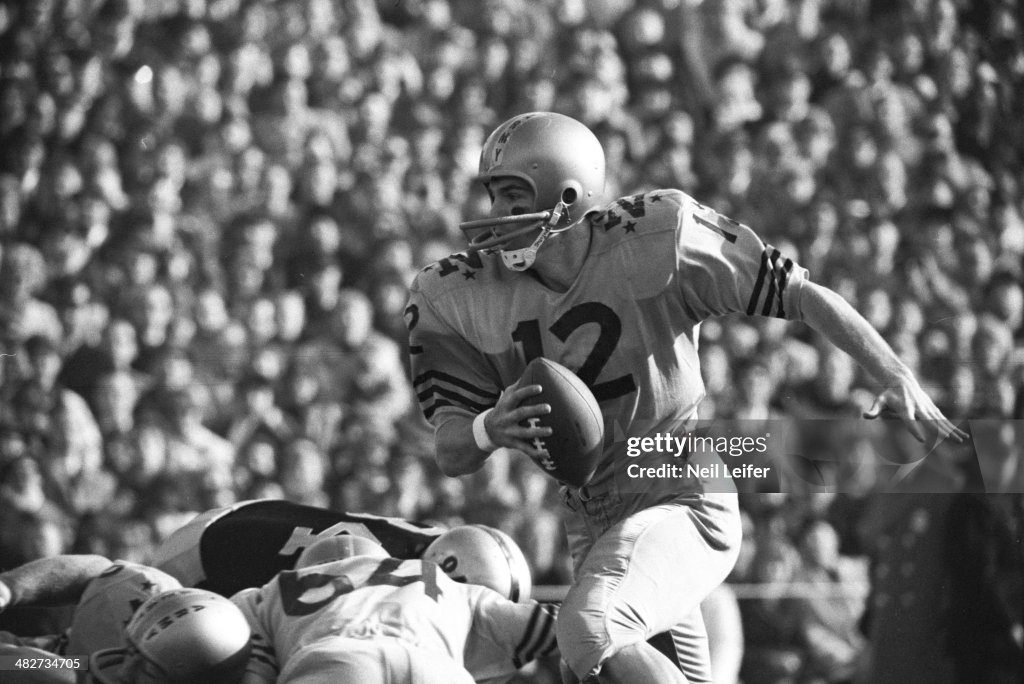
Tony Verna, a CBS-TV director, invented the concept of “Instant Replay” during the network’s television broadcast of football’s annual Army-Navy game played in Philadelphia. In the fourth quarter, Army quarterback Rollie Stichweh ran for a touchdown. Within seconds, technicians rewound the black and white videotape, then played the recording back on television. Commentator Lindsey Nelson told viewers, “This is not live. Ladies and gentlemen, Army did not score again!”; the name “instant replay” would be coined by CBS commentator Pat Summerall during the broadcast of the Cotton Bowl on January 1, 1964. Navy won the game, 21—15.
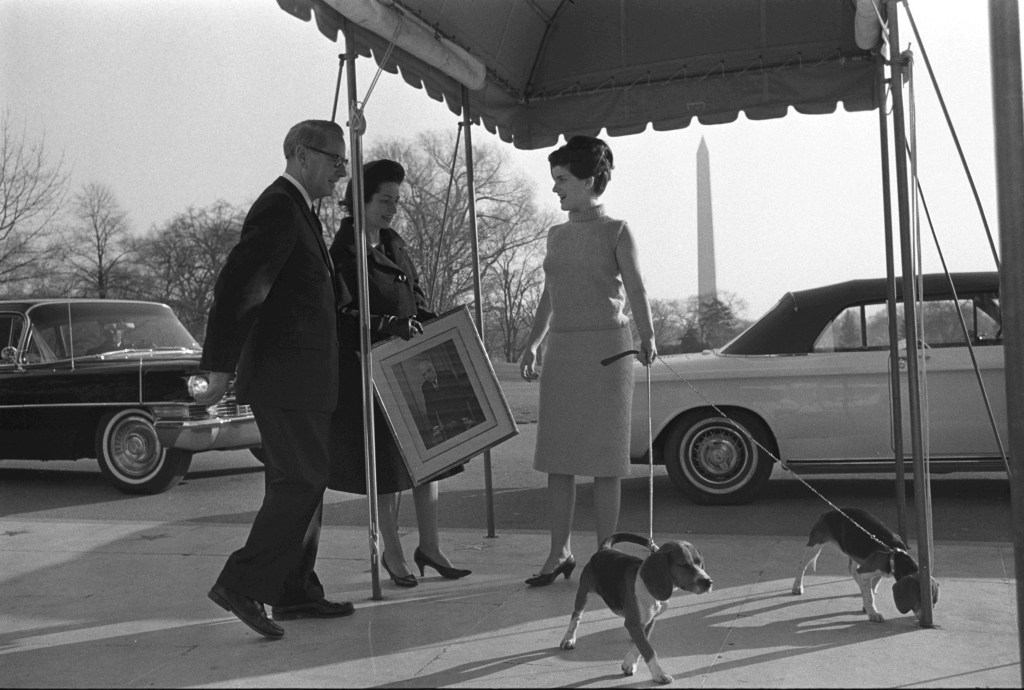
U.S. President Lyndon Johnson, and his wife Lady Bird Johnson, spent their first night in the White House, 15 days after he had been sworn into office.
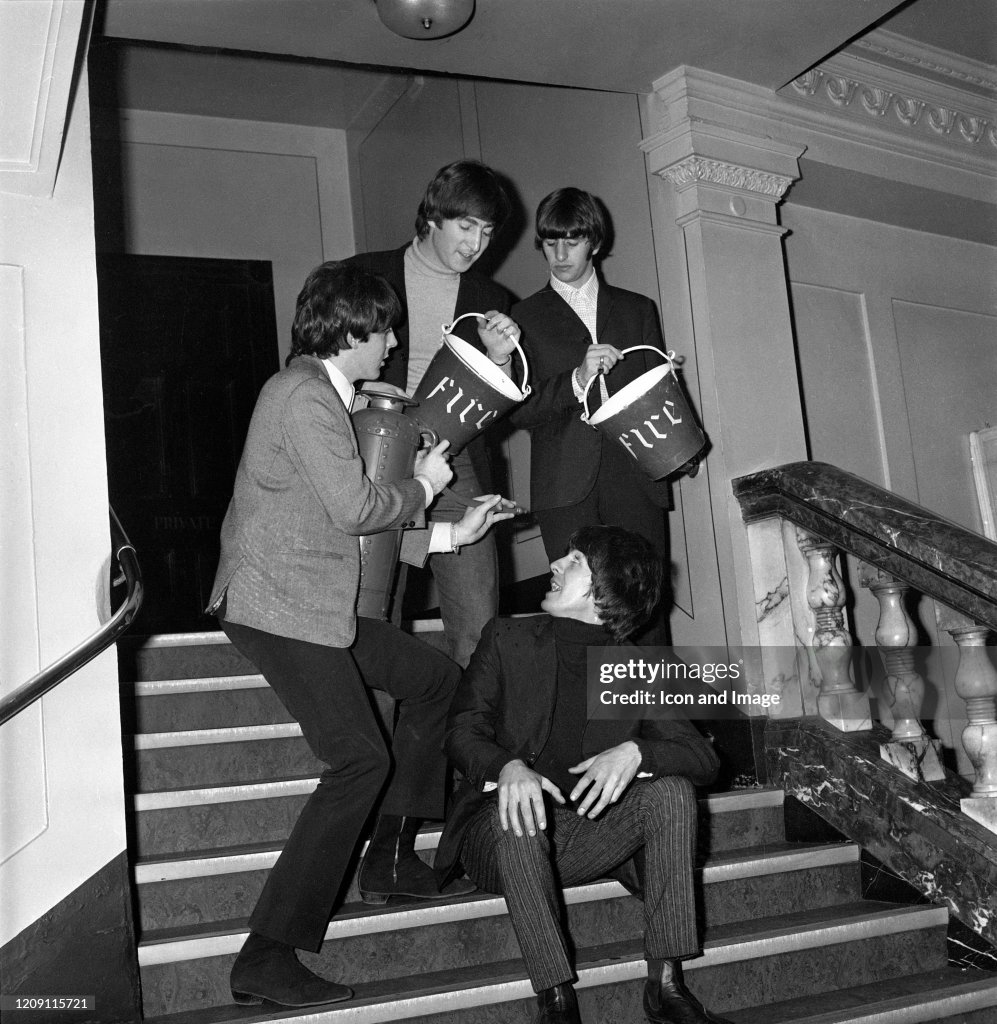
Americans got their first glimpse of the new British music group, The Beatles, when a clip of one of their performances (and the enthusiastic support from the British fans) was shown on the CBS Evening News. Radio stations in the U.S. began receiving requests to play Beatles songs, and several began to import copies from the U.K.
Joey Giardello won the world middleweight boxing title in a fight at Atlantic City, New Jersey, defeating champion Dick Tiger in 15 rounds.
NFL Football:
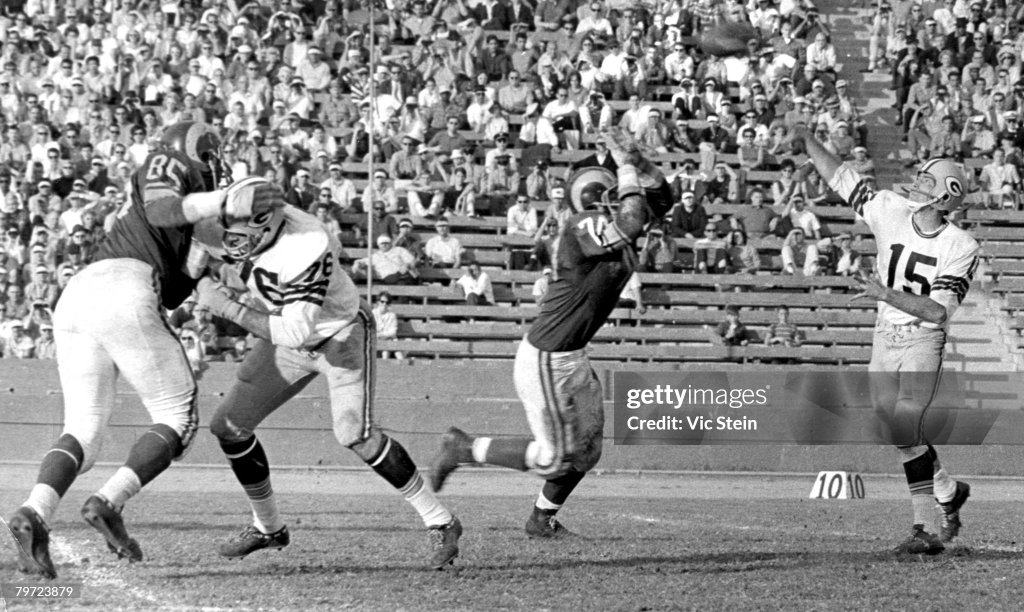
Jim Taylor of Green Say swept 40 yards for the go-ahead touchdown in the third quarter today as the Packers defeated the Los Angeles Rams, 31–14, to keep their Western Conference title hopes alive in the National Football League. A crowd of 52,357 in the Los Angeles Memorial Coliseum and a national television audience saw the surprising Rams take a 14—10 lead at the half. But a third-period jinx for Los Angeles caught up with the Rams as Bart Starr, the Packer quarterback, directed Green Bay to two touchdowns. Herb Adderley, a Packer safety, and Jim Phillips, a Los Angeles end, were ejected from the game after a brief flurry of fisticuffs that floored Phillips. Starr connected with his favorite target, Max McGee, for three touchdowns on passes of 25, 16, and 13 yards, and Jerry Kramer kicked a 40-yard field goal.
The victory left Green Bay with a won-lost-tied record-of 10-2-1. Taylor, the bulldozer of the Packer backfield, gained 113 yards in 17 carries before he left the game in the last period. Green Bay opened the scoring in the first period as Starr guided the team 58 yards. Included was a 20-yard gallop by Starr and an 11-yard pass to McGee. The Rams, seeking their fourth straight victory, scored twice in the second quarter to take the lead. Carber. Shannon’s brilliant 55-yard runback of a kickoff set up the first points which Dick Bass scored on a 3-yard plunge. Gabriel’s long pass to Be Wilson, good for 43 yards, placed Los Angeles on Green Bay’s 9. Gabriel’s 1-yard dive resulted in the second touchdown.
Green Bay Packers 31, Los Angeles Rams 14
Born:
Shane Mack, MLB outfielder (World Series Champions-Twins, 1991; San Diego Padres, Minnesota Twins, Boston Red Sox, Oakland A’s, Kansas City Royals), in Los Angeles, California.
Jim Austin, MLB pitcher (Milwaukee Brewers), in Farmville, Virginia.
Billy Bates, MLB second baseman and pinch runner (Milwaukee Brewers, Cincinnati Reds), in Houston, Texas.
Steve Howard, MLB outfielder and designated hitter (Oakland A’s), in Oakland, California.
Sergei Priakin, Russian NHL right wing (NHL Champions, Stanley Cup-Flames, 1989; Calgary Flames), in Moscow, Russian SFSR, Soviet Union.
Nathan Wonsley, NFL running back (Tampa Bay Buccaneers), in Moss Point, Mississippi.
Jeff Van Raaphorst, NFL quarterback (Atlanta Falcons), in Columbus, Ohio.
Barbara Weathers, American vocalist (Atlantic Starr – “Secret Lovers”), in Greensboro, North Carolina.
Died:
Harry Copeland, 67, one of the original members of John Dillinger’s gang of bank robbers, was killed in Detroit after being struck by a drunken driver. Copeland served 15 years of a 25-year prison sentence for aiding Dillinger in the robbery of the Central National Bank in Greencastle, Indiana, before being released in 1949.
_____________________________________________
_____________________________________________
_____________________________________________

_____________________________________________
_____________________________________________
_____________________________________________
_____________________________________________
_____________________________________________
_____________________________________________
 History Diaries