Egypt has decided to attend the Middle East peace conference opening in Geneva on December 18 even in the absence of a prior Israeli troop withdrawal from the Suez area, diplomats in Cairo said. The United States and the Soviet Union have been told of Egypt’s decision, they said. Egypt, it was understood, will not resume the suspended military talks with Israel, in which Israel’s withdrawal to the cease‐fire lines of October 22 is at issue, before the Geneva conference.
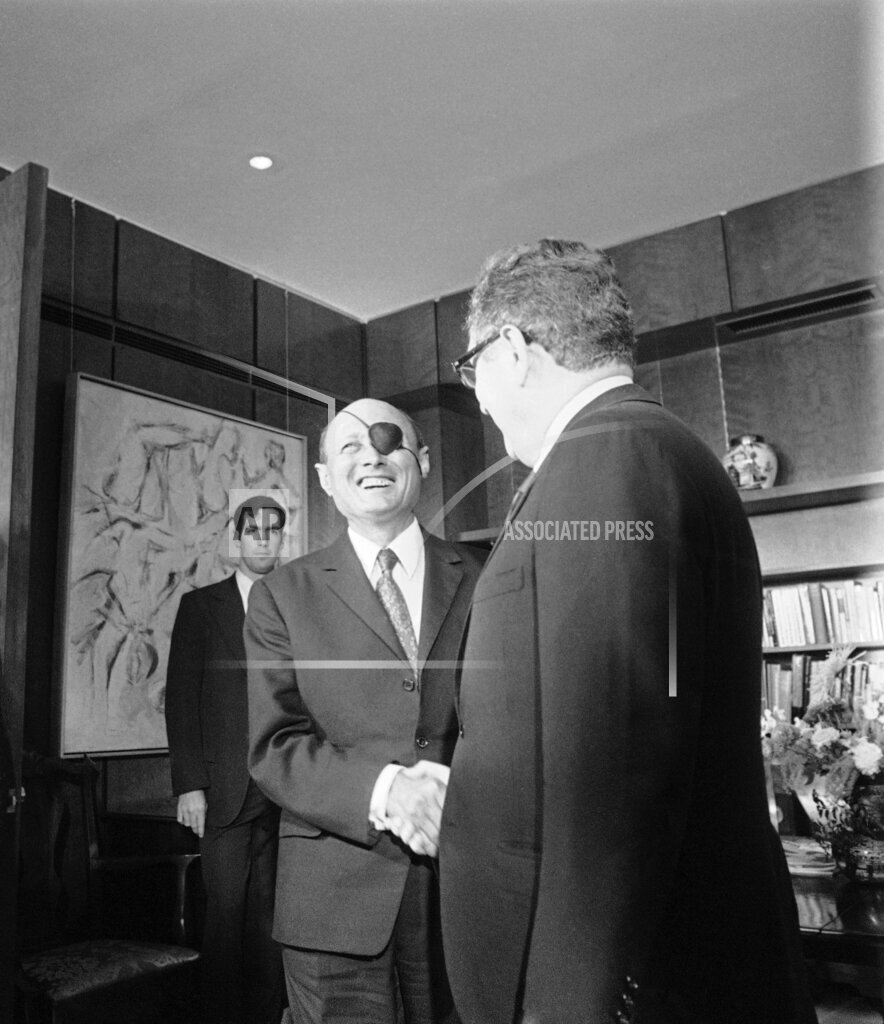
Secretary of State Henry Kissinger met separately in Washington with Israeli defense minister Moshe Dayan and Egyptian ambassador Ashraf Ghorbal. Dayan accused Saudi Arabia oil minister Ahmed Yamani of using oil as a political weapon against the U.S. and Israel. Kissinger leaves tomorrow for his visit to the Middle East and Europe. He will visit 11 countries — 5 in Europe and 6 in the Middle East.
The North Atlantic Treaty Organization today unanimously pledged to move “rapidly toward a common solution to the problem of paying a bigger share of the cost of U.S. forces stationed in Europe. Officially, the U.S. delegation said this outcome of a semiannual meeting of NATO defense ministers was “somewhat disappointing because it is not yet backed up with any hard cash. Overall, however, U.S. Secretary of Defense James R. Schlesinger is understood to feel that the thrust of what the Europeans are now committed to doing, both in their own defense efforts and on behalf of the United States, is such that there will be no major withdrawal of American forces from NATO, unless an agreement emerges from the Vienna negotiations with the Warsaw Pact on mutual balanced reductions.
Japan is bracing for a full‐scale oil crisis, and hard facts are forcing more and more Japanese to recognize that the impact of the oil shortage on their economy will be severe, and all the more so because it will be sudden and concentrated. A major newspaper said “Japan has entered a catastrophic stage,” in which the oil crisis jeopardizes “the very existence of the nation.” Private comments run along the same line.
South Vietnamese infantry units last night retook a district capital in the Central Highlands that was overrun by North Vietnamese soldiers and tanks four days ago, the Saigon command announced. The command spokesman, Lieutenant Colonel Lê Trung Hiền, also said that government forces had succeeded in moving a convoy of 70 trucks down a 30‐mile stretch of road to the capital of Quảng Đức Province, Gia Nghĩa, which had been cut off by road for about a month. The reported capture of Kiến Đức — the site on Tuesday of probably the heaviest battle since the January cease‐fire agreement — was apparently accomplished with little resistance. The two reported moves — 2 the opening of provincial Route 8B and the retaking of Kiến Đức, which lies 13 miles to the west of Gia Nghĩa — would appear to have eased the North Vietnamese pressure on the drab provincial capital. The South Vietnamese have reported flying reinforcements into Gia Nghĩa’s tiny airstrip in the last two days to ward off a blow against the town itself.
Yesterday morning, according to Colonel Hiền, Government planes were able once more to land at a larger strip at Nhơn Cơ, five miles east of Kiến Đức. That strip had been closed by North Vietnamese shelling. Colonel Hiền said that the 70‐truck convoy made the trip from Đức Lập to Gia Nghĩa yesterday afternoon. The convoy, he added, made the return trip early this morning. The only fighting reported yesterday in Quảng Đức Province was a skirmish a mile and a half northwest of Đắk Song base camp. The command said that five North Vietnamese and two South Vietnamese soldiers were killed.
In the Mekong Delta province of Định Tường, the Saigon spokesman reported continued heavy fighting. Thirty‐three Communist soldiers were said to have been killed in Định Tường, a traditional infiltration corridor and staging area, in two separate actions. In other parts of the country, the command reported only 42 Communist cease‐fire violations — the lowest such figure put out by Saigon since the signing of the Paris agreement on January 27.
North Vietnam charged today that the United States had stationed the aircraft carrier USS Midway off its coast and demanded it be withdrawn, the Chinese news agency Hsinhua reported.
The statement by the North Vietnamese Foreign Ministry was in a dispatch from Hanoi broadcast by the official Chinese agency and monitored in Hong Kong.
The statement said: “On December 6, the United States dispatched its aircraft carrier Midway to the sea adjacent to the Democratic Republic of Vietnam. Many planes that took off from the carrier‐carried out activities east of the territorial waters of North Vietnam. The Midway still remains off the coast of the Quảng Bình Province.”
The U.S. Defense Department confirmed today that the carrier USS Midway was operating in the Tonkin Gulf off North Vietnam. A Pentagon spokesman explained that since the cease‐fire last January, the United States has kept a carrier stationed in the Tonkin Gulf area most of the time. The spokesman said that the carriers have operated in international waters and had not engaged in provocative actions.
In the absence of American bombing, some Cambodian refugees have begun to filter hack into towns and villages controlled by the insurgents. The movement has been observed by Government officials, foreign diplomats and peasants, all of whom attribute it not to political ideology but to a combination of growing economic hardships in the cities, decreased danger in parts of the countryside and the Cambodians’ traditional devotion to their ancestral plots of land. “We prefer to stay always in our villages,” said Dy Bellong, a member of President Lon Nol’s executive Cabinet who is in charge of refugees and foreign aid. “It is difficult to leave our native villages. Each time there is a little security, they return right away.”
The return to insurgent‐held territory is only one current in the complex crosscurrents that propel refugees throughout Cambodia. Many Cambodians still flee the fighting, some to the insurgents’ side, some to the Government’s. Some go to the cities, others to small pagoda complexes at the sides of secure roads. Some stay near enough to their villages so that they can return in daylight to pick fruits and vegetables or harvest the rice, which is ripening now. They leave well before dusk to avoid being shelled by Government artillery or kidnapped by the insurgents, whom they call “forest troops.”
Cambodian Premier In Tam today offered his resignation to President Lon Nol for the second time in two months, well‐informed sources said tonight. They said that the Premier, who is also a member of the four‐man ruling council, announced he was resigning during a council meeting this Morning, citing as the reason a lack of cooperation by some of his Cabinet ministers. The sources did not elaborate on his motives for resigning, but said he had refused to go to an afternoon session of the council, which also includes the President, Vice President Cheng Heng and Sirik Matak, the special presidential adviser. President Lon Nol refused to accept the Premier’s earlier offer of resignation last October 14 because of the split it would have caused in the Government at a time when Secretary of State Kissinger was preparing to visit Peking and when the United Nations was getting ready to vote on whether the Lon Nol Government should retain its seat in the world body.
The burden-sharing problem is obviously somewhat eased for the United States by the fact that its overall balance of payments has now swung back into surplus after a decade in deficit. To that extent, the issue is not as basic or as emotional as it has been at past NATO meetings. Nevertheless, the Americans have made it clear that they are not relaxing about the problem, and the Europeans are now going to start studying how they can pick up more of the tab. In particular, there is almost certain to be an agreement in the near future to reduce the American share of the NATO infrastructure program — the common-funded military building, communications, etc., in Europe — as well as the American share of participation in NATO civil programs.
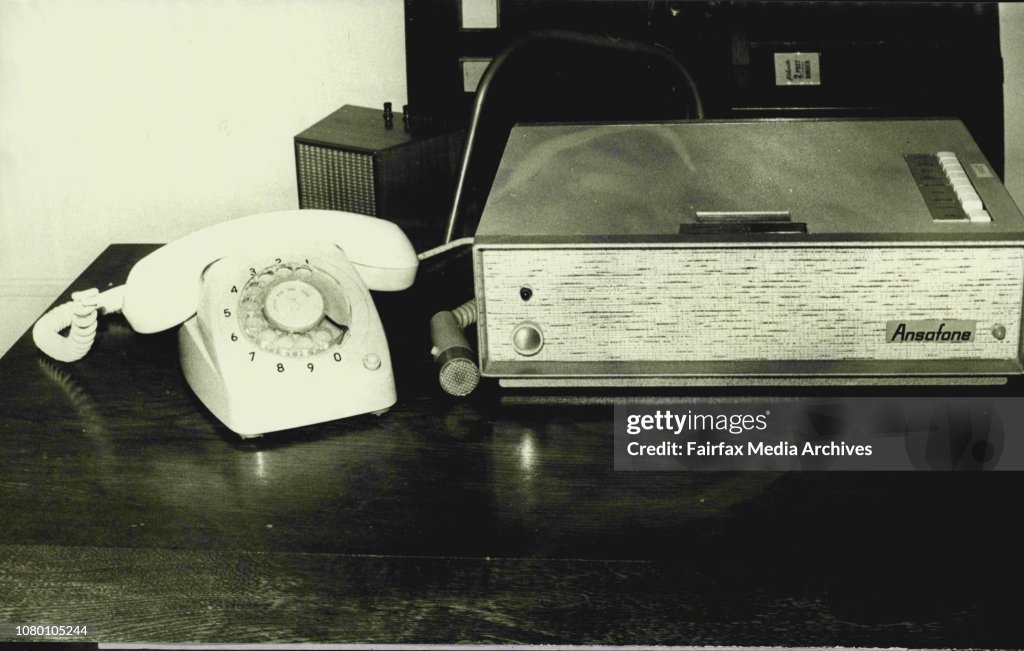
The United States and the Soviet Union are transferring the Washington‐Moscow Hot Line to a network of space satellites. The new system, intended to improve the emergency communications linking the two capitals, involves both Soviet and American satellites. It was chosen in part to put the Hot Line beyond the reach of human interference. During the 10 years that the Hot Line has existed, parts of the cable have been blacked out by fire, stolen and even plowed up by a Finnish farmer. The radio route has also been subject to atmospheric interference. However, there is no indication that the new Hot Line will be used any more than the old one, which has reportedly not even employed to exchange messages during the Middle East crisis.
Andre Labay, 51, was sentenced to 18 years in prison today for his role in a transatlantic heroin smuggling ring that was the inspiration for the film “The French Connection.” Labay — described as a wealthy industrialist — and some of his alleged co-profiteers were accused of helping to organize a heroin shuttle service across the Atlantic in luxury cars put aboard liners. A Cadillac, a Bentley, a Lancia, and a Plymouth Barracuda were among cars packed with heroin and sent from France to the United States during 1970 and 1971, police told a court last October, when Labay was brought to trial with 19 other men. All were arrested in France. Two Corsicans have evaded capture so far.
Labay was described as a key man in the ring. He was arrested near Paris in October, 1971, at the wheel of a hired car that contained six new suitcases packed with 233 pounds of heroin. U.S. narcotics authorities cooperated with French authorities after another Frenchman, Richard Berdin, was arrested in the United States and reportedly gave police details of the ring. Several of Labay’s accomplices also received heavy sentences Friday for complicity in the ring.
Paris police used a bulldozer today to break down the door of the Chilean Embassy after 80 young Communists staged an occupation to draw public attention to political prisoners in Chile. Police arrested all the youths without a struggle. The demonstrators, members of the French Communist Party’s youth movement, told reporters during their 90-minute occupation that they were seeking the liberation of Chilean Communist leader Luis CorvaIan and all political prisoners in Chile. About 400 riot police were rushed into the area and surrounded the embassy. A special bulldozer designed to smash street barricades was brought up to break down the embassy door and police then rushed inside.
Fourteen persons have been arrested here in connection with a series of bomb attacks in Spain’s northern Basque provinces, police sources said today. The arrests were reported after bombs believed to have been planted by Basque separatists badly damaged two bars in nearby Bilbao. A third bomb was defused. Those arrested in San Sebastián, about 50 miles along the northern coast from Bilbao, were aged between 17 and 28, the sources said. Nine were teenagers. The police seized a machine gun, three pistols, a shotgun, three photocopiers and a large amount of material on the Basque independence movement, the sources added.
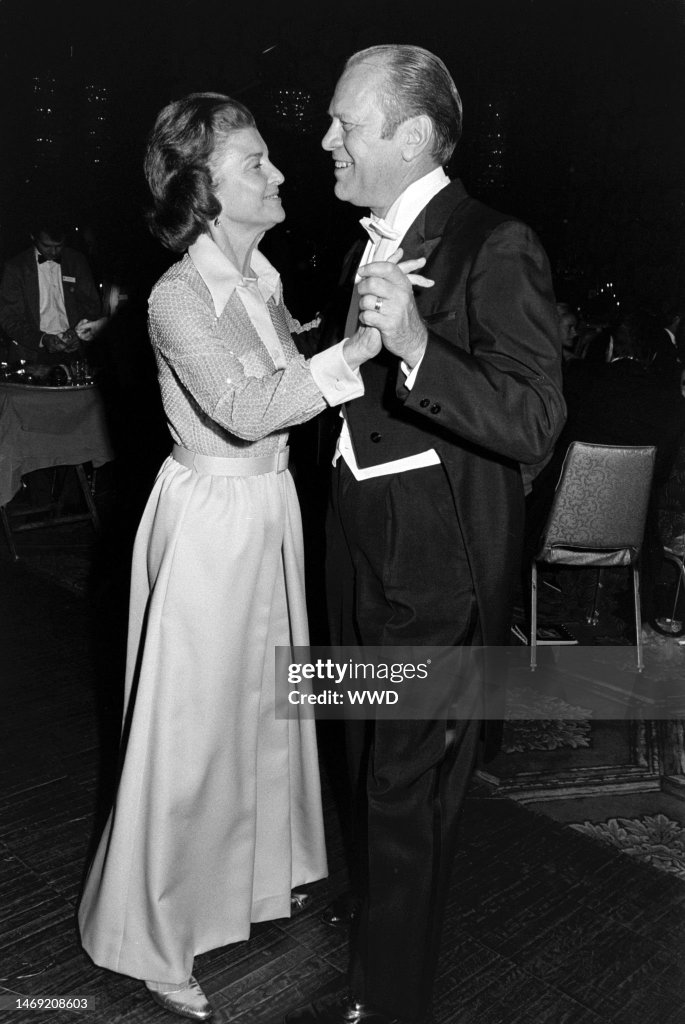
Gerald Ford began his first full day as Vice President. He conferred with President Nixon and later defended him at a news conference, insisting that the President has no intentions of resigning his office. Ford also added his opinion that no grounds exist for impeachment, and stated that President Nixon is an asset to the Republican party.
The House of Representatives elected John Rhodes as minority leader, which was Ford’s old job. Rhodes said that he thinks Nixon is a handicap to the Republican party, and he hopes the House Judiciary Committee’s impeachment investigation will proceed rapidly and thoroughly. Many Congressmen agree with Rhodes that President Nixon will continue to be a liability to Republicans; more talk of resignation is circulating.
White House press secretary Ron Ziegler briefed selected newsmen regarding President Nixon’s financial statement which will be made public tomorrow. Nixon availed himself of a tax break after donating his vice-presidential papers to charity. The papers apparently did actually arrive at the archives before Congress passed the law outlawing tax breaks on such gifts, but no deed of gift accompanied the papers and manuscript appraiser Ralph Newman insists that his appraisal of the Nixon papers didn’t begin until November 1969 — four months after Congress passed the law against such gifts getting tax breaks. Edward Morgan, former deputy counsel to the President, refused comment regarding the gift deed, and President Nixon’s former tax attorney Frank DeMarco refused to be interviewed by CBS.
Columbia University law professor George Cooper studied President Nixon’s gift and consented to an interview with CBS. Cooper asserted that the transfer of the Nixon papers was not completed in time to receive a valid tax deduction. The tax returns of all presidents are kept in an IRS office; officials refused to discuss this matter. On November 17th, Nixon insisted that the IRS had raised no questions about the tax deduction in question, but he stated that if issues were to arise, the papers would be taken back and taxes paid. Appraiser Newman agreed that the papers have doubled in value since their original appraisal.
White House chief of staff Alexander Haig allegedly told White House appointees that he could not assure them that no more surprises regarding Watergate existed. Haig was not available for comment today.
President Nixon’s former appointments secretary Dwight Chapin pleaded innocent to four charges of lying to a Watergate grand jury. His trial is set for February 19.
A judge in the Bahamas ruled against Robert Vesco’s extradition to the United States. Charges against Vesco include illegal campaign contributions to Richard Nixon’s 1972 re-election campaign, and he was indicted along with Maurice Stans and John Mitchell. The Securities and Exchange Commission also has charges pending against Vesco.
The House gave final approval to the salary cutback bill which was designed to remove the barrier to Senator William Saxbe’s approval as Attorney General.
For the first time in recent memory, House Republicans changed leaders without a fight and elected Representative John J. Rhodes of Arizona to succeed Vice President Ford as minority leader. Mr. Rhodes, a conservative Republican, became minority leader by acclamation and without opposition at a closed conference.
The unemployment rate jumped from 4.5% to 4.7% for November. The Bureau of Labor Statistics predicted that unemployment related to the current fuel shortage will begin to show up in the January report. The nation’s unemployment rate, after dip in October, returned in November to the level that had prevailed since last spring, the Labor Department reported. The November rate was 4.7 per cent of the labor force, up from 4.5 per cent in October. The rise, government spokesmen said, had nothing to do with the oil shortage.
Truckers met with government officials in Washington to negotiate regarding higher speeds and lower fuel costs. The drivers parked their rigs on the outskirts of D.C.; however, the lobbying went peacefully. Transportation Secretary Claude Brinegar stated that refineries are currently in the process of making less gasoline and more distillates, and truckers must trust the government and be patient. Teamsters’ union president Frank Fitzsimmons said that all cars should be removed from the highways if necessary to make more fuel available to truckers. Truckers pulled out of D.C. after the meeting, but some talk of a nationwide truck stoppage still exists. Teamsters president Fitzsimmons will meet with President Nixon tomorrow.
A study by the Senate Interior Committee stated that grievous fuel shortages are to be expected unless gasoline rationing and other tough measures to deal with the energy crisis are used.
The Senate, voting 82 to 0, passed a bill calling for a 10‐year research and development program to make the United States self‐sufficient in sources of energy. The bill authorizes spending $20‐billion on the effort, largely exclusive of nuclear energy development, and differs sharply from the Administration’s proposals on the subject.
The Nixon administration requested that oil refineries make a 15% cut in the amount of gasoline that is sent to distributors in order to produce more diesel fuel and home heating oil; the oil industry is up in arms. Oil companies insist that increased distillate production is not technically feasible. Attorney Martin Lobel stated that the industry isn’t producing more heating oil because higher profits can be made more easily on gasoline production. Gulf Oil company officials have projected a daily revenue loss.
The Postal Service was already facing delays in delivering Christmas mail because of the fuel shortage. Now Postmaster General Klassen has announced that some mail must be sent by train because of flight cutbacks.
With the elimination of the U.S. Coast Guard Women’s Reserve, the United States Coast Guard accepted its first regular enlisted women. Chief Warrant Officer Alice T. Jefferson was commissioned as the first woman to be a regular USCG officer, and Yeoman First Class Wanda May Parr and Yeoman Second Class Margaret A. Blackman as the first female enlistees.
Convicted child murderer Lester Eubanks escaped from the Ohio Penitentiary after being allowed a temporary, unsupervised furlough to go Christmas shopping, and would elude searchers for more than 49 years afterward. As of the end of 2022, Eubanks would still be on the U.S. Marshals “15 Most Wanted Fugitives” list.
For the first time in 20 years, comedian Bob Hope won’t make his annual Christmas tour to entertain U.S. troops overseas.
Apple Records releases Paul McCartney & Wings album “Band on the Run” in UK; the commercial and critical pinnacle of his post-Beatle work tops the charts in 7 countries.
A controversial trade for Kansas City: they get veteran pitcher Lindy McDaniel from the Yankees for outfielder Lou Piniella and pitcher Ken Wright.
The Orioles sell pitcher Eddie Watt to the Phillies.
The Boston Red Sox trade John Curtis, Lynn McGlothen, and Mike Garman to the St. Louis Cardinals for Reggie Cleveland and Diego Segui.
In a continuing housecleaning of hometown heroes, the Giants sell future Hall of Fame pitcher Juan Marichal to the Red Sox.
Dow Jones Industrial Average: 838.05 (+23.93, +2.94%).
Born:
Terrell Owens, NFL wide receiver (Hall of Fame, inducted 2018; Pro Bowl, 2000-2004, 2007; NFL receiving TD leader, 2001, 2002, 2006; San Francisco 49ers, Philadelphia Eagles, Dallas Cowboys, Buffalo Bills, Cincinnati Bengals), in Alexander City, Alabama
Mark Hartsell, NFL quarterback (Chicago Bears), in Brockton, Massachusetts.
Brian Schmack, MLB pitcher (Detroit Tigers), in Chicago, Illinois.
Damien Rice, Irish singer-songwriter; in Kildare, Ireland.
______________________________________________
______________________________________________

______________________________________________
______________________________________________
______________________________________________
______________________________________________
______________________________________________
 History Diaries