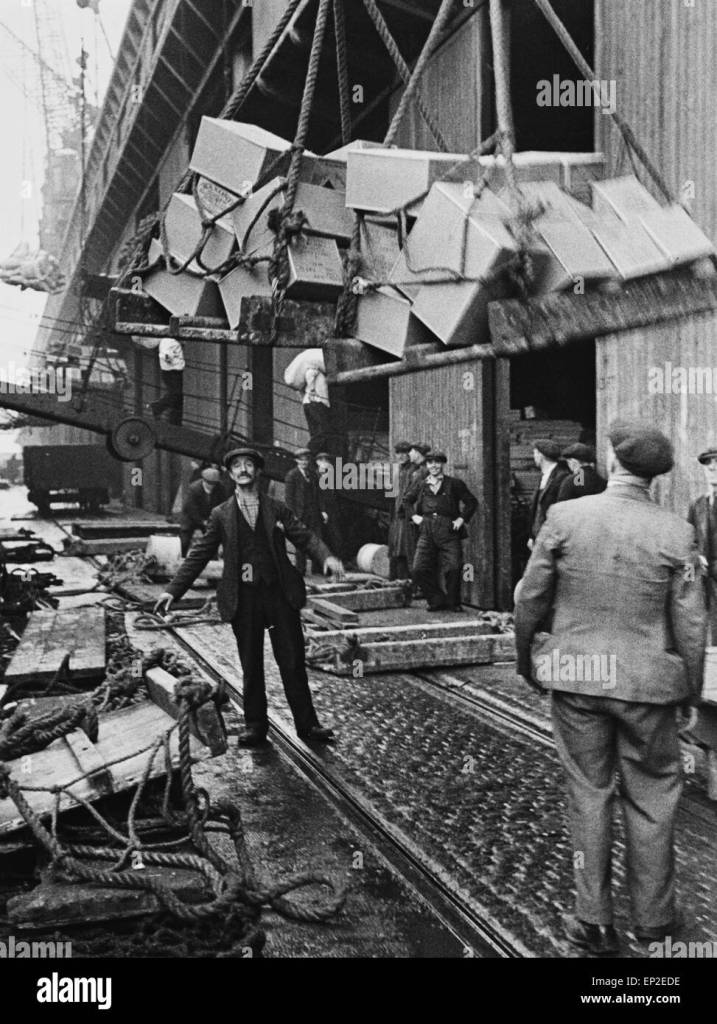
French naval officers and crews stand ready to man ocean liners in Le Havre. The government of Premier Édouard Daladier ignored labor overtures for peace tonight and ordered naval detachments to Le Havre to break the strike that has tied up the huge liner Normandie and other shipping. The government is determined to use the same stern methods in the shipping strike that it employed last week to crush the metal workers’ walkout in northern France and the one-day nation-wide strike against its economic decrees and suspension of the 40-hour work week. Three destroyers arrived at Le Havre tonight with 259 sailors from Cherbourg to man the liner Paris, which operates between Le Havre and New York.
The sailors were assigned to man the bridge and engine rooms of the ship. Stewards were sent aboard during the night on a requisition order to perform their services. French Line officials said the Paris would leave Le Havre tomorrow, a day ahead of schedule, and would proceed to Cherbourg to pick up her passengers on Wednesday. Three naval lieutenants and 126 sailors were en route from Lorient to Le Havre to take the place of other strikers. Other detachments were sent to Le Havre from naval bases.
The merchant marine ministry refused to receive a delegation of Le Havre strikers who sought a compromise by dismissal of charges against four of their leaders and the rehiring of sixty of their number who took part in the unsuccessful November 30 general strike. Approximately 1,500 of the Normandie crew, 2,000 workers on the liners Paris and Ile de France, and 1,500 dock workers and port handlers on Saturday refused to work at Le Havre in sympathy with the sixty discharged employees. The merchant marine ministry declared the liner Normandie, which missed her sailing Saturday as a result of the strike, would be returned to service on her next scheduled sailing date, December 17.
France’s Finance Committee approves a 1939 defense budget of over 18 billion francs.
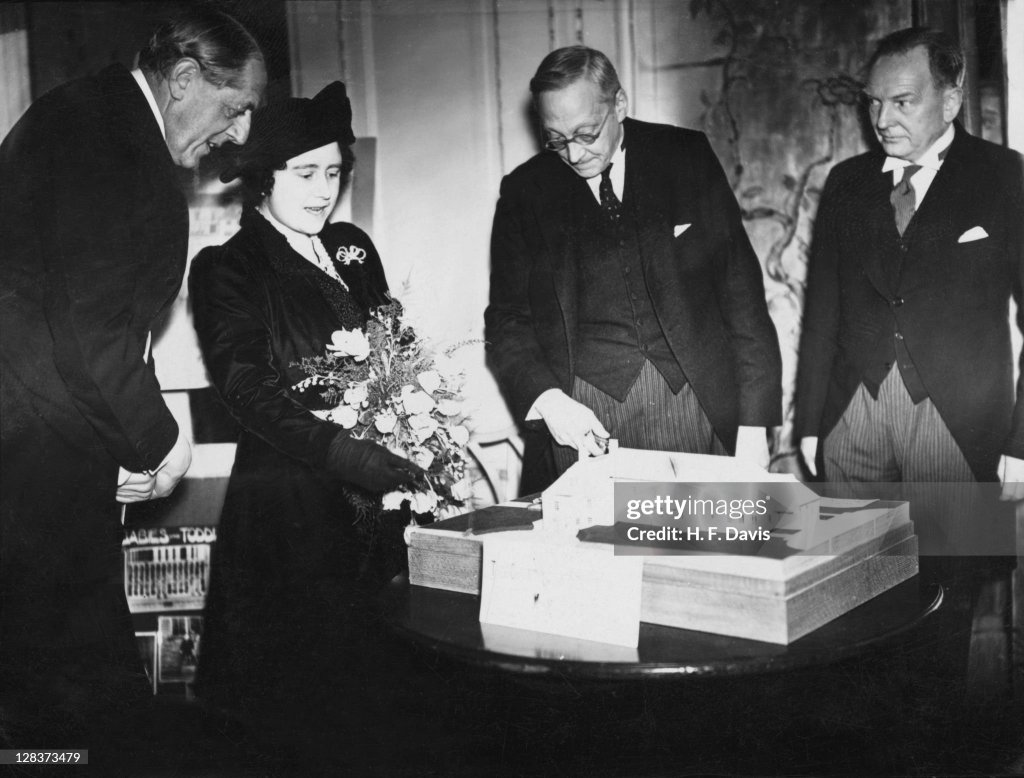
Six hundred Jewish children leave Vienna for new homes in Britain, and possibly the United States. The Scottish home of Earl Balfour, who wrote the Balfour Declaration, will house 200 refugee children.
Decrees from the Reich Economic Ministry forbade Jews from buying real estate or selling securities such as stocks and bonds or jewelry. All securities were to be placed in a special foreign exchange bank which could only be accessed with government permission. The systematic drive to make paupers of Jews before they are given a chance to flee from Germany is proceeding swiftly. Decrees issued tonight by the Ministry of Economic Affairs banned Jews from participating in the economic affairs of Germany and forbade the sale of their securities, whether stocks or bonds, real estate, jewelry, and art objects. The decrees, furthermore, made possible the forced sale of their businesses to anyone Nazi authorities might designate. Jews are to be paid off in government bonds instead of cash “to wipe out Jewish influence in German business affairs and all fields where it is publicly and economically a nuisance.”
Nazi officials were empowered to force Jews to sell their businesses to picked Aryan buyers within a definite time limit. If the Jews do not follow orders and sell or if they fail to find buyers, officials will appoint trustees who will “take over the direction or sale of businesses for the time being.” The Jewish owners must pay the trustees’ fees and expenses. Jews were forbidden to buy both real estate and options on real estate or to participate in compulsory auctions of property. They only can sell real estate with permission of the authorities. The decree forbidding Jews to sell securities said: “All securities owned by Jews are to be deposited in a special depot of a foreign exchange bank. These depots are to be marked as Jewish. The deposit can be touched only with the permission of the authorities.”
The Spanish government proceeded today to discharge foreign volunteers while the battle fronts remained deadlocked. Following the departure of 332 Americans on Friday, a detachment of 442 former recruits in the international brigades came to France on Sunday. They included Swedes, Belgians, Netherlanders, Frenchmen, and Finns. They were repatriated today on trains from the French border town of Gerbere. There was a mass of rumors of troop concentrations and coming offensives, from both the government and rebel sides.
Werner Mölders returned to Germany from Spain.
Viktor Abakumov was named acting head of the UNKVD Directorate of Rostov Oblast, Russia, Soviet Union.
Ambushes kill four men in Palestine, both Jew and Arab.
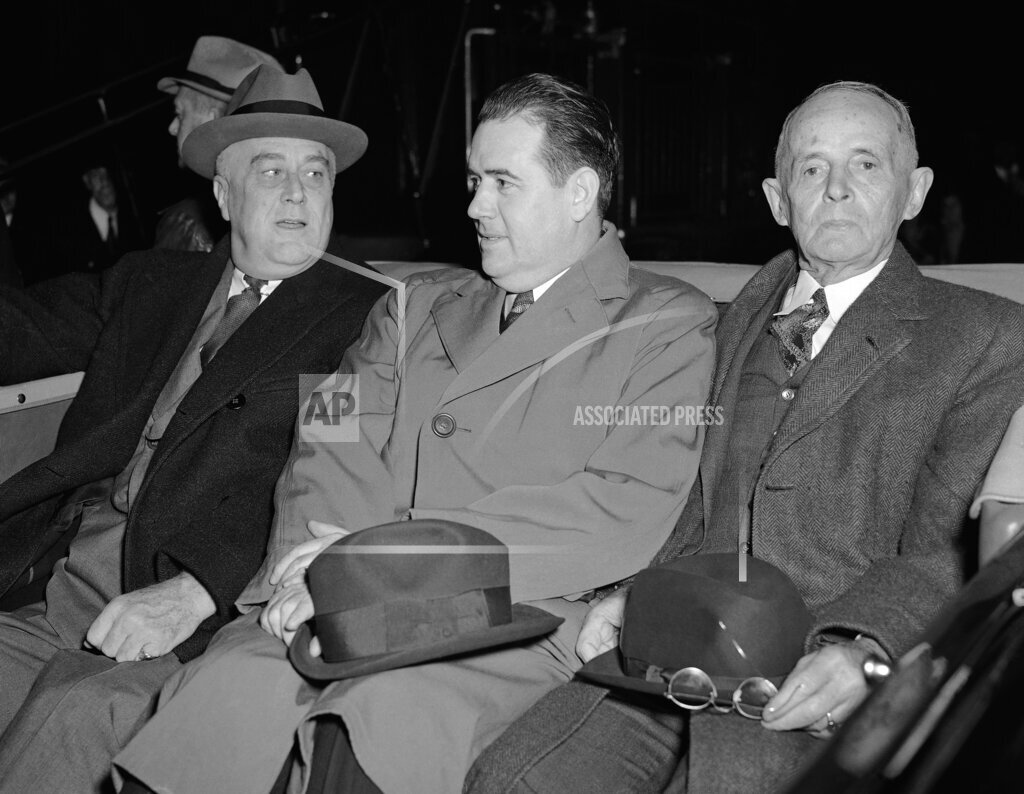
In a speech broadcast over the radio, the President reaffirms his dedication to the New Deal and points out that much of the world looks to the United States for leadership. In his first formal address since the New Deal defeat in the November election President Roosevelt today voiced a militant defense of his administrations and his social reform objectives. He spoke before the political union of the University of North Carolina at Chapel Hill, North Carolina, after he was awarded an honorary doctor of laws degree. He paused in the college town on his way back to the White House after a two-week vacation at Warm Springs, Georgia. “It is only the unthinking liberals in this world who see nothing but. tragedy in the slowing up or temporary stopping of liberal progress,” he asserted. “It is only the unthinking conservatives who rejoice when a social or economic reform fails to be 100 percent successful.”
Mr. Roosevelt declared that it is only the “headline” mentality which would exaggerate or distort his true objectives by which he is seeking to “guide change into the right channels to the greater glory of God and the greater good of mankind.” In his address the President barely mentioned the international situation which occupied much of his attention in his stay at Warm Springs. He said nothing of dictators or persecuted minorities but merely reasserted his declaration that the external policies of this country are exerted on the side of peace. Mr. Roosevelt denied that he is the ogre his political enemies portray. He asserted that he is actually a mild-mannered person — “a practitioner of peace, both domestic and foreign; a believer in the capitalistic system, and for my breakfast a devotee of scrambled eggs.”
The U.S. Supreme Court decides that the National Labor Relations Board has jurisdiction over the Edison Company, but limits its authority over aspects of Edison’s labor contracts. President Roosevelt’s National Labor Relations Board, often called the judicial branch of the CIO, was severely rebuffed today by the United States Supreme Court. The court not only ruled that the board abused its authority in setting aside American Federation of Labor contracts in favor of the CIO but comprehensively condemned the board’s “arbitrary and unreasonable” methods of procedure. Specifically, the court vacated an order of the board in so far as it required the Consolidated Edison Company of New York, Inc., and its affiliated companies to desist from giving effect to collective bargaining agreements with AFL local unions. The court ruled the board has jurisdiction over utilities doing business with interstate commerce. It was the labor board’s first defeat in the Supreme Court and the case is expected to have important repercussions affecting not only the senate fight against confirmation of Donald W. Smith for another term on the board, but also proposals to amend the Wagner Labor Relations Act in the next session of congress.
The U.S. Supreme Court decided Lyeth v. Hoey. The Court held that property received by an heir under a settlement agreement resolving a dispute over the decedent’s will is property acquired by “inheritance,” which exempts the value of such property from the income tax.
Cuba’s Ambassador says a $50 million loan to his country will be made by the United States through the Export-Import Bank in Washington, D.C.
Swastikas line the streets of Lima, Peru. German and Italian “observers” lobby with delegates arriving for the Pan-American Conference.
The U.S. gunboat Luzon is the first warship permitted to sail down the Yangtze River from Hankow to Shanghai. The United States river gunboat USS Luzon (PR-7) left Hankow today, the first foreign warship permitted by the Japanese to sail down the Yangtze since they gained control of that stretch of the river. Rear Admiral David Le Breton, commander of the American Yangtze patrol, was aboard the Luzon. An escort of Japanese navy ships was provided for the 585-mile trip down the river by the Luzon and the French sloop, Admiral Charner. They were expected to reach Shanghai by December 10. The escort was provided because the Japanese asserted passage on the river was dangerous because of floating mines.
Three French policemen and an Italian marine in Shanghai were wounded in a gun battle which developed early today when the police sought to quell a barroom brawl between sailors and marines of the two governments’ defense units here. Seven Italian marines were arrested and placed in the French military jail following the clash. Following the initial barroom clash the Italians retired to their barracks for reinforcements and returned and renewed the brawl with the French sailors. The French police stepped in and attempted to separate them. Then the shooting started between the police and the Italians.
Electricity to much of Hankow is cut to conserve dwindling coal resources. Hankow became a city without electric lights and heat, and even its emergency water service was restricted tonight as the coal supplies of the British Electricity Company were exhausted. The shutting down of the power plant forced hospitals to postpone operations. Hankow fell to the Japanese invaders on October 25 and a month later the British sought their aid to replenish the plant’s fuel supply. The supply ran out tonight. There are ample fuel reserves in bunkers and vessels on the Yangtze, but the British failed to overcome Japanese obstacles and a dearth of labor prevented them from getting sufficient coal to keep generators working. Hankow has a population of more than 400,000 persons.
Japanese ships in the Gulf of Tonkin shell areas 70 miles from French Indo-China, in Kwangsi. Chinese reports today declared Japanese warships massed in the Gulf of Tonkin were shelling Pakhoi, seventy miles east of the French Indo-China border, possibly presaging a new Japanese landing in South China. Chinese authorities ordered the evacuation of Pakhoi and nearby Luaichow. Invasion of Kwangsi province, lying between Canton and the French colony, is expected by Chinese military authorities who believe the Japanese thus will attempt to outflank China’s defense forces. Pakhoi is 125 miles south of Nanning, the capital of Kwangsi, and is that province’s rail outlet to the sea. Severe fighting occurred today in the West river region (west of Canton), which is expected to be the route of an overland attack on Kwangsi. The first important city along that route is Wuchow, just within the Kwangsi border.
A typhoon kills 305 people, ruins crops, and leaves thousands homeless in the central Philippines. Rain mixes with ash from the slopes of the Mayon volcano to slide down and bury the village of Camalig, known to be home to more than 20,000 people.
Dow Jones Industrial Average: 147.47 (-0.03).
Born:
Richard Meade, Welsh equestrian (3 x Olympic gold, eventing, 1968, 1972; World Championship gold team 1970, 1982), in Chepstow, Monmouthshire, Wales, United Kingdom (d. 2015).
Gennady Sapunov, Russian Greco-Roman wrestler (World Championship, gold, lightweight, 1963, 1965; silver, 1966) and coach (Soviet GR wrestling team, 1979-90), in Ust-Muya, Russian SFSR, Soviet Union (d. 2023).
Chico Ruiz, Cuban MLB second baseman, pinch hitter, and third baseman (Cincinnati Reds, California Angels), in Santo Domingo, Cuba (d. 1972).
Al Moran, MLB shortstop (New York Mets), in Detroit, Michigan.
J. D. McDuffie, American auto racer (653 x NASCAR Cup Series races; 106 x top-10 finishes), in Upper Little River Township, North Carolina (d. 1991).
J.J. Cale, musician and songwriter (“After Midnight”: “Call Me The Breeze”; “Cocaine”), in Oklahoma City, Oklahoma (d. 2013).
Naval Construction:
The Royal Navy Dragonfly-class river gunboat HMS Mosquito is laid down by Yarrow Shipbuilders Ltd. (Scotstoun, Scotland).
The Nihon Kaigun (Imperial Japanese Navy) Type C cruiser (C1 Subclass) submarine I-24 is laid down by the Sasebo Naval Arsenal, Sasebo, Japan.
The Royal Navy Net-class boom defence vessel HMS Falconet (Z 19) is launched by Blyth Shipbuilding & Drydock Co. Ltd. (Blyth, U.K.).
The Nihon Kaigun (Imperial Japanese Navy) Type J3 submarine I-8 is commissioned. Her first commanding officer is Commander Goto Hiroshi.
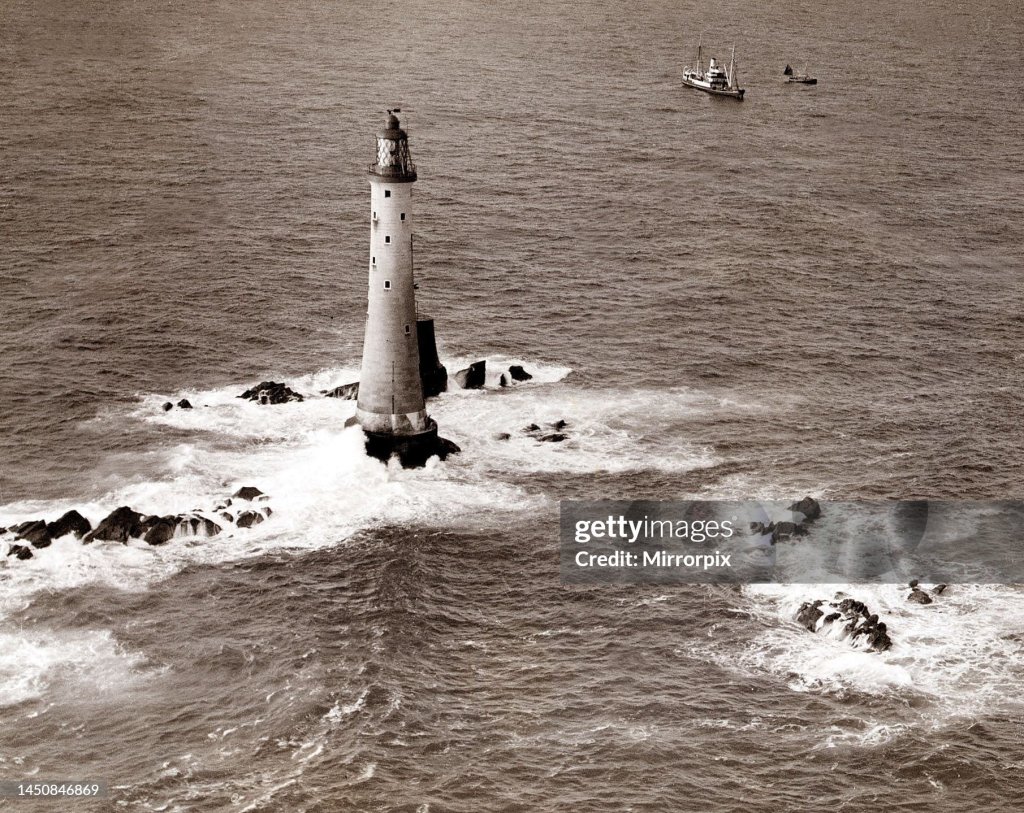

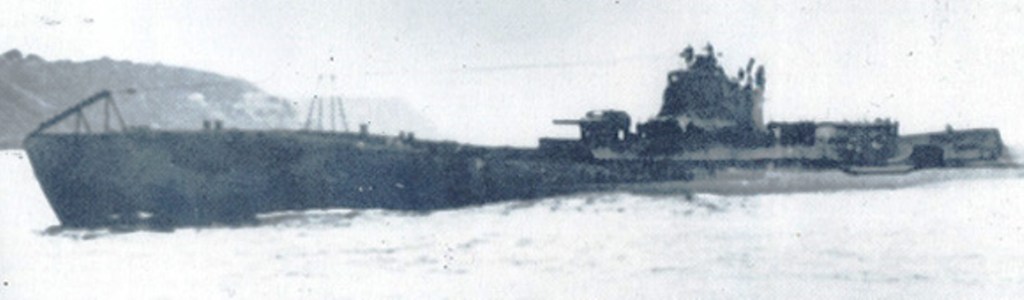
Designed as submarine aircraft carriers, I-8 and her sister ship I-7 were the largest Japanese submarines to be completed before the outbreak of the war in the Pacific in 1941. With embarked floatplanes, I-8 participated in operations related to the attack on Pearl Harbor, patrolled off the United States West Coast, and took part in the Guadalcanal campaign and the Okinawa campaign.
In 1943, I-8 completed a technology exchange mission with a voyage to German-occupied France and back to Japan, the only submarine to complete a round-trip voyage between Japan and Europe during World War II. Under a new commanding officer in 1944, her crew committed war crimes during anti-shipping operations in the Indian Ocean.
Sunk 31 March 1945 by U.S. Navy destroyers USS Morrison (DD-560) and USS Stockton (DD-646).
https://en.wikipedia.org/wiki/Japanese_submarine_I-8#Service_history
 History Diaries