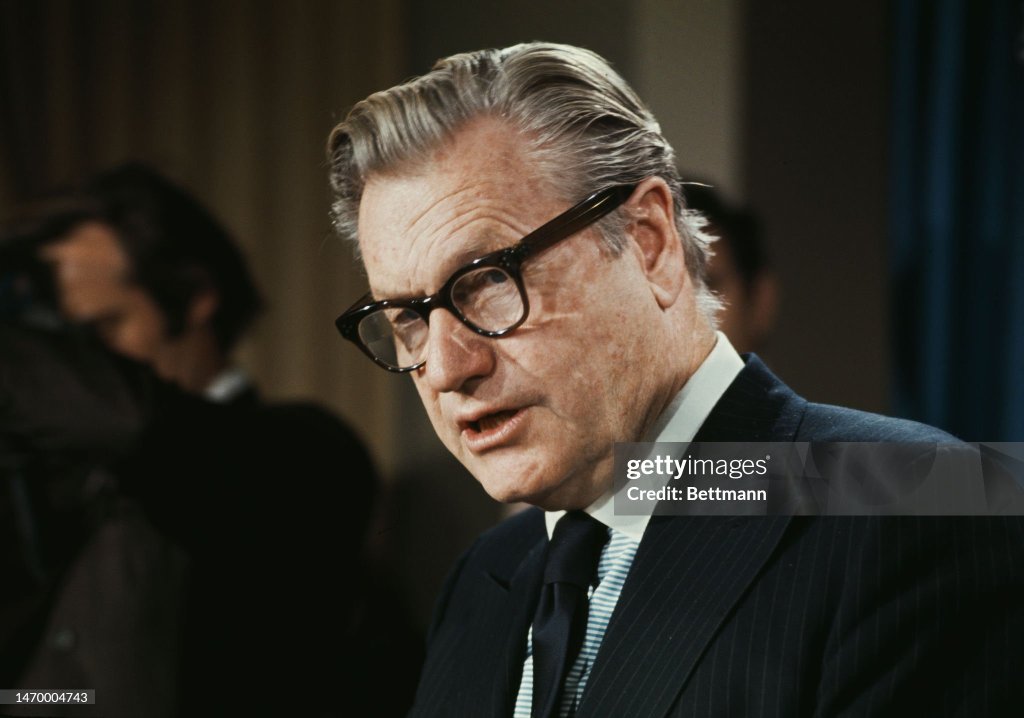
Saudi Arabia’s oil minister Sheik Ahmed Yamani met with Secretary of State Henry Kissinger in Washington. Yamani vowed that there will be no relaxation of the oil embargo until Israelis withdraw from all Arab lands currently occupied, including the city of Jerusalem. Saudi Arabia’s Minister of Petroleum met with Kissinger and then said that peace in the Middle East was “now more feasible than at any time in the past.” After his 90‐minute meeting at the State Department, Yamani sought to give an optimistic appraisal of his discussion, but held out little prospect for an immediate end to the Arab oil embargo.
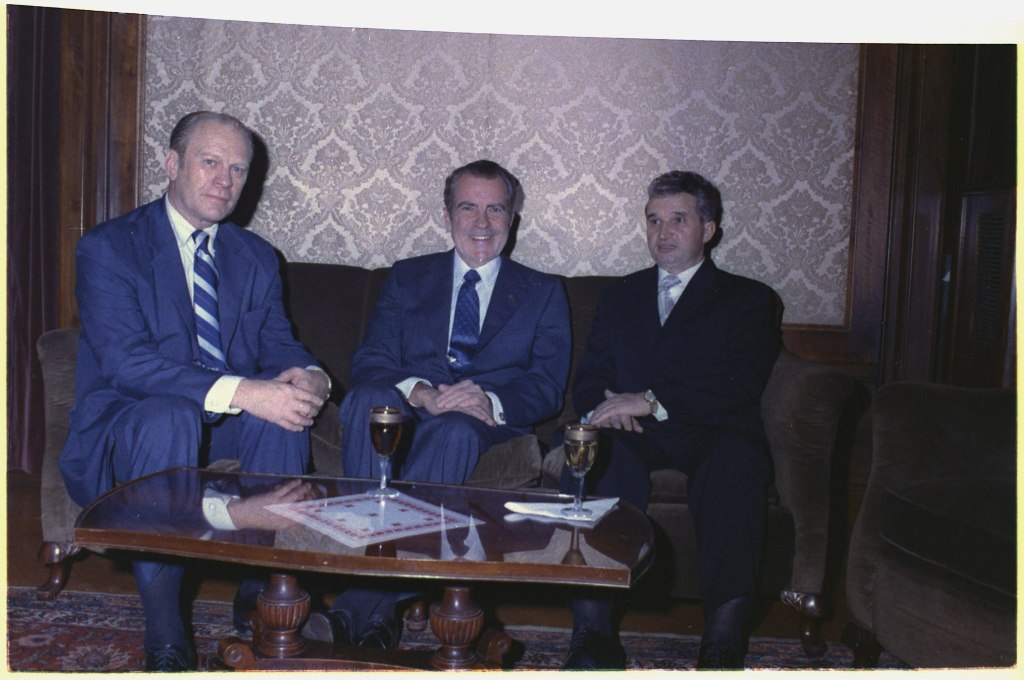
Romanian President Nicolae Ceaușescu met with President Nixon and they discussed oil shipments to the United States. Nixon and Ceaușescu signed a statement pledging “continued development of friendly relations” between the two countries. The statement was supplemented by a joint declaration committing the United States and Romania to economic, industrial and technical cooperation.
Hopes for Mideast peace continue to dim. Shooting incidents along the cease-fire line have increased, and Israel’s armed services are on an urgent state of alert along the Egyptian and Syrian fronts and they are now preparing for fighting on the Jordanian front. Egypt claimed that an Israeli jet was destroyed over the Suez Canal today; Israel denied the report. In Tel Aviv, a terrorist bomb exploded on a bus; 16 were injured. First reports said that the bomb had weighed about half a pound. According to unofficial reports it was hidden under a seat occupied by an Arab, but the spokesman could not confirm this. Yesterday 18 persons were injured when a grenade was tossed into a narrow alley in the Old City of Jerusalem. Today’s incident occurred as the bus was near the town of Natanya, on the Mediterranean coast 15 miles north of Tel Aviv.
The Egyptian Government told the United Nations that it had not decided on whether to resume the military talks with Israel that were suspended a week ago. The message, delivered to the commander of the United Nations Emergency Force in Egypt, added to the suspense over whether. Egypt intended to attend the proposed full‐scale peace conference.
Joseph J. Sisco, the State Department’s chief Mideast troubleshooter since the 1967 Israeli-Arab war, is resigning to become president of Hamilton College in upstate New York. Sisco will stay on during the “important next phase of peace negotiations” in the Middle East, the college said in a statement distributed in the State Department. Officials said it would be up to Secretary of State Henry A. Kissinger and Sisco to decide when Sisco takes up his Hamilton post.
The Northern Ireland Assembly was adjourned after fist fighting broke out among members of the Protestant Unionist Party. Punches were exchanged and one parliamentarian was knocked to the floor and kicked. Another grabbed a microphone and shouted that ‘there will be no executive, there will be no Council of Ireland.” This was a reference to the British-backed Ulster executive body, which gives minority power to the Catholics, and plans for a council to provide some coordination between the Irish Republic and Northern Ireland short of full union.
Foreign Secretary Sir Alec Douglas‐Home returned today from two days of talks with Soviet leaders in Moscow and said relations between Britain and the Soviet Union were “now back to normal after the coolness of the past two years.” The two Governments agreed to establish the closest possible contacts, including exchanges and visits at ministerial level, he said. Relations were chilled in 1971 when Britain expelled 105 Soviet officials as spies.
The Soviet Union is sounding out Communist parties around the world on convening an international Communist conference in 1974, non-Soviet Communist sources said in Moscow. Speculation persists that the Kremlin is interested in staging a meeting that would attempt some action against China, the target of increasingly bitter polemics in the Russian press. There have been three international Communist conferences since World War II. The last was in 1969.
The Soviet police showed unusual restraint tonight as Andrei D. Sakharov, the nuclear physicist, led a silent demonstration of political dissidents in Moscow’s Pushkin Square. A large number of uniformed and plainclothes policemen left Mr. Sakharov and his followers undisturbed as the civil rights advocates stood bareheaded under falling snow before the statue of Pushkin, the Russian poet who attacked the injustices of czarist rule. The protest and the police restraint contrasted sharply with previous demonstrations held to mark Constitution Day today. In past years policemen roughly dispersed dissident demonstrators, jostled Western newsmen and photographed participants and onlookers.
Thirty-four persons, including a newsman and sons of two former parliamentarians, were jailed in Greece in connection with recent student protests. All 34 persons were tentatively charged by police with conspiring to overthrow the existing social order, or violations of Public Law 509 passed in 1949 to contain a Communist insurrection. Their cases have been turned over to a military prosecutor.
Sweden announced it would not replace its ambassador to Chile, Harald Edelstam, who was declared persona non grata by the Santiago government because of his activities in helping political refugees out of the country. Stockholm said it did not intend to break diplomatic relations. It would be represented in Santiago for the time being at the charge d’affaires level.
A mass demonstration is planned tomorrow in Paris, France, to protest cost of living increases. A general strike tomorrow, called by left‐wing unions to protest the Government’s failure to arrest inflation, will close down most sectors of French economic life for 24 hours. The strike, considered mainly a show of force by the left to embarrass the Government, will come at a time of growing concern over possible unemployment and when production cutbacks in the automotive, textile and petrochemical industries are imminent.
In France, where there is a cafe or bar for every 250 persons, one of every four French men and one of every 12 women suffers from alcoholism, according to a study made by reporters on the newspaper Le Monde. The disease, the study said, kills 30,000 Frenchmen a year. Seventy per cent of the alcoholics are wine drinkers, most of whom drink at least four quarts per day, Le Monde said.
Yesterday’s election in Denmark marked voters’ disillusionment with rising taxes and radical social change. Danish Prime Minister Anker Jorgensen resigned after his Social Democratic Party was routed, losing 24 seats in parliament. Opposition leader Mogens Glistrup, an advocate of lower taxes who is the leader of the new Progress Party, is credited with leading people away from Jorgensen.
A band of insurgent commandos slipped into the Cambodian capital of Phnom Penh early this morning and staged the first anti-Government attack inside Phnom Penh in more than a year. The attack was apparently intended to destroy the Bridge of the United Nations, the only bridge connecting the capital with Route vital supply line to the southeastern military front. The attack failed short of the bridge, Government soldiers said, when defending troops fought back against commando rockets by throwing more than a hundred grenades. Government soldiers said that 11 of their own men had been wounded and three civilians hurt. They said that they thought they had killed at least one enemy commando.
The attack took place a few hundred yards from the bridge, which spans the Bassac River on the south side of the city. Government soldiers noted that the city’s other major bridge, across the Tonle Sap, was destroyed by plastic explosive charges in the last such attack, in September, 1972. Government officers said that the commandos who attacked this morning probably carried similar explosives. The officers said that the commandos slipped into the capital in small rowboats, paddling in from the countryside through a series of lakes and shallow creeks. The attackers grounded their boats under houses raised on stilts above a creek about 100 yards from the Government outpost that defends the United Nations Bridge.
Political representatives of South and North Korea met in Panmunjom to discuss ways to resume their stalemated discussion of peaceful reunification. A South Korean spokesman for the coordinating committee for the talks said the delegates had a comprehensive and sincere exchange of views.
President Juan D. Perón ordered border patrol troops around Argentine plants of the Ford Motor Co. after assuring Ford executives personally that he intended to protect them and their factories from guerrilla attacks. The firm evacuated 25 of its top executives, mostly Americans, last week after receiving threats from the Perónist Armed Forces, a left-wing guerrilla group that bears the president’s name but opposes many of his policies. Personal bodyguards will be provided for executives worried about kidnapping or death threats.
The Soviet Union has begun flying military reconnaissance missions from the West African nation of Guinea, according to Pentagon officials, who said that the flights are apparently used to monitor ship movements in the South Atlantic. Analysts said that the Russians now have a reconnaissance ability over almost all the Atlantic and that this represents a further extension of Soviet military power in Africa.
Elections were held for parliament and the president were held in the southern African nation of Zambia. Voters had a choice from multiple candidates from Zambia’s only legal political party, the United National Independence Party (UNIP), for the 125 seats of the National Assembly, and three cabinet ministers were defeated by other UNIP candidates in their districts. President Kenneth Kaunda was re-elected in a yes-no vote with 88.8% of voters in his favor. Voter turnout was only 39% for the presidential election, and only 33% of eligible voters participated in the National Assembly election.
The Cost of Living Council approved a price increase for heating oil. The price of refinery gasoline was reduced by one cent per gallon; heating oil increased two cents. Cost of Living Council director John Dunlop said that today’s actions will encourage refineries to shift their emphasis to home heating oil rather than gasoline. But the gasoline price decrease still won’t benefit the consumer. The Cost of Living Council ordered an investigation into diesel fuel price gouging at truck stops. The National Association of Truck Stops denied the charges.
Truck drivers again blocked major highways to protest higher diesel fuel prices and lower speed limits. Along Interstate 80 in Pennsylvania, truckers used diners and CB radios to coordinate the blockade. Drivers stopped on the Delaware Memorial Bridge during rush hour to protest the government actions. Truck drivers in Pennsylvania ended blockades in protest over higher fuel prices and lower speed limits after meeting with Governor Milton J. Shapp. But blockades continued in Ohio despite five arrests and the forcible removal of 300 vehicles.
Near Berlin Heights, the Ohio turnpike was completely blocked by truckers. Ohio Governor John Gilligan warned that court action is likely if the trucks aren’t moving by tomorrow morning. The governors of New Jersey and Pennsylvania are considering calling in the National Guard to clear the roads if further blockades are set up.
CBS reporters viewed some truckers’ lives first-hand. The citizens band radio is used to find diesel fuel for truckers along their routes. Trucker Charley Tederman said that he’s currently forced to stop three times for fuel from California to Salt Lake City. Usually, one stop would suffice. Tederman believes that the federal government is down on truckers, and he stated that the country couldn’t function without trucks.
In New Jersey, driver Mike Pryslak’s operating costs are tremendous now, leaving less money for his family. Pryslak noted that diesel fuel price hikes mean a profit for someone — and it’s not truckers. Truckers discussed operating costs at every stop. The Teamsters Union has requested that President Nixon call a meeting to discuss truckers’ problems.
In response to the wildcat highway blockades by truckers, the Nixon Administration promised to take immediate action to alleviate their problems and to give truck fuel high priority in any allocation program.
The head of the Federal Law Enforcement Assistance Administration believes that the energy crisis could lead to an increase in crime. Administrator Donald Santarelli reported that his agency will give priority to local police dealing with the threat of increased crime.
President Nixon’s personal secretary Rose Mary Woods and White House chief of staff Alexander Haig appeared before Judge John Sirica regarding the White House tapes and the missing 18 minutes. After hearing their testimony, it’s clear that the White House has no explanation for the gap on the tape. Rose Mary Woods was unable to explain the reason for the length of the gap. Haig recalled the President’s reaction upon learning about the 18-minute gap. Haig, testified that Mr. Nixon was “very, very disturbed” and “almost incredulous” when he was told November 15 of the 18‐minute gap in one of the subpoenaed White House tapes. Though the President’s secretary, Miss Woods, has testified that she told the President immediately after she discovered several minutes of shrill buzzing on October 1, the White House has maintained that the full extent of the gap and the fact that the affected tape was one of the subpoenaed recordings was not discovered until mid‐November. The hearing is expected to end tomorrow.
Gerald Ford is expected to be confirmed and sworn in as Vice President tomorrow. Republican Senator Jacob Javits noted the likelihood of the issue of President Nixon’s resignation or impeachment being quickly revived after Ford is officially named Vice President.
President Nixon will name Arthur Flemming as chairman of the Civil Rights Commission to replace Father Theodore Hesburgh. White House adviser Bryce Harlow will be leaving the administration soon also.
The funeral of a slain Boston police officer set the stage for a police demonstration favoring capital punishment. Detective John Schroder was buried today after dying in the line of duty. The Boston Patrolmen’s Association believes that capital punishment will help stop the killings of policemen. Massachusetts Governor Francis Sargent said that he understands the policemen’s view. A veto of any capital punishment bill passed by the state legislature is likely, however.
Nicholas Johnson announced he was stepping down as a federal communication commissioner without waiting for the Senate to confirm a successor. Johnson said he wanted to resolve his “dilemma” and “remove any possible question as to my motives in opposing” the man President Nixon has named to succeed him — James H. Quello, a retired Detroit broadcaster. Opposition to Quello has come not only from Johnson but from consumer advocate Ralph Nader and others who contend it is important to have at least one consumer spokesman on the commission.
A fear of approaching insanity drove U.S. Attorney Robert A. Morse to jump to his death from a window of his fifth-floor New York City apartment, a rambling suicide note indicated. Morse, 45, the chief federal prosecutor for Brooklyn and Long Island, died Tuesday. His associates said he had been depressed recently and had submitted a scrawled, incoherent letter of resignation just before his death.
A national caucus of Democratic mayors — the first such organization in the history of the party — was formed to “elect a veto-proof Congress in 1974 and a Democratic national administration in 1976.” Milwaukee Mayor Henry W. Maier, the caucus chairman, said the group would “fill a gap” in the party’s national apparatus. The group was formed at the National League of Cities convention in San Juan, Puerto Rico, where 3,000 local officials are meeting. Among the 16 mayors on the new caucus’ organizing committee were Tom Bradley of Los Angeles and Joseph Alioto of San Francisco.
Two main bodies of the Presbyterian Church have existed since the Civil War when a North-South division occurred; now the Southern faction has split again. The newly-organized “Presbyterian Church in America” practices conservative theology, which is believed to be spreading.
Apple Records releases Paul McCartney & Wings album “Band on the Run” in US; the commercial and critical pinnacle of his post-Beatle work tops the charts in 7 countries.
Ron Santo becomes the first player to invoke the new 10 and 5 rule. The Cubs want to trade Santo to the Angels for 2 pitchers, but he vetoes the deal.
The Dodgers trade outfielder Willie Davis to the Expos for relief pitcher Mike Marshall. Marshall will win the Cy Young Award for the Dodgers in 1974.
Dow Jones Industrial Average: 788.31 (-14.90, -1.86%).
Born:
Sorin Grindeanu, Prime Minister of Romania during 2017; in Caransebeș, Romania.
Shalom Harlow, Canadian actress and model; in Oshawa, Ontario, Canada.
Hanley Frías, Dominican MLB shortstop, pinch hitter, and second baseman (Texas Rangers, Arizona Diamondbacks), in Villa Altagracia, Dominican Republic.
Corissa Yasen, American WNBA guard (Sacramento Monarchs), in Omaha, Nebraska.
Died:
Robert Watson-Watt, 81, Scottish physicist and developer of the radar and radio direction finding in WWII.
Tom Dorrien-Smith, 60, the exclusive leaseholder of the island of Tresco in Cornwall, England, since 1955, died from cancer. His position was inherited by his son, Robert Dorrien-Smith.
Eugeni Xammar, 85, Spanish Catalan journalist.

 History Diaries