Nikita Khrushchev, speaking in Moscow, hails President Johnson’s pledge to seek peaceful solutions to east-west problems and improve relations with Russia. He says Russia will not “relax its efforts in search of a solution to major international problems.”
President Romulo Betancourt of Venezuela renews his call for an air and sea blockade of Cuba to prevent it from exporting arms and the communist revolution. His call for action against Fidel Castro’s regime comes as President-elect Raul Leoni awaits official confirmation of his election. In a resumption of Red terrorism, one man is killed and another wounded when a bomb-rigged car explodes in a market area. Fire causes $250,000 damage to an American-owned oil plant.
The council of the Organization of American States voted 16 to 0 today to send a five-member team to Venezuela to investigate that nation’s charges of Cuban aggression. Mexico abstained. Venezuela could not vote because it had brought the charges. Haiti was not represented at the meeting. Cuba and Bolivia are not members of the OAS council.
Mexico’s abstention was based on grounds that the United Nations charter provides that regional organizations such as the OAS shall be created only for the preservation of peace, not for purposes which could lead to armed conflict. Brazil voted for the resolution creating an investigating group but said Cuba should be given an opportunity to defend itself. Chile voted for the resolution but said its action did not indicate it had passed judgment on the Venezuelan case. Mexico, Brazil, and Chile are three of the five OAS members which have not broken off diplomatic relations with Cuba. The others are Uruguay, which voted without reservation today for the resolution, and Bolivia, which has withdrawn temporarily from the OAS because of a border dispute with Chile.
A spokesman at the U.S. Embassy at Caracas expressed deep concern for the safety of U.S. Army Colonel James K. Chenault, kidnaped by Venezuelan pro-Communist terrorists.
The reduction of United States forces in South Vietnam began as 220 servicemen headed home. Plans are for 780 more to return by Christmas.
France’s nuclear force, in its initial phase, will consist of 50 bombers and 150 fighter-bombers, all capable of delivering atomic bombs, a leading French expert said today. Pierre Gallois, a retired brigadier general, defended France’s independent nuclear force in sharp debate with Dr. Henry A. Kissinger, author and professor of political science at Harvard. The debate was held at a luncheon meeting of the Anglo-American Press Association. General Gallois argued that the nuclear force would give France and the West great advantages, “All alliances are now obsolete because every country is vulnerable to atomic attack. and must have the means to defend itself,” he said. Dr. Kissinger replied that the general had commended the French-American alliance. Why? he asked, if all alliances are now obsolete. “The question,” Dr. Kissinger said, “is how much unity do we want and how much plurality can we stand?” The debate shed light on the great value placed on possession of nuclear weapons by advanced French military thinking.
President Johnson has told President de Gaulle that he is looking forward to extensive discussions between them in 1964. He expressed his desire for a meeting in a private message sent to General de Gaulle yesterday. The contents of the message were disclosed tonight by Agence France-Presse, the French news agency. Mr. Johnson’s message did not mention a site for the proposed meeting. General de Gaulle met briefly with President Johnson last week, following the funeral of President Kennedy. He gave the impression then that he would be willing to return to Washington for a longer meeting.
Since then, however, President de Gaulle has backed away from the idea of visiting Washington. The French leader would prefer that Mr. Johnson visit him during what diplomats call “a swing around Europe.” United States officials here indicated that the “swing around Europe” was an idea being put forth by the French Foreign Ministry. No such visit is planned, they said. One qualified source said that if it were planned and it resulted in a visit to Paris by Mr. Johnson, General de Gaulle would be able to contend that the President had come to him and that he had not joined other European statesmen in making pilgrimages to Washington. Western observers feel that jockeying over who visits whom reflects the width of the gap between the two administrations. Some fear General de Gaulle now believes that his influence is equal to that of the President of the United States. This, they say, is not a good omen for any early settlement of French-American differences over the future of the North Atlantic Treaty Organization.
Mayor Willy Brandt of West Berlin said that he had been informed that Western allied contingency plans for the defense of West Berlin and for protection of access rights to the city had been disclosed to the Soviet Union. This may have been the reason, he added, the Russians recently interfered with convoys on the autobahn.
Chancellor Erhard said at a news conference in Bonn that, while West Germany could not act as a mediator, he would do what he could to eliminate existing misunderstandings between France and the United States. He said prospects for harmony between the two countries were improved by the change in Administration in Washington.
United States military officials in Honolulu report that equipment Communist China has obtained from the Soviet Union is becoming obsolete and is not being replaced because of the Communist ideological dispute. The officials believe this will inhibit Peking’s military striking power.
Secretary General U Thant is expected to advise the General Assembly that there is no way to make major cuts in the costs of the U.N. emergency force in the Middle East without jeopardizing its efficiency.
Pope Paul strengthened the pastoral authority of Roman Catholic bishops by adding to their permanent powers and granting them new privileges. The move, which was viewed as falling short of “collegiality,” was interpreted primarily as an attempt to decentralize church administration and to stress episcopal dignity.
Italy reduced the size of its paper currency, which had been referred to as “bed sheet” size because each bill was almost 25 cm by 12.5 cm (almost 10 inches long by five inches wide). The new size of the lira, 15 centimeters by 7.5 centimeters (almost six inches by three inches) was a little more than one-third as large in total area, and closer in size to other world currencies.
Despite the desires of President Johnson and the maneuvering of the House Democratic leadership, there is slight prospect for a vote on the civil rights bill before January. House Speaker John W. McCormack (D-Massachusetts), appeared to concede this today when he said it is very uncertain that the bill can be passed before Christmas, and that the probabilities are that there will be a vote next month. McCormack and other members of the Democratic congressional leadership met with Johnson, and the speaker told reporters that the President expressed “deep and keen interest” in the legislation. He said the President wants action as quickly as possible.
However, the legislative facts of life virtually preclude a House vote this year regardless of the steps the leadership is taking to move the bill along. The measure, drafted and approved by the judiciary committee, is now lodged in the rules committee. The latter committee controls the flow of bills to the House floor, setting the hours a bill will be debated for those it approves, and pigeonholing those of which it disapproves. The chairman of this committee is Rep. Howard W. Smith (D-Virginia), a veteran of 32 years in the House with a reputation of never being hurried into action on a measure he doesn’t like. And civil rights legislation is something he emphatically does not like.
The White House today raised the possibility of another record federal budget with the disclosure that President Johnson plans to submit spending proposals totaling 98 to 103 billion dollars for the 1965 fiscal year. The range of the budget President Johnson intends to send to Congress in mid-January was reported by the White House in the midst of what is described as a drive by the new chief executive to promote government economy and cut spending. The President has ordered his budget bureau and military and civilian agency heads to eliminate excess employees and reduce operating costs. In an address to a joint session of Congress last week, the President committed his administration to fiscal prudence, to a course of “utmost thrift and frugality.” Pierre Salinger, White House press secretary, disclosed today that President Johnson “is attempting to arrive at” a budget of 98 to 103 billion dollars for the 1965 fiscal year beginning next July 1.
House Democrats on the Public Works Committee today rammed out a 900-million-dollar public works spending bill to create jobs. The reporting of this bill over solid Republican opposition just seven days after President Johnson had pledged before Congress the “utmost thrift and frugality” was blasted as showing “bad faith” in Johnson. The bill came out of the committee on a 16 to 15 vote. The money would be spent on water systems, sewage systems, and road repairs in areas where administration officials find unemployment. The Democrats voted to spend the money in the next six months. It would be spent in addition to the regular public works billions, and would lift the total job-making expenditures since September, 1962, to 1 billion 800 million dollars.
“This is a pure pork barrel bill, intended as a political raid on the Treasury by the Democrats in Congress,” said Rep. Robert T. McLoskey, (R., Illinois), a member of the Public Works Committee. “This action is contrary to the wishes of President Johnson, who just a few days ago asked for tight curbs on excessive federal spending.” McLoskey said it showed “bad faith” in the President, and he said Johnson should offer at once to veto it, “if he is sincere about his wishes to curb wasteful, unneeded, and ill-conceived federal spending.” “To propose a bloated bill such as this when we are in the midst of prosperity is fiscal irresponsibility at its worst,’ McLoskey said.
President Johnson opens high level administration councils to Speaker John McCormack, next in line of succession to the Presidency. The Massachusetts Democrat will be kept advised on all national security matters, to provide continuity of government in case of any contingency.
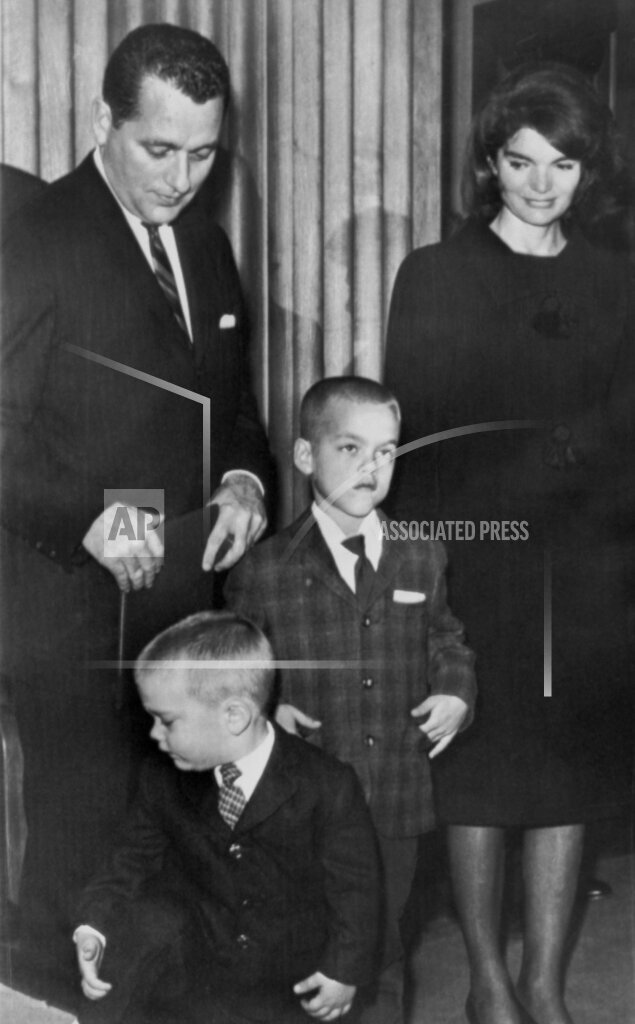
Mrs. John F. Kennedy looked on while Secret Service agent Clinton J. Hill received the Treasury’s highest award for “exceptional bravery” during the assassination attack on the late President.
An FBI report on the assassination of President Kennedy concludes that there was no conspiracy between Lee Harvey Oswald, the accused assassin, and Jack Ruby, Dallas nightclub owner who in turn killed Oswald.
Officials of Rose Hill cemetery in Fort Worth, Texas, estimate 8,000 persons have visited the grave of Lee Harvey Oswald since he was buried November 25. Police guard the burial site night and day and secret service agents observe the visitors. Automobiles were bumper-to-bumper Thanksgiving day. Some visitors leave flowers.
Senator William Proxmire (D., Wisconsin) discloses his financial dealings since his election to the Senate in 1957. The senator says he inherited stocks and bonds with an annual income of $5,000 to $6,000 but sold all the common stocks he owned. Through his son, Ted, he controls 11 shares in the Milwaukee National league baseball team.
Officials of five railroad operating unions announce that attorneys on Friday will file a court suit challenging an arbitration award eliminating 90 per cent of the firemen jobs on freight and switch engines.
Los Angeles county authorities are studying notes pasted on the doors of apartments occupied by Karyn Kupcinet, daughter of a Chicago newspaper columnist, and her friend, Andrew Prine, a television actor. Prine and other friends of the television starlet are questioned again in connection with her strangulation murder.
A federal grand jury in Nashville, Tennessee, begins a surprise investigation into the 1962 contract kickback trial of James Hoffa, teamster union president. The 1962 case ended in a mistrial but resulted in the indictment of Hoffa on jury tampering charges. The new investigation involves bribery charges against Hoffa’s former lawyer.
The U.S. Navy’s sagging morale was bolstered when its new secretary, Paul Nitze, opposed any reduction in the strike carrier fleet and supported nuclear power for carriers.
Miss Elizabeth Bentley, 55, admitted Communist spy during World War II, who later renounced communism and aided FBI work, died in Connecticut.
Outfielder Felipe Alou, catcher Ed Bailey, pitcher Billy Hoeft, and a player to be named are sent by the Giants to the Braves for catcher Del Crandall and pitchers Bob Shaw and Bob Hendley.
Dow Jones Industrial Average: 751.82 (-0.09).
Born:
Terri Schiavo, American “right to die” figure (d. 2005), in Lower Moreland Township, Pennsylvania.
Steve Hegg, American road and track cyclist (Olympic gold, individual pursuit, 1984), in Dana Point, California.
Damon Berryhill, MLB catcher (Chicago Cubs, Atlanta Braves, Boston Red Sox, Cincinnati Reds, San Francisco Giants), in South Laguna, California.
Ray Wallace, NFL running back (Houston Oilers, Pittsburgh Steelers), in Indianapolis, Indiana.
Todd Sandham, NFL guard (New England Patriots).
Joe Lally, American rock bassist (Fugazi), in Silver Spring, Maryland.
Died:
U.S. Army Captain Michael D. Groves, 27, died only eight days after directing the Honor Guard at the funeral of President Kennedy. According to a UPI report, Captain Groves “died unexpectedly… while dining with his family” at his home in Fort Myer, Virginia.
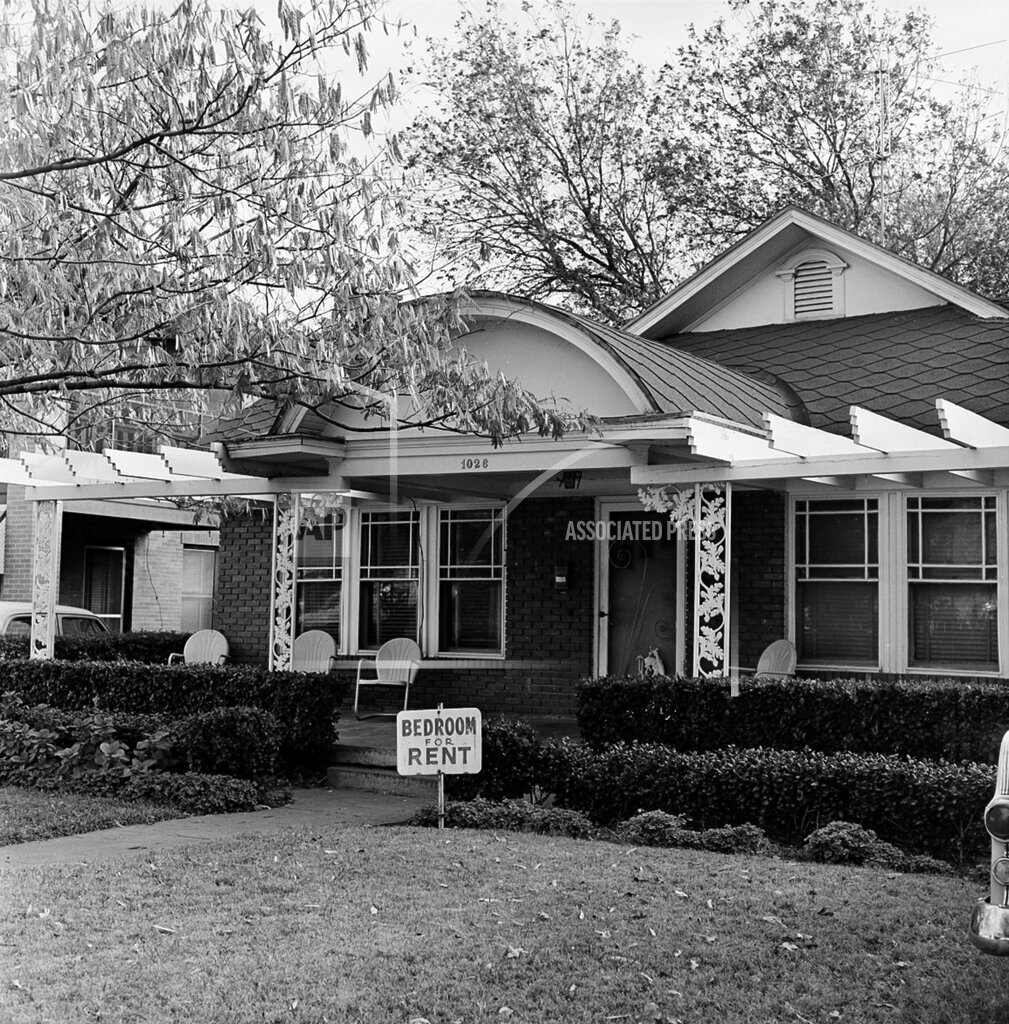
Maurice Baker, 35, a former Dallas policeman, was found shot to death in his apartment in the Oak Cliff neighborhood, apparently having committed suicide. Some conspiracy theorists cite the death as suspicious because Baker lived on the same street where Lee Harvey Oswald lived and was a friend of Jack Ruby.
Elizabeth Bentley, 55, American Communist spy during World War II.


 History Diaries