A team of military engineers from the 12th Viet Cong Sapper Regiment destroyed the largest oil storage facility in South Vietnam with an attack on the Shell Oil Company’s tanks at Nhà Bè. The VC hit the fuel depot with rocket fire destroying or damaging 30 fuel tanks and igniting over 600,000 barrels of fuel. Communist gunners fired about 50 rounds rockets into the largest civilian gasoline storage area in South Vietnam at Nhà Bè early this morning, creating a huge blaze and immediate gasoline shortages in Saigon.
The Nhà Bè storage area, seven miles southeast of the capital, was engulfed by a vast plume of gray‐black smoke that spiraled high in the air and over Saigon itself. Only a few fire trucks appeared to be fighting the conflagration, which seemed to have consumed the bulk about 25 Shell‐owned storage tanks. About an equal number of tanks owned, respectively by Esso and Caltex had not been reached by the spreading fire at 11 o’clock this morning. There was no immediate estimate on the extent of gallon damage to the serried ranks of gasoline, but each of the 50 tanks was reported to contain about four Million liters of fuel.
The Saigon military spokesman announced today that South Vietnamese aircraft had flown 124 bombing sorties today against Communist positions. When asked by reporters whether these strikes were in retaliation for the attack on the Nhà Bè gasoline storage complex, the spokesman, Lieutenant Colonel Lê Trung Hiền, declined to comment. He said the number of sorties flown yesterday was not the highest since the ceasefire in January. South Vietnamese fighter bombers, Colonel Hiền said, flew 51 sorties in Central Vietnam, hitting three antiaircraft positions and setting off four secondary explosions, and 57 sorties in the area around Saigon, hitting 24 installations and 14 antiaircraft positions. In the Mekong Delta, he said, warplanes struck 16 times, sitting 14 Communist installations and killing five soldiers.
Lee Hu-rak was fired as director of the Korean Central Intelligence Agency by South Korea’s President Park Chung Hee as part of a major shakeup of the nation’s cabinet. The cause of Lee’s dismissal was the August 8 kidnapping of Park’s political opponent, Kim Dae-jung. Kim Jong-pil was retained as prime minister.
Student delegates from six Asian countries marched on the Japanese and American embassies in Bangkok, protesting what they called an economic invasion of their region. After ending a four-day conference on foreign aid and foreign investment, the students delivered letters to the embassies to the effect that foreign economic domination is the main reason many Asian countries are poor. The conference, including more than 60 delegates from Australia, Cambodia, Hong Kong, Laos and Singapore, was convened at the invitation of Thailand’s National Student Center.
Renewed fighting occurred in the Mideast in the Golan Heights as Israeli and Syrian troops battled for a second day; sporadic fighting along Suez front was also noted. The U.S. State Department remains hopeful for a resumption of cease-fire talks. Secretary of State Henry Kissinger will visit the Mideast on a peace-making tour this month, with stops in Saudi Arabia, Egypt, Jordan, Israel and Syria.
Highly placed Arab diplomats in Cairo said that Egypt and Syria had decided to boycott the proposed Middle East peace conference Highly placed Arab diplomats in Cairo said at Geneva unless Israeli forces carried out at least a limited withdrawal in the Suez city area. The sources said that President Anwar el‐Sadat of Egypt and President Hafez al‐Assad of Syria had obtained an endorsement for this policy last week from other Arab leaders at the summit conference in Algiers.
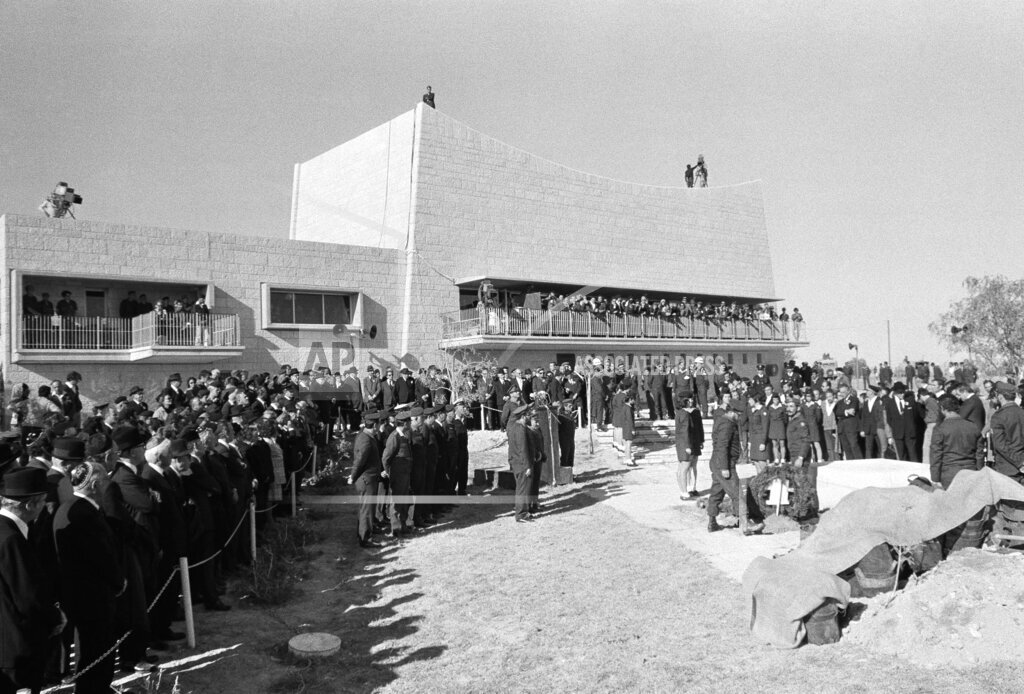
David Ben-Gurion, one of the founders of Israel and its first prime minister, was buried near Jerusalem today. Ben‐Gurion, Israel’s first Premier, was buried in a starkly simple service in Sde Boker, Israel near the desert kibbutz where he spent the contemplative final years of his life. A group of 300 political and military leaders, representatives of foreign governments family members and former associates attended the service.
A British army patrol in Londonderry, Northern Ireland, exchanged shots with terrorists who fired machine-gun bursts from a hijacked taxi. Three persons were wounded in the shootout. An army spokesman said there was no immediate report on the condition of the victims. Several hours earlier soldiers defused a bomb on the Belfast-to-Dublin railroad line before it could cause any damage.
West German Chancellor Willy Brandt will visit Prague December 11 and 12 to sign a treaty normalizing German-Czech relations. A West German government spokesman said Bonn and Prague have solved a deadlock over West Berlin, clearing the way for another step in Brandt’s Ostpolitik or policy of reconciliation with World War II enemies in Eastern Europe. The disagreement on Bonn’s claimed right to represent West Berlin institutions in foreign countries had caused Brandt to call off an earlier trip to Prague. The spokesman did not say how the issue was resolved.
Forty Soviet Jews in Vienna, Austria, apparently unhappy with life in Israel, attempted to obtain reentry visas to the Soviet Union. Soviet diplomats used force to remove the Jews from the consulate.
Nine European Common Market nations discussed setting up an “oil pool” to meet the energy crisis. Denmark proposed the plan.
Britain’s foreign secretary, Sir Alec Douglas-Home, told the Russians that better East-West ties must be demonstrated in practice rather than just in words. Sir Alec made the remark after his Kremlin counterpart, Andrei A. Gromyko, warned that agreement on European security depended on noninterference by the West in the Soviet Union’s domestic affairs. Sir Alec’s visit to Moscow aimed at ending a diplomatic freeze between the two countries that dated to the 1968 Soviet-led invasion of Czechoslovakia. The thaw appeared to speed up as the ministers discarded formal prepared speeches and exchanged. friendly off-the-cuff remarks at a luncheon.
President Nixon, in a reversal, has decided to ask the House of Representatives to proceed with the big foreign trade bill despite the risk of strong anti‐Soviet amendments. The President’s new position was disclosed in a letter to House Speaker Carl B. Albert, who promptly set December 10 and 11 for debate on the bill.
An international prisoner’s rights organization said more than 60 countries have used torture on captives in the last 10 years and that it is increasingly being used against political prisoners. Amnesty International said military interrogators have been taking over the role of civilian police in torture of political prisoners. It said countries where torture was used on a considerable number of people include Portugal, Spain, Greece, Turkey, the Soviet Union, the United Kingdom (Northern Ireland), Uganda, South Africa, Morocco, Tunisia, Vietnam, Indonesia, Ceylon, Brazil, Argentina, Uruguay and Bolivia.
A Trinidad seaman who stabbed the captain of a Greek tanker and attempted to hijack the vessel to Cuba died Monday, apparently from a beating suffered at the hands of fellow crewmen after they had subdued him. Police in Montego Bay, Jamaica, said 26-year-old Roderick Jones died in a hospital where he had been carried in a stretcher after the 36,000-ton Halifax docked under Jamaican coast guard escort.
A bomb exploded and almost destroyed the Cuban consulate in downtown Mexico City, a spokesman for the Cuban mission said. There were no reports of injuries. Police and firemen surrounded the area, including the Cuban Embassy which is located 150 feet from the consular offices.
The United States announced a grant of 150,000 tons of grain for drought victims in the sub-Saharan countries of Chad, Mali, Mauritania, Niger, Senegal, and Upper Volta, raising to $80 million the U.S. share in the international effort to relieve the drought. The U.N. Food and Agriculture Organization estimates that the drought zone may need 550,000 tons of emergency grain in the next 10 months.
Pioneer 10 sent back the first close-up images of Jupiter, making its closest approach of 82,178 miles (132,253 km). Images were received at NASA Ames Research Center in California at 6:25 in the evening (0125 hours, 4 December UTC). Boosted by Jupiter’s gravity to a speed of 82,000 miles per hour (132,000 km/h) — the highest speed ever attained by an object sent from Earth — the small probe began moving away from Jupiter three hours later toward the constellation Taurus.
Skylab 4 astronauts William Pogue, Edward Gibson, and Gerald Carr took pictures of earth and ran experiments inside Skylab. The Skylab astronauts, battling a dwindling gas supply, needed 22% more fuel than predicted to roll the station over for two earth resources picture-taking sweeps. They still used much less, however, than the day before. Some of the earth studies photo passes probably will be cut on the 84-day flight but flight controllers said there would still be enough control gas to turn the station’s telescopes toward the comet Kohoutek at Christmas. Excessive use of gas for maneuvers became a problem after one of three control gyroscopes failed.
John Love, the top energy adviser to President Nixon, resigned. Deputy Treasury Secretary William Simon succeeds Love. Love and his chief deputy Charles DiBona apparently tried hard to deal with the energy crisis, but complaints of their managerial shortcomings reached the White House. Love’s staff believes that Treasury Secretary George Shultz and presidential counsel Melvin Laird persuaded the President to get rid of Love. Love, who quit as Governor of Colorado five months ago to be President Nixon’s energy “czar,” reportedly resigned because he had been shunted aside in a shake‐upp of energy policy‐marking. His refusal to remain part of the Nixon Administration upset White House plans to announce yesterday morning the establishment of Federal Energy Administration, headed by William E. Simon, the Deputy Treasuyr Secretary.
Love noted that a new energy agency has already been formed under Simon’s direction. Love wished Simon well and said he was relieved to get out of trying to manage the energy crisis. Asked about his future, Love stated that he plans to return to Colorado and possibly practice law; he won’t try again for public office. Love conceded that policy differences existed between himself and the Nixon administration.
To conserve gasoline, the White House asked Congress to relax automobile emission standards for two years. The Environmental Protection Agency was not consulted about the decision and is furious over the White House action. EPA administrator Russell Train insisted that a relaxation of emission standards is opposed by the agency.
The House voted to require states to establish a uniform 55‐mile‐an‐hour speed limit for automobiles buses and trucks. The bill cleared the House by a voice vote, with no debate. It now goes to the Senate, which earlier attached to an oil allocation bill an amendment giving the, President discretionary authority to establish national speed limits to conserve fuel.
Motorists went back to gasoline pumps, crowding into stations that had been closed Sunday, and traffic returned to normal on highways. Most oil industry officials and some Nixon Administration aides, however, were skeptical over just how effective the first voluntary shutdown of the country’s gas stations would be in saving fuel in the long run.
General Motors announced that 137,000 of its employees will be affected by a production cutback slated to begin one week before Christmas. Chrysler and Ford also plan layoffs and production cuts.
A daily newsletter for the oil industry reported that the fuel shortage has stranded 27 oil tankers and merchant vessels around the world. Black market prices for oil were described as “outrageous”.
The heating oil shortage is expected to be acute in New England this winter. Students at Tufts University are trying to deal with the heating oil shortage by planning a longer holiday vacation. The heating oil allocation is down from last year, and the entire university schedule may be shuffled to keep students away from school during the coldest months. Instead of celebrating the lengthened break from studies, students are concerned over having less time to absorb lessons, and are worried about a decline in the quality of their education. Northern universities are afraid that students may transfer to schools in warmer climates.
Judge John Sirica began listening to White House tapes to decide which of them will be sent to the Watergate grand jury. U.S. marshals are guarding Sirica’s office. President Nixon’s lawyer Fred Buzhardt instructed Sirica on how to use the tape recorder this morning. Sirica seriously considered recalling the President’s personal secretary Rose Mary Woods to the stand. White House chief of staff Alexander Haig will testify Wednesday regarding the 18-minute tape gap.
A six‐day‐old effort to force passage of a landmark bill financing Federal election campaigns with public funds collased in the Senate Unable to stop a filibustper that had blocked the measure since Friday and with the prospect that the Government would be out of money to pay its bills later this week, the Senate, voting 48 to 36, eliminated the campaign financing provisions it had added last Tuesday to a bill extending the Government’s debt limit. The bill extending the debt ceiling, which had passed the House, was sent to the President.
Over the weekend, the Senate demonstrated that the filibuster is still an effective weapon. James Allen of Alabama led a filibuster to prevent a vote on raising the national debt ceiling because the bill included an amendment calling for campaign finance reform. Lowell Weicker argued against the campaign-finance legislation for now; Edward Kennedy argued for it. Senate leaders Hugh Scott and Mike Mansfield moved to adopt a straight national debt ceiling bill. The campaign reform amendment lost.
The Supreme Court refused to review Tony Boyle’s conviction for illegally contributing United Mine Workers’ funds to political candidates. Boyle may begin serving his prison term soon.
The House Foreign Affairs Committee rejected attempts aid cut to Israel. In the Senate, an aid bill will be voted on this week; a portion of the money in the bill would go to Arab countries. Idaho Senator Frank Church stated that he objects to sending aid to Arabs.
The prices for a market basket of food were down in three of the four cities which are visited monthly to check food prices. Overall, prices have jumped substantially from last March to December except in Los Angeles.
The Consumer Product Safety Commission said that 100,000 portable color televisions of five brands that were evaluated during the past few months were found to have fire or electrical shock hazards. New safety rules for all sets are being planned.
A Louis Harris poll ranked America’s confidence in government and other professions. Politicians rated the lowest, the medical profession scored highest. Garbage collectors were rated second, followed by television newsmen. The Senate requested the survey.
NFL Football:
The intercepted pass has been called the best play in football because it shifts a team so swiftly from defense to offense and often advantageously. The Miami Dolphins proved the point here tonight as they beat the Pittsburgh Steelers, 30—26, thanks to interceptions of six Pittsburgh passes. The Dolphins in the first 17 minutes made four interceptions and thereby scored three touchdowns and a field goal. Dick Anderson, the champions’ strong safety, had three of them and returned two for touchdowns on brilliant runs of 27 and 38 yards. Miami led, 20—0, at the end of the first quarter and 30—3 at the end of the second.
Then the game turned around and the Steelers almost pulled out a victory. Clamping down on the Miami offense and with Terry Bradshaw leading the offense, Pittsburgh scored three touchdown and a safety given them by the Dolphins with 64 seconds left to play. Bradshaw directed three touchdown drives of 53, 72 and 58 yards against a defense which had given up only 101 points or 9.2 per game for the league’s best record. Franco Harris did a lot of the damage on the ground while Bradshaw threw two touchdown passes to Barry Pearson. But Miami avoided defeat by using the intenional safety ploy. Back on his own 6‐yard line, Bob Griese, the Dolphin quarterback, ran backwards out of his own end zone and thus gave the Steelers two unimportant points. Larry Seiple next followed with a free kick, a punt that traveled a tremendous 73 yards to the Pittsburgh 7. The Steelers were done.
It was the third defeat in a row for Pittsburgh, which now finds itself in a three‐way tie with Cincinnati and Cleveland for the first place in the Central Division of the American Conference. Miami, which has clinched its Eastern Division title, won for the 28th time in the last 29 games. It was the 21st straight victory for the Dolphins playing at home in the Orange Bowl.
Pittsburgh Steelers 26, Miami Dolphins 30
Dow Jones Industrial Average: 806.52 (-15.73, -1.91%).
Born:
Holly Marie Combs, American actress (“Picket Fences”; “Charmed”), in San Diego, California.
Michael Hamilton, NFL linebacker (San Diego Chargers, Cleveland Browns, Miami Dolphins), in Greenville, South Carolina.
Robert Ramsay, MLB pitcher (Seattle Mariners), in Vancouver, Washington (d. 2016, brain cancer).
Died:
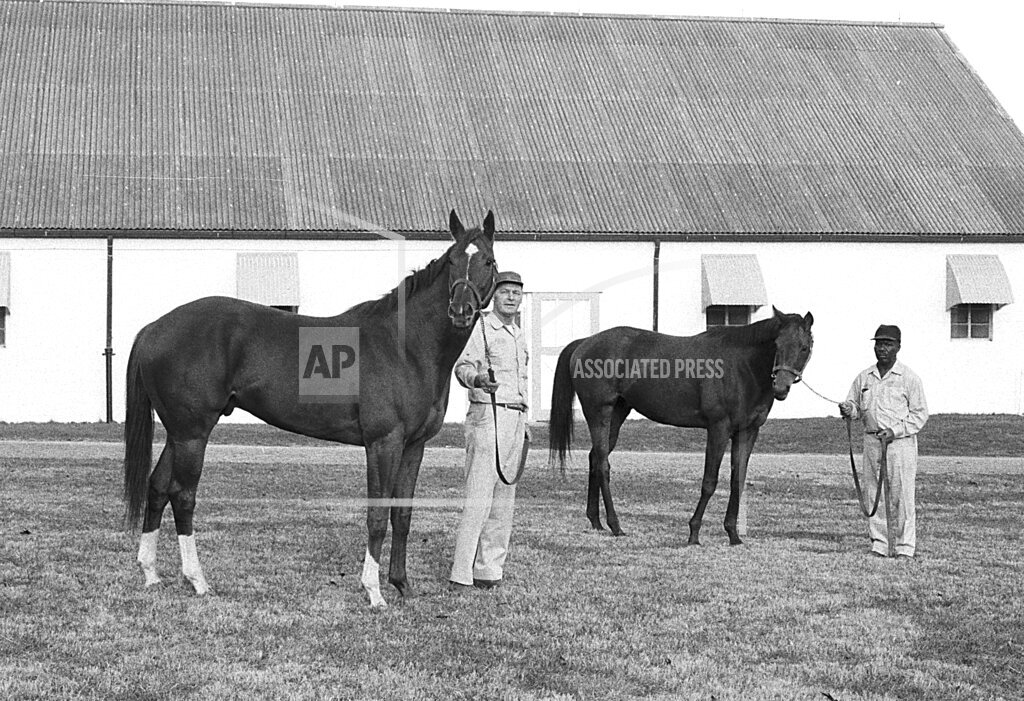
Count Fleet, 33, U.S. champion racehorse who won the Triple Crown (Kentucky Derby, Preakness Stakes and Belmont Stakes) in 1943.



 History Diaries