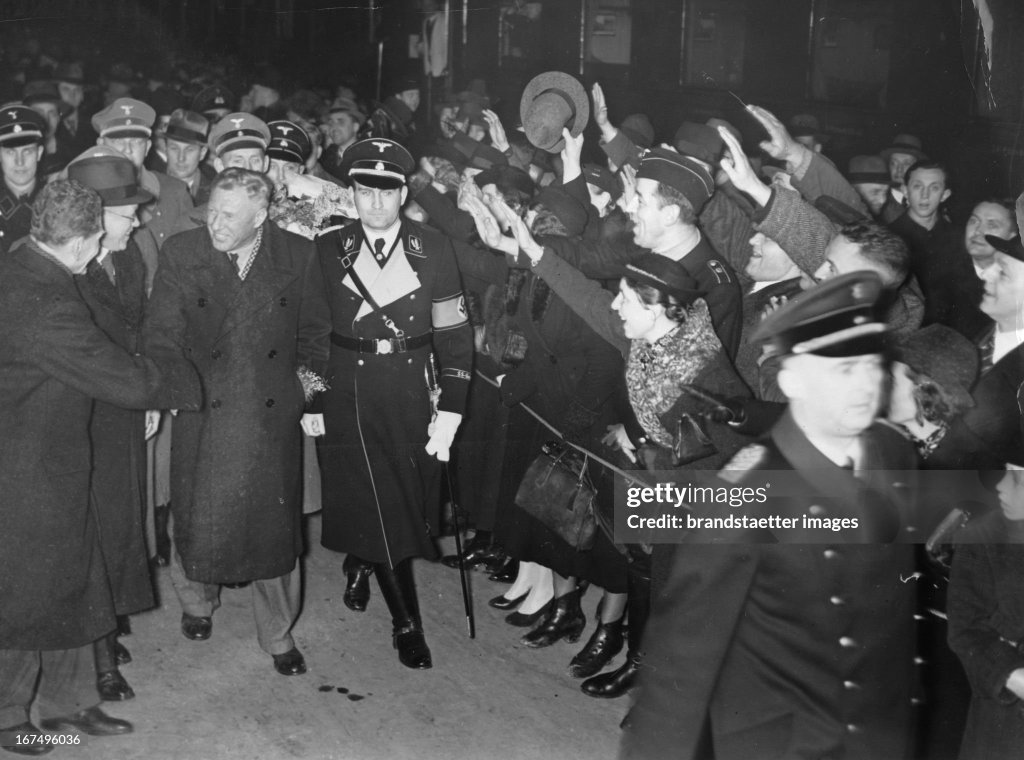
Following Kristallnacht and the House of Commons debate on the growing refugee crisis in Europe, the first Kindertransport left Berlin. Early this morning one platform of a Berlin railway station was filled with frightened looking youngsters toting cardboard boxes or battered suitcases. They were accompanied by grief-stricken parents who were unable to hold back their tears. The children were from 3 to 17 years of age. The younger ones watched the scene with curiosity while girls in their teens clung to their relatives with tears in their eyes. As the train pulled out some of the girls tried to escape, but women custodians convinced them that “your parents will be happier if they know that you are building up a new life in England.” This first contingent of young refugees will reach England tomorrow. The youngsters will be placed in camps and then distributed among families which volunteer to give them homes and help them learn a practical trade.
The Kindertransport (Children’s Transport) was a unique humanitarian rescue program which ran between November 1938 and September 1939. Approximately 10,000 children, the majority of whom were Jewish, were sent from their homes and families in Germany, Austria and Czechoslovakia to Great Britain. The British Home Secretary, Sir Samuel Hoare, had met with a delegation representing both Jewish and non-Jewish refugees. After a debate in the House of Commons decided that the UK would accept unaccompanied children up to the age of 17, Sir Hoare agreed to speed up the immigration process by allowing travel documents to be issued on a group basis rather than individually. No limit was placed on the number of refugees.
The last Kindertransport group left Germany on 1 September 1939, the day the German army invaded Poland, and although hundreds of children were stopped in Belgium and the Netherlands, over 10,000 were saved. Many never saw their parents again; they were murdered by the Nazis and their collaborators in the Holocaust.
Five Spanish Nationalist insurgent planes drop 75 bombs on Barcelona and its harbor.
In France, the Secretary of the General Confederation of Labor and union leaders lose government and private positions after their failed strike. Up to 80,000 workers are fired for not working.
France asks Italy the meaning of yesterday’s demonstration over territory. Cries of “Tunisia! Tunisia!” which were heard yesterday in the Italian chamber of deputies resulted in a protest tonight from France to Italy. Foreign Minister Georges Bonnet called Raffaele Guariglia, Italian ambassador, to the foreign office, and there voiced France’s displeasure. Acting on orders from Premier Édouard Daladier, he asked for an explanation of the scene in the Italian chamber in Rome. The outburst was interpreted by some quarters as the beginning of a drive for Italian ownership of Tunisia, which is a French protectorate in North Africa. It took place during a foreign policy speech by Count Galeazzo Ciano, Italian foreign minister, in which he outlined the “interests and aspirations” of Premier Mussolini’s government. Mussolini was present at the time, as was Andre François-Poncet French ambassador to Rome. It was understood that François-Poncet has been instructed to take the matter up with the Italian government. The Ambassador made a full report of the incident to the Paris foreign office.
Rudolf Beran became the prime minister of Czechoslovakia.
Britain asks citizens to sign up voluntarily for a “war registry,” putting their individual skills to use.
Two more “victims” of the Halifax Slasher confessed to faking the attacks on themselves. The panic soon wound down as doubts arose as to whether the slasher really existed.
Moscow audiences see the film “Alexander Neivsky” for the first time, and director Sergei Eisenstein is restored to favor in the Soviet Union.
The Iraqi Senate and King approve the oil concession to British-owned Basrah Petroleum.
A group headed by Fakhri Nashashibi claiming to represent 70,000 Arabs meets with British authorities. They are opposed to the Mufti of Jerusalem’s terrorist policies.
The Congressional Temporary National Economic Committee opens a two-year investigation into American business and the influence of monopolies.
The Dies House Committee on Un-American Activities questions Homer Martin, president of the United Auto Workers. Martin, president of the United Automobile Workers of America, and as such one of John L. Lewis’ chief lieutenants, admitted today that he believes the CIO leadership is made up of communists. Martin’s admission was made while he was a witness before the Dies house committee investigating un-American activities. It was brought out when he was confronted with transcripts of two of his own speeches. They had been privately heard last spring. The Dies committee has heard testimony from many local union officers concerning the communist domination of the UAWA, but Martin was the first president of a large CIO international union to tell about the communist leadership of the parent organization.
Blocks away from the Chicago stockyards, gunmen attack union leader Herbert March, who escapes. The 11-day-old strike is over a closed shop, written contract, and union dues collection.
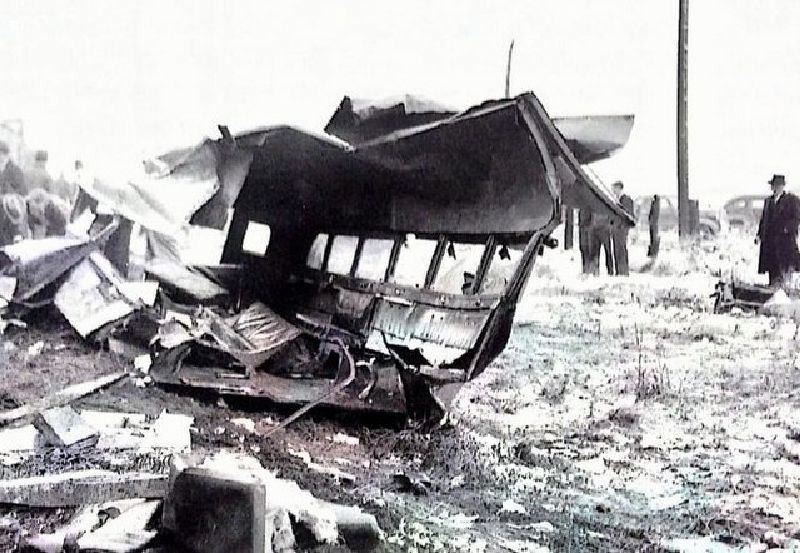
In the nation’s worst auto accident, a school bus crossing train tracks during a snowstorm in South Jordan, Utah, and is hit by a freight train. The driver and 25 of the 32 students from Jordan High School die. The bus driver had stopped to look for a train, but a blizzard with fierce winds that caused almost zero visibility prevented the driver from seeing the train that hit the bus as it crossed the tracks. The bus turned and stopped at the railroad crossing. State law required, as did school district policy, that school buses come to a full stop before crossing railroad tracks, and “before proceeding on his way, the driver must be certain that no train is approaching from either side.”
Normally, at this time of day, no trains were on the tracks. Investigators later watched the tracks themselves and found that on average only twenty-two trains a day used this track, with a tendency for more traffic to occur in the middle of the night. The bus driver was on the left-hand side of the bus, while the train approached from his right. The train engineman was on the right side of his engine, while the bus was stopped on his left side. Seeing no train, because the side windows were steamed up, and not hearing the train whistle because the windows were all closed, and not expecting a train at that time of day, the bus driver worked the gears and proceeded forward. None of the students remembered hearing the train whistle, though one girl remembered hearing another student toward the front of the bus cry out, “train.”
The bus was made completely of steel. The right side of the bus was sheared off and the body of the bus came to rest one hundred feet from the railroad crossing, while the sturdier chassis of the bus was pushed by the train engine almost a half mile further down the track before the train came to a stop. Debris from the bus was scattered along that half mile. The bus chassis forced the lead pair of train engine wheels off the tracks and welding torches were necessary to later cut the bus chassis out from underneath the front of the train engine. David Witter, an unemployed twenty-two-year-old truck driver, was catching a ride in a boxcar, walking back and forth, trying to keep warm, when the train came to a stop. He got out to see “the awfullest thing I ever saw.” At first, because of all the carnage, he assumed that the train had hit a cattle truck, then he saw the children in the snow, some lying still and some looking “bewildered.”
Within a half hour, hundreds of people gathered at the site: “hysterical parents,” rescue crews, law enforcement officers, ambulances, and anxious onlookers. Searching through the wreckage, Highway Patrolman Bob Howard found his own niece and nephew. Other workers walked along the tracks with baskets and sacks, gathering bus parts and body parts, while the injured and the dead were taken to the Salt Lake General Hospital. The New York Times also reported that Sheriff Grant Young ordered “a thorough search of the snow-covered area near the track to recover parts of bodies and clothing.”
Ecuadorian President Borrero resigns after a stormy and factionalized administration of 110 days.
Japan’s new budget is its highest ever, though the military expenses in China are presented separately. The amount funding immigration to Manchukuo is doubled.
Japan reopens the Yangtze River to limited commercial shipping.
Dr. Hiyoshi Kato, Manchukuo Trade Commissioner in Germany, today told the East Asia Society that in the future Germany and Italy will have an “exclusive preserve” in China’s trade with the Occident. Kato is a Japanese subject, and Japan, Germany and Italy are bound together in an anti-Communist alliance. Kato continued: “There has been much talk, especially among European countries, about maintaining the open door in China. This is mostly by powers bent on selfish profit-making under a humanitarian mask.”
Interior Minister John McEwen announces that Australia will accept 15,000 refugee immigrants over three years.
Dow Jones Industrial Average: 148.63 (-1.19).
Born:
Tom Goode, AFL and NFL center, guard, and linebacker (NFL Champions, Super Bowl V-Baltimore, 1970; Pro Bowl, 1969; Houston Oilers, Miami Dolphins, Baltimore Colts), in West Point, Mississippi (d. 2015).
Ralph Smith, NFL tight end (Philadelphia Eagles, Cleveland Browns, Atlanta Falcons), in Brookhaven, Mississippi (d. 2023).
Chuck Janerette, NFL and AFL defensive tackle, tackle, and guard (Los Angeles Rams, New York Giants, New York Jets, Denver Broncos), in Philadelphia, Pennsylvania (d. 1984).
Mike McGee, NFL guard (St. Louis Cardinals), in Washington, District of Columbia (d. 2019).
Sandy Nelson, American rock drummer (“Teen Beat”; “Let There Be Drums”), in Santa Monica, California (d. 2022).
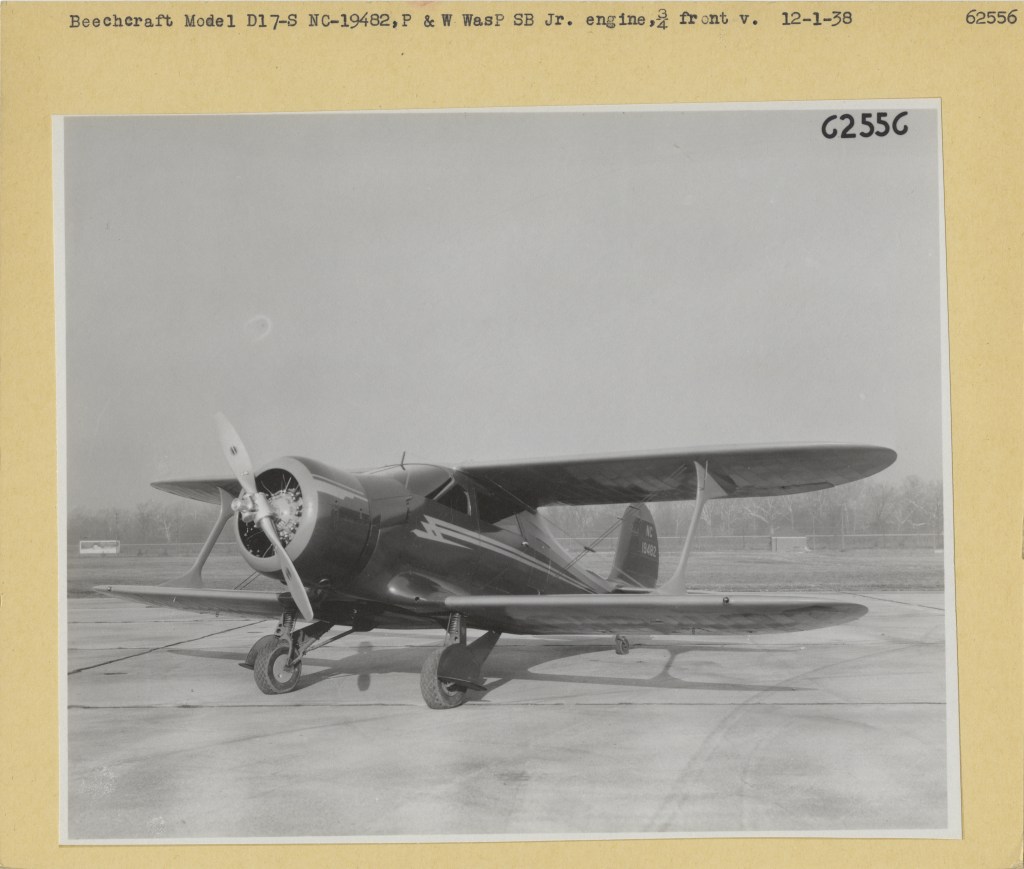
Early in World War II, the need for a compact executive-type transport or courier aircraft became apparent, and in 1942, the United States Army Air Forces ordered the first of 270 Model 17s for service within the United States and overseas as the UC-43 (USAAF designation for Utility, Cargo). These differed only in minor details from the commercial model. To meet urgent wartime needs, the government also purchased or leased (impressed) additional “Staggerwings” from private owners, including 118 more for the Army Air Force plus others for the United States Navy. In Navy service, the airplanes were designated as GB-1 and GB-2 (under USN designating convention signifying General (purpose), Beech, 1st or 2nd variant of type). The British Royal Air Force and Royal Navy acquired 106 “Traveller Mk. I” (the British name uses the UK double “l” spelling) through the Lend-Lease arrangement to fill its own critical need for light personnel transports.
(National Archives photo)
 History Diaries