Amid a flurry of gun battles, bus burnings, and threats. 40,000 troops were deployed throughout Venezuela today to guard the ballot boxes in tomorrow’s elections and to crush any communist terrorism designed to disrupt the voting. Four pedestrians and a policeman were wounded in a gun battle in a slum district this morning between police and snipers of the communist Armed Forces of National Liberation. The government charges that the F.A.L.N. receives arms and instructions from Cuba and seeks by terror to block tomorrow’s voting.
Last night, the terrorists slipped about the city tossing tacks into the streets in a move to keep voters at home. The tacks were swept up today. In separate parts of the city terrorists halted two buses, ordered their passengers out and set the vehicles afire. A third bus was burned as it stood parked and empty. Terrorists drenched the inside of another bus and its 21 passengers with gasoline, but fled before setting it on fire when they were attacked by the driver. They shot the driver dead. Air force planes and warships are patrolling the coastline to detect any attempt by Cuban Premier Fidel Castro to land arms and reinforcements for the local Communists.
President Romulo Betancourt appears to have smashed the backbone of the Castro-communist F.A.L.N. plans to block the election but the eleventh-hour communist effort to frighten most of the 3,400,000 registered voters away from the polls had apparently fizzled miserably. The F.A.L.N. decreed Caracas a dead city from midnight last night thru Sunday and threatened to shoot anyone on the streets. But nobody is paying a bit of attention to this threat. It appears to have been nothing more than a psychological warfare trial balloon that burst from self-impotence.
It is reported today that Venezuela will ask for immediate armed action by the American republics to overthrow Premier Fidel Castro’s communist regime in Cuba, Foreign Minister Marcos Falcon-Briceno said today in an interview. The full sanctions provided for in article 8 of the Rio Treaty of 1947 will be requested of the foreign ministers of the Organization of American States, he said. These include the breaking of diplomatic, consular, and commercial relations, all communications, and the use of armed force. The ministers’ council will meet Tuesday in Washington, Falcon said. He expressed confidence that more than the required two-thirds or 14 votes will be in hand to declare the sanctions. He said word was received today that Colombia will support Venezuela’s move. He expects the United States and other O.A.S. governments to follow suit. An inter-American military force will be used for the war against Castro, he said.
Southeast Asia’s squabbling nations are presenting a series of problems which President Johnson must face.
Despite official and editorial assurances here that President Johnson will adhere to the foreign policy of the late John F. Kennedy, many Germans display anxiety and uncertainty. The German people have not recovered from the shock caused by President Kennedy’s assassination. His death marked the disappearance from the political scene of the third leading western statesman in less than two months. The others were Chancellor Konrad Adenauer of Germany and Britain’s Prime Minister Harold Macmillian, both of whom retired.
Pressure is increasing in West Germany from functionaries and lower ranks of the Socialist Party to remove Willy Brandt as candidate for federal chancellor.
In the Australian federal election: Led by Prime Minister Robert Menzies, the coalition of the Liberal Party and the Country Party, which had a slim 62-60 majority in the Australian House of Representatives, increased its lead to a 72-50 margin over the Australian Labor Party, which lost ten seats in the 122 member House. The election also marked the first time that indigenous Australians (referred to at the time as Aborigines) were allowed to vote in nationwide elections on the same basis as other electors, a franchise that had not been available in Western Australia, Queensland or the Northern Territory. In addition, it was the first election where the results could be tallied simultaneously from all electorates on live, nationwide television.
The New Zealand general election took place. As Robert Chapman for the New Zealand Broadcasting Company described it the next day, the NZBC announcer “named the election for us all: the ‘No Change Election’… it is positively uncanny how, yesterday, the voters of New Zealand went out and repeated themselves. They simply conducted the 1960 election over again with the same amount of non-voting…” Only one of the 80 seats in the Parliament, the Manukau electorate, was filled by a different political party. The results were almost identical to those of the previous election in 1960; the National Party went from having a 46 to 34 majority, to a 45 to 35 split with the Labour Party.
A crisis in the island republic of Cyprus, between the Greek and Turkish Cypriots who lived there, was triggered by a 13-point proposal from the President to reform the dual government that had existed there since the nation had gained independence on August 16, 1960. The President, Archbishop Makarios III, was of Greek descent, while the Vice-President, Dr. Fazıl Küçük was of Turkish descent, and each had the right to veto the decisions of the other. In addition, enactment of laws had to be done by a separate majorities of the Greek Cypriot and the Turkish Cypriot members of the House of Representatives, and each of the five largest cities had separate Greek and Turkish municipalities. With the encouragement of the British High Commissioner, Makarios proposed to amend the nation’s constitution to reduce the power of the Turkish minority; the American ambassador to Cyprus had persuaded Makarios to phrase the 13 amendments as suggestions rather than as a declaration.
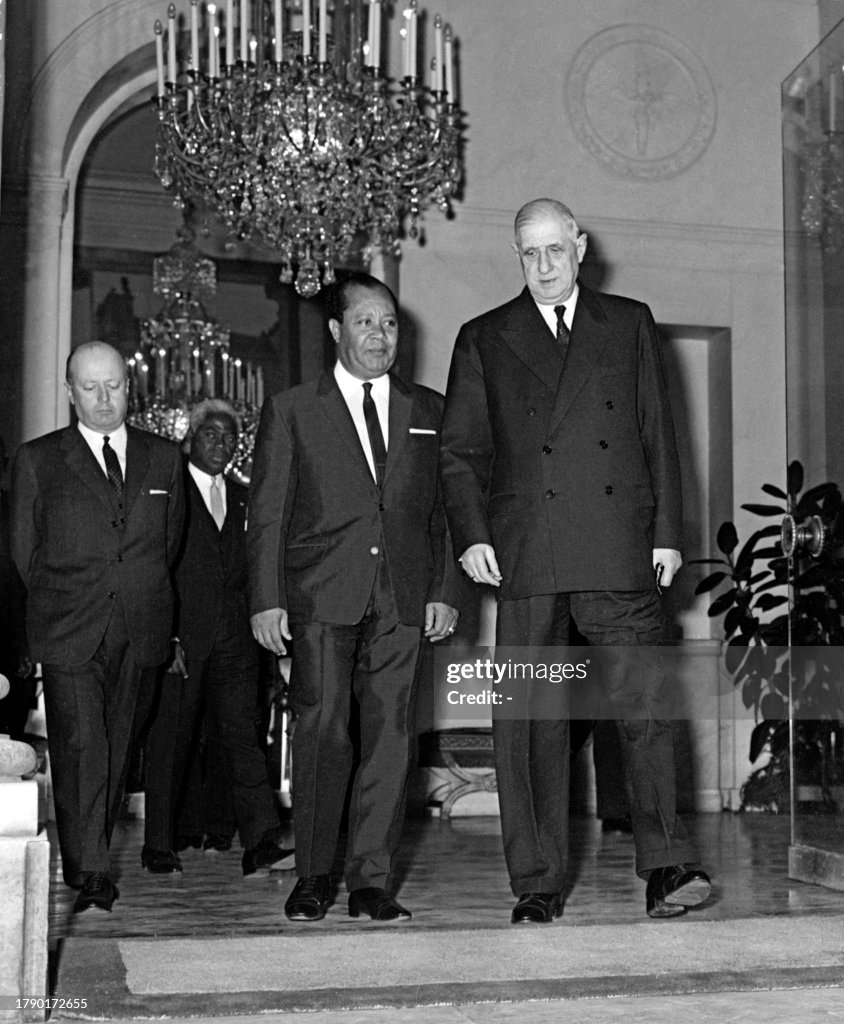
Senator J. William Fulbright, chairman of the Senate Foreign Relations Committee, called General Charles de Gaulle “a disruptive influence in the western alliance, and said he doubted President Johnson could change him.
Investigators are studying the possibility that an explosion may have been the cause of the crash of a Canadian airliner which came down near Montreal, killing 118.
Sir Winston Churchill celebrated his 89th birthday with a big black cigar and a cake laced with brandy. He was cheered by hundreds of Britons gathered outside his Hyde Park London home.
The term “one hundred days,” applied to other regimes in other times of crisis, has an urgent import for President Johnson as he takes the nation’s helm for he has little more than three months to set course for administration.
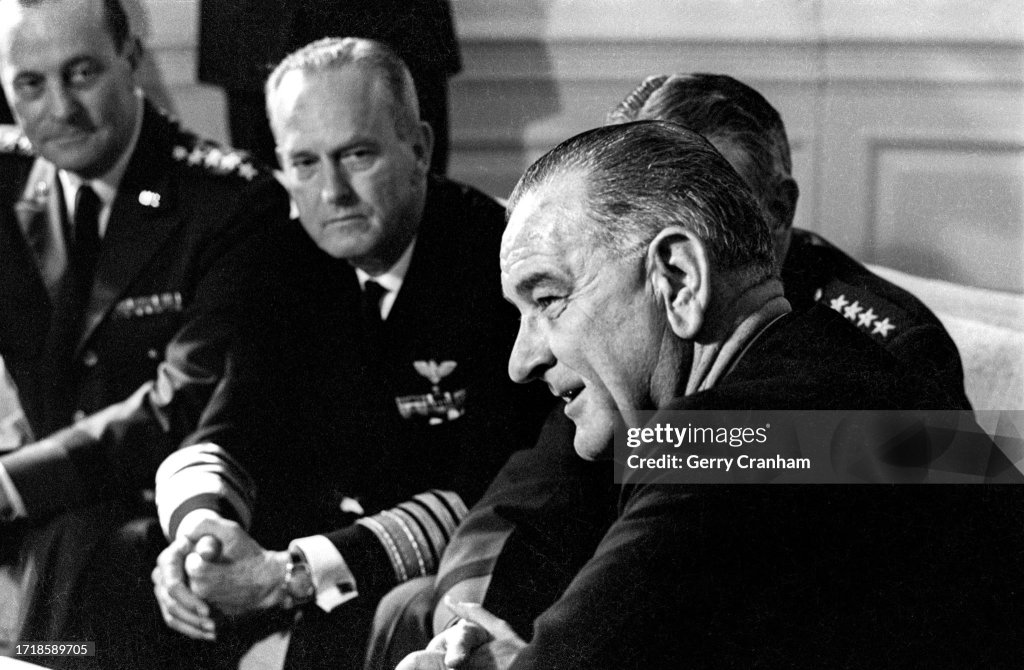
President Lyndon Johnson began the second week of his administration today by dispatching to all department and agency heads a memorandum calling for “the utmost thrift and frugality” in government operations. The detailed memo, which follows a thrift pledge in his address to Congress last week, made it clear that Johnson intends to push frugality as a principle identifying characteristic of his administration. Observers note that Johnson faces a gargantuan job in forming a personal public “image” before his campaign for election next year. The thrift theme is the first to emerge.
In the memorandum, Johnson pledged “to examine agency budget requests with the determination to hold the 1965 budget to the barest minimum consistent with the efficient discharge of our domestic and foreign responsibilities.” He also promised his subordinates to support money-saving plans, to back pay measures designed to encourage efficiency, and to give special recognition to government units which “make notable advances in providing efficient service at lower costs.” He ordered the department and agency chiefs to hold down personnel rosters and to wage personal economy campaigns.
Mrs. Jacqueline Kennedy and her two children went for a lonely walk along the gale-lashed Cape Cod seashore where she and her slain husband spent their happiest hours.
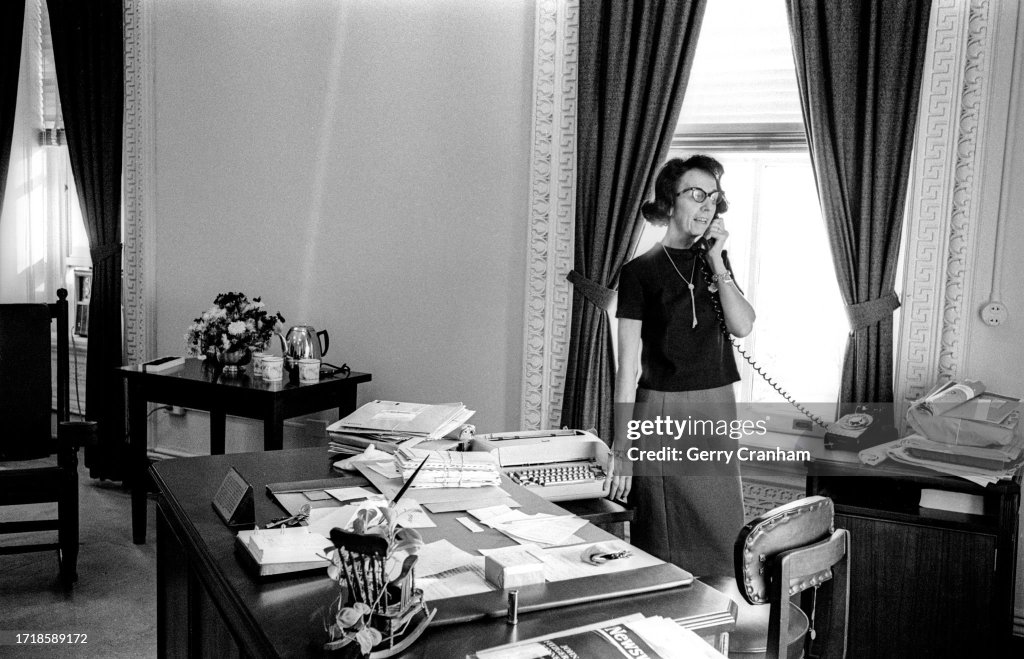
Mrs. Lyndon B. Johnson will carry on Jacqueline Kennedy’s plans for restoration of White House.
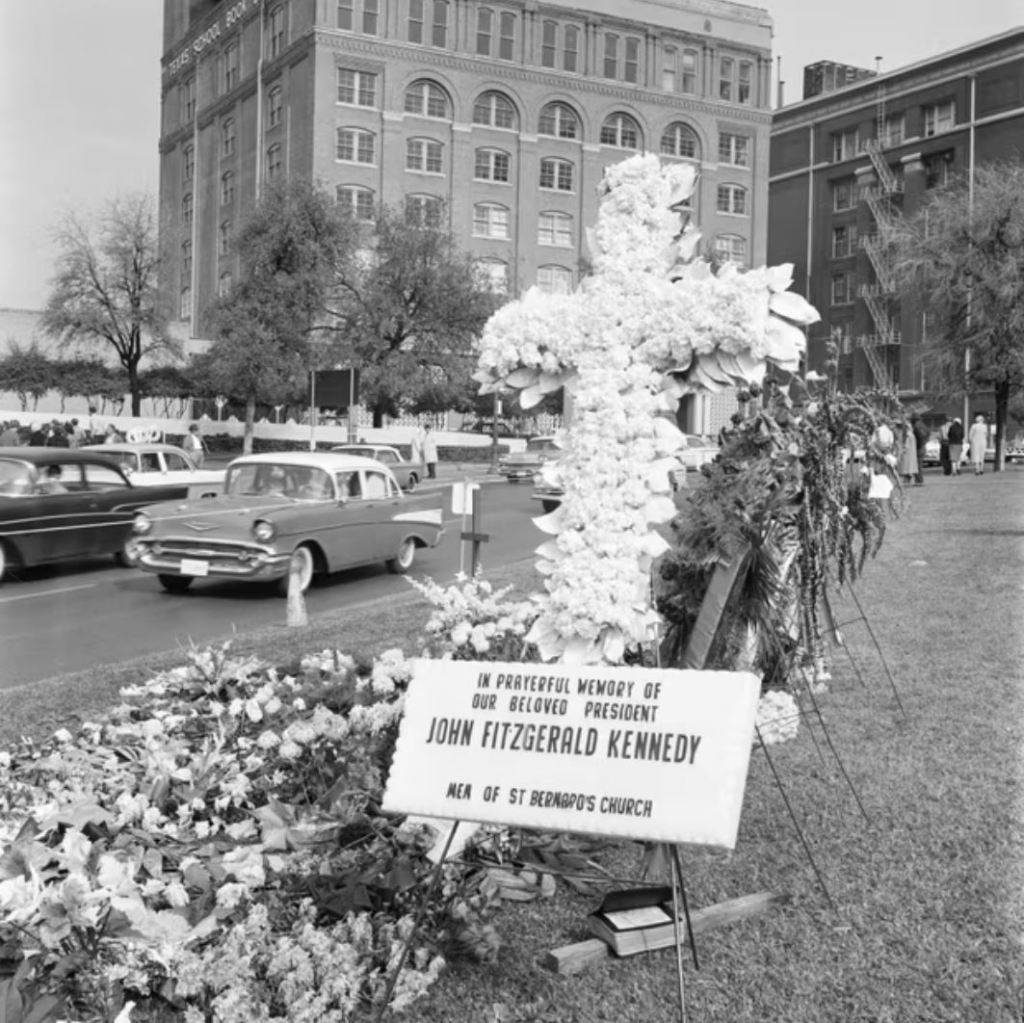
Americans by the thousands paid tribute to President Kennedy at his grave and in the White House.
The Internal Revenue Service says gifts, such as those to the family of slain Dallas policeman J. D. Tippit, are not subject to federal income tax; but prizes are.
FBI agents are tracking the source of occasional small sums apparently received by Lee Harvey Oswald.
Actress Karyn Kupcinet was found murdered in her Hollywood home today, police reported. The 23-year-old brunette beauty was the daughter of Irv Kupcinet, Chicago Sun-Times columnist. Police said she was found dead in bed, nude. She had been beaten about the head and there were indications she had been strangled. She had recently appeared on the Jerry Lewis television show and had appeared in many television segments. The scene of Miss Kupcinet’s murder was a modest apartment on the south side of Hollywood.
James Andrew becomes first of Fischer quintuplets of Aberdeen, South Dakota, to go home from hospital. His four sisters, all doing well, will remain in the hospital for a time.
The United States is seeking treaties in the United Nations for the return of strayed spacemen and collection of damages for space accidents.
The lone survivor of the sinking of the cutter Judy told a nightmare tale of fire, fumes, waves and death in the Atlantic.
A gale batters the northeastern U.S. coast with torrential rain, fierce winds, and abnormal tides, as wind-driven snow moves into western New York state.
28th Iron Bowl: Auburn beats Alabama 10-8 in Birmingham, Auburn’s first points in the series in five years.
CFL Grey Cup, Empire Stadium, Vancouver: Hamilton Tiger-Cats defeat BC Lions, 21-10; features controversial sequence involving American players Angelo Mosca and Willie Fleming.
Born:
Sister Souljah, American hip hop-generation author, activist, recording artist, and film producer, in The Bronx, New York, New York.
David Norrie, NFL quarterback (New York Jets), in Boston, Massachusetts.
Rickey Isom, NFL running back (Miami Dolphins), in Harrisburg, Pennsylvania.
Died:
Cyril Newall, 1st Baron Newall, who had served as the Governor-General of New Zealand from 1941 to 1946, died in England at the age of 77, on the same day of the nationwide election.
 History Diaries