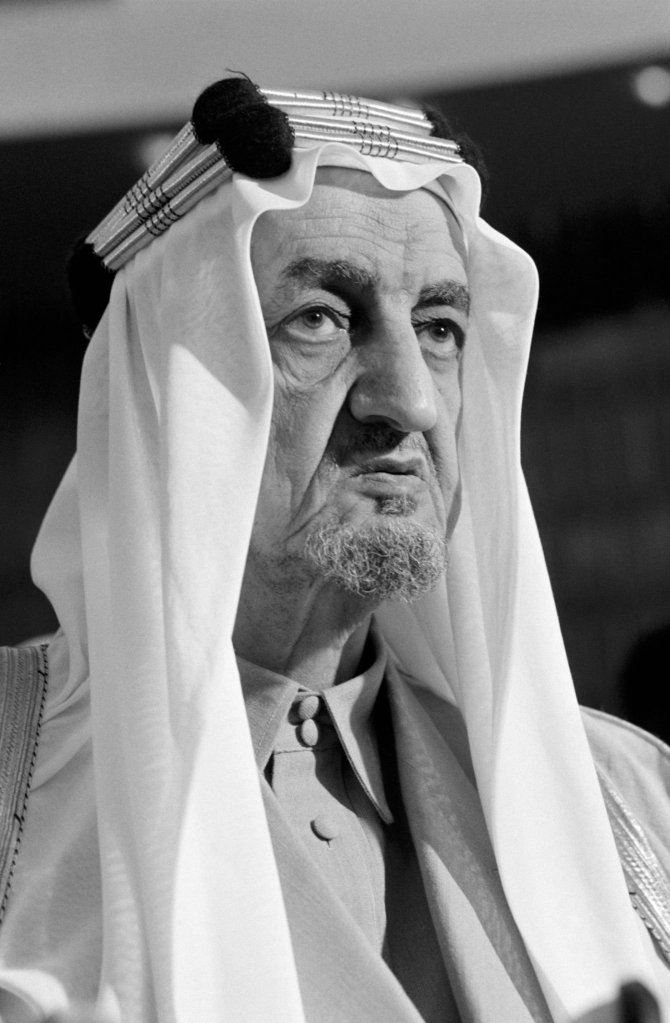
An Arab summit conference is being held in Algeria. Libya and Iraq are the only two Arab nations not present at the summit. The oil embargo will be the main topic of the conference. Saudi Arabia’s King Faisal, President Sadat of Egypt, Algeria’s Boumedienne and Syrian President Assad are the true leaders of the summit meeting and will decide most of the issues themselves. The conference of Arab heads of state opened in Staouéli, Algeria with spokesmen talking exultantly of the Arab “oil weapon” and its impact on the outside world, but adding notes of caution about its use. Arabs feel assured that the summit will be a success.
The Arab hijackers finally landed in Malta and allowed Dutch passengers to disembark safely. In exchange, the Netherlands was forced to announce that it will not be a transit country for emigrating Soviet Jews on their way to Israel. The release began early today as the plane was being refueled for take‐off to an undisclosed destination. Authorities said the agreement for the release had been worked out with Prime Minister Dom Mintoff, who conducted the talks with the hijackers from the airport control tower. Airport sources here said this agreement came after the Dutch Government had promised it would not send arms to Israel or allow Jewish emigrants from the Soviet Union or military volunteers to go from the Netherlands to Israel.
Egyptian and Israeli officials met again today to discuss the Mideast cease-fire. No progress was reported. Egyptian and Israeli generals meeting in a United Nations tent at this checkpoint failed today to break the deadlock between the two countries on the issue of troop withdrawal. The two armies exchanged heavy automatic‐weapons fire for 10 minutes about a mile from the negotiating site barely two hours after the meeting between Major General Mohammed Abdel Ghany el‐Gamasy of Egypt and Major General Aharon Yariv ended and reporters had left the scene.
Egyptian and Israeli liaison officers and members of the United Nations Emergency Force watched the exchange of fire through field glasses, according to witnesses. The firing was one of many tangible signs of growing military tension all along the Egyptian‐Israeli front on the western side of the Suez Canal. General Gamasy and General Yariv are due to meet again Wednesday. Today’s meeting, the ninth between the two men in two weeks, had been termed “crucial” by United Nations officials.
Representative Bella S. Abzug yesterday showed photographs, given to her by Premier Golda Meir, which the Israelis had described as evidence of Syrian atrocities against captured Israeli soldiers at several places on the Golan heights during the Middle East war. Mrs. Abzug, Democrat of Manhattan, who was with a Congressional mission to Israel, exhibited the pictures at a news conference at her offices at 252 Seventh Avenue. She said that when she was given the pictures Mrs. Meir had remarked that “they reflected the deep feelings of the Israeli people.” Mrs. Abzug said the dead Israeli soldiers had been found at Wadi Yahudi after the territory had been retaken from Syrian forces. She said that according to information she had received from official Israeli sources the men were blindfolded and murdered. In all, about 30 were found under similar circumstances elsewhere on the Golan heights, she said.
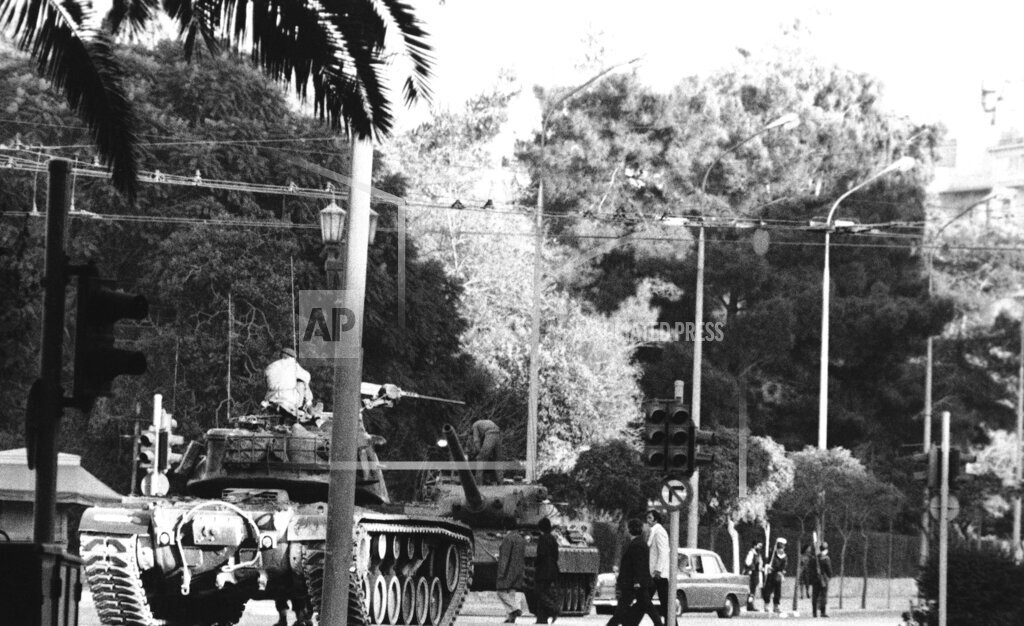
The new military rulers of Greece moved to consolidate their power today by purging from the armed forces high‐ranking officers who supported the ousted President, George Papadopoulos. At the same time, apparently in an effort to gain public support, they freed three political leaders who had been put under house arrest last week by Mr. Papadopoulos. Earlier in the day, the civilian Cabinet appointed by Lieutenant General Phaedon Gizikis, the new President, met for three hours but did not issue an expected statement outlining the goals of the new Government.
The U.S. government hopes to continue to do business with the new Greek regime. The State Department claims it knew nothing about yesterday’s military coup in Greece beforehand. The head of Greece’s military police is believed to have been the leader of the coup. Greece returned to some degree of normalcy after yesterday’s upheaval.
A man was found shot to death beside a blazing car in the Catholic Ardoyne district of Belfast as a new wave of violence continued in Northern Ireland. Three British soldiers and two civilians were killed in shootings and bombing over the weekend. Security forces blamed the Provisional wing of the Irish Republican Army for four of the killings and said the IRA might have started a campaign to wreck Ulster’s fledgling Catholic Protestant coalition government.
Dissident Russian historian Andrei Amalrik’s sentence to three years at a labor camp in the Soviet Far East province of Magadan has been commuted to three years of exile in the same desolate region, dissident sources said in Moscow. The sources said the Moscow appeals court cited Amalrik’s health, impaired severely by an attack of meningitis during a previous labor camp term, as the reason for its decision.
A Moscow court ruled mathematician Yuri A. Shikhanovich unfit to stand trial for alleged anti-Soviet activity and ordered him confined to a mental hospital, dissident sources said. According to the sources, a psychiatric report read to the court said Shikhanovich, while seemingly normal, had signs of incipient mental illness. He was not at the trial and foreign newsmen were barred. The sources said the secrecy indicated Shikhanovich, 41, a friend of dissident Andrei D. Sakharov, had not buckled under interrogation during 14 months of pretrial imprisonment.
The father of J. Paul Getty III announced in London that he had agreed to pay a ransom in advance of the youth’s return, as has been “customary in other recent kidnaping cases in Italy.” His statement said kidnappers had refused to hand over the youth at the same time the ransom was paid. The mother of the 17-year-old youth, who disappeared July 9 in Rome, said the amount involved was $1 million, less than one-third of the last reported demand.
Dutch officials reported that the country’s Sunday driving ban is working, as fuel consumption has been cut by 15%.
It was another bloody, inconclusive day on Cambodia’s Route 4. Since November 10, when insurgent forces cut the road at Manassang, a town southwest of Phnom Penh, government troops have been trying to reopen it. Route 4 leads from the capital to the sea. When it is closed, necessities — ice, sugar, seafood, charcoal, firewood, beer, pigs, cattle — are flown to the capital. Prices already high rise further, and people become even unhappier. This afternoon the government’s offensive to reopen the road was apparently being commanded from a log‐cabin bunker next to an intact bridge that led down Route 4 — which was dusty and empty — to Mohassang.
U.S. and Pakistani drug enforcement officials have made the largest seizure of hashish on record-an estimated 12 tons-in New York and Karachi. Officials said the hashish was destined for the U.S. illicit wholesale market where it would be worth about $30 million and an estimated $856 million in street value. U.S. drug agents arrested Salem Hraoui, a Lebanese citizen, in New York last week after he sold two tons of hashish to an undercover agent. Hraoui is owner of an import business in Hollywood.
Representatives of the nations of Indonesia and Malaysia signed a memorandum of understanding agreeing to pay jointly for an independent survey and demarcation of their boundaries on the island of Borneo.
Two Spanish Roman Catholic missionaries expelled from Mozambique after being held in jail there for nearly two years said that fellow prisoners were tortured. The Revs. Martin Hernandez and Alfonso Valverde Leon, both of the Spanish Burgos Fathers, said at a Madrid press conference they were freed on a general amnesty after being held on charges of subversion.
Bolivia’s entire cabinet resigned after President Hugo Banzer announced he would not run in presidential elections he has called for next year. A cabinet spokesman said the move was designed to give Banzer a free hand in choosing a new cabinet and in resolving a split between the two parties that make up his coalition government. One of the parties, the Nationalist Revolutionary Movement, has refused to remain in the coalition for the election.
After years of controversy and months of debate, Canada’s House of Commons passed a bill that will put strict controls for the first time on a broad range of foreign investments in Canada. The bill is a response to growing concern among Canadian nationalists about the huge share of this country’s economy that is controlled by foreigners — mostly Americans
Approximately 2,000 workers at three Quebec mills, two of which produce newsprint, voted overwhelmingly to end a strike that began August 10. A union spokesman said the three-year contract, retroactive to May 1, provides for pay increases of 26.5% over its span. He said a feature of the contract is the abolition in 1975 of the five-day work week in favor of a “4-2” schedule of four consecutive days of work followed by two days off.
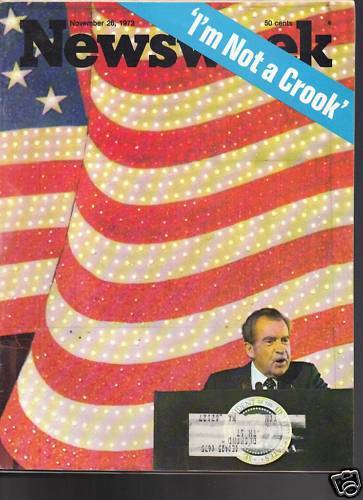
President Nixon released most of the subpoenaed White House tapes to Judge John Sirica. Rose Mary Woods, the President’s personal secretary, testified today that she accidentally erased 18 minutes of tape. Judge Sirica did not conceal his skepticism of Miss Woods’ testimony. In testimony before a U.S. District Judge John J. Sirica, U.S. President Nixon’s personal secretary, Rose Mary Woods, took the blame for an 18-minute gap on a tape recording that would have been important evidence in the investigation of the Watergate scandal. The recording was of conversation between President Nixon and Chief of Staff H. R. Haldeman on June 20, 1972, three days after the Watergate burglary. Mrs. Woods said that the erasure had been an accident.
The White House invoked executive privilege for three of the tapes. H.R. Haldeman’s notes pertaining to a meeting between President Nixon and Haldeman were reviewed. That conversation was the one allegedly erased by Miss Woods.
White House press secretary Gerald Warren accused the Watergate prosecutor’s office of two recent news leaks. The leaks involved the 18-minute tape gap and an illegal campaign contribution made by the Seafarers Union to President Nixon’s 1972 campaign. Prosecutor Leon Jaworski was not singled out in Warren’s attack.
Senate Watergate committee chairman Sam Ervin has tentatively decided to suspend the hearings until January. The committee must vote on the proposal.
A Harris poll released today indicated that 44 percent of Americans believe that when the Watergate investigation is completed, President Nixon will be found to have violated the law. The poll also showed that 46 percent of 1,459 persons questioned November 12–15 did not believe that Mr. Nixon was a man of high integrity. The polling organization headed by Louis Harris said that when it asked a cross-section of Americans 14 months ago whether they believed Mr. Nixon was “a man of high integrity,” 76 percent said he was and only 13 percent said he was not. The new poll showed 46 percent said he was not of high integrity while 39 percent said he was. In answer to a question whether Mr. Nixon would ultimately be found to have broken the law, 44 percent believed he would be, 34 percent said he would not be and 22 percent were not sure.
The White House energy office reported that service stations along interstate highways may remain open on Sundays for the purpose of making emergency repairs. They are permitted to sell diesel fuel but not gasoline.
Most analysts attribute the latest stock market slump to President Nixon’s plans to cope with the energy crisis. Investors expected a more concrete energy plan or at least some new provisions that had not already been advertised. But some analysts noted that the President could not announce a simple cure for the energy crisis, because there is no such cure.
Congress reacted to President Nixon’s speech by calling for tougher action by the President. House Speaker Carl Albert said that an emergency energy bill will not be passed through the House until the middle of December. Daylight savings time legislation may be passed by both houses of Congress this week. The White House conceded that additional action must be taken to meet fuel shortages, but there was no word on any specific proposals.
President Nixon spoke to the Seafarers union about the energy crisis and Watergate. He vowed that the United States will never become dependent on other nations for energy even if a crisis situation occurs, and stated that he is not considering resigning. The President said that he will bring the ship into port safely without jumping ship. Nixon will cut down on travel as his personal contribution to easing the energy crisis.
The Louisiana state legislature, supported by Governor Edwin Edwards, is considering doubling the state’s oil and gasoline tax.
The House Appropriations Committee chopped the Pentagon’s “outlandish” request for funds.
Two federal agencies have developed preliminary answers to the question of whether they halted a narcotics investigation when it led to Robert L. Vesco, the controversial financier. Both agencies and the Secret Service have been under pressure from the Senate Permanent Subcommittee on Investigations to explain why they did not pursue the tips about Mr. Vesco from Frank Peroff, the government source.
A rise in unemployment next year is almost universally predicted by private economic forecasters, but only partly because of the energy shortage. While there is as yet no official Government forecast, private estimates, revised to allow for the energy shortage, center on an unemployment rate of about 6 percent by the end of 1974, compared with a rate of 4.5 percent last month. The higher rate would mean 1.3 million more unemployed persons.
Chief Justice Warren E. Burger, speaking at Fordham Law School in New York’s Lincoln Center, called for a radical revision of American legal practice that could bar three‐quarters or more of the 375,000 lawyers in the country from appearing in court at all. Charging that one‐third to one‐half of the lawyers who now go to court are inadequately experienced or trained, the Chief Justice proposed new standards that any lawyer would have to meet to engage in trial practice.
Albert DeSalvo, who at one time confessed to the Boston strangler murders in the 1960’s, was found stabbed to death overnight at Walpole prison in Massachusetts. A suspect has been taken into custody.
Actor Laurence Harvey died of cancer in London yesterday at the age of 45.
NFL Monday Night Football:
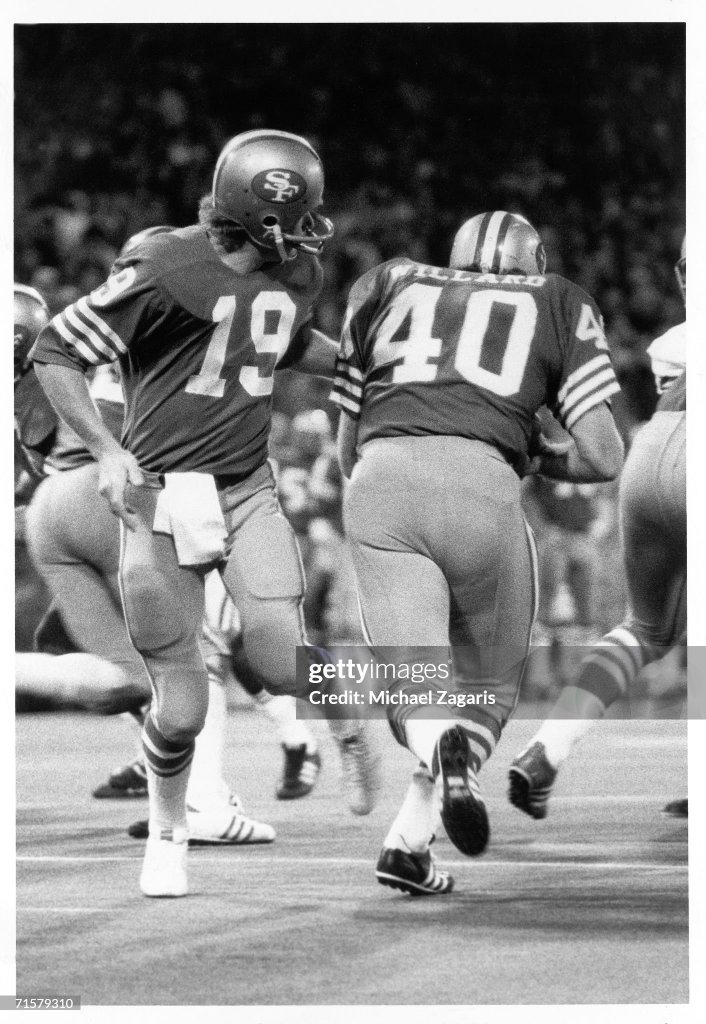
In a game made noteworthy only by Bruce Gossett’s two field goals, the San Francisco 49ers defeated the Green Bay Packers, 20—6, at Candlestick Park tonight. Those who did saw Gossett kick a 25‐yard field goal in the second quarter and a 22‐yarder in the fourth, giving him 12 in a row (and 24 in 29 attempts this season). Only one man in the history of the National Football League has had a longer streak: Jan Stenerud, of Kansas City, kicked 16 straight in 1969 when the Chiefs were in the American Football League. Lou Groza and Bobby Layne also had 12‐kick streaks in the nineteen fifties. The game itself is best described by the word “routine.” Each team opened with the third quarterback it has tried this season — Joe Reed of San Francisco and Jerry Tagge of Green Bay. Reed was replaced by Steve Spurrier in the fourth quarter, when the score was 10—6, but he did direct the team through most of its first victory in its last five starts. The 49ers, champions of their division last year, now have a 4–7 won‐lost record, The Packers, also divisional winners a year ago, are 3–6‐2.
An interception at midfield by Dave Wilcox early in the second period led to San Francisco’s first touchdown. Of the 52 yards the 49ers covered, 33 came on penalties, including a pass interference on the Packer 34 and a piling on that produced a first down on the 14. Vic Washington ran it over from there on four tries, the last covering less than a yard. The Packers reached the San Francisco 28 from the next kickoff and settled for a 35‐yard field goal by Chester Marcol, but Gossett matched that three minutes later after another pass interference penalty had helped the 49ers reach the 17. Two minutes into the fourth period, Marcol made it 10—6 with a 15-yard kick on fourth and three from the San Francisco 9. But his kickoff was short and Spurrier took over on the 33. He needed just six plays to cover the 67 yards, hitting Ted Kwalick in the end zone from 20 yards out. Another interception, by Wilcox, off a deflection, set up the 49ers on the Packer 34 and Gossett’s other field goal came with 6:03 to play.
Green Bay Packers 6, San Francisco 49ers 20
Fears that the energy crisis might result in a 1974 recession sent stock prices tumbling in the biggest single‐day break since May 28, 1962, following a confrontation between President Kennedy and the steel industry.
Dow Jones Industrial Average: 824.95 (-29.05, -3.40%).
Born:
Peter Facinelli, American actor (“Fastlane”); in Queens, New York, New York.
Andre King, Jamaican NFL wide receiver (Cleveland Browns), in Kingston, Jamaica.
John Zimmerman, American pairs skater (with partner Steigler), in Birmingham, Alabama.
Died:
Charles E. Whittaker, 72, former U.S. Supreme Court justice, 1957-1962.
John Rostill, 31, British rock bassist (The Shadows, 1963-70 – “The Rise and Fall of Flingel Bunt”), and songwriter (“If You Love Me, Let Me Know”), of barbiturate poisioning.

 History Diaries