Polish troops cross the Czech border a week ahead of the scheduled occupation date, leading to violence.
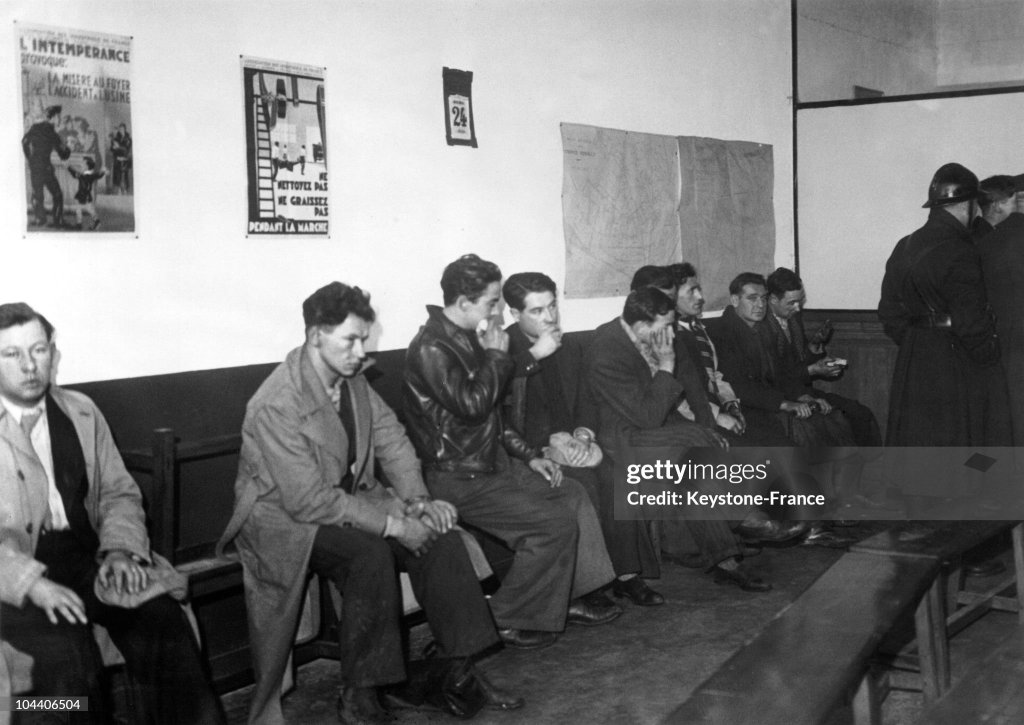
The French General Confederation of Labor calls a general strike of 5 million workers on November 30. The General Confederation of Labour in France called for a 24-hour general strike on November 30 to protest Prime Minister Édouard Daladier’s decrees aimed at improving the economy at the expense of labour power.
French Premier Edouard Daladier tonight countered a rapidly growing strike movement directed against him. He prepared the government to take over affected industries “in case of need.” The premier acted swiftly and defiantly at the end of a critical twenty-four hours. During the day the strong Socialist party demanded his immediate resignation, and the General Confederation of Labor called a twenty-four hour nation-wide general strike of its 5,000,000 members for next Wednesday. Both moves were in protest against Daladier’s decree laws which, among other things, suspended the forty-hour work week. With armed mobile guards and police maintaining order among more than 100,000 strikers in France, the premier fought back at his labor foes by issuing a decree. It authorized the minister of public works to requisition strike paralyzed mines and industries in the north of France “in case of need.” The decree will become effective with publication in the official journal, probably tomorrow.
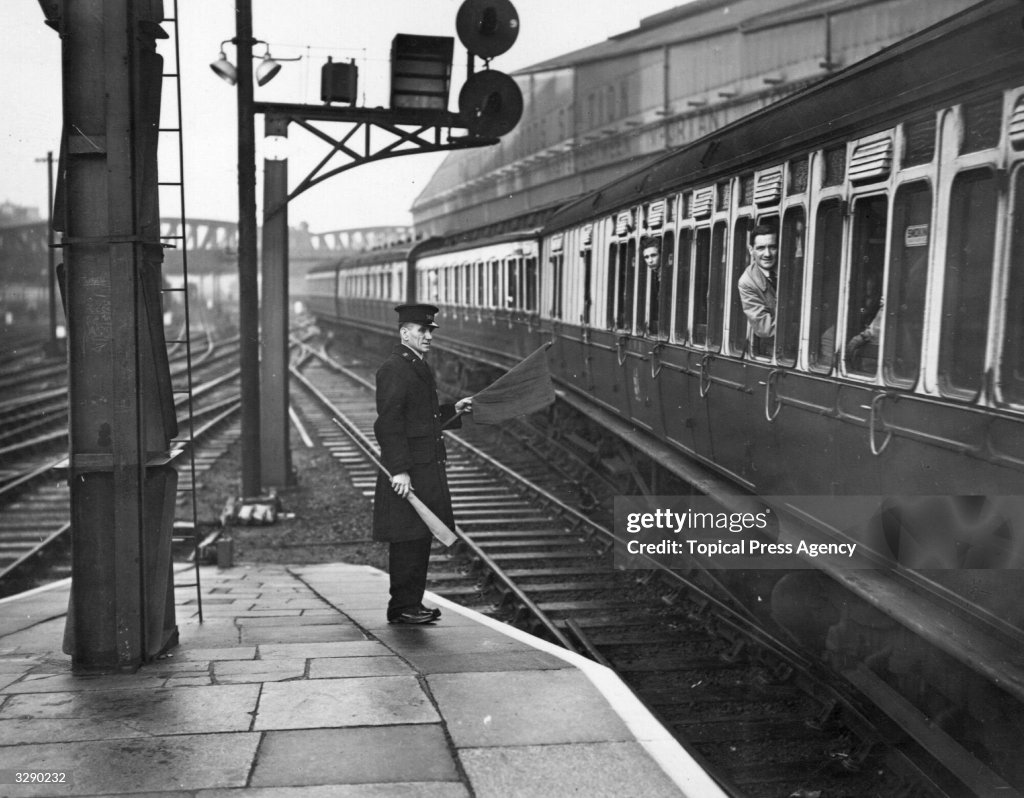
A government spokesman also let it be known that Daladier had taken steps to assure operation of all the nation’s public services on Wednesday, the day of the general strike. Moving hurriedly after issuance of the strike call, Daladier conferred with Gen. Victor Bourret, military governor of Paris; Roger Langeron, Paris prefect of police, and with General Jules Decamp, director of his military staff in the ministry of defense. The National Federation of Railroad Workers already had announced its workers would join the general strike. Daladier’s conference, however, indicated he plans to mobilize all railroad workers and send them to work as soldiers in order to keep the railroads running.
Germany demands that all Jewish students repay loans within two weeks. All Jewish retail stores and mail order businesses must cease and liquidate immediately, but salaries must be paid out through January 1.
German Major General Otto von Loosow passed away. Once the military commander of the region that included Bavaria, von Lossow had been one of the triumvirate appointed, in 1923, by Eugen von Knilling to enforce the state of emergency proclaimed in München (Munich), Germany which had led to the infamous Beer Hall Putsch.
Ireland prepares to take 20 Jewish refugee families. Britain and France announce that 10,000 refugees each will be taken in by their colonies.
The U.S. State Department tells its Embassy in Berlin (which is still open) to prod Germany over the debt owed on behalf of Austria.
Spanish civil war trenches were quiet today while both government and insurgent commanders prepared for their next offensives. Insurgent sources expressed disappointment, and government quarters joy, that Anglo-French talks just concluded in Paris did not end with recognition of belligerent rights for the insurgents. Dispatches from government territory reported Foreign Minister Julio Alvarez del Vayo was considering a trip to the United States to enlist help against the insurgents. Alvarez del Vayo, it was said, planned to ask President Roosevelt to lift the United States’ embargo on arms for Spain.
Pope Pius XI collapsed today from a heart attack, which tonight caused attending physicians to summon Dr. Domenico Cesa-Bianchi, a noted heart specialist. The pope is 81 years old. Dr. Cesa-Bianchi went into the pontiff’s simply furnished bedroom at 9 p.m. and remained until 11:20 p.m. When he left, he told persons waiting outside the papal apartment that the pope’s condition was not for the moment alarming. Shortly before midnight a Vatican source said the pope’s condition was encouraging.” About the same time a Vatican news agency said there were no important developments. The pope also was visited tonight by an intimate friend, the Jesuit Padre Agostino Gemelli, who was reported to have found the patient’s condition “much easier.”
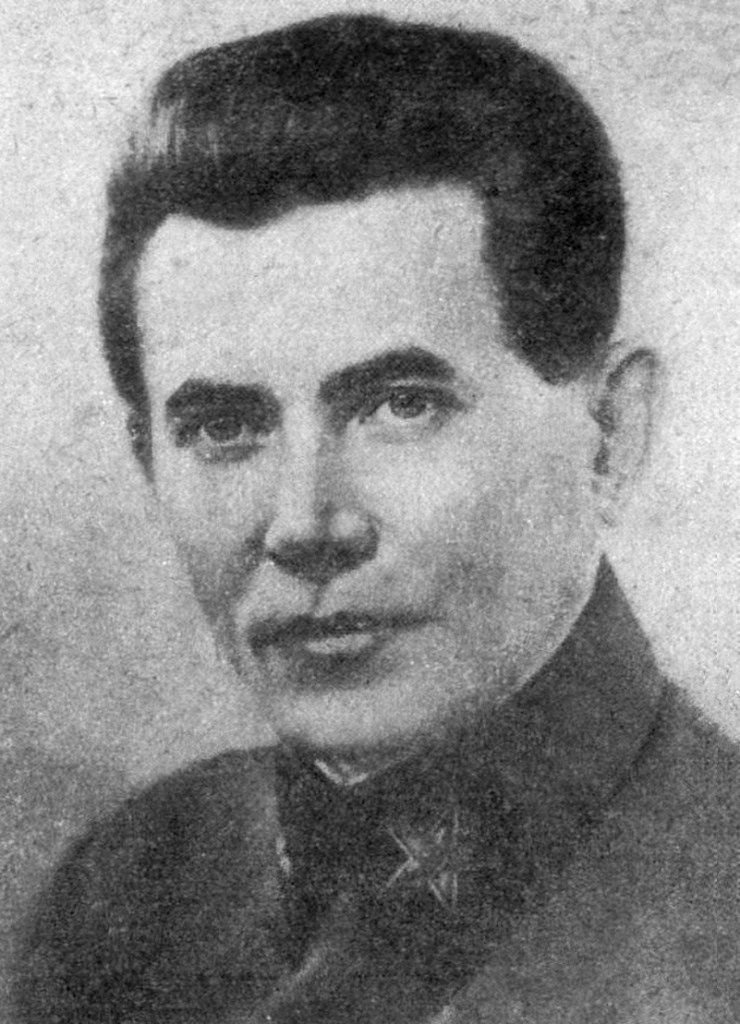
Lavrentiy Beria succeeds Nikolai Yezhov as the head of the Soviet secret police, NKVD. At his own request, Yezhov was officially relieved of his post as the People’s Commissar for Internal Affairs on 25 November, succeeded by Beria, who had been in complete control of the NKVD since the departure of Mikhail Frinovsky, Yezhov’s first deputy, on 8 September. He attended his last Politburo meeting on 29 January 1939.
Stalin was evidently content to ignore Yezhov for several months, finally ordering Beria to denounce him at the annual Presidium of the Supreme Soviet. On 3 March 1939, Yezhov was relieved of all his posts in the Central Committee but retained his post as People’s Commissar of Water Transportation. On 10 April, Yezhov was arrested and imprisoned at the Sukhanovka prison; the “arrest was painstakingly concealed, not only from the general public but also from most NKVD officers… It would not do to make a fuss about the arrest of ‘the leader’s favorite,’ and Stalin had no desire to arouse public interest in NKVD activity and the circumstances of the conduct of the Great Terror.”
In his confession, Yezhov admitted to the standard litany of state crimes necessary to mark him as an “enemy of the people” prior to execution, including “wrecking”, official incompetence, theft of government funds, and treasonous collaboration with German spies and saboteurs. Apart from these political crimes, he was also accused of and confessed to a humiliating history of sexual promiscuity, including homosexuality, rumors that were later deemed true by some post-Soviet examinations of the case.
On 4 February 1940, Yezhov was shot by future KGB chairman Ivan Serov (or by Vasily Blokhin, in the presence of N. P. Afanasev, according to one book source) in the basement of a small NKVD station on Varsonofevskii Lane (Varsonofyevskiy pereulok) in Moscow. The basement had a sloping floor so that it could be hosed down after executions and had been built according to Yezhov’s own specifications near the Lubyanka. The main NKVD execution chamber in the basement of the Lubyanka was deliberately avoided to ensure total secrecy. Yezhov’s body was immediately cremated, and his ashes dumped in a common grave at Moscow’s Donskoye Cemetery.
Under Yezhov, the Great Purge had reached its height during 1937–1938. 50–75% of the members of the Supreme Soviet and officers of the Soviet military were stripped of their positions and imprisoned, exiled to the Gulag in Siberia, or executed. In addition, a much greater number of ordinary Soviet citizens were accused (usually on flimsy or nonexistent evidence) of disloyalty or “wrecking” by local Chekist troikas and similarly punished to fill Stalin and Yezhov’s arbitrary quotas for arrests and executions. Yezhov also conducted a thorough purge of the security organs, both NKVD and GRU, removing and executing not only many officials who had been appointed by his predecessors Yagoda and Menzhinsky, but even his own appointees as well. He admitted that innocents were being falsely accused, but dismissed their lives as unimportant so long as the purge was successful:
“There will be some innocent victims in this fight against Fascist agents. We are launching a major attack on the Enemy; let there be no resentment if we bump someone with an elbow. Better that ten innocent people should suffer than one spy get away. When you chop wood, chips fly.”
In the “Letter of an Old Bolshevik” (1936), written by Boris Nicolaevsky, there is Bukharin’s description of Yezhov:
“In the whole of my now, alas, already long life, I had to meet few people who, by their nature, were as repellent as Yezhov. Watching him, I am frequently reminded of those evil boys from Rasteryayeva Street workshops, whose favorite form of entertainment was to light a piece of paper tied to the tail of a cat drenched with kerosene, and relish in watching the cat scamper down the street in maddening horror, unable to rid itself of the flames that are getting closer and closer. I have no doubt that Yezhov, in fact, utilized this type of entertainment in his childhood, and he continues to do that in a different form in a different field at present.”
Talk of a coalition to curtail government expenditures vastly at the next session of congress came today from Senator Charles L. McNary (R-Oregon), leader of the election-strengthened Republican ranks in the Senate. “In my judgment,” he said in an interview, “Republicans will join with other groups to vastly curtail expenditures and bring about a balance between income and outgo. A reduction in government expenditures necessarily challenges the attention of the Republicans.” With twenty-three Republicans in the senate for the coming session — eight more than at present — the party would need twenty-six votes from Democrats, Farmer-Laborites, Progressives, or Independents to have a majority. In the past it has been estimated by some members that twenty or more Democrats could be counted on to support efforts to reduce government spending.
[The coming war will upset all calculations as to limiting spending.]
As the fifth day of the Chicago stockyards strike ends, AFL spokesmen say their workers, who have respected the CIO-sponsored strike, will return to work on November 28.
Secretary Hull sails with the U.S. delegation for Lima, Peru, to attend the eighth Pan-American Conference in December.
New York digs out from under eight inches of snow. Some 60 people are dead in the huge snowstorm that hit the Atlantic Seaboard.
Bolivia declares martial law and fights a leftist revolt, arresting 20 leaders.
An attempt to assassinate the mayor of Shanghai is foiled, and the assassin is killed by police.
Japanese troops capture a village four miles from Hong Kong.
General Chiang Kai-shek, Chinese commander in chief, was reported tonight to be planning a frank review of relations between China and the United States and France. It will follow a showdown talk with Sir Archibald Kerr, British ambassador. In a conference “somewhere in Hunan province,” Chiang was said to have delivered to Britain a tacit warning. Unless Britain’s policy is changed, and British help is forthcoming, China will be forced to turn elsewhere, he was reported to have said. Reliable Chinese sources quoted Chiang as saying that, in such an event, British dominance in the still unconquered parts of China would fade away and the nation that provided needed help to China would win Britain’s place. The Chinese commander also was reported to have told Sir Archibald that the loss of Canton, South China metropolis, on October 21 was largely the result of China’s erroneous belief that Britain would intervene in any Japanese threat to South China.
Dow Jones Industrial Average: 150.1 (+0.22).
Died:
Otto von Lossow, 70, German Army officer.
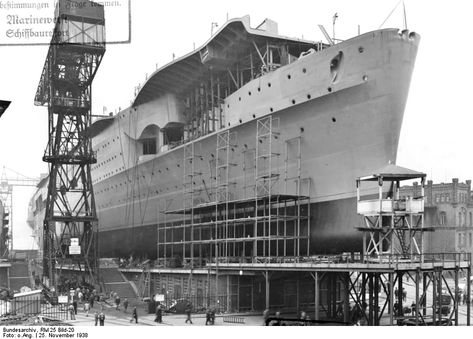
Naval Construction:
The Nihon Kaigun (Imperial Japanese Navy) Kagerō-class destroyer Isokaze (磯風, “Wind on the Beach“) is laid down by the Sasebo Naval Arsenal (Sasebo, Nagasaki, Japan).
Artie Shaw — “Begin the Beguine”
 History Diaries