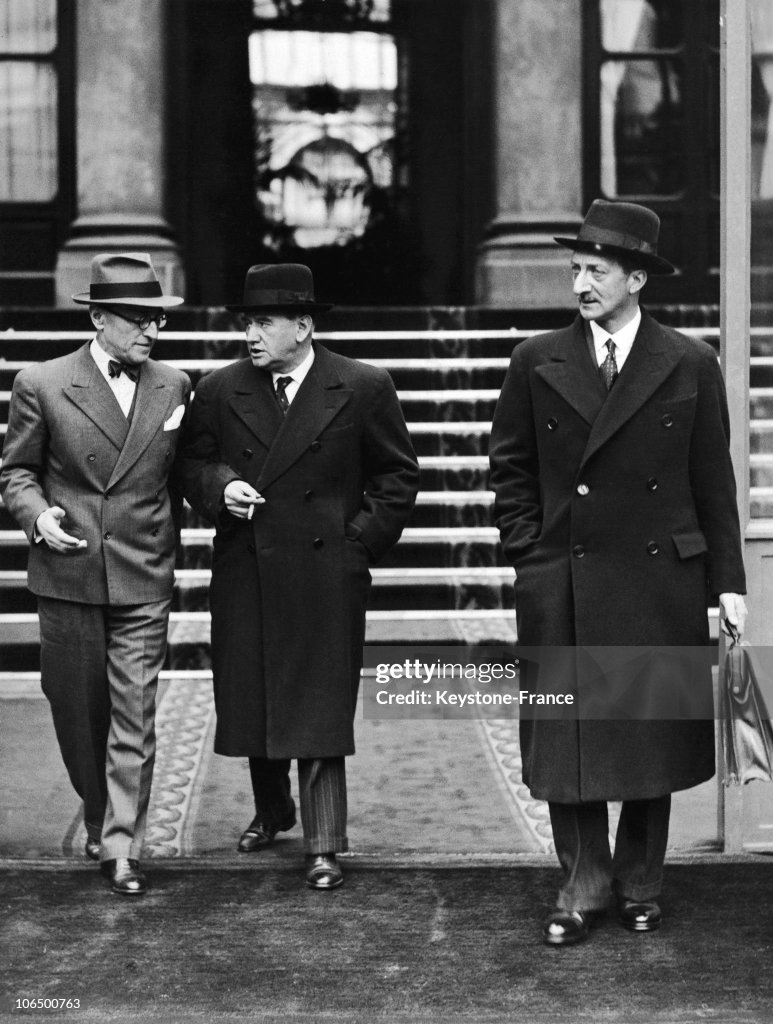
France and Germany agree on a nonaggression pact, to be signed next month. France and Germany will agree to mutual respect for each other’s frontier and renounce recourse to war for settlement of any differences between them. By guaranteeing borders, Hitler would promise to lay no further claim to Alsace-Lorraine, provinces which were returned to France by Germany after the world war. They have been the cause of disputes many times in history. Hitler made assurances of the border guarantee in addresses during the Czechoslovak crisis. News of the pact’s conclusion provoked mixed reactions in Paris. After the scare of last September over Czechoslovakia almost all the French are glad to be rid of the menace of war with Germany. At the same time, it is considered rather humiliating that France should appear in the role of accepting the integrity of its territory as a free gift accorded at Hitler’s pleasure.
In Valenciennes, France, 26,000 workers in 40 factories strike. Reinforced police and mobile guards tonight started clearing forty factories in northern France of 26,000 sit-down strikers who oppose the government’s lengthening the forty-hour work week. The number of striking employees and of factories occupied increased throughout the day under the leadership of metal workers, who led widespread strikes in June, 1936. The new factory seizures started with a strike of 18,000 men and became general during the afternoon in the metal factories of the Valenciennes region. The action was direct defiance to a section of Premier Édouard Daladier’s new decrees which provided heavy penalties for industrial agitation.
Three devastating bombings of Barcelona and a continuing rebel push on the front west of that city gave evidence tonight of a mounting campaign against Catalonia, northeastern section of government Spain. Some government reports said the raids by eight rebel warplanes killed at least 50 and wounded 120 persons. The rebel command asserted its forces were reducing rapidly the government salient on the west bank of the Segre River. Reports said loyalists were forced to evacuate the villages of Aytona and Soses. Only a small government force was reported holding out in the nearby sector around Seros, nearly encircled by rebels. The rebel command summoned reserves 31 years old to the colors. The move was taken to indicate that the severe battles beginning in the Ebro sector last July had depleted rebel Generalissimo Franco’s manpower.
[Ed: Actually, it is the Republicans who have reached the crisis point in manpower, and now face defeat in the coming year.]
Hungary’s Premier Imrédy and his Cabinet resign, having lost support of Parliament. Premier Bela Imrédy’s failure to obtain the eastern part of Czechoslovakia for Hungary — an aim that was opposed by Germany — brought about his resignation today. His entire cabinet left with him after a defeat in the lower house of parliament, 115 to 95. The test vote followed desertion of 61 of the 160 members in parliament of Imrédy’s National Unity party who were dissatisfied with the premier’s weakening on the question of annexation of Carpatho-Ukraine [Ruthenia] and the establishment of a common frontier with Poland. It has been widely reported here, without confirmation, that the government’s attitude changed after Germany had delivered flat representations opposing Hungarian ambitions. Government circles indicated the viewpoint of Germany would be taken into consideration in the formation of the next cabinet. Admiral Nicholas Horthy, the regent, deferred appointment of a new premier until after interviews with numerous political leaders tomorrow.
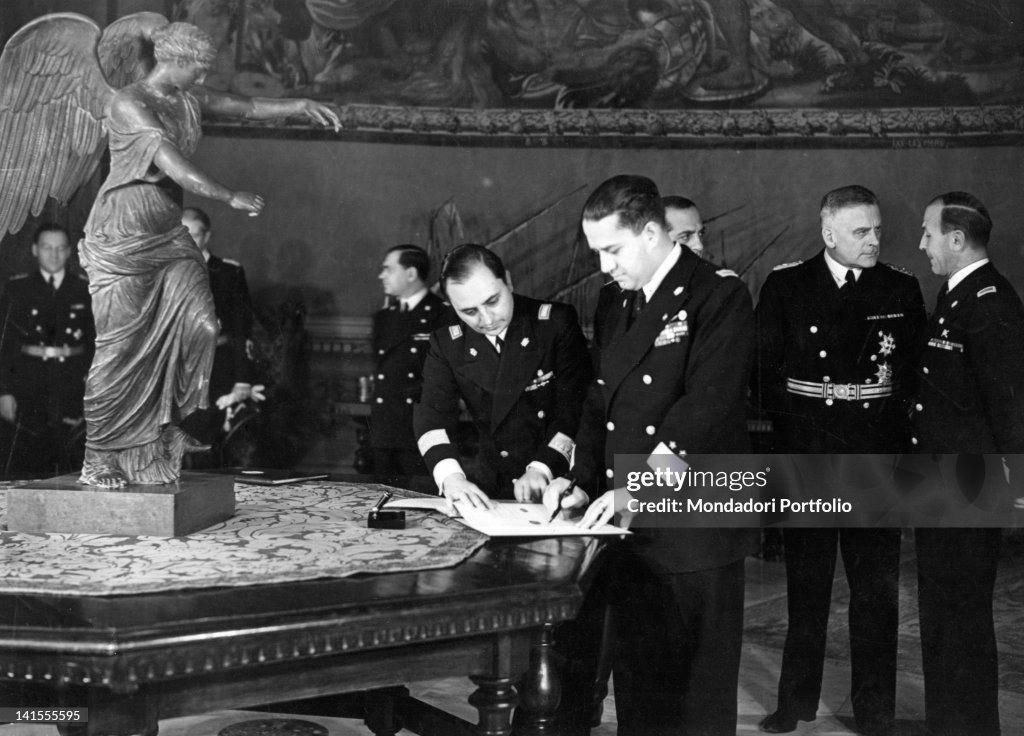
Italy and Germany sign a pact regulating cultural relations.
A citizenship law for the Sudeten and Czech lands is passed, giving Germany the right to expel non-Germans, and the Czechs the right to expel Germans.
Jews are now forbidden to hold public office in Danzig.
The Czechoslovakian National Assembly approved full autonomy for Slovakia.
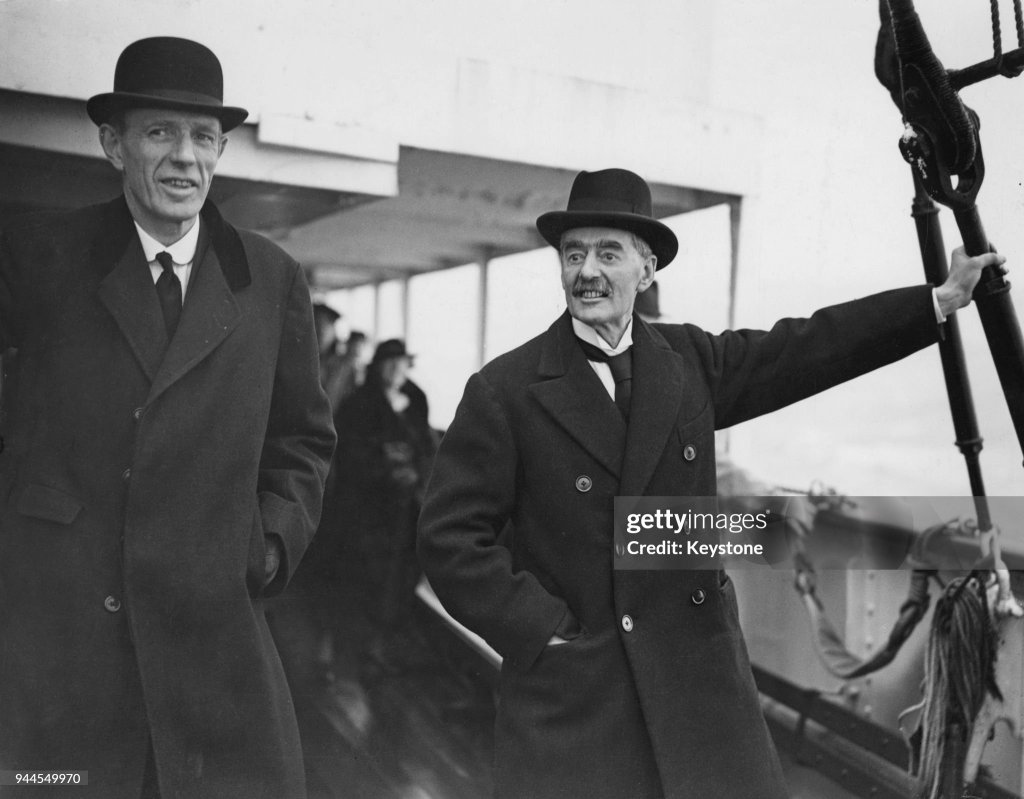
The British government used the good offices of Joseph P. Kennedy, United States ambassador to Great Britain, to censor an American newsreel during the September war scare, it was disclosed tonight in the house of commons. The government feared that the newsreel might prejudice the success of Prime Minister Neville Chamberlain’s negotiations with Reichsführer Adolf Hitler in Godesberg, Germany. Official representations were made to Kennedy that two passages in a Paramount newsreel were harmful, and Kennedy was asked to do something about it.
Kennedy did. He got in touch with the office of Will Hays, president of the Motion Picture Producers and Distributors of America, and requested the removal of scenes to which Britain objected. They were deleted in subsequent showings of the newsreel. The scenes involved Wickham Steed, a foreign affairs writer who formerly was editor of the London Times, and A. J. Cummings, chief polities writer for the News Chronicle, a Liberal paper. In one of them Cummings was pictured telling a taxicab driver: “The fact is our statesmen have been guilty of what I think is a piece of yellow diplomacy.” Steed’s contribution was a brief statement criticizing British and French “fear to take a risk” and charging that British-French action was “helping Hitler to gain a triumph.”
Interior Secretary Harold L. Ickes criticizes Rep. Dies and his committee at a press conference. Ickes admitted membership in the American Civil Liberties Union, which has been described in evidence before the Dies committee investigating un-American activities as a communist front organization composed of communists and their dupes and stooges. In confessing his connection with the organization, Ickes joined in the chorus of denunciation with which the Roosevelt administration from the President down has sought to discredit the Dies committee’s investigation of communist influences within the New Deal.
Trans-Atlantic and trans-Pacific air travel at speeds ranging between 375 and 400 miles an hour was predicted in New York today by Alex De Seversky, builder of army air corps pursuit planes and holder of innumerable speed records made in his planes. Such scorching speed, he said, will be made at heights ranging between 35,000 and 40,000 feet. The day is close at hand — certainly not ten years away, he said — when relatively small airplanes with comfortable but not luxurious accommodations for fifty passengers will climb into the stratosphere and swiftly cross oceans and continents at these speeds. Flying time between New York and London will be eight hours, between San Francisco and China about twenty-two.
Firefighters and Civilian Conservation Corps workers battle wildfires in the hills and canyons of Southern California, from San Diego north to Santa Barbara counties.
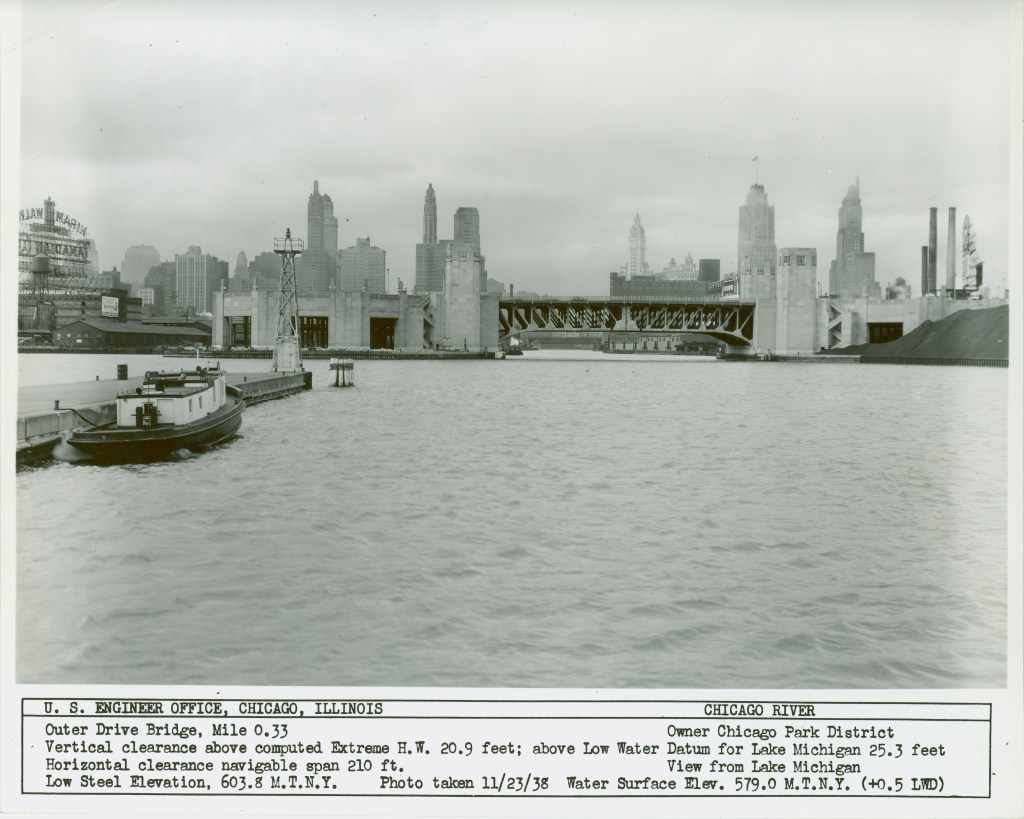
Construction begins on the Tacoma Narrows Bridge.
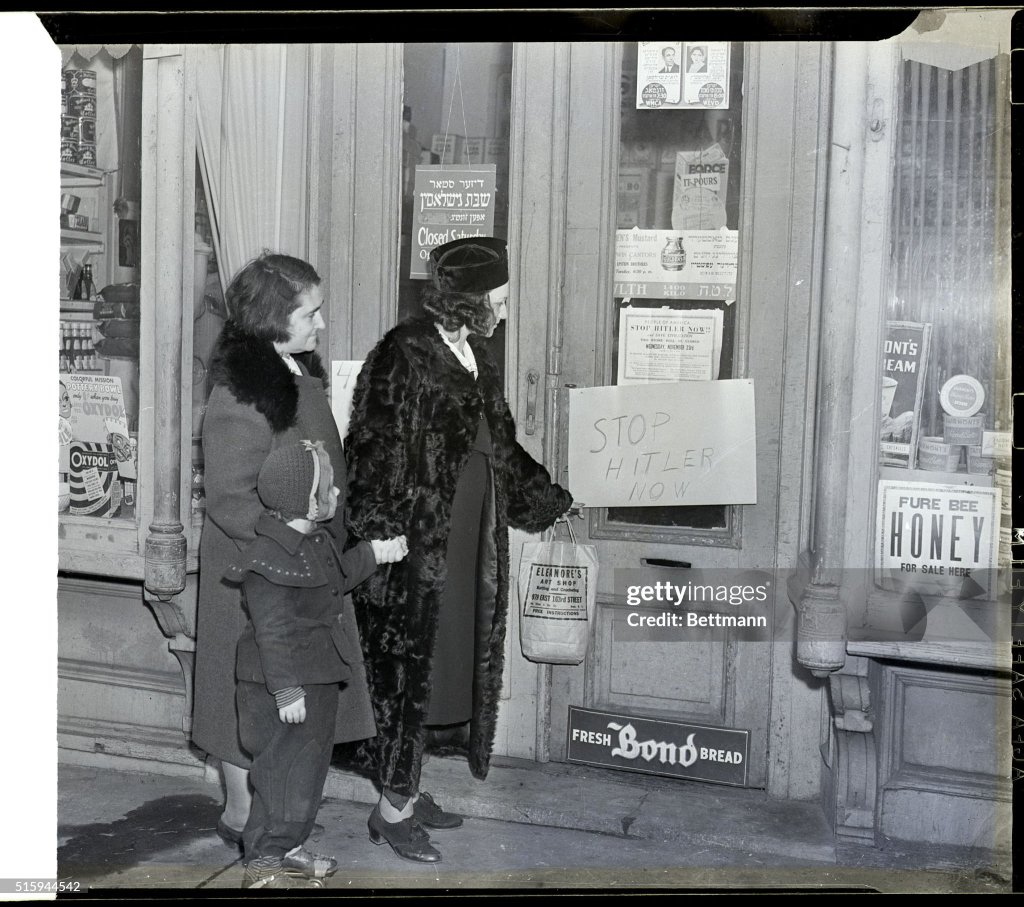
A Chicago street battle between anti-Semitic, pro-Hitler Silvershirts and Jews sends one man to the hospital and several more to jail.
A Rodgers and Hart musical based on Shakespeare’s “Comedy of Errors,” “The Boys from Syracuse,” opens in New York.
Another landslide in St. Lucia leaves hundreds missing. The final death total is never known but may be as high as 340.
Japanese planes bomb Sian, and the headquarters of China’s Eighth Route Army. In the south, Japan lands 2,000 troops on the east bank of the Pearl River.
Japanese air raiders struck today at the Chinese communist stronghold in Shensi province and asserted they inflicted “heavy damage.” The Japanese naval spokesman said the raiders, in their attack on Sian, the provincial capital, dropped bombs on the 8th Route army headquarters. Chinese reports said Japanese had suffered 10,000 casualties in thirty Shansi province engagements during the last two weeks. Shensi and Shansi are adjoining provinces in northwest China. The Chinese also said they had halted the Japanese drive on Changsha, Hunan province capital and the next Japanese objective on the central China front.
In South China, Japanese said they had routed 4,000 Chinese northeast of Canton. The Chinese declared the Japanese had sent 60,000 reinforcements into that area. A relief ship left Hong Kong for Canton with food supplies and a group of foreign missionaries — the first foreign vessel the Japanese have permitted to go to Canton since the capture of the city a month ago.
The Chinese press in Hong Kong reported that General Chung Fan-chun committed suicide, holding himself responsible for the failure of the Chinese to hold the Bocca Tigris forts, down the Pearl River from Canton.
An analysis of customs figures by the China Press, an English language newspaper here, showed that American imports in Shanghai had dropped 65 percent since the Chinese-Japanese conflict started. In the same time British and German imports dropped 60 percent and Japan’s increased 40 percent, giving Japan first place. Japanese imports now amount to 25 percent of the total received in China, while Britain is second with 22 percent, America third with 19 percent, and Germany fourth with 13 percent. Before the war Japan ranked third.
Dow Jones Industrial Average: 149.88 (+0.32).
Naval Construction:
The Royal Navy “L”-class destroyers HMS Loyal (G 15) and HMS Lookout (G 32) are laid down by the Scotts Shipbuilding & Engineering Co. (Greenock, Scotland).
The Royal Navy Halcyon-class minesweeper (Third Group) HMS Speedy (J 17) is launched by William Hamilton & Co. (Port Glasgow, Scotland); completed by J.S. White & Co. (Cowes, U.K.).
The Royal Canadian Navy Fundy-class minesweeper HMCS Comox (J 64) is commissioned. Her first commanding officer is Lieutenant Commander Henry Wickens Stephens Soulsby, RCN.
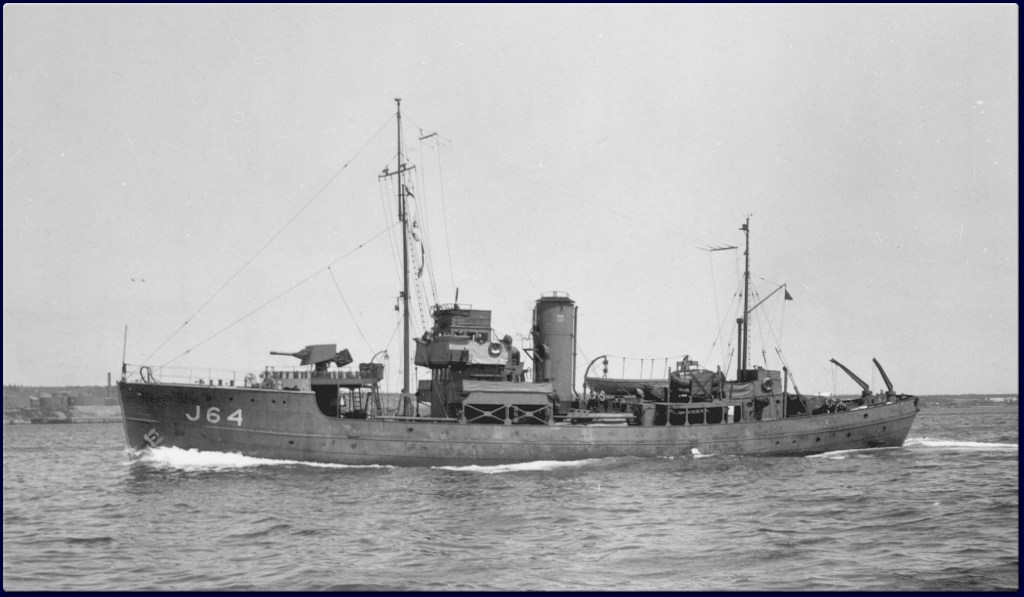
HMCS Comox was stationed at Esquimalt at the outbreak of the war, and carried out local patrol duties until March 1940, when, with Nootka, she was ordered to the east coast. Arriving at Halifax in April 1940, she spent the entire war on local minesweeping duties with Halifax Local Defence Force. On 15 January 1945, with Fundy, she rescued 66 survivors from the U.S. liberty ship Martin van Buren, torpedoed off Halifax.
Decommissioned 27 July 1945. Sold to China in 1946 and renamed Sung Ming. Final disposition unknown.
https://en.wikipedia.org/wiki/HMCS_Comox_(J64)
 History Diaries