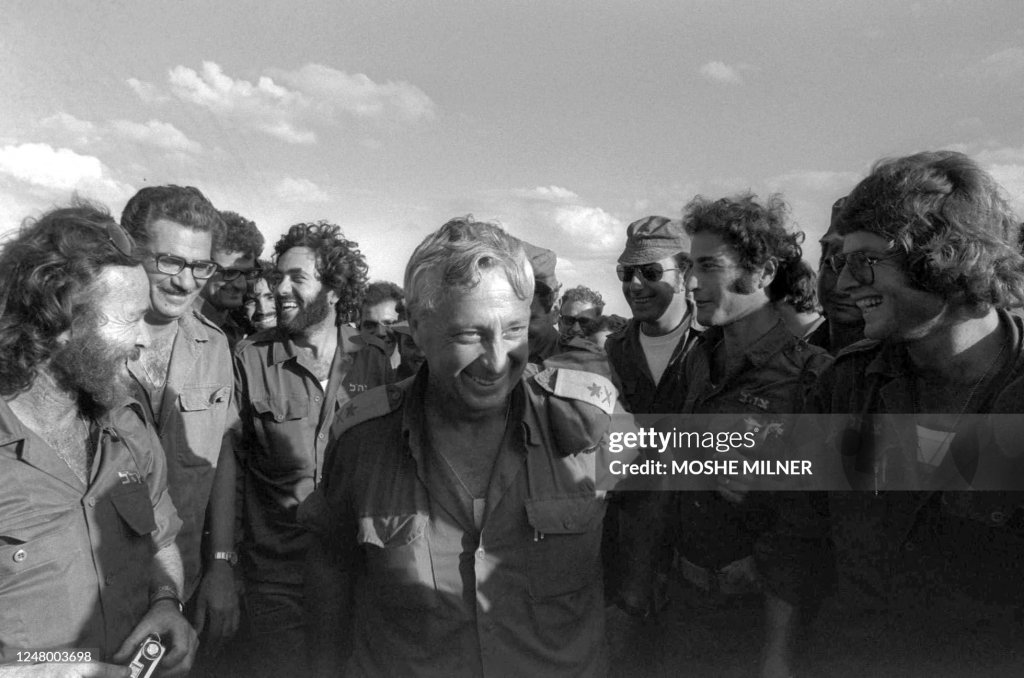
Israeli and Egyptian officials met to discuss the mutual withdrawal of troops. Prospects for the outcome of the talks are not encouraging; the Egyptian armed forces on the eastern bank of the Suez Canal seem to be main point of contention between Israel and Egypt in the cease-fire negotiations. Israel’s terms for troop withdrawal differ from Egypt’s. Officials will meet again tomorrow. Israeli forces remain on alert along both fronts.
Israel’s Defense Minister, Moshe Dayan, said that he did not share the optimism generated by the talks between Egyptian and Israeli generals on carrying out the six‐point cease‐fire agreement. There was another meeting at the United Nations checkpoint at Kilometer 101 on the Cairo‐Suez Road at which the disengagement of forces was discussed. The talks, which are showing some progress, will continue today.
The Arab summit conference adopts open and secret resolutions on the use of the oil weapons; embargo extended to Portugal, Rhodesia, and South Africa.
There has been a heavy drain on the Israeli economy because of the failure to settle the Mideast war quickly. That economic drain may have a political impact, as Prime Minister Golda Meir has suffered a sharp decline in popularity.
The U.S. has not been hit as hard by the energy crisis as Europe or Japan, as the dollar has strengthened on European money markets.
A spokesman for the Norwegian shipping industry stated that world shipping may to come to a standstill over the energy crisis. Italy has adopted new emergency regulations and restrictions. Canada warned its citizens about possible voluntary energy conservation measures. Oil exports from Canada to the U.S. are not expected to dwindle, but Canadians come first. Saudi Arabia’s Sheik Yamani warned of a further 80% oil reduction if the United States or other nations take countermeasures against the Arab oil embargo.
Under pressure from the oil embargo, Japan switched to a pro-Arab stance in hopes of getting oil. The U.S. State Department was sympathetic but insisted that a Mideast peace settlement will be more difficult because of Japan’s new policy. Jewish organizations called on the Japanese ambassador to Washington to warn his government that Japanese-American relations could be damaged by Japan’s actions. Such repercussions could hurt Japan.
The Japanese are on a buying spree in America. Japanese soy sauce production in the United States is big business. Foreign-owned industries in American have doubled in the past four years and Japanese investments have increased faster than those of any other country. Although the Japanese haven’t gained a dominant interest in any single American industry, the rate of foreign investment upsets some Congressmen. Representative John Dent stated that increased foreign investment can lead to subjugation under someone else’s control. The “foreign invasion” will continue, however, until restrictive legislation is brought before Congress.
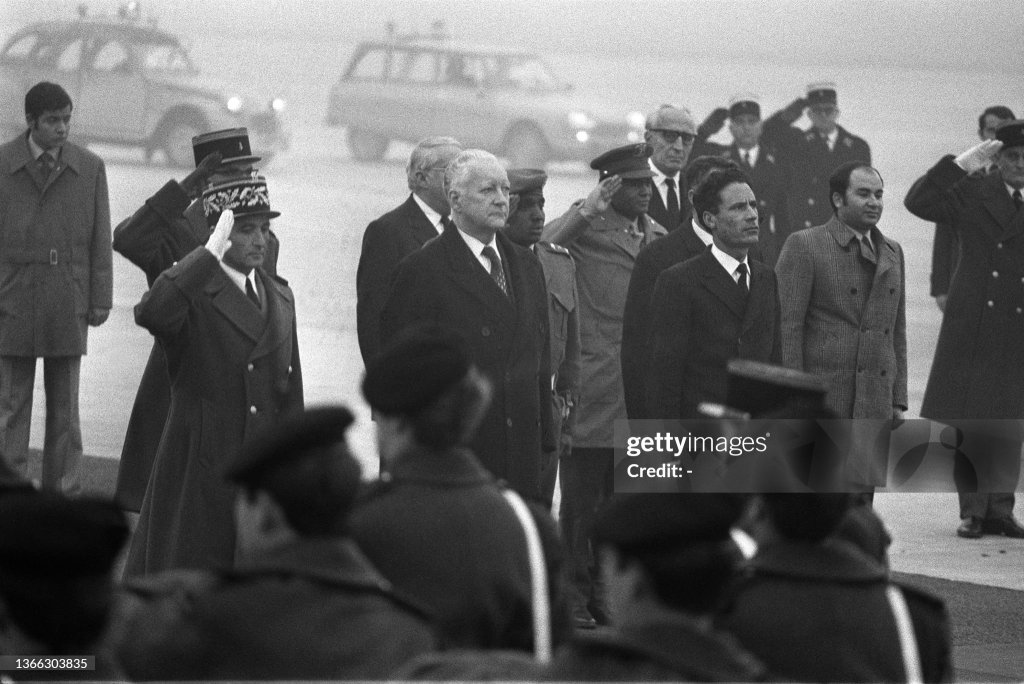
Libyan leader Muammar Qaddafi visited Paris, where the wrong national anthem was played for him. France gets most of its oil from Libya. Qaddafi, the Libyan leader, arrived in Paris and was expected to demand that the French deliver more and better arms, possibly including atomic weapons, and lift restrictions on the transfer of French arms to Egypt and Syria. He was on a private trip, but planned to meet today with President Pompidou.
In an immense undertaking to make Europe less dependent on foreign energy supplies, the French Government announced that it would start construction next January on a plant that would make fuel for nuclear power reactors in the nineteen‐eighties. The building site is in the Rhone Valley in southern France.
The editor of Egypt’s semiofficial newspaper Al Abram stressed that the Arab world needed to build, buy or borrow nuclear weapons as a deterrent to any use of such weapons by Israel. The editor, the politically influential Mohammed Hassanein Heykal, wrote that he had become convinced that Israel had nuclear weapons and might attempt to use them as psychological “blackmail” against the Arabs.
In Moscow, two American firms signed a $45 million contract to build a chemical plant in the Ukraine. The Soviet Union signed a contract with two American corporations for the construction of a $100‐million petrochemical complex, which will be the first American‐built plant purchased outright by the Soviet Union since the current detente began. The American companies are the Lummus Company, a construction concern, and the Monsanto Chemical Company.
Guerrillas struck around Northern Ireland today after vowing to smash the new administration that gives Catholics their first significant government voice in Ulster’s history. The raiders blew up tracks and bombed a bridge on the Belfast‐Londonderry rail line, set off a land mine near Omagh — wounding two soldiers and a civilian — ambushed and wounded a militiaman in Strabane, and attacked the home of a Roman Catholic political leader, the army said. The violence followed an agreement reached in Belfast Wednesday between moderate Protestant and Catholic politicians to share power for the first time via an 11‐man executive body.
The Catholic political leader whose home was attacked by submachine-gun fire tonight is Austin Currie, who was named yesterday as one of the members of the new executive body. Mr. Currie arrived home minutes after the attack to find his wife and two children, unhurt, the police said. Two policemen guarding the house escaped injury, although their police car was hit six times.
Life in Athens drifted back to a semi-normal state tonight as the country’s military leadership decided to reduce the curfew to allow people to stay out until 1 A.M. instead of 10 P.M. Traffic resumes at 5 A.M. Last Saturday, President George Papadopoulos reimposed martial law to quell the fierce student revolt centered at the Polytechnic University here. Tonight, martial‐law conditions were relaxed some as Athenian restaurants reopened for dinner.
The sinking of the Cyprus cargo ship Annette killed 21 of the 24 crew after the ship struck a harbor wall at Ashdod in Israel.
All four crew of an Italian Air Force airplane were killed when an improvised explosive device detonated aboard Argo 16, a C-47 Dakota used by the Servizio Informazioni Difesa (Defense Information Service) for electronic surveillance of with Yugoslavia. The aircraft crashed in Italy near Marghera.
Airlines flying international routes announced agreement on an average 6 per cent fare increase, effective January 1, “to meet the recent drastic increases” in fuel costs. Most major governments were expected to approve the higher fares. The round‐trip economy fare from New York to London in the winter season would go up to $495 from $456. The airlines warned of still higher fares to come.
The ripple effect of the energy crisis has hit certain segments of the economy; the plastics industry is feeling the pinch and the automotive industry has been hit particularly hard. President Nixon will interrupt his Thanksgiving holiday for talks with advisers regarding the energy crisis.
The President’s meeting with energy adviser John Love and White House counsel Melvin Laird won’t produce any immediate announcement of plans to meet the crisis. A Sunday ban on gasoline sales is a high priority. Interior Secretary Rogers Morton urged the major refiners to produce less gasoline. Democratic representative Ken Hechler declared that the energy crisis is being used as an excuse to stall legislation that would limit or ban strip mining. Hechler also insisted that coal which is needed in the United States is being “haphazardly” exported; he noted that plans for legislation against such exports is in the works.
In what was regarded in Detroit as a direct result of the energy crisis, which has stimulated the demand for smaller automobiles, the General Motors Company announced that it planned to halt operations during the week of December 17 at 16 assembly plants where standard and intermediate-size cars are manufactured. General Motors is the first of major American car manufacturers to cutback its previously scheduled production of standard‐size autos.
Boat builders are suffering from the energy crisis too; some have seen a 50% cutback in orders and sales have dropped significantly due to a lack of fuel and a lack of raw materials.
The U.S. government approved a 5% increase in airline fares earlier in the week. In Geneva, Switzerland, a 6% increase on all international fares was reported.
A little‐publicized amendment to the recently passed military procurement bill is proving to be an irritant to America’s NATO allies but a boon to United States officials pressing for an increased European contribution to the alliance. The military procurement bill, signed by President Nixon this week, contains a Senate amendment requiring that American troops be withdrawn from Europe in relation to the failure of NATO countries to offset the balance‐of‐payments deficit incurred by the United States in stationing forces. For example, if the European allies fell short by 25 percent in offsetting the deficit during this fiscal year, which ends June 30, 1974, there would have to be a 25 percent reduction next year in the 310,000 United States troops stationed in Western Europe.
General Motors and Ford are recalling thousands of automobiles.
Grain dealer Dwayne Andreas and his firm pleaded innocent to charges of illegally contributing corporate funds to Hubert Humphrey’s 1968 presidential campaign. Watergate prosecutor Archibald Cox brought those charges the day before he was fired.
The General Services Administration has abolished a “special referral unit” that circumvented United States Civil Service Commission regulations by hiring some personnel because of their political influence rather than merit. It is believed to be the first acknowledgment by a government agency that political connections were taken into account in the hiring for civil service positions.
Senator William Proxmire, Wisconsin Democrat, charged in a letter to President Nixon that Robert H. Bork, the Acting Attorney General, was serving in violation of a, Federal law requiring his confirmation by the Senate after 30 days in office. An Assistant Attorney General disputed Mr. Proxmire’s legal interpretation and noted that there have been at least six instances in which Acting Attorneys General “have lawfully served for more than 30 days.”
As Governor Rockefeller and Mayor‐elect Abraham D. Beame prepared to request a meeting next week with President Nixon to seek a federal fund to save the 35‐cent New York subway fare, Administration officials remained adamant in opposition to the use of federal funds for mass‐transit operating subsidies. But the requested meeting is under consideration a White House aide said.
An increasing number of black students are leaving the Chicago public school system this year, and those who remain are more segregated. Results of the Board of Education’s annual racial census, published this week, show that for the third year in a row the percentage of black students increased, as did the number of elementary and high schools that are now either all black or 95 percent black. The Chicago school superintendent, James F. Redmond, citing findings from the survey, conceded that efforts by the Board of Education to integrate more schools, had failed.
One gyroscope aboard Skylab 4 has broken, but astronauts Gerald Carr, Edward Gibson and William Pogue are not in danger. A control gyroscope failed aboard the Skylab space station today and officials said the loss of another one could force the 84‐day Skylab 3 mission to be shortened. Phil Shaffer, the flight director, said at the Johnson Space Center here that the orbiting laboratory could function effectively with only two of its three control gyroscopes, but that maneuvers of the 118‐foot craft could be more difficult and would require increased use of control gas jets.
The failure occurred on the eighth day of the Skylab 4 mission, while the crewmen, Lieutenant Colonel Gerald P. Carr of the Marines, Lieutenant Colonel William R. Pogue of the Air Force, and Dr. Edward G. Gibson, a civilian scientist, were asleep. The astronauts continued with their normal flight activities, despite the problem. Their plan for the day included the first viewing from space of the comet Kohoutek.
Astronomers say that Kohoutek will be the most fascinating comet in modern history. Kohoutek was discovered earlier this year, and its orbit will become visible in late December. The most famous comet, Halley’s, is sighted on earth every 76 years. Some believe that bad luck accompanies comets, however Kohoutek shouldn’t be feared but held in awe for its beauty.
[Ed: Kohoutek, at least as seen with the naked eye from the Earth, will turn out to be a huge disappointment.]
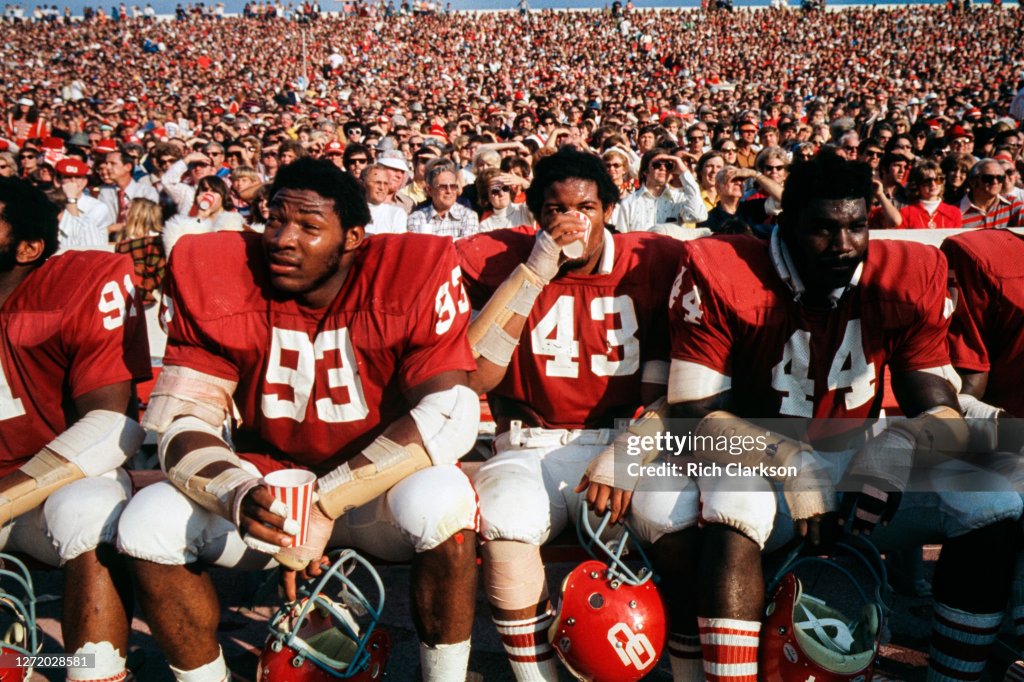
The last game of the Atlantic Coast Football League, a minor pro football league founded in 1962, was played. In the championship, the New England Colonials defeated the Bridgeport (Connecticut) Jets, 41 to 17, in Bridgeport, Connecticut. The league permanently ceased operations at the end of the season.
Dow Jones Industrial Average: 854.00 (-0.98, -0.11%).
Born:
Sheddrick Wilson, NFL wide receiver (Houston Oilers), in Thomasville, Georgia.
Died:
Sessue Hayakawa, 87, Japanese film star best known for 1957’s “The Bridge on the River Kwai”, of cerebral thrombosis.
Robert Ellis, 40, actor (“Curse of King Tut’s Tomb”).
Paul Newland, 70, U.S. character actor in film and TV.
Adele Buffington (pen name for Adele Burgdorfer), 73, American film screenwriter.
Jennie Tourel (stage name for Eizhenija Davidovich), 73, Russian-born American opera singer.




 History Diaries