Under the threat of an oil embargo from the Arab oil producing nations, Japan’s government agreed to drop its support for Israel and joined the United Nations in advocating for a separate nation for Palestinian people in Israel. The decision of Prime Minister Kakuei Tanaka, announced by government spokesman Susumu Nikaido, has been called “Perhaps the most important policy decision ever made on the Middle East in the twentieth century.”
Japan announced that it will make concessions in its Mideast foreign policy in order to get the oil which is necessary to run the country. Japan’s foreign ministers decided to switch to a pro-Arab policy in hopes of gaining most favored nation status. The threat of oil shortages in Japan touched off hysterical buying and hoarding; Japan is completely dependent on other countries for petroleum. Premier Tanaka requested energy conservation on a voluntary basis, but so far little response has been noted.
Israeli foreign minister Abba Eban hinted that Japan’s new foreign policy could cause repercussions in the U.S. market.
Secretary of State Henry Kissinger stated that if all else fails, “countermeasures” against the Arab oil boycott may be necessary. Kuwait, a major oil producer, is concerned over Kissinger’s statement. The House Foreign Affairs Committee insisted that a U.S. food embargo against Arab states won’t work.
Saudi Arabia’s Oil Minister threatened to cut oil production by 80 percent if the United States, Europe or Japan tried to counter current Arab embargoes and reductions. The minister, Shiek Ahmed Zaki al-Yemeni, also threatened to blow up some oil fields if the United States should take any military action.
Any U.S. effort to embargo food shipments to Arab nations in retaliation against their oil embargo would be ineffective, according to a study issued by the House Foreign Affairs Committee. “The Arabs can meet their relatively small food import needs from other sources in the world market, while the United States cannot meet its relatively large petroleum import needs from other sources,” said the report, compiled by the Library of Congress’ research service and released by the committee.
Iraq and Libya reportedly are continuing to ship oil to the Western world despite the boycott. The Shah of Iran, leader of a major non-Arab oil producing nation, urged his Middle Eastern neighbors to lift the embargo.
Egyptian and Israeli generals met in a sandstorm on the Cairo‐Suez Road as the two sides held their first formal session in eight days to grapple with the intricate details of disengaging their troops under the ceasefire agreement. While no agreement was reached, the session was relaxed, the discussions progressed to detailed debates of each side’s proposals and another session was scheduled for today.
Israeli and Egyptian officers met again in Tel Aviv to discuss the Mideast cease-fire. No progress was made today, but the officers agreed to try again tomorrow. Israeli General Yariv and Egyptian General Gamasy discussed troop withdrawals and cease-fire lines without much hope for a break in the deadlock. The prisoner exchange has been completed.
Tension along cease-fire lines continues. A clash occurred at Ismailia’s western bank and along the Syrian front. King Hussein of Jordan stated that he is willing to accept international control of some of Jordan’s land, currently occupied by Israelis, if Israel will withdraw.
The United States and its European allies are near agreement on the military part of a “new Atlantic charter,” North Atlantic Treaty Organization sources said in Brussels. They said the ambassadors from the 15 NATO nations would meet in Brussels again Wednesday to work out the wording.
Most of the tanks used to suppress a three-day student rebellion in which 12 persons were killed were pulled out of Athens. But the army tightened its grip on Greece with uniformed officers taking over press censorship. The first decision of the army censors was to confiscate the biweekly magazine Politika Themata, which was strongly critical of the regime of President George Papadopoulos. Meanwhile, the Athens special military tribunal sentenced five more persons to prison terms for violating the martial law.
The British Government disclosed the details of the compromise under which moderate Protestant and Roman Catholic parties agreed to share power in Northern Ireland. In describing the agreement to Parliament, its architect, William Whitelaw, called it “a good start,” but said there was a “long way to go,” before its success could be assured. Nevertheless, the agreement setting up an executive body is regarded as a substantial achievement by the British minister for Northern Ireland.
The Italian Fascist organization Ordine Nuovo disbands.
A Rome newspaper published pictures purportedly of J. Paul Getty III, without his right ear. Getty was kidnapped in Rome last July. A note accompanied the pictures, pleading with his grandfather to pay the multi-million-dollar ransom, but Getty Sr. has refused to pay.
Some groups are trying to blackmail the West German government with the threat of a large-scale germ contamination of the water systems in several cities. Armed officers are guarding water supplies.
Chile’s military government has granted 4,342 safe-conduct passes for persons who want to leave the country, the Foreign Ministry said. These include 2,290 given to persons who sought political asylum in Santiago’s numerous foreign embassies following the Sept. 11 military coup. Petitions from 138 others are being examined and the government said 487 persons have been expelled.
Argentine President Juan D. Perón was reported fully recovered from what was officially described as a relapse of a bronchial condition but which government sources said was actually a mild heart attack. The 78-year-old president was said to be “attending to affairs of state in his private home” in Buenos Aires.
An American executive and three body. guards were ambushed and killed in Argentina by 15 well‐dressed gunmen. The executive, John A. Swint, was the general manager of an Argentine subsidiary of the Ford Motor Company, which had been forced by leftist terrorists to pay $1‐million to Argentine charities in May. However, the police said Mr. Swint’s murder appeared unrelated to the series of kidnappings that has plagued the country this year.
West German honorary consul Kurt Nagel, 37, was freed after being “slightly injured” in a shootout between the Venezuelan national guard and his kidnapers. A spokesman said police surprised the two kidnappers as they held a ranch owner at gunpoint in an attempt to steal his truck. The rancher and a kidnaper were seriously wounded in the battle. The spokesman did not say what put the police on the kidnapers’ trail before any ransom demands had been made. However, a friend said Nagel feared that Communists at the university where he taught might do something to him and had given a list of those he feared to his wife.
The Quebec Court of Appeals suspended a temporary injunction that had halted all work on the $6 billion James Bay hydroelectric project, Work on the project affecting about 133,000 square miles in northern Quebec was expected to resume immediately. Indians in the area were granted the injunction last week by Judge Albert Malouf, who recognized their rights to the land and held that irreversible damage to their way of life would result from the project’s continuation.
At least 33 persons were killed and 19 reported missing in the wake of a tropical storm that lashed the central and southern Philippines, officials said in Manila. The Social Welfare department said 108,918 persons were displaced by the storm in 10 provinces. The storm, named “Openg,” was reported moving out into the South China Sea.
Two Skylab 4 astronauts moved outside their orbiting laboratory to fix a jammed antenna, reload exterior cameras and express Thanksgiving Day gratitude.
Thanksgiving Day in the United States. Tempered in their celebration of the nation’s historic holiday of bounty by the international scarcity of fuel, by rising fuel costs, by domestic political taint and by the recollection of a Presidential assassination, Americans here and across the country observed Thanksgiving today. Amid the sobering elements that pervaded the holiday were mingled, nonetheless, fundamental joys and the impetus for profound gratitude in the form of family reunions, care of the lonely traditional turkey dinners and the bright, warm skies ashine here over the annual Macy’s parade.
President Nixon joined his family today at his Maryland mountaintop retreat of Camp David for Thanksgiving dinner. Mr. Nixon flew there by helicopter this afternoon after a series of White House meetings, including a 30‐minute session with Secretary of State Kissinger that was described as “a general review of foreign policy.”
President Nixon’s new Watergate offensive, a/k/a “Operation Candor”, has not been an immediate success. A new Harris Poll shows a significant increase in the percentage of respondents who believe that Nixon should resign. The number now stands at 43%.
The Senate Watergate committee heard testimony regarding the wiretapping of President Nixon’s brother Donald Nixon. Former White House investigator John Caulfield revealed in a closed meeting with the committee that Donald Nixon was under physical surveillance as well as being wiretapped in 1970. The reason for the surveillance may have been Donald Nixon’s friendship with John Meyer. Meyer, a former aide to Howard Hughes, may testify before the committee regarding Hughes’ contribution to the Nixon re-election campaign, which he sent to Nixon pal Bebe Rebozo. Caulfield stated that John Ehrlichman was the one who requested that he monitor the surveillance of Donald Nixon.
Elliot L. Richardson has said that President Nixon’s chief of staff, Alexander M. Haig Jr., told him that he had tried to talk the President out of ordering Archibald Cox to abandon all court efforts to obtain the White House tapes — the issue that led to Mr. Cox’s dismissal as special Watergate prosecutor when he rejected the President’s order. Mr. Richardson, who resigned as‐Attorney General over the issue, made the statement in an interview, Mr. Haig would not discuss the report.
Senator Lowell P. Weicker Jr. (R-Connecticut) defended former Attorney General Elliot L. Richardson against a reported charge by President Nixon that Richardson lied about the circumstances of his resignation. Republican senators who attended a White House meeting with Mr. Nixon last week reported that the President and his chief of staff, Alexander M. Haig Jr., remarked that Richardson “did not tell the truth about his role in the dismissal of special Watergate Prosecutor Archibald Cox and had supported a move to curb his powers. Referring to Richardson, Cox and former Deputy Attorney General William D. Ruckelshaus, Weicker said in an interview on a South Bend, Indiana, television station, “These men don’t tell lies. They make mistakes, I suppose, like we all can, but they don’t tell lies.”
The AFL-CIO said President Nixon committed an impeachable offense when he created the White House “plumbers” unit, which it called a “special and personal secret police, answerable only to the White House and operating totally outside the constraints of the law.” The federation’s second weekly statement detailing a 19-point “bill of particulars” as grounds for impeachment said the plumbers burglarized the office of Daniel Ellsberg’s psychiatrist “with a clear knowledge that it was a crime.”
From March, 1970, to March, 1973, the nation’s metropolitan areas showed a net loss of 944,000 in population, the Census Bureau reported. It theorized that the migration “reflects the continued move of both people and jobs to the belts surrounding existing metropolitan centers.”
The office of Edmund G. Brown Jr., California secretary of state, reported that it was nearing a conclusion to an investigation of the use of as much as $2 million in once-secret 1968 political campaign funds by President Nixon’s former personal attorney, Herbert W. Kalmbach of Newport Beach. Tom Quinn, deputy secretary of state, said in an interview that Kalmbach was “bending over backwards to be cooperative with us.” Quinn declined to predict exactly what the outcome of the investigation would be.
The wife and daughter of a Methodist minister, kidnapped from their Jonesboro, Georgia, home in scheme to force release of min charged in a bank robbery, were found handcuffed but unharmed walking along a rural Georgia road today. Jackie Nelson, 44 years old and her daughter, Debbie, 16, were reported to be cold and hungry but otherwise in good condition after the 30‐hour kidnapping. The mother and daughter were picked up by a motorist near Cochran, about 115 miles south of their home in this Atlanta suburb. Howard Smith, Clayton County police chief, said the Nelsons had apparently been released after their car, driven by the kidnappers, got stuck in a ditch. Chief Smith said the authorities had no firm suspects but did have “some real good leads” in the case.
Jazz at noon fills the Cleveland Arcade. Three tiers of ornate late 19th‐century balconies come to life as figures drift out on them, drawn by the mellow sound that floods the truss‐spanned, skylit street from Superior to Euclid Avenues. The lights are on again in Playhouse Square, where the theaters have been dark. The nearly complete Huron Road Mall in front of it is receiving trees. Young people are walking downtown again, from the modern; mushroom‐growth of new construction at Cleveland State University just beyond. An apartment complex of 1,000 suites is renting in the nearby financial district where a new park, Chester Commons, attracts local crowds. These are the signs, watched with as much care as the first spring robin, that downtown Cleveland may be coming back to life. This city, which shares and almost epitomizes the urban ills of middle America, including the dying downtown, is at a tipping point right now. The battle for center‐city survival will be won or lost in the next few years.
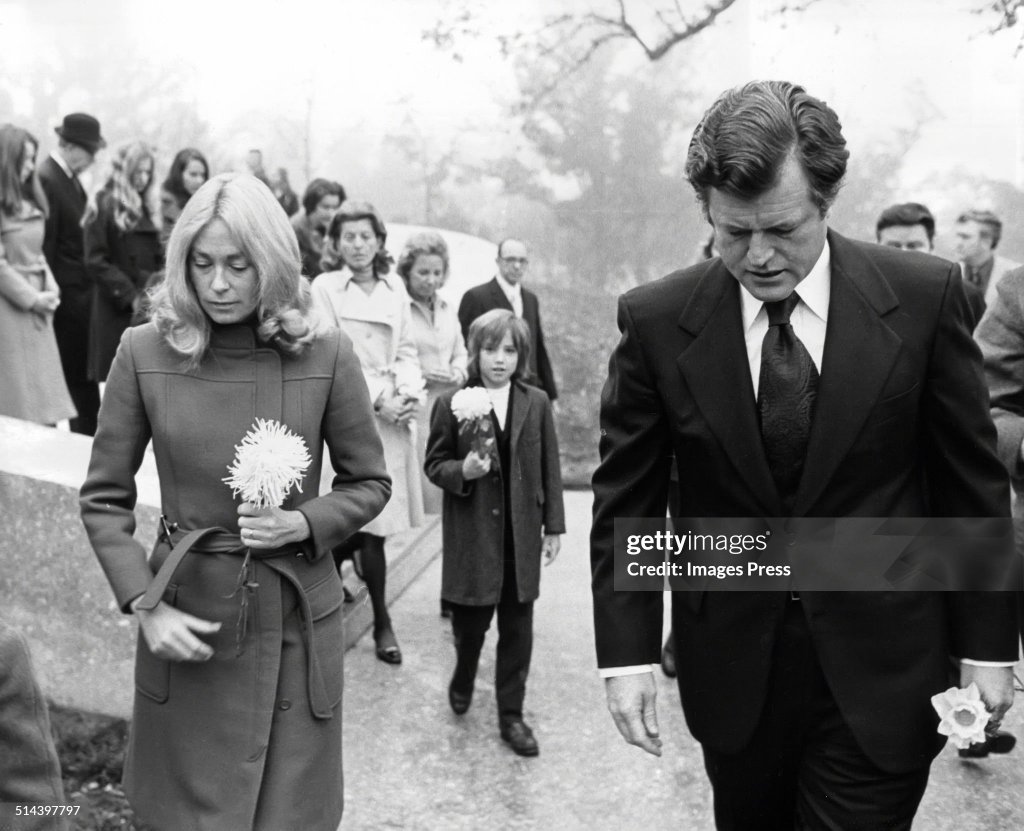
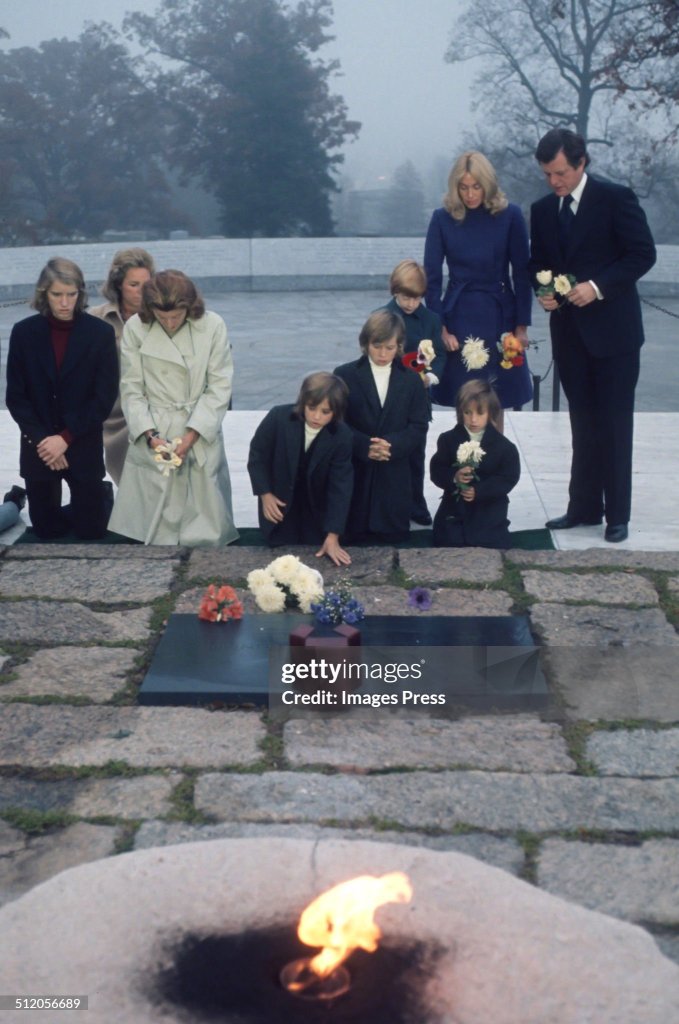
Today is the 10th anniversary of John F. Kennedy’s assassination. Numerous ceremonies marked the event. The Kennedy family visited JFK’s gravesite early this morning. The only surviving brother, Edward Kennedy, his family, and Mrs. Robert Kennedy paid their respects. Hundreds of people visited Kennedy’s grave during the day.
The 10‐year struggle for stricter gun control laws that began with the assassination of President Kennedy has been a decade of frustration for reformers, despite some legislative success. While 1968 laws ended the booming mail‐order trade that allowed Lee Harvey Oswald to buy a rifle, a legislative loophole has allowed the trade in cheap pistols to continue.
[Good. Gun control is just another prohibition, and as we should have learned in the 1920s, prohibitions do not work. In fact, they will always make things worse, by enriching criminals in the black market.]
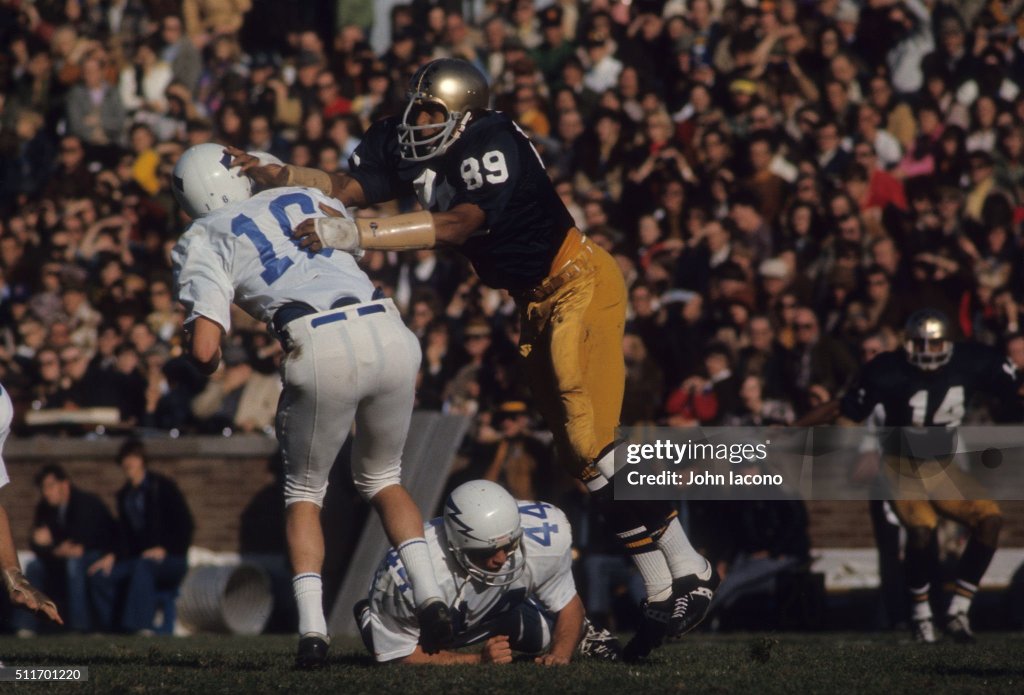
NFL Football:
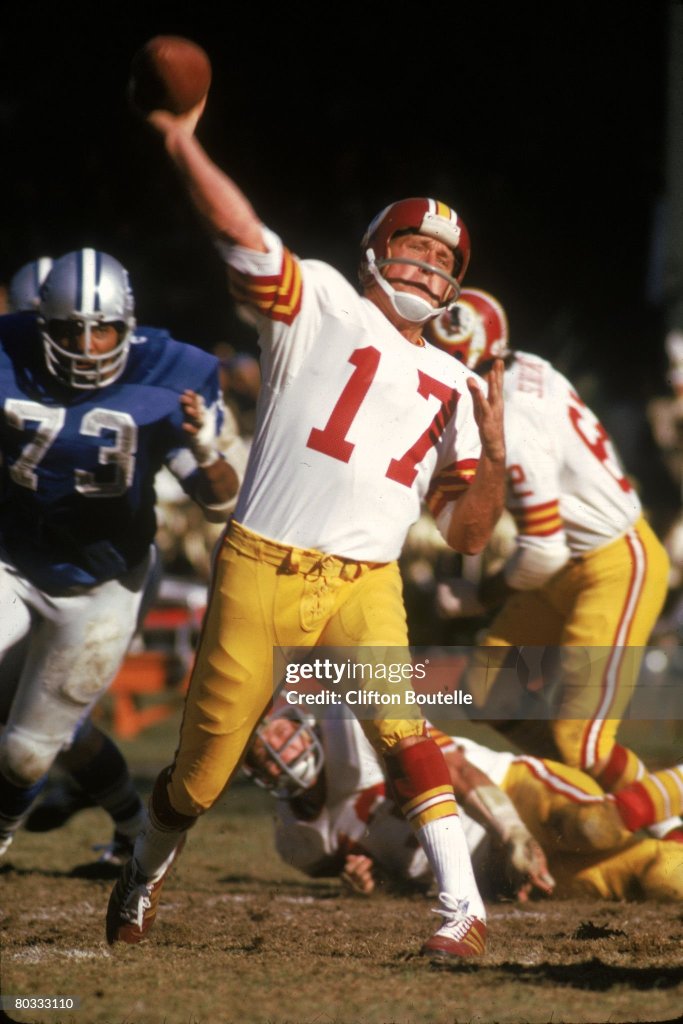
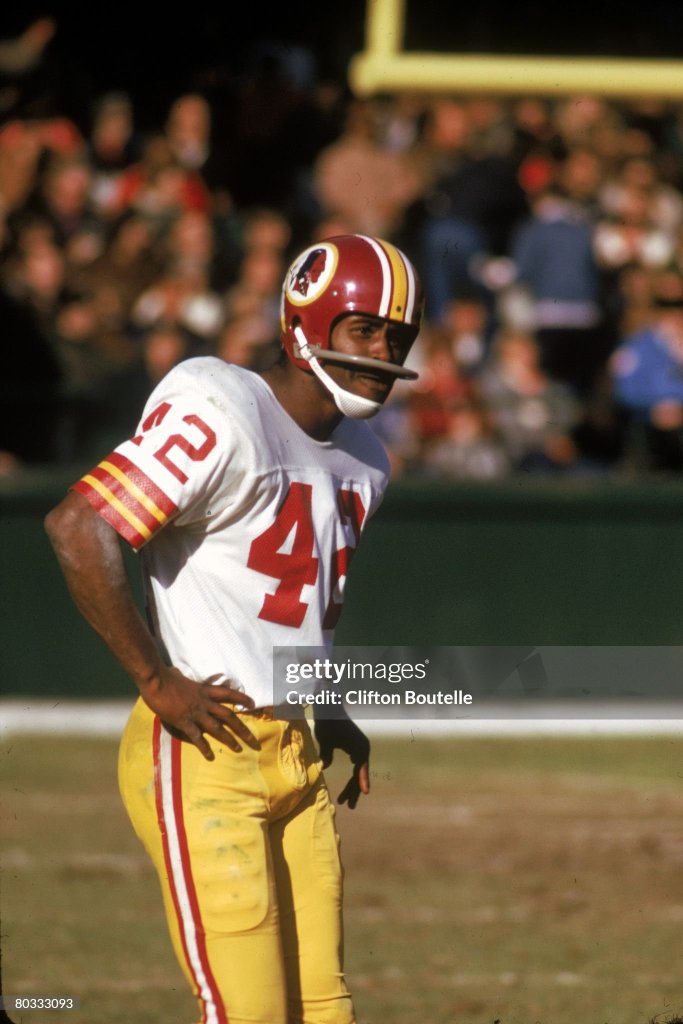
The Washington defense handed Detroit its first shutout in 56 games today as the Redskins defeated the Lions, 20‐0, in a National Football League game. Billy Kilmer threw two short touchdown passes. The Redskins drove 74 yards in 13 plays on their first possession, capped by a 4‐yard pass from Kilmer to Charlie Harraway in the end zone. Harraway rushed for 105 yards in leading the Washington attack. Curt Knight booted field goals of 25 and 23 yards, but missed on three longer attempts. Kilmer’s second touchdown pass was a 3‐yarder to Charlie Taylor, ending a 75‐yard, 12‐play drive with the second half’s opening kickoff. The loss dropped the Lions to a 4‐6‐1 won‐lost‐tied record in the National Conference’s Central Division. Washington is 8‐3 and leads the East Division.
The Miami Dolphins, who had been annihilating those second‐class teams back in the Eastern Division of the American Conference, stepped up in class today and won again. It was not that easy against the Dallas Cowboys, the score being 14‐7 for Miami in a contest that lacked a climactic finale because the Dolphins would not let any anxiety surface in the final quarter. They were methodical, those Dolphins, in winning their ninth game in a row and their 10th game of the season against one defeat, 12‐7, to Oakland back in September. And no one was more methodical, more physical than Larry Csonka, their big fullback. Csonka specializes in killing clocks and linebackers. With their lead cut to 7 points, as the fourth period began, the Dolphins never let the Cowboys emerge from the Dallas 4‐yard line.
With almost nine minutes left to play, Miami took the ball at midfield and ran out all the playing time by driving to the Cowboy 1‐yard line in 15 plays. The game ended there. Csonka carried on eight of the plays including the last three and picked up two first downs that left Dallas for dead. “He’s so strong,” Lee Roy Jordan, the Cowboy linebacker and defensive captain, said of Csonka. “You stop him for three yards and that’s a feat. Then he falls down for two more.” Csonka gained 80 yards and scored the first Miami touchdown from the 1‐yard line. Paul Warfield had the other, catching a beautiful 45‐yard pass from Bob Griese. Both touchdowns came in the first quarter. The victory had no tangible meaning for Miami, which had clinched its division title last Sunday. The defeat had plenty of meaning for Dallas, most of it bad.
Washington Redskins 20, Detroit Lions 0
Miami Dolphins 14, Dallas Cowboys 7
Born:
Cassie Campbell, Canadian women’s ice hockey left wing (Team Canada, Olympics, silver medal, 1998; gold medal, 2002, 2006), in Richmond Hill, Ontario, Canada.
Ricky Ledée, Puerto Rican MLB outfielder and pinch hitter (New York Yankees, Cleveland Indians, Texas Rangers, Philadelphia Phillies, San Francisco Giants, Los Angeles Dodgers, New York Mets), in Ponce, Puerto Rico.
Kevin Smyth, Canadian NHL left wing (Hartford Whalers), in Banff, Alberta, Canada.
Marjolein Kriek, Dutch clinical geneticist, and the first woman to have her total DNA genome sequenced; in Leiden, Netherlands.
Giorgi Targamadze, opposition leader of the Parliament of Georgia as president of the Christian-Democratic Movement (KDM); in Tbilisi, Georgian SSR, Soviet Union.
Died:
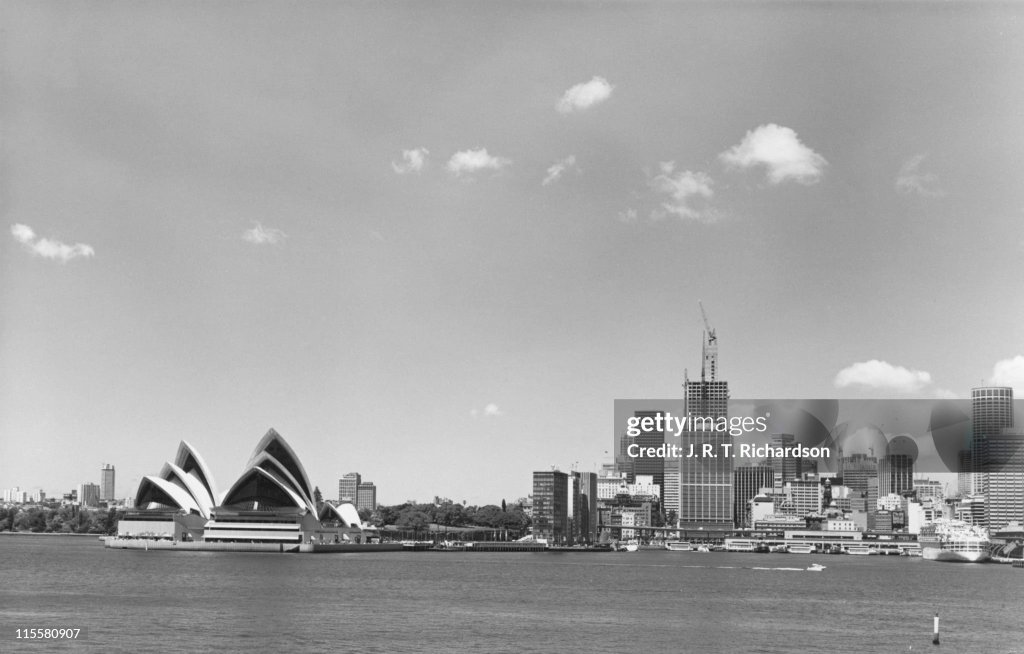
John Dedman, 77, Australian politician.

 History Diaries