JFK will not be at Thanksgiving Dinner this year.
Three Days to Dallas.
Cambodia declares an end to all U.S. military and economic aid. Prince Norodom Sihanouk charges that the CIA is trying to oust him from power. Cambodia’s ruling Prince Norodom Sihanouk announced last night that he was severing all economic and military ties with the United States. He will continue to maintain diplomatic relations, he said. An emergency meeting of his political party unanimously approved his decision. Before a wildly cheering stadium rally. Sihanouk charged that American aid was being used to undermine him and that rebel Cambodians based in Vietnam were using American equipment.
Even as he announced his decision to scuttle the United States aid program, the State Department in Washington was issuing instructions to the United States embassy in Phnom Penh to deny that any American assistance was going to the rebels. Communist North Vietnam charged in its official newspaper that [President] “Kennedy’s pals hoped they could take this opportunity to overthrow Prince Norodom Sihanouk.”
Communist terrorists have been sent into Saigon to blow up government and American military installations and kill American personnel, South Vietnamese security sources said today. Eager to discredit the new military regime, the Communist Viet Cong have thrown caution aside and are recruiting any persons who say they support the cause, the informants added.
Consequently, agents of the South Vietnamese security forces have been able to infiltrate the communist recruiting program to pry out secrets and clear the way for crushing the new terrorist campaign. Bomb explosions in Saigon, South Vietnam’s capital, are occurring at the rate of at least one a day. Security sources said that three captured Viet Cong agents reported they were members of a group sent into Saigon from D zone, a barren area north of Saigon, long regarded as a communist base. They were told to work independently in the city, choosing as prime targets government and military installations and American homes and personnel.
An explosion Sunday night in a downtown Saigon open air restaurant wounded three American servicemen. The Viet Cong are known to be recruiting taxi drivers, hooligans, beggars, and others, security sources said. These people are being taken into D zone for three days of training in explosives handling and then sent back into Saigon, they said. The guerrillas are striking hard in the countryside also.
South Vietnam’s security minister said today that he could not guarantee Madame Ngô Đình Nhu’s security if she returns to Saigon. Major General Tôn Thất Đính also said in an interview that “it would be unwise” for Archbishop Ngô Đình Thục, a brother of former President Ngô Đình Diệm and the Roman Catholic archbishop of Huế, to return now. The archbishop is in Rome for the Vatican ecumenical council. Madame Nhu and her four children recently joined him there. General Đính, a key figure in the coup that ousted Diem, said that Madame Nhu tried to contact members of the military council in the early days of the coup, but made no attempt to get in touch with any of them since then.
American policy toward the new, military-backed, provisional government of South Vietnam and the proposed withdrawal of some American troops there will be discussed today at a meeting including the secretaries of state and defense and General Maxwell D. Taylor, head of the joint chiefs of staff, in Honolulu. Any idea of a negotiated truce with the communist Viet Cong is fantastic, says Ambassador Henry Cabot Lodge.
At a press conference after conferring with the State Department, Yale Professor Frederick Barghoorn describes how the Russians contrived to arrest him and hold him for 16 days on spy charges before releasing him. He says a Russian stranger, speaking English, thrust a roll of papers at him outside his Moscow hotel moments before his arrest by Soviet police. He says the Russians contend the papers contained military secrets.
Venezuelan Army units in armored cars and national guardsmen were called out in Caracas today to halt an outbreak of pro-communist terror that all but paralyzed the capital. Police and snipers fought it out in the workers’ suburbs, base of operations for the terrorists. Unofficial reports said 19 persons were killed and 70 wounded. The interior ministry said more than 100 terrorists were arrested. Egged on by communist Cuba, the Venezuelan underground intensified its campaign to unseat President Romulo Betancourt’s government or to disrupt presidential elections scheduled for December 1. Reports from the interior said other cities were under the same terrorist offensive. Schools for American children were closed.
The public health department in Port-au-Prince, Haiti, said today that 500 persons were killed Thursday and Friday by floods and landslides. It said thousands were homeless and estimated damage in the millions of dollars. A bus was buried by a landslide near Camp Coq on Saturday, killing the driver and all 20 passengers.
The department said about 500 bodies have been recovered and the death toll is expected to go higher. All crops have been destroyed in the Grande Riviere du Nord area — the most prosperous in the country. The northern regions, which were spared by Hurricane Flora last month, were devastated last week by the rains. The landslides caused by torrential rains cut communications between the north and Port-au-Prince.
Heavy rains were reported again today in eastern Cuba where a hurricane last month brought death to 2,000 persons and caused millions of dollars in damage. Baratta, on the Oriente coast, reportedly was isolated from the rest of Cuba. Residents of low-lying grounds were removed for the second time in a month. The Oriente town of Mayan also was reported in new trouble. Heavy rains caused the Pontezuelo River to overflow. A recently-rebuilt bridge was destroyed. Citizens in low-lying areas were taken to higher ground.
Over the protests of the west, the United Nations gives its approval to an Afro-Asian resolution requesting a world-wide conference with the purpose of drafting a ban on the use of nuclear weapons. The west argues that such a ban would be a mere scrap of paper in the absence of an earlier agreement on inspections to enforce it.
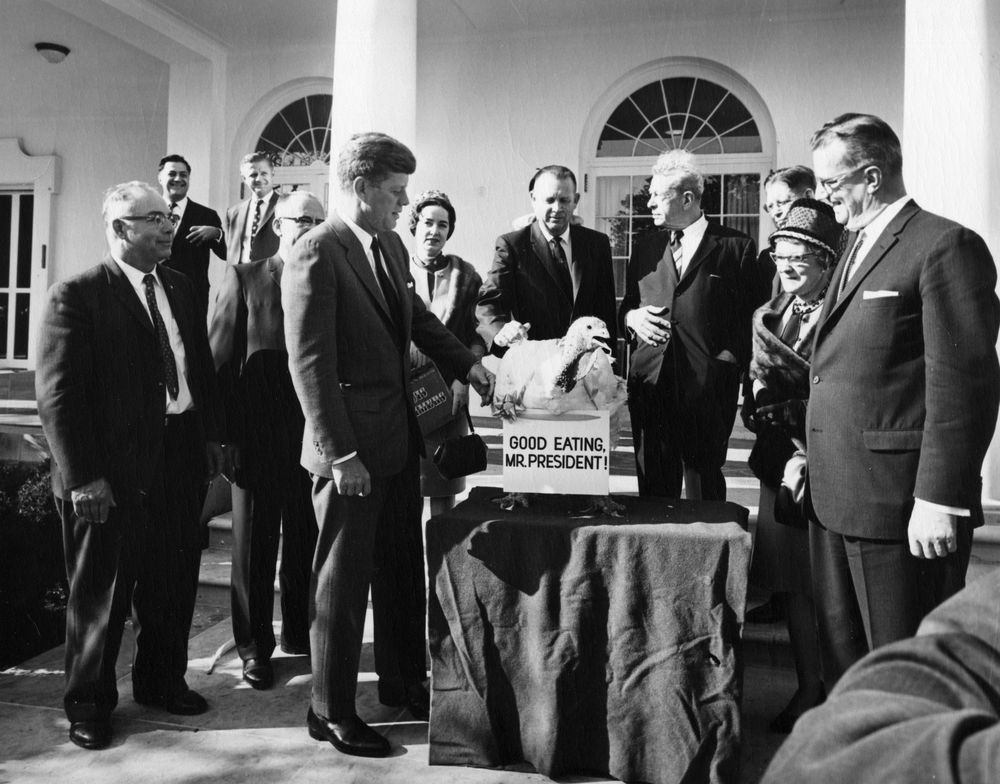
President Kennedy is presented with a live, 55-pound Thanksgiving turkey by the National Turkey federation — and promptly gives it back so that it can be used to develop bigger and better turkeys. Another turkey — dressed and weighing 20 pounds — is turned over to the Salvation Army. The presentation marks a lull in the President’s schedule, but only a brief one; he is scheduled to leave again Thursday for a three-day trip to Texas.
One of the most startling revelations that Author Thurston Clarke makes in his recent book entitled “JFK’s Last Hundred Days: The Transformation of a Man and the Emergence of a Great President” is of a conversation that President John F. Kennedy had with his secretary, Evelyn Lincoln on November 19, 1963 (50 years ago today.) According to Clarke, Kennedy told Mrs. Lincoln that he had decided to change his running mate in the 1964 presidential election and that he intended to drop Lyndon Johnson from the ticket. Clarke writes at pages 317-8 that Kennedy said the following to Mrs. Lincoln:
“You know, if I am reelected in '64," he said, "I am going to spend more and more time making government service an honorable career." He considered it absurd that in the Space Age someone who had become chairman of a congressional committee because of his longevity could tie up a bill and prevent it reaching the House floor for a vote. In his second term, he said, "I am going to advocate changing some of the outmoded rules and regulations in Congress, such as the seniority rule," adding, "To do this I will need as a running mate in '64 a man who believes as I do." As if thinking out loud, he continued, "I am going to Texas because I have made a commitment. I can't patch up those warring factions. This is for them to do, but I will go because I have told them I would. And it is too early to make an announcement about another running mate - that will perhaps wait until the convention."

“"Who is your choice of a running mate?" Lincoln asked.

“Staring straight ahead, he said without hesitation, "At this time I am thinking about Governor Terry Sanford of North Carolina. But it will not be Lyndon." Sanford was a logical choice. Kennedy was impressed with his economic and antipoverty programs, and he represented the enlightened "New South" that the President needed to court in 1964.

“Lincoln had not seen Johnson in the Oval Office for almost a month and had already suspected that the president was considering replacing him. Sanford would later say that although he and Kennedy had never discussed the vice presidency, he did not doubt that the conversation had occurred as Lincoln had reported it. He knew that the president had become exasperated with Johnson, but thought his comments might have been "one of those things that you say... just to get it off your chest."”
Later that day Kennedy received a turkey from the president of the National Poultry and Egg Board, and had a meeting with William Mahoney, the U.S. Ambassador to Ghana. Among the things they discussed was U.S. relations with China. They also talked about Mahoney managing Kennedy’s campaign in Arizona in 1964 and the possibility that his opponent would be Mahoney’s fellow Arizonan Barry Goldwater. Mahoney had been counsel for the NAACP and he told the President that he was proud of him for his June 11th civil rights speech.
Kennedy had other meetings that day, including one with Richard Helms of the CIA (about Cuba) and with Secretary of State Dean Rusk (about Vietnam.) He also had meetings regarding his antipoverty program and on the subject of housing. Clarke also relates the following discussion that Kennedy had with his press secretary Pierre Salinger (at pages 323-4):
“When Salinger came to say good-bye before leaving for Honolulu, Kennedy looked up from a stack of papers, removed his glasses and said with an air of fatigue, "I wish I weren't going to Texas." That morning Salinger had received a letter from a woman in Dallas saying, "Don't let the President come down here. I'm worried about him. I think something terrible will happen to him." He decided not to mention the letter, because he knew Kennedy would dismiss it, just as he had the other warnings. But Lincoln had no qualms about relaying her husband's premonition to him. Before going home that evening, she told him that for days [her husband] Abe had been telling her that he had a bad feeling about the trip and wished the president were not going.

“"If they are going to get me," he said, "they will get me, even in church."”
Senate Democrats debated today whether to dam off some of the river of gold being spent to put an American on the moon in order to leave more money for schools and job relief. Chairman J. William Fulbright (D-Arkansas) of the Senate Foreign Relations Committee got things started by offering an amendment to reduce moonshot appropriations by 519 million dollars, the same amount the Senate cut Fulbright’s foreign aid bill. The Senate was debating a $13,356,789,650 independent offices appropriations bill, which included 5 billion, 190 million dollars in new money for the national Aeronautics and Space Administration.
“Simply stated, the purpose of the amendment is to allow time to reevaluate the goal of trying to reach the moon in this decade and to proceed on a more deliberate and thoughtful basis,” Fulbright said. “Even with this reduction the appropriation would be about a billion dollars — or 27 percent above last year’s amount.” Fulbright emphasized that he was not attempting to dissuade the Kennedy administration from proceeding with plans to try to put a man on the moon. He said he thought the administration should first determine, however, “whether the project is so vital and so urgent as to warrant the indefinite postponement of other national efforts.”
In the concluding event for the three-day centennial celebration of the Gettysburg Address delivered by President Abraham Lincoln on November 19, 1863, former U.S. President Dwight D. Eisenhower addressed the crowd in a ceremony of rededication for the Gettysburg National Cemetery. General Eisenhower, who had retired to a farm near the battlefield after his term as President had ended, told the audience, “My friends, Lincoln reminded his hearers that they had no power to dedicate this ground. So we, today, have no power to rededicate it. But with the playing of Taps, the soldier’s farewell, we can share the grief of every family who has heard that a son or father or sweetheart has fallen. If we can but do this, we will begin to do our part to solve the unfinished business of which Lincoln spoke.”.
Senator Thomas J. Dodd (D-Connecticut) charges that a State Department official has compounded perjury in testimony before the Senate internal security subcommittee in the inquiry over the firing of Otto F. Otepka, veteran security officer. The perjury was committed when the official tried to relieve himself of previous charges of lying to the committee. Dodd demands his prosecution and promises a complete investigation of the State Department.
The names of Vice President Johnson and former Vice President Nixon are brought up at the inquiry on the award of the TFX warplane contract. Neither is the subject of accusations bearing on the award but each, it is implied, brought pressure for their own states for industrial advantages. “There are always pressures,” Deputy Secretary of Defense Roswell L. Gilpatric tells the probers.
Senate employees whose jobs result from patronage are asked to list their assets and sources of income as a result of the Robert G. [Bobby] Baker case. A bill also is in the works to require members of the Senate themselves to make similar reports. Senator Dirksen, Illinois G.O.P. leader, denounces the suggestion and says he will make no effort to have Republican employees list their incomes.
Coach Hank Bauer is named to replace Billy Hitchcock (86-76) as manager of the Baltimore Orioles.
Dow Jones Industrial Average: 736.65 (+1.80).
Born:
Terry Farrell, [as Theresa Lee Farrell], American television actress (Jadzia Dax-“Star Trek: Deep Space Nine”, “Becker”), in Cedar Rapids, Iowa.
Amado Boudou, Argentinian politician and businessman, Vice President of Argentina, in Buenos Aires, Argentina.
Ken Zachary, NFL running back (San Diego Chargers), in Sapulpa, Oklahoma.
Travis Simpson, NFL center (Green Bay Packers), in Norman, Oklahoma.
Joe Chetti, NFL running back (Buffalo Bills), in Bay Shore, New York.
Paul Kiser, NFL guard (Detroit Lions), in Valdese, North Carolina.
Died:
Carmen Amaya, 60, Spanish flamenco dancer and singer.
Donald Summerville, 48, Mayor of Toronto. Summerville had made an appearance at a hockey game for charity, tending goal for a few minutes, then had a heart attack while in the locker room. City Council member Philip Givens would be appointed to serve out Summerville’s term.
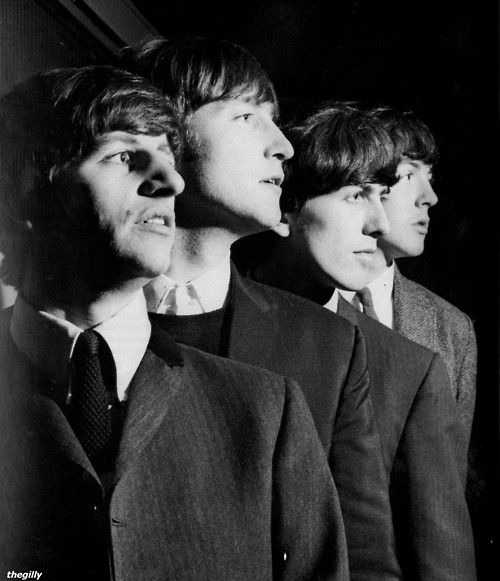
The new #1 song in the U.S. this week in 1963: Dale & Grace — “I’m Leaving It Up To You”
 History Diaries