Iraqi president Abdul Salam Arif, his brother, Brigade General Abdul Rahman Arif and their Iraqi Army supporters suppressed the Ba’ath National Guard Militia, bombed its headquarters, and removed Prime Minister al-Bakr from office and deposed him as Ba’ath Party leader. A new Party Council, was created, which did not include al-Bakr or former Vice-Premier al-Sadi. The Iraqi army today revolted and overthrew the Ba’athist party government of that nation, Baghdad radio said in a broadcast monitored in Beirut. The broadcast said the anti-Ba’athist coup was headed by President Abdul Salam Arif, who heads the new government and simultaneously became chief of staff of the army. The radio announced an immediate curfew and warned that violators of it would be shot on sight.
The coup came only five days after an attempted revolt last Wednesday in which a moderate faction of the Ba’athists beat back a right-wing power grab. Arif himself came on Baghdad radio to announce the coup. “Our military forces have just taken control of the Iraq capital and will deal with any opposition,” he said.
Arif announced that the nation’s national guard, considered pro-Ba’athist, will be liquidated. The guard was earlier reported anxious for the Ba’athist extremist leader, Deputy Premier Ali Saleh al-Sadi, to return here from his Madrid exile. Al-Sadi and four top lieutenants were banished from Iraq last week. The abortive coup followed a few hours later and apparently was led by al-Sadi’s supporters. The military cut off all communications from Baghdad with the outside world and closed all Iraqi newspapers. Arif led the coup last February that toppled the Iraqi dictatorship of Abdel Karim Kassem and put the Ba’athists in power.
King Hassan II opens the first parliament in Morocco.
The mother of Yale Professor Frederick Barghoorn says her son was “treated like a jailbird” while being held incommunicado in a Moscow prison on spy charges. Mrs. Elizabeth Barghoorn, 80, says he lost 10 pounds during 16 days of Russian prison food. As to the spy charges, she says her son’s only “unpardonable sin” in the eyes of the Reds was that he was proficient in Russian and could understand what the people were saying.
U.S. Secretary of Defense Robert S. McNamara tells 1,500 business leaders at an Economic Club dinner in New York City that the most effective surprise attack the Soviets could launch would still leave the United States with the capability to destroy their society. He compares the strategic nuclear forces of the United States and Russia and finds the military capabilities of the United States far in front.
The Red Chinese called Soviet Premier Nikita S. Khrushchev a Bible-reading, psalm-singing servant of the United States and claimed he did not appreciate that Red China sacrificed itself in the Korean War to avert a direct clash between Russia and the United States.
Large numbers of anti-Diệm, and anti-communist Buddhist Hòa Hảo guerrillas streamed out of their jungle strongholds and rallied to the new government after years of fighting the U.S.-backed Vietnamese forces and the Communist Viet Cong.
The United States warned NATO allies that uncontrolled trade with the Soviet bloc is dangerous.
A former U.S. intelligence specialist who once had access to some of the Air Force’s most closely guarded secrets, told Congress of his honeymoon trip to Cuba and his support of the Castro regime.
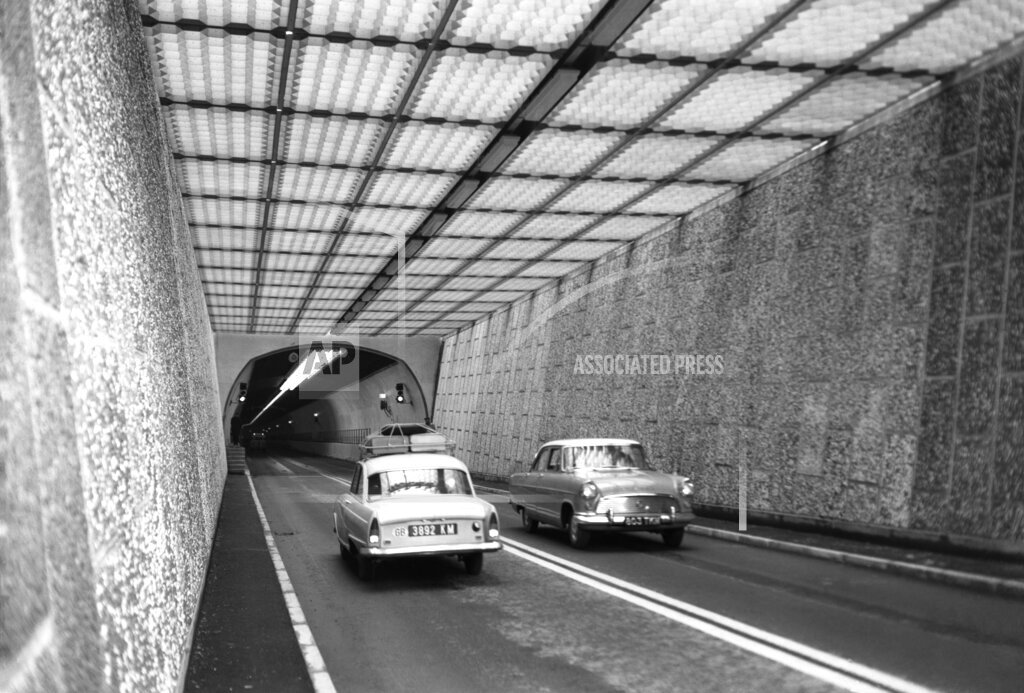
The Dartford Tunnel under the River Thames opened in the United Kingdom, 164 years after the idea had first been proposed in 1799.
Prince Norodom Sihanouk, the ruling monarch of Cambodia, announced that his Southeast Asian nation would sever all military and economic relations with the United States. Sihanouk told a crowd that Cambodian rebels were using American equipment and making incursions into Cambodia from neighboring South Vietnam.
The Argentine government offers to pay indemnification for seizure of American and other foreign oil companies, but it attaches strings that could drastically reduce payments. President Arturo U. Illia’s regime sues in federal court for an order to require the oil firms to return all payments made to them by the state over the last five years and for payment of taxes from which the firms were exempted by contract.
President Kennedy tonight gave definite word that his administration will take no retaliatory action against Argentina for its cancellation of multi-million-dollar oil contracts with private American firms. The President said in an address to newspaper editors and executives from Latin America and this country that “no country can tell another how it must order its economy.” He said the Alliance for Progress aid program for Central and South America, largely financed by the United States, does not dictate to any member nation how it must organize its economic affairs.
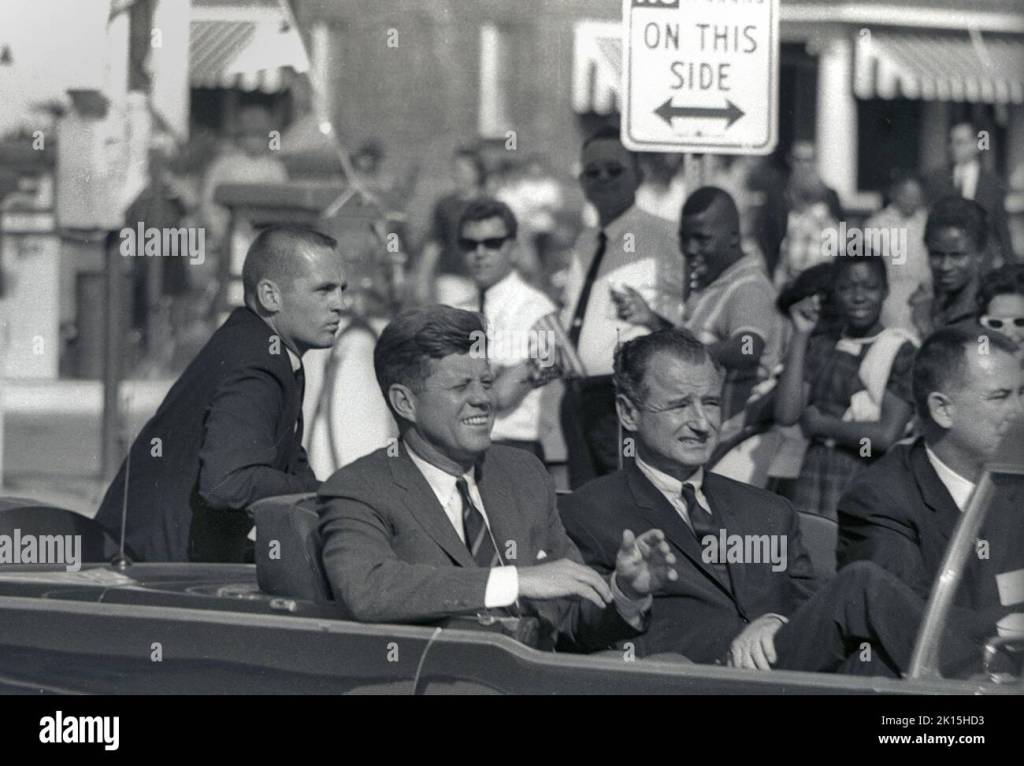
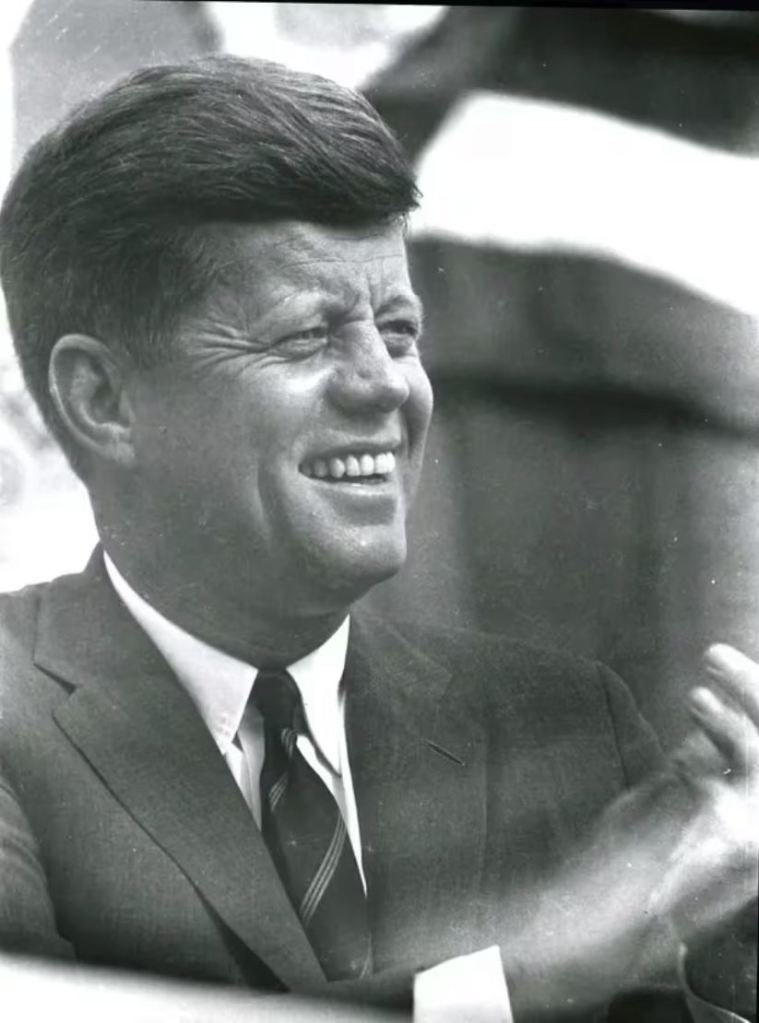
President John F. Kennedy flew from West Palm Beach, Florida to Tampa, Florida. His secret service detail was concerned for the President’s safety because Tampa had a large Cuban community, composed of both pro- and anti-Castro forces. Author Thurston Clarke, in his recent book entitled “JFK’s Last Hundred Days: The Transformation of a Man and the Emergence of a Great President,” writes at page 312:
“[A] right-wing fanatic named Joseph Milteer had been recorded telling a police informant that the best way to kill the president would be “from an office building with a high-powered rifle.” The Secret Service had tracked Milteer to Georgia and placed him under surveillance, but the threat had unsettled [Secret Service Agent Gerald] Blaine enough that he called [Agent Emory] Roberts to recommend that he and [Agent Floyd] Boring station two agents on the steps flanking the trunk of the president’s limousine. This would put them close enough to protect him from spectators dashing toward the car and in a position where they could shield him from the kind of sniper threatened by Milteer.
“Boring seized on his casual encounter with Kennedy on Air Force One to raise the sensitive subject. Taking a deep breath, he said, “Mr. President, we have a very long motorcade, so we’re going to have to stick to a tight time schedule. Two people have made threats against your life and even though we have them in custody you might want to keep your stops during the motorcade to a minimum.”
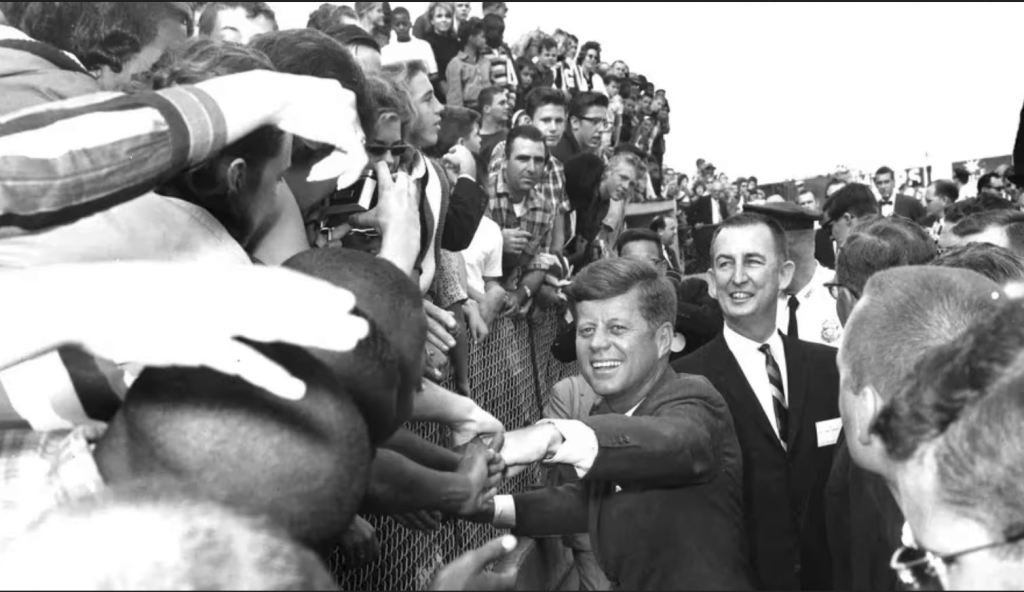
“Removing his hand from Boring’s shoulder, Kennedy said, “Floyd, this is a political trip. If I don’t mingle with the people, I couldn’t get elected dog catcher.” He was down the aisle before Boring could suggest positioning agents on the rear steps.”
Kennedy’s itinerary for the day included a visit to the military’s Strike Command headquarters, lunch at the officer’s club on the base, a speech at Al Lopez Stadium marking the 50th anniversary of the first flight from Tampa to St. Petersburg, and speeches to the Florida Chamber of Commerce and the United Steelworkers. Throughout the trip, the Secret Service was concerned about the number of people coming into contact with the President, while Kennedy thought that the number of agents surrounding him was excessive. The visit went well for the most part, but he did have to field some questions about why he was “pushing civil rights.”
That evening Kennedy spoke at a dinner for the Inter-American Press Association. There he spoke about relations with Cuba. He made overtures inviting Castro to build a relationship with the United States, provided that Cuba detached itself from Moscow and ceased the spread of communism in this hemisphere.
On the flight back, he told Florida Senator George Smathers that he was dreading his upcoming trip to Texas and that he had “a terrible feeling about going.” He commented on the various factions within the Texas Democratic Party, calling them “prima donnas of the biggest order.” He added, “I just wish to hell I didn’t have to go. Can’t you think of some emergency we could have?”
According to Clarke (at page 316), Kennedy talked to his appointments secretary Dave Powers about the possibility of being shot by a high powered rifle:
“He told Powers, “Thank God nobody wanted to kill me today!” He made this kind of comment so often that Powers usually shrugged it off. This time, he added that if anyone tried to kill him with a high-powered rifle outfitted with a telescopic sight, he would do it during a motorcade, when there would be so much noise and commotion that no one would be able to point and say, “it came from that window!””
Four days to Dallas.
In Atlantic City, New Jersey, a fire broke out at the Surfside Hotel, which regularly served as a convalescent home for elderly people after the summer tourist season ended. Twenty-five of the 34 registered hotel guests died in the blaze, and another later died of her injuries. Ten bodies were never recovered; only two of the other 15 could be identified. A former mental patient and convicted arsonist would be arrested on June 20, 1964, and confess that he had poured gasoline into the hotel’s boiler and set it ablaze. However, an Atlantic City grand jury did not find probable cause to return an indictment.
The State Department announces the resignation of two security officials who led the move to fire Otto Otepka, a veteran career officer. The two officials, John F. Reilly and Elmer D. Hill, have been on leave since disclosure of their part in “bugging” Otepka’s office. Senate investigators, who charge that Otepka was ordered dismissed for telling the truth in a Senate hearing, see the resignations as preliminary to a shakeup in the bureau of security and consular affairs. The State Department gives no reason for the resignations.
One of the enduring monuments of Congress, Rep. Carl Vinson (D-Georgia), turned 80 today and said he will retire at the end of his present term. Vinson has served in the House of Representatives longer than any man in history — it will be 50 years on November 14 next year. His term ends January 3, 1965. In the course of a half century here, the smalltown lawyer from Milledgeville, Georgia, became an unquestioned autocrat of all things military, as chairman of the House Armed Services Committee. Over the years some generals and admirals have bowed and scraped before him in almost comical deference while he seemed to make a point of not remembering their names.
Treasury Secretary Douglas Dillon concedes that it may be necessary to ask for a 330-billion-dollar debt ceiling two years from now. Dillon makes his forecast in an appearance before the Senate finance committee, which he asks to recommend approval of a 315-billion-dollar limit through June 29. Dillon says a balanced budget will not be achieved until fiscal 1967 or 1963 if proposed tax reforms are approved and says that if a tax cut is not approved, “I can’t foresee when the budget will be balanced.”
Senator John McClellan (D-Arkansas) and Roswell Gilpatric, deputy secretary of defense, clash over the defense aide’s former connections as an attorney with General Dynamics Corporation, winner of the TFX warplane contract. McClellan, reopening his committee’s probe into the contract decision, presses Gilpatric about $111,000 in legal fees he received from the firm before he joined the government. Gilpatric insists that his service with Dynamics dealt almost exclusively with its merger with the Material Service Corporation of Chicago.
Dr. Charles A. Hufnagel of Georgetown University Medical School reports the development of an artificial heart valve shaped like a flying saucer which he hopes can replace a defective mitral valve caused by rheumatic heart disease. The new plastic valve is described as an improvement on the ball type of artificial valve, also pioneered by Dr. Hufnagel.
The first touch-tone phone was released to the public in Pennsylvania. This eventually signaled the end of the rotary phone, since it was easier to dial.
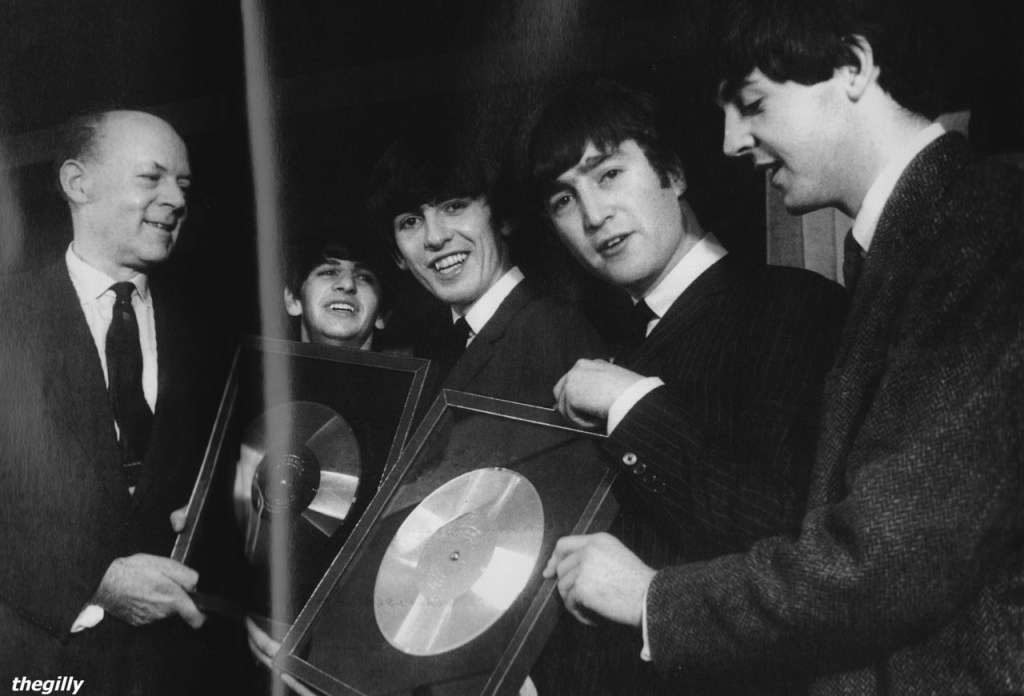
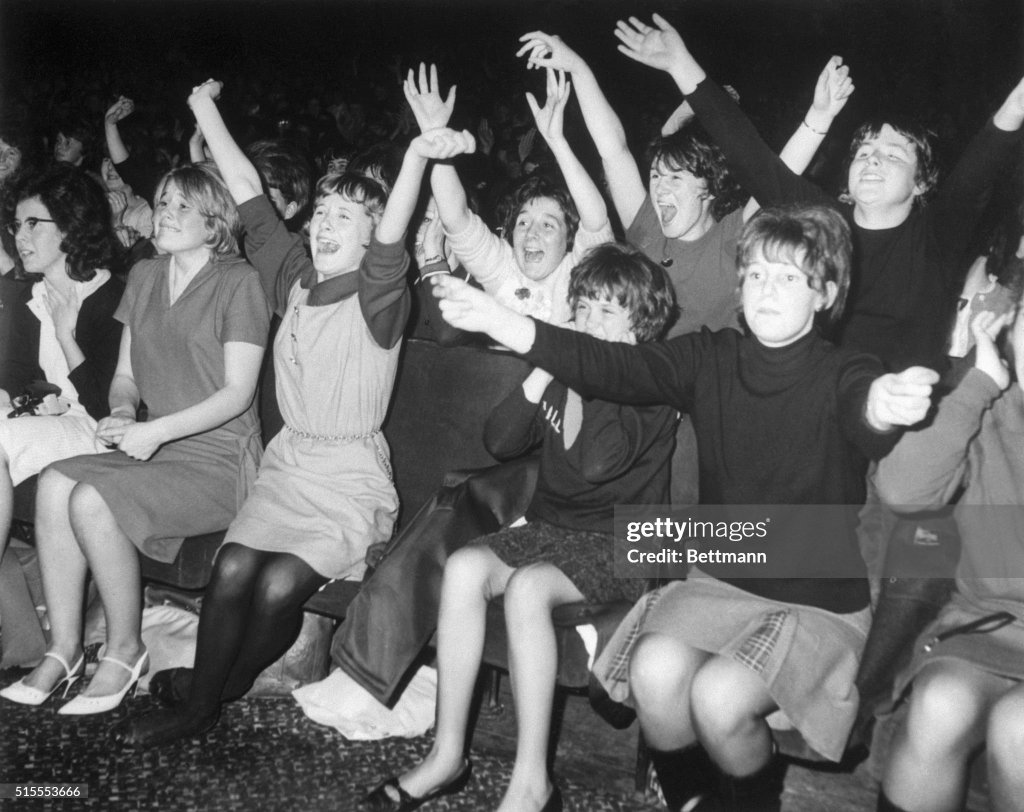
The NBC evening news program “The Huntley–Brinkley Report” featured a four-minute news feature on The Beatles, marking the group’s first appearance on U.S. television.
The Detroit Tigers send outfielder Rocky Colavito, pitcher Bob Anderson, and a reported $50,000 to Kansas City for A’s second baseman Jerry Lumpe and pitchers Dave Wickersham and Ed Rakow.
Dow Jones Industrial Average: 734.85 (-5.15).
Born:
Dante Bichette, MLB outfielder (All-Star, 1994-1996, 1998; California Angels, Milwaukee Brewers, Colorado Rockies, Cincinnati Reds, Boston Red Sox), in West Palm Beach, Florida.
Len Bias, American basketball player (Boston Celtics pick for 1986 draft; died of cocaine abuse before ever playing), in Landover, Maryland (d. 1986).
Todd Bowles, NFL safety (NFL Champions, Super Bowl 22-Redskins, 1987; Washington Redskins, San Francisco 49ers), in Elizabeth, New Jersey.
James Jefferson, NFL defensive back (Seattle Seahawks), in Portsmouth, Virginia.
Four Days to Dallas.
 History Diaries