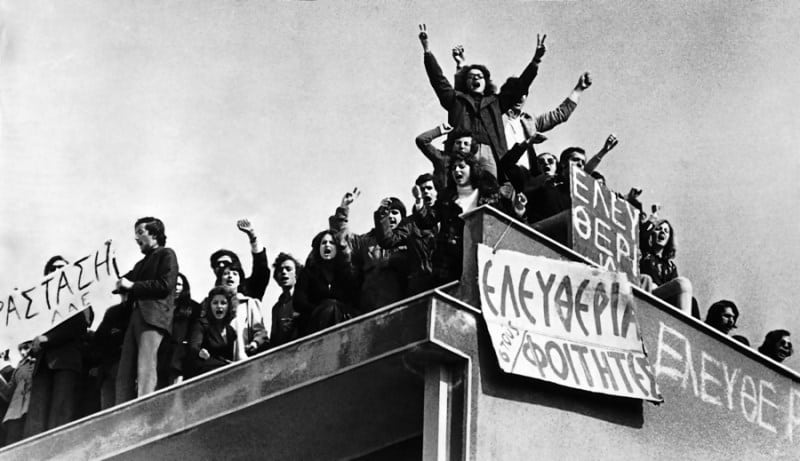
The Athens Polytechnic uprising, which had started on November 14 as a student protest against the military junta that ruled Greece, was brutally suppressed by the Greek Army, with the deaths of 40 protesters and the injury of at least 1,103. President George Papadopoulos of Greece imposed martial law after a night of street clashes in Athens between the police and student and worker demonstrators. The police said that five people were killed during the fighting Friday and that 203 were hospitalized with serious injuries. Those hurt included 35 policemen. Early this morning, army tanks and armored personnel carriers dislodged students and workers barricaded in the Athens Polytechnic University. The demonstrators dispersed, but the police were unable to deal with fresh demonstrations later in the day, and at least 40 tanks and armored vehicles were ordered back into Athens.
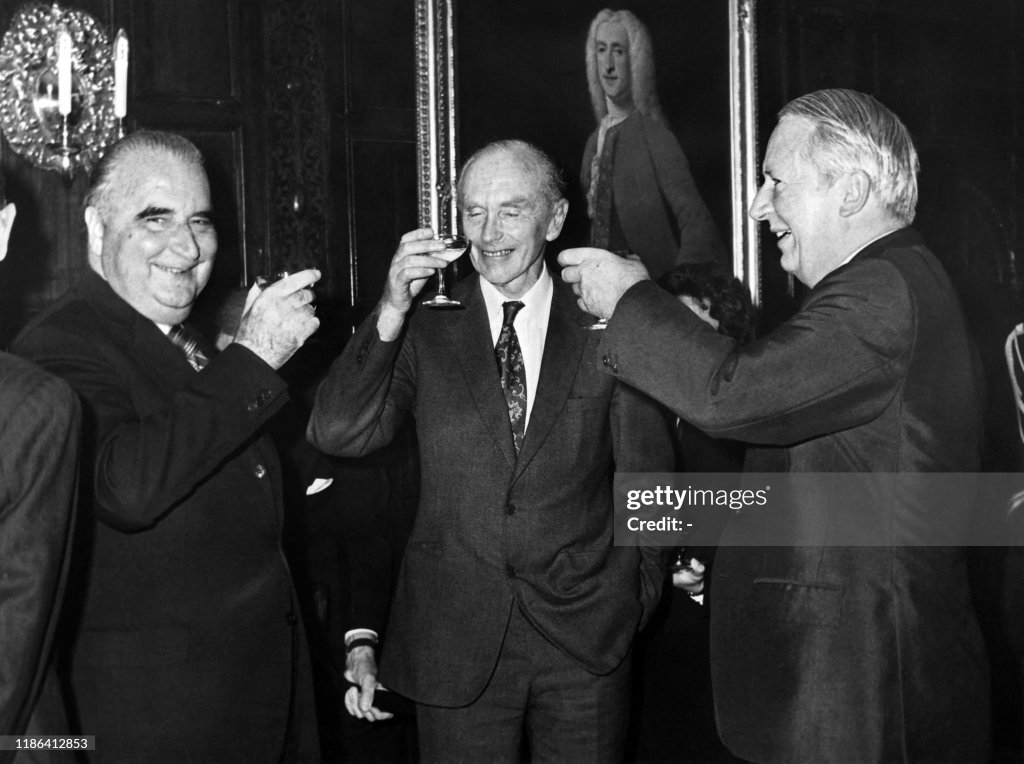
In London, the foreign ministers of France and the United Kingdom signed a treaty for the construction of the proposed tunnel underneath the English Channel. Prime Minister Heath of Britain and President Pompidou of France concluded two days of talks on the future unity of Europe and then toasted the signing of a historic treaty that will bring their countries closer together. The treaty will open the way to the start of construction of a 32-mile tunnel under the English Channel to France.
Seven U.S. military personnel were killed and three were rescued when their plane, which had just taken off from a U.S. 6th Fleet carrier and was headed for Athens, crashed into the sea about three miles off the northwestern coast of Crete. Police at the port of Khania, on Crete, said Greek divers recovered four bodies. The dead were not immediately identified.
Britain warned housewives that food prices — which made their biggest jump in 18 years last month — will continue to rise sharply. The warning came from Agriculture Minister Joseph Godber who said prices of foods connected with wheat and other cereals will continue to rise. Animal products like bacon, eggs and poultry will be worst hit. Last month’s jump was 3.3%, which meant that food had increased 44.8% in price since Prime Minister Edward Heath’s Conservative government came to power in June, 1970.
French grocers, who had been protesting price controls, voted to end a strike that has closed stores across the country for the past week. Two thousand grocers met at the Paris Central Market at Rungis following a meeting between their officials and Agriculture Minister Jacques Chirac to announce the end of the strike. It was also announced that Finance Minister Valery Giscard d’Estaing would meet with the grocers’ leaders this week to discuss price controls, which the grocers claim favor wholesalers.
At least six persons were hurt in a series of bomb attacks against bars owned and frequented by Roman Catholics in Northern Ireland. Police blamed Protestant extremists seeking to prevent any rapprochement between the feuding religious communities. One bomb was tossed from a passing car into Glenn Inn on a street full of shoppers in the Belfast suburb of Glengormley. Another blast hit a pub in the seaside town of Carrickfergus, 14 miles east of Belfast. A faulty fuse kept injuries to a minimum when the main charge of a 200-pound bomb failed to explode in a car parked next to a bar in Belfast’s Durham Street.
The body of Jan Palach, the Czech student who burned himself to death to protest political reprisals after the Russian-led invasion of Czechoslovakia in 1968, has been cremated at his family’s request, according to the newspaper Vecerni Praha. Palach’s body was “removed from Prague Olsany Cemetery at the request of his parents and cremated,” the announcement said. The body was removed from the cemetery October 25.
Jews in four Soviet cities began a two-day hunger strike to protest the recent arrest on “hooligan” charges of a Kiev engineer denied permission to emigrate to Israel, a Jewish source in Moscow said. The source said the engineer, Alexander Feldman, 35, was to go on trial Monday but the proceedings now have been delayed indefinitely. He faces up to five years in prison. The hunger strike was being conducted by at least 17 Jews in Leningrad, Moscow, Tbilisi and Novosibirsk, the source said.
Soviet authorities have issued a veiled warning that they may lift the Soviet citizenship of Andrei D. Sakharov, the dissident atomic Physicist, especially if he tries to go abroad. The 52‐year‐old physicist has received an invitation from Princeton University to spend a year as a visiting scholar, provided arrangements could be made for his family. But he has always said he wanted to return to the Soviet Union. The latest issue of the monthly journal Man and Law contains an article by a specialist in administrative law at the Soviet Ministry of Justice Research‐Institute, which outlines reasons for lifting Soviet citizenship. After stating the general rule that citizenship can be lifted from those who betray state interests or who go abroad and do not return, the author then cites the case of Zhores Medvedev, the dissident Soviet geneticist and publicist, who was deprived of citizenship earlier this year while on a research grant in England.
Two young mountain climbers were killed attempting to scale 10,600-foot Mt. Fitz Roy in southern Argentina. They were Steven Anthony McAndrews of Iowa City and Kevin Ronald Carroll of New Zealand. A companion said they died in a 4,000-foot fall last Monday, apparently after reaching the peak and starting down. He said a helicopter will attempt to recover the bodies. One of the members of the climbing team was James R. Udall, son of U.S. Rep. Morris K. Udall (D-Arizona).
All 27 people on board an Air Vietnam passenger flight were killed when the Douglas C-47 crashed while flying from Saigon to Quảng Ngãi. The aircraft struck the nearly vertical wall of a mountain at an altitude of 1,200 feet (370 m) only while attempting a landing at an airport at Chu Lai.
Trần Thip Phượng, who is 42 years old, has seven children and is pregnant, squatted in the dirt under the straw roof of a house by the side of Route 1, in Tịnh Hòa, South Vietnam, looking out at the rain. “Two disasters in five years,” she said. “Now we have nothing but our bare hands.” Mrs. Phượng, a rice‐farmer’s wife, is one of the 150,000 people forced out of their homes by the typhoon winds and river‐swelling rains that swept South Vietnam’s central and northern coastal provinces last weekend, killing at least 60 people and destroying thousands of acres of rice crops and tons of harvested rice supplies. The first disaster, Mrs. Phượng said, was when her home in this hamlet in Bình Định Province, 260 miles northeast of Saigon, was razed during the fighting of the Tet offensive in 1968, The second came last Sunday at about five o’clock in the afternoon as the wind drove the rain in off the South China Sea against the dark green mountains and down into the streams and rivers that irrigate the rice land.
Travel by Americans to Europe this fall appears to have fallen into its deepest slump in more than a decade. The State Department estimated that visits to Europe during September and October lagged 12 percent behind comparable periods in 1972, and it forecast a 13 percent drop this month. Estimates are based on the number of passports issued by the department. Travel agents attributed the decline principally to cautious spending by many Americans because of inflation and an uncertain economy; higher prices abroad because of dollar devaluation; fears about the Middle East war and higher air fares.
The Skylab 4 astronauts moved into their earth-orbiting space station and found it in good condition for their planned stay of 84 days. They reached the space station, 270 miles above the earth, after an eight-hour journey from the Kennedy Space Center at Cape Canaveral. The crew, however, was reprimanded by Mission Control for withholding apparently vital medical information from the flight controller. One of the astronauts is seriously ill with motion sickness.
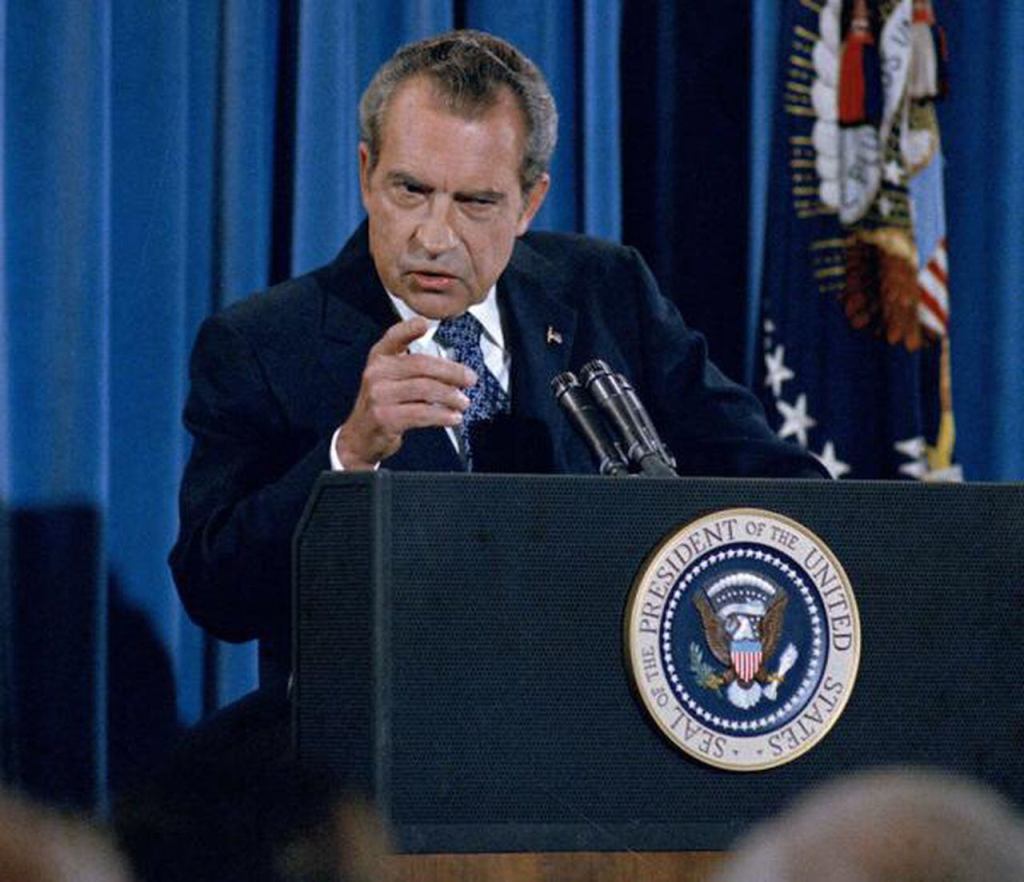
At a press conference in Orlando, Florida, U.S. President Richard Nixon told 400 Associated Press managing editors, “People have got to know whether their President is a crook. Well, I’m not a crook. I’ve earned everything I’ve got.” The statement came in response to a question from reporter Joseph Ungaro of The Providence Journal about a Journal report that he had only paid $792 in income taxes in 1970 and $878 in 1971. President Nixon defended himself against all charges of wrongdoing and attempted to regain the political offensive in a televised one-hour session with 400 members of The Associated Press Managing Editors Association at their convention in Disney World, Florida, He gave detailed answers to more than a dozen questions.
Despite the Watergate scandals, the Nixon administration can still count on considerable support in the Senate for the principal elements of its foreign policy. Interviews with 12 Senators across the political spectrum, supplemented by discussions with key staff aides, found that backing for the administration is directly tied to admiration for Secretary of State Kissinger.
Fulfilling a campaign promise made in 1968, President Nixon set up during his first term a minority capitalism program to provide money and other aid to minority businessmen. Last year, the program was turned into a vehicle by which the President’s re-election effort sought nonwhite support, and today the program’s survival is threatened not only by politicalizing, but by investigations into charges of corruption and mismanagement. A survey by The New York Times found that few minorities were awarded contracts last year without at least an attempted political quid pro quo. Minority businessmen were under intense pressure from the White House and the President’s campaign staff to give support to Mr. Nixon’s re-election effort.
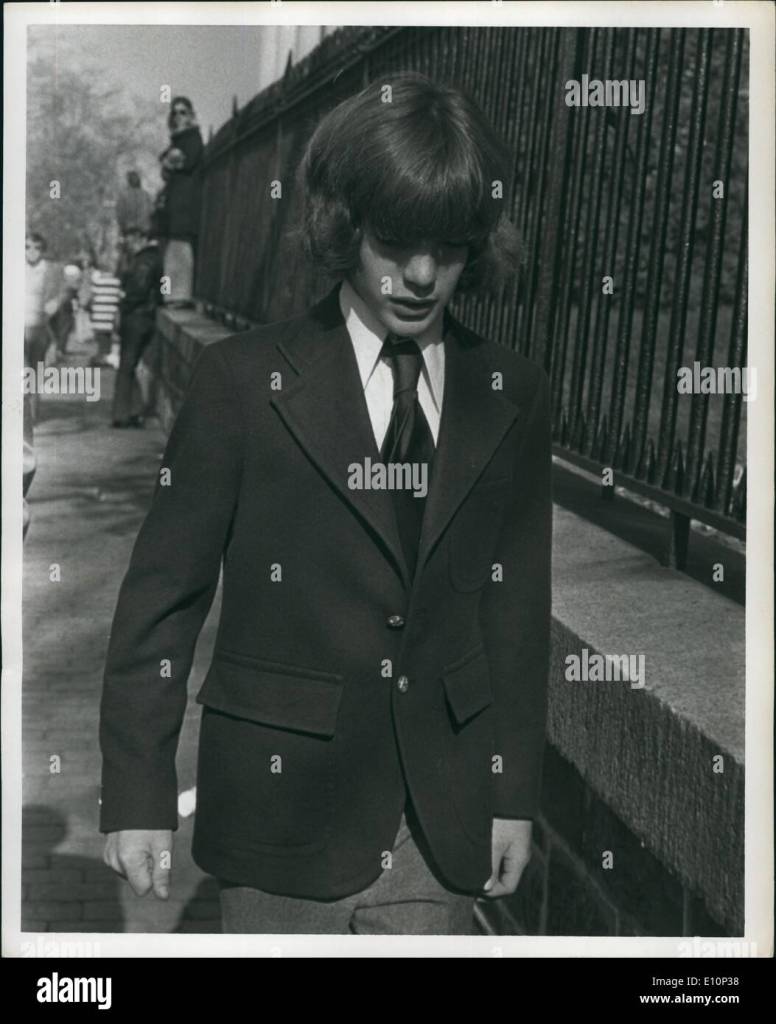
In Washington, D.C., the right leg of 12-year-old Edward M. Kennedy Jr. was amputated above the knee due to a bone tumor. A hospital spokesman said the condition of Edward Moore Kennedy Jr. was “satisfactory.” Four hours after the operation, the hospital said he was “making an uneventful recovery.” The Senator and his wife, Joan, were at Georgetown University Hospital during the operation. The hospital spokesman said young Kennedy was taken into the operating room at about 8:30 A.M. and was taken out at 10 A.M. The surgery, performed by the hospital’s chief of orthopedic surgery, Dr. George Hyatt, took about one hour.
Ousted Watergate special prosecutor Archibald Cox said President Nixon either “fell into a slip of the tongue or was misinformed,” if he said Cox had changed his mind about accepting the proposal to have Senator John C. Stennis (D-Mississippi) handle the White House tapes. Mr. Nixon had been quoted by a senator leaving a White House meeting as saying the reversal was one of the reasons Cox was fired. Cox said, “The written record makes it clear I was opposed to the Stennis proposal” from the beginning.
The American public, by a 5-1 margin, believes that a President should have congressional approval before sending U.S. armed forces into action overseas, a Gallup Poll reports. The survey, taken November 2-5, supports, in principle, new war powers legislation that limits presidential authority to commit troops outside the United States. Although an overwhelming majority favors congressional approval for sending troops into action, 6 in 10 persons do not think Congress should be required to obtain assent of the people by means of a national vote.
President Nixon expressed strong personal distaste tonight for governmental rationing but would not rule out completely the possibility that gasoline would be rationed in the months ahead. Peacetime rationing “would be something that the American people would resent very, very much,” he said, and “our goal is to make it not necessary.” Speaking at a televised question‐and‐answer, meeting with The Associated Press Managing Editors at Disney World, Fla., Mr. Nixon said he would not pledge to the editors or to the viewing public “that rationing may never come. If you have another war in the Mideast, or some other disaster occurs, rationing may come.”
On the other hand, the President went on, if the voluntary energy conservation and 50‐mile‐an‐hour speed limits he has proposed take effect, then, he indicated, perhaps rationing can be avoided. Mr. Nixon did not actually finish that thought in so many words. Rather, he digressed into noting that he had ordered the speed of Air Force One, his official aircraft, reduced to save fuel and that he had dispensed with the so‐called backup plane. Customarily, this second jet transport follows the President to be available in case Air Force One experiences mechanical difficulties and cannot be flown. This thought led the President to make the following quip: “We didn’t have the backup plane. If this one goes down, it goes down — and they don’t have to impeach.”
President Nixon signed legislation today authorizing the spending of $185‐million over three years for planning, development and research in emergency medical services. The bill, called the 1973 Emergency Medical Services Systems Act, closely resembles a measure passed by Congress and vetoed by Mr. Nixon on August 1. The major difference is that the program he approved had been stripped of a provision that would have required the Department of Health, Education and Welfare to continue operating eight Public Health Service hospitals. The hospitals, which primarily treat merchant seamen and their dependents, are located in New Orleans, Baltimore, Staten Island, New York, San Francisco, Seattle, Boston, and Galveston, Texas.
Ten years ago, he stood in the doorway of a University of Alabama building to prevent blacks from enrolling, but today Alabama Governor George C. Wallace had a very different role to play on campus. During halftime of the Miami-Alabama football game he crowned Terri Points, 21, the school’s first black homecoming queen. From his wheelchair, Wallace, wearing Alabama red colors, placed the crown on the queen’s head, shook her hand twice and then was wheeled off the field beside Miss Points and her court of five white coeds as the crowd applauded. Miss Points, a senior majoring in business administration, was chosen queen by vote of the student body.
The Miami Herald reported that thousands of dollars in secret contributions from Federal Housing Administration contractors in Florida had been traced to a safe in the Washington office of Senator Edward J. Gurney (R-Florida). The newspaper said that the money was from kickbacks collected by Larry E. Williams — whose relationship with Gurney is a subject of conflicting assertions — and passed on to Jim Groot when Groot was administrative assistant to Gurney. Federal agents reportedly said that Groot put the money into the safe, in Gurney’s inner office. The newspaper said that Gurney had said he would have no comment until later.
The madam of a brothel on federal land in Esmeralda County, Nevada, was ordered to move her Cottontail Ranch in 10 days. Beverly Harrel, whose brothel is south of Goldfield, Nevada, had sought a preliminary injunction to block her eviction but lost. Miss Harrell had leased the land for her operation from the Bureau of Land Management without difficulty. However, after it was publicized that the house was on federal property, the government moved to evict her.
British doctors have reported the discovery of a test that detects severe, paralyzing brain and spinal cord birth defects, early in pregnancy from a few drops of the mother’s blood. A maternal blood test is an unusual aid to diagnosing birth defects. Doctors can diagnose many conditions before birth by testing fluid from the womb. Also, they can detect parents who as carriers of genetic diseases have a high risk of passing the disorder on to their children. But there are few maternal blood tests that can help diagnose a condition in the fetus during pregnancy. Cautiously optimistic American researchers eager to confirm the British finding said they had run into a snag — a chemical necessary to do the test is no longer sold in this country, and those interested must prepare their own supply.
Teri Garr plays new nurse, Lieutenant Suzanne Marquetten, on “The Sniper” episode of TV series MAS*H.
Born:
Alexei Urmanov, Russian figure skater (Olympic gold medalist, men’s singles, 1994), in Leningrad (now Saint Petersburg), Russian SFSR, Soviet Union.
Eli Marrero, Cuban-American MLB catcher, outfielder, and first baseman (St. Louis Cardinals, Atlanta Braves, Kansas City Royals, Baltimore Orioles, Colorado Rockies, New York Mets), in Havana, Cuba.
Mickey Lopez, MLB pinch hitter, designated hitter and second baseman (Seattle Mariners), in Miami, Florida.
Scott Rehberg, NFL guard and tackle (New England Patriots, Cleveland Browns, Cincinnati Bengals), in Kalamazoo, Michigan.
Simone Edwards, Jamaican WNBA center (WNBA Champions-Storm, 2004; Seattle Storm), in Kingston, Jamaica.
Hamed Behdad, Iranian film actor; in Mashhad, Iran.
Died:
Louise Koster, 84, Luxembourg classical music composer
Rudolf Bredow, 68, German painter who received posthumous fame in the 1990s
Richard Nixon – “I’m not a crook”


 History Diaries