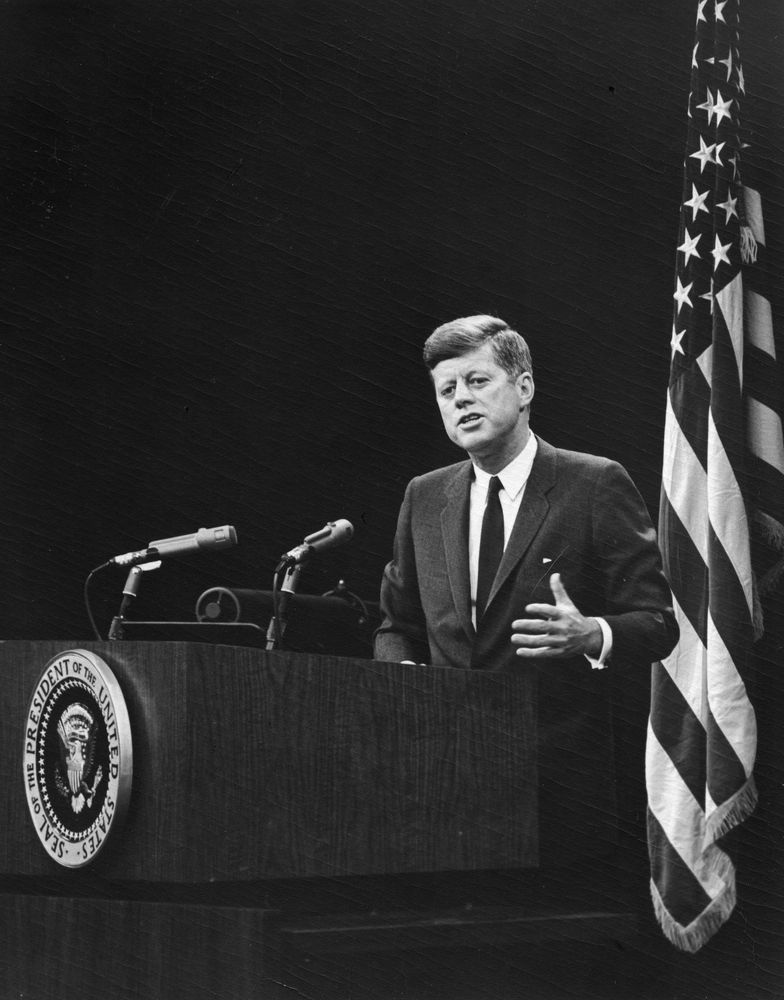
Photograph: President John F. Kennedy delivers remarks during a press conference in the State Department Auditorium, Washington, D.C., 11:00 AM, 14 November 1963.
This is President Kennedy’s last press conference.
Eight days to Dallas.
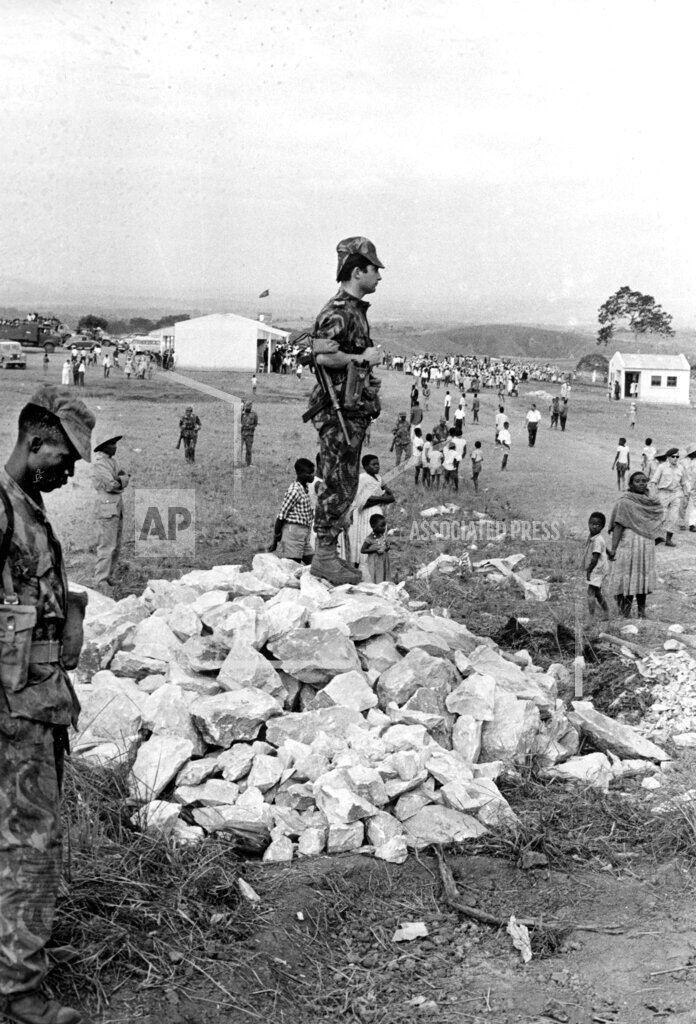
A powerful Viet Cong terrorist bomb exploded in an open air café along Saigon’s crowded bar alley tonight, critically injuring two United States servicemen. The communist guerrillas have vowed to intensify bomb attacks on American military personnel, and the bombing obviously was part of the campaign. A passer-by presumed to be a Viet Cong terrorist hurled the bomb through a window. It wrecked the Imperial Café on Catinat Street (today Đồng Khởi Street), Saigon’s main entertainment district.
The injured Americans were carried to the sidewalk and given first aid for head wounds. Two waiters also were injured. The soldiers were not immediately identified. One of them was believed to be a marine guard at the American embassy. The Imperial Café was one of the few establishments along the street unprotected by anti-grenade wire grills. It is on a corner with both sides exposed to the street. Since November 1, the day of the military coup, the terrorist campaign within the capital has injured 25 Vietnamese. Several power plants have been blown up. Bombs and grenades explode almost daily.
Officials learned from captured Viet Cong agents that the Communists were planning an increased campaign of violence against the American military mission in the country. Several days ago, a bomb plot against American military advisers in the city of Mỹ Tho, 40 miles to the southwest, was discovered in time. In the fighting itself, the Communists continued their attacks on South Vietnam’s strategic villages, but some slackening of activity from last week was reported by an American military spokesman. Three Americans were injured and evacuated to Saigon when their helicopter hit a tree while making a landing approach in Bình Định province yesterday.
For the sixth time, the United States Embassy in Moscow demands the immediate release of Professor Frederick C. Barghoorn of Yale University. He is being held incommunicado by Russian authorities on spy charges though President Kennedy himself says he is innocent. John Steinbeck, Nobel prize winning author, and Edward Albee, playwright, both of whom are in Moscow on a cultural exchange program, join in denouncing the Soviet action. Steinbeck brands it irresponsible and “too damned dangerous.”
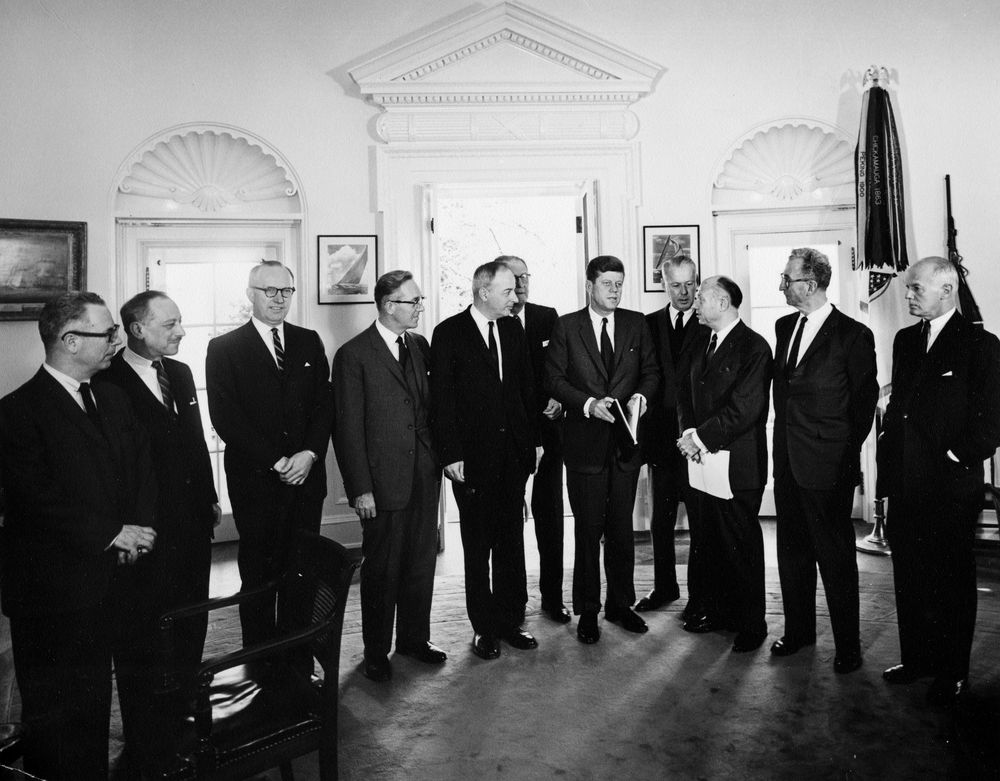
President Kennedy today expressed anger at the arrest of a Yale professor in Moscow on spy charges and said that the incident could wreck cultural relations with the Soviet Union. Shortly before the President discussed the case of Professor Frederick C. Barghoorn at a press conference, the United States pulled out of a Moscow conference on cultural relations, scheduled to start next Tuesday. The conference was to have negotiated a new United States-Soviet agreement on cultural, scientific and educational exchanges. The current agreement will expire December 31.
A state department spokesman said the United States had postponed its participation “to a more suitable date” — obviously a date after the hoped-for release of Barghoorn. But the President said it would not help Barghoorn to make the professor’s release a condition for resuming the negotiations. “I just say there is no sense in having a program if a man who is innocent of any intelligence mission… is subjected to arrest and without means of defense,” the President said. He described the political scientist as a “distinguished professor of Soviet affairs” who had been instrumental in arranging cultural exchanges between the two countries.
“We are concerned not only for his personal safety,” the President said, “but because this incident, I think, can have a most serious effect upon what we understood the Soviet government’s strong hope was, and certainly our hope, that we would find a widening of cultural intellectual exchanges.” The President said American Ambassador Foy D. Kohler and the American embassy in Moscow had lodged six protests with Russia. The United States, the President said, is concerned by the fact that American officials were unaware for several days that Barghoorn had been arrested.
North Korean negotiators agree to meet with United Nations command officials angered by a communist ambush of eight unarmed American and South Korean soldiers in the Demilitarized Zone. In the ambush, a South Korean army captain is presumed killed. An American enlisted man was shot in the thigh but escaped with six others.
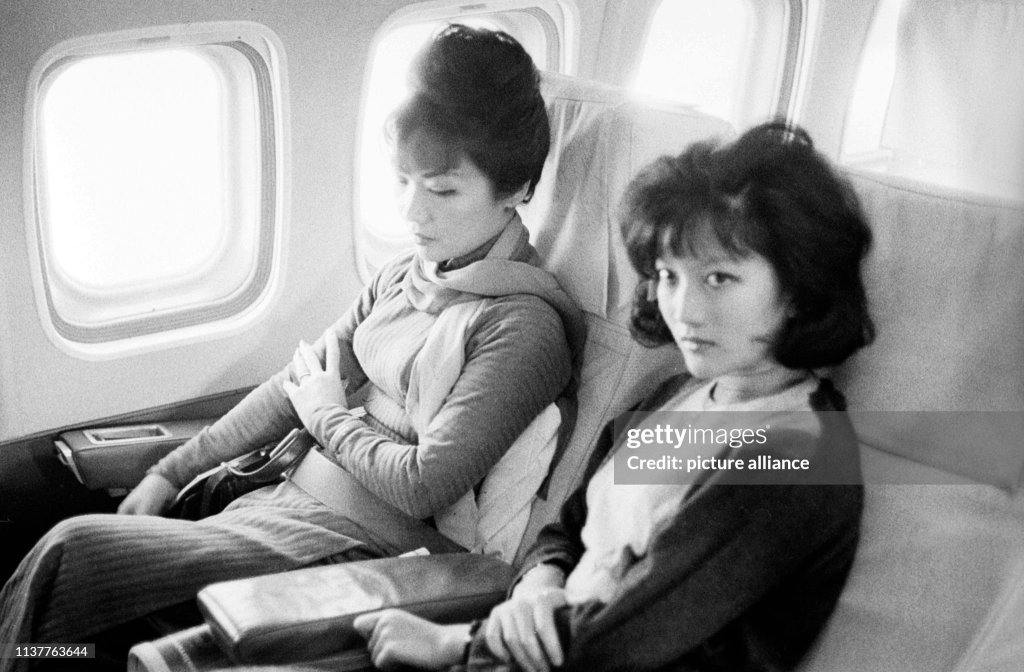
Madame Ngô Đình Nhu, former strong woman of South Vietnam, arrives in Rome for a reunion with her three younger children. The children are not at the airport to meet their mother. Instead, they are reunited in a convent after Madame Nhu dodges newsmen at the airport and a nearby villa.
The Pentagon announces readjustment of air squadrons based in France. It is learned that three squadrons of a troop carrier wing, based at Evreux, France, will be transferred to Lockbourne air force base in Ohio. The readjustment will take place by next summer. Three tactical squadrons will be left in France on a rotational basis. Approximately 5,200 servicemen and families will be involved in the shift.
Heavy rains struck northern Haiti and eastern Cuba. In Haiti, flash flooding and landslides at Grande-Rivière-du-Nord killed at least 500 people on the first and second days of the storm. The nation’s public health department made its estimate based on the number of bodies that had been recovered a week later.
President John F. Kennedy held his last White House Press Conference. The news hadn’t been that good for him lately. Congress had cut his budgets for foreign aid, and the Russians had arrested Yale Professor Frederick Barghoorn on bogus espionage charges, but the subject that Kennedy was asked most about was Vietnam. In his recent book entitled “JFK’s Last Hundred Days: The Transformation of a Man and the Emergence of a Great President,” author Thurston Clarke writes, at page 299:
Asked about the purpose of the conference on Vietnam that his advisers were attending in Honolulu the next week, he offered a laundry list of goals, including “assess the situation”, decide “what our aid policy should be,” and determine “how we can bring Americans out of there.”
“Now that is our objective,” he stressed. “To bring Americans home, permit the South Vietnamese maintain themselves as a free and independent country.” After asking, “Are we going to give up in South Vietnam?” he answered, “The most important program, of course, is our national security, but I don’t want the United States to have to put troops there.”
Later that day he called a family friend to help select a fur coat as a Christmas present for the first lady, before boarding a helicopter that took him to a motorcade which in turn transported him to Manhattan where he could attend a party at the home of his sister and brother-in-law Jean and Stephen Smith. At the party he spoke with Adlai Stevenson, who had recently been accosted by an angry mob in Dallas. According to Clarke, at page 301, Stevenson said to Kennedy (about Kennedy’s forthcoming trip to Dallas), “Why do you go? Your own people are saying you should not?” Clarke writes that Kennedy “stared back wordlessly and shrugged.”
President Kennedy today evidenced his dissatisfaction with the way the Democrat-dominated Congress has been cutting his foreign aid program and delaying action on tax reduction and civil rights legislation. He told a press conference the attack on the foreign aid bill on Capitol Hill is the worst since the launching of the Marshall plan 16 years ago. He asserted that House and Senate cuts in foreign aid authorizations for the current fiscal year are denying him an essential tool in the conduct of United States foreign policy.
The chief executive said Congress should enact his bogged down 11-billion-dollar tax reduction and revision bill to prevent a slackening in the pace of the national economy. He said that further delay in passage of the tax bill and civil rights legislation would be “unfortunate.”
The Senate neared agreement tonight on a ceiling of $3,702,365,000 on United States foreign aid spending between July 1, 1963 and June 30, 1964. The Senate ignored President Kennedy’s angry morning press conference blast that it was “severely limiting” his ability to deal with international crises and voted another 20-million-dollar aid cut.
Final passage of the bill was postponed at least until tomorrow after the Senate got into a wrangle over wheat sales to Russia and other iron curtain countries. The dispute was over an amendment which would bar the Export-Import bank from guaranteeing the credit of New York banks handling Russian and other communist bloc countries’ grain purchases. Senator Wayne Morse (D-Oregon), who offered the amendment for today’s aid cut, told the Senate afterward that “there was more wrath than logic” in the President’s press conference statements on aid.
Senator Barry Goldwater said he would not abolish TVA services but would put the production of steam power and fertilizer in state or private hands.
President Kennedy predicted that an expanded medical care plan for the aged, with compulsory payroll deductions, will become law during 1964.
Governor George Romney’s plan to reform Michigan’s tax and fiscal structure is dead, a victim of the state’s increasing prosperity. The Michigan House, considering an income tax bill, is given an amendment which would require that the reforms be carried out before an income tax could become effective, and the House resoundingly rejects the idea.
The controller general, Joseph Campbell, notifies the United States Information agency that it has no legal right to enter into a contract with a Hollywood company to show its film of Mrs. Jacqueline Kennedy’s 1962 trip to India and Pakistan to American theater audiences.
A University of Michigan study of life in a small town — Tecumseh, Michigan — indicates it may not be as relaxing as many would have you believe. Report of the survey shows remarkably high incidence of heart ailments, ulcers, diabetes, and high blood pressure.
A secretary of T. Eugene Thompson says the Minneapolis criminal lawyer planned to appeal to “underworld connections” to try to find the killer of his wife, with whose murder he is charged. Thompson is linked with Norman Mastrian, 39, a former boxer, alleged middleman in a plot to do away with Thompson’s wife, Carol. The two men and Dick W. C. Anderson are all charged with first degree murder of Thompson’s wife, who was stabbed and bludgeoned on March 6.
Automation is rapidly becoming a “curse” to the United States, AFL- CIO President George Meany told the union convention, in demanding an immediate 35-hour work week or less to avert a “national catastrophe.”
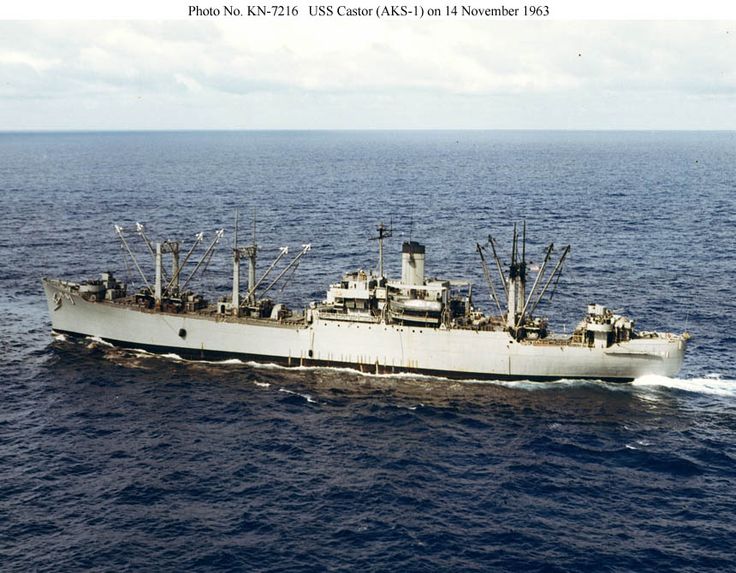
A Norwegian freighter and an American tanker collided off the Massachusetts coast, injuring five of the crewmen. The resulting fire took six hours to control, and the two vessels remained locked together.
The season’s coldest weather so far sent freezing temperatures as far south as Florida’s citrus belt. Snow blocked roads and closed schools in parts of Ohio.
Dow Jones Industrial Average: 747.04 (-4.07).
Born:
Mike Prior, NFL safety (NFL Champions, Super Bowl 31-Packers, 1996; Tampa Bay Buccaneers, Indianapolis Colts, Green Bay Packers), in Chicago Heights, Illinois.
JFK Press Conference, November 14, 1963 — SUBJECT: Vietnam (Excerpt)
1:32
 History Diaries