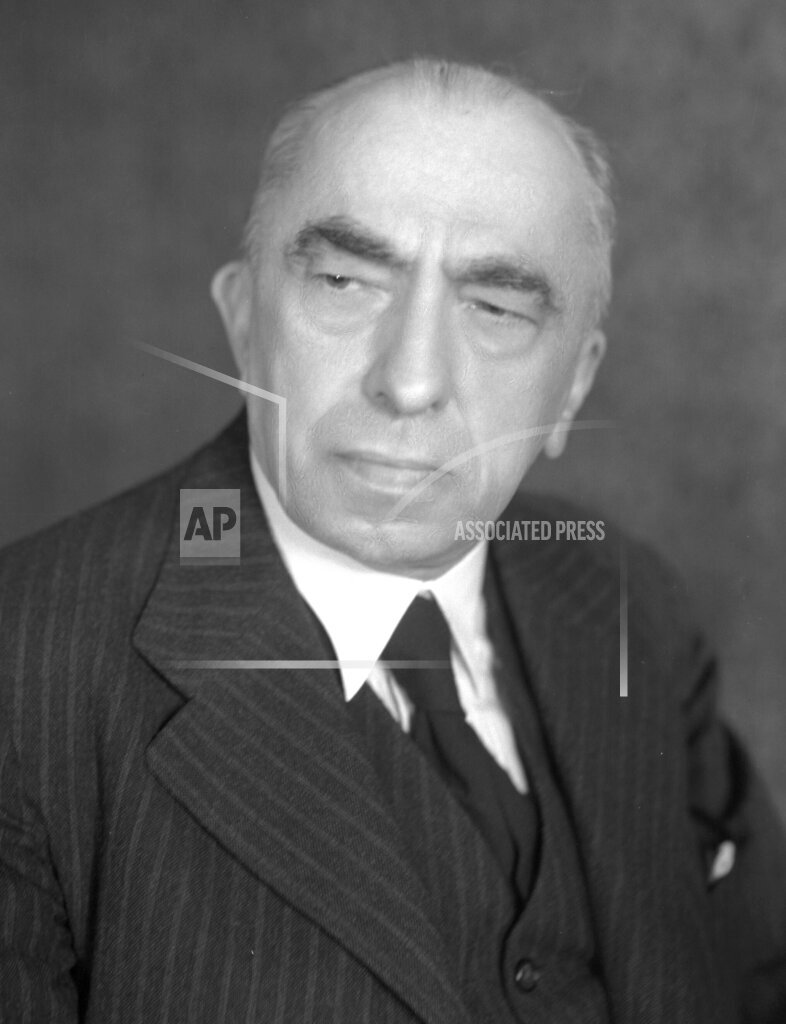
Photograph: President of Czechoslovakia Emil Hácha on November 13, 1938 in Prague, Czechoslovakia. Hácha was President of Czechoslovakia from November 30, 1938 till March 14, 1939 and President of The Protectorate of Bohemia and Moravia from March 15, 1939 till May 9, 1945, mostly as Hitler’s puppet. On 9 May 1945, Prague was captured by the Red Army during the Prague Offensive. Hácha was brutally beaten and arrested by NKVD agents on 13 May and transferred immediately to Pankrác Prison. He died in prison on 27 June 1945 under mysterious circumstances. After his death, he was buried at first in an unmarked grave at the Vinohrady Cemetery (though now there is a marker present on his grave).
Over the next week, politicians and civic and religious leaders in Britain, the United States, and other countries express disgust with Germany’s recent actions toward Jews.
Third Reich extremism accelerates. To help pay the billion-mark fine, assessments of up to 150,000 marks are made on wealthy Jews, which must be paid tomorrow. All businesses will be Aryanized. Salzburg announces it has cleared out all Jews.
Anti-Catholic feelings flared again today when rowdies whistled and jeered as 5,000 worshipers intoned a hymn in St. Mary’s Square in Munich. The disturbers then knocked down lighted candles and trampled floral decorations arranged for the religious festival. A few minutes after the disturbance started a flying squad of police cleared the square, which by then was completely occupied by anti-Catholics. While police watched, a youth climbed the pedestal of the historic column “Mariensaeule,” erected in the square in honor of the Virgin Mary, and tore down the remaining decorations.
Indignant shouts went up from onlookers but police did not interfere and departed after he had finished his job. Catholics had assembled in the square for the tercentenary celebration of erection of the column. The first part of the observance, a special service at St. Peter’s cathedral, was without incident. When the churchgoers joined the crowd in the square the disturbance followed. Cardinal Michael von Faulhaber did not officiate at the service, but it was understood he was avoiding public appearances in view of yesterday’s window smashing at his palace when an excited crowd threw stones. The attack followed an address by Adolf Wagner, Bavarian Nazi leader, who denounced “Roman Catholic allies of Jews.” The cardinal last Sunday urged his congregation to uphold personal rights which he charged Nazis with violating.
Maurice Bavaud was caught stowing away on a train in Augsburg. Later when interrogated by the Gestapo he admitted his plan to assassinate Hitler.
The Netherlands doubles its border guards as German Jews congregate and beg for entry.
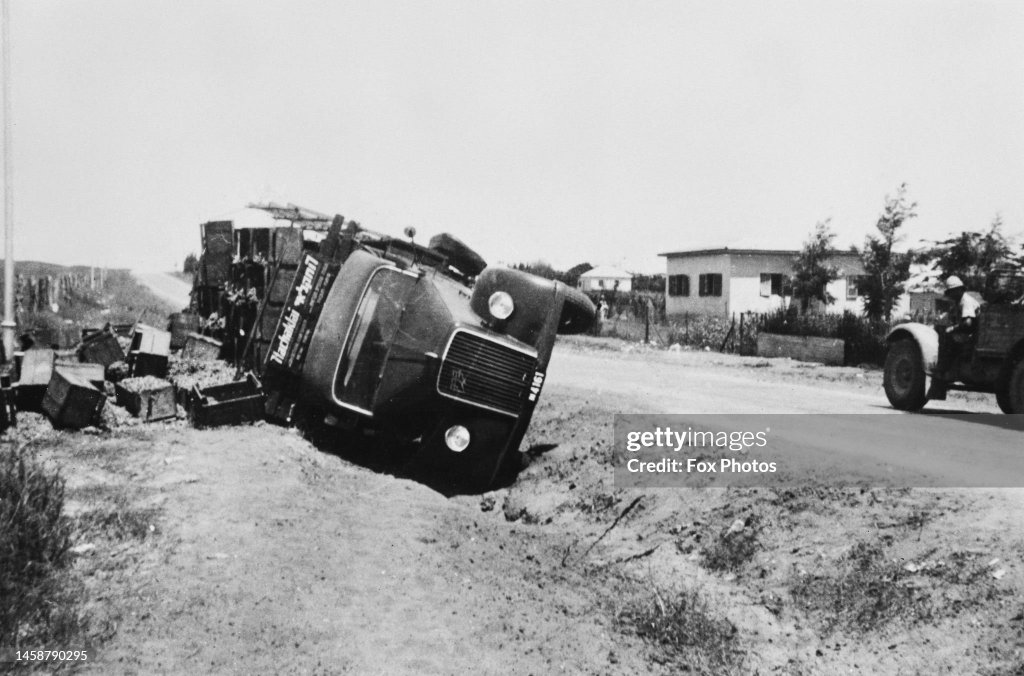
British pilots and infantry free Jericho in Palestine from the Arab terrorists who have held it several days. During their “occupation,” police stations, post offices, and other government buildings were burned.
Prominent New Dealers were named today by Chairman Martin Dies (D-Texas), of the committee investigating un-American activities, as “purveyors of class hatred” in the United States. Dies said this charge was based upon documentary evidence gathered by his committee. Two members of President Roosevelt’s cabinet, Secretary of the Interior Harold L. Ickes and Secretary of Labor Frances Perkins, headed a list which Dies made public. Others named were Harry L. Hopkins, head of the Works Progress administration; Paul Sifton, assistant to Wage Administrator Elmer F. Andrews, and David Saposs, economist of the National Labor Relations board.
Dies plans to issue such lists at regular intervals as his committee continues its inquiry, he said. His purpose, he said, is to awaken the nation to the fact that a regular campaign to foster class hatreds is being conducted in this country. Such tactics pursued for the last fifteen years in Europe have plunged the continent into a morass of hatreds of every kind, he declared, ending with racial and religious hatreds which have caused the persecution of Jews, Catholics, and Protestants. Included on the list of “purveyors of hatred” with the New Dealers were John L. Lewis, head of the CIO; Earl Browder, leader of the Communist Party of the United States; Clarence Hathaway, editor of the Daily Worker, communist party organ, and James Ford, Black communist. Purveyors of racial and religious prejudice already are busy in the United States, Dies said. He is compiling another list of such persons, based upon testimony before his committee.
Former President Herbert Hoover issued a public statement today expressing his indignation at the treatment of Jews in Germany. The statement, prepared at the request of the Federal Council of Churches, was addressed to Samuel McCrae Tavert, general secretary of the federation, New York City.
“I am glad to again evidence my own indignation and to join in an expression of public protest at the treatment of the Jews in Germany,” said the statement. “It is not the German people at large who are to be blamed for this action. The blame is squarely up to the political agencies in power. It is still my belief that the German people, if they could express themselves, would not approve these acts against the Jews. But as they cannot so express themselves, it is the duty of men everywhere to express our indignation not alone at the suffering these men are imposing on an innocent people but at the blow they are striking at civilization itself.”
The National Labor Relations Board reaffirms its April decision that Inland Steel must bargain collectively with its employees and put its agreement in writing. The decision stems from a strike in summer 1937.
Mother Frances Xavier Cabrini is the first American citizen beatified by the Roman Catholic Church.
Anti-Semitism in the cities of Colombia is fueled by recent immigration. The government prepares a bill to bar Jews and other minorities from certain industries, and to halt issuance of visas to Jews.
Chinese forces claim to recapture several cities near Canton, including Tsungfa. Chinese merchants refuse to return to Canton, delaying Japanese plans to organize the city.
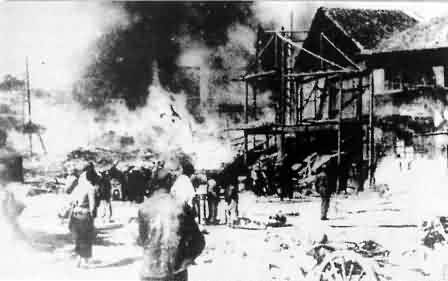
The Changsha fire began in Changsha, China. The fire was deliberately set by Chinese soldiers to keep the city’s wealth from the Japanese. Failures in communications in the city of Changsha, Hunan Province, China led to the commencement of a scorched earth operation which was only supposed to take effect when the city was about to fall into Japanese hands. Fires were started at pre-arranged locations around the city, starting the Wenxi Fire that would burn for five days, killing 3,000 people and destroying a large number of buildings. At around 2 o’clock in the morning of November 13, 1938, there was a fire in a military hospital just outside the South Gate (to this day, it remains a mystery whether the fire was a signal or an accident). The arson team took it as a signal and started to set the fire at 2 o’clock in the morning. The burning lasted for five days, also destroying several 2,500-year-old historical antiques. City residents tried their best to escape, resulting in a severe boat accident at a river ford on the Xiang River.
More than 30,000 people lost their lives during the fire. Over 90%, or 56,000, of the city’s buildings were burned. The fire also disabled commercial trading, academic institutions and government organizations throughout the city. The fire cost a total economic loss of $1 billion, which accounted for 43% of the total output of the city. Government institutions that were destroyed include the provincial government headquarters, buildings housing the bureaus of civil affairs, construction, police, army mobilizations, security, telegraph, telephone, post as well as the courts, Kuomintang branches, chamber of commerce, central news agency, central radio station and several newspaper offices. More than 31 schools, including Hunan University, were also burned down. Banks destroyed include the Bank of Hunan, Bank of Shanghai, Jiaotong Bank and Bank of China. More than 40 factories were burned. The one that suffered the most was the First Textiles Factory of Hunan. The damage to this factory included $270,000 loss due to burned workshops; $960,000 to raw materials; $600,000 to machinery. Of the city’s 190 rice mills and storage buildings, only 12 survived the fire. More than $2 million, or about 80% of the total, were lost in the silk industry. Forty Hunan embroidery factories were completely destroyed. Except for the Hsiangya Hospital, every hospital in Changsha was burned to ground.
Born:
Jean Seberg, actress, in Marshalltown, Iowa (d. 1979).
Warren Bernhardt, American pianist in jazz, pop and classical pianist (L’Image; Steps Ahead; Steely Dan, 1993-94) and composer, in Wausau, Wisconsin (d. 2022).
Wayne Hillman, Canadian NHL defenseman (NHL Champions, Stanley Cup-Chicago, 1961; Chicago Black Hawks, New York Rangers, Minnesota North Stars, Philadelphia Flyers, WHA: Cleveland Crusaders), in Kirkland Lake, Ontario, Canada (d. 1990).
Julio Canani, Peruvian thoroughbred horse racing trainer (Breeders’ Cup Mile 1999, 2001; Juvenile Fillies 2004), born in Oxampampa, Peru (d. 2021).
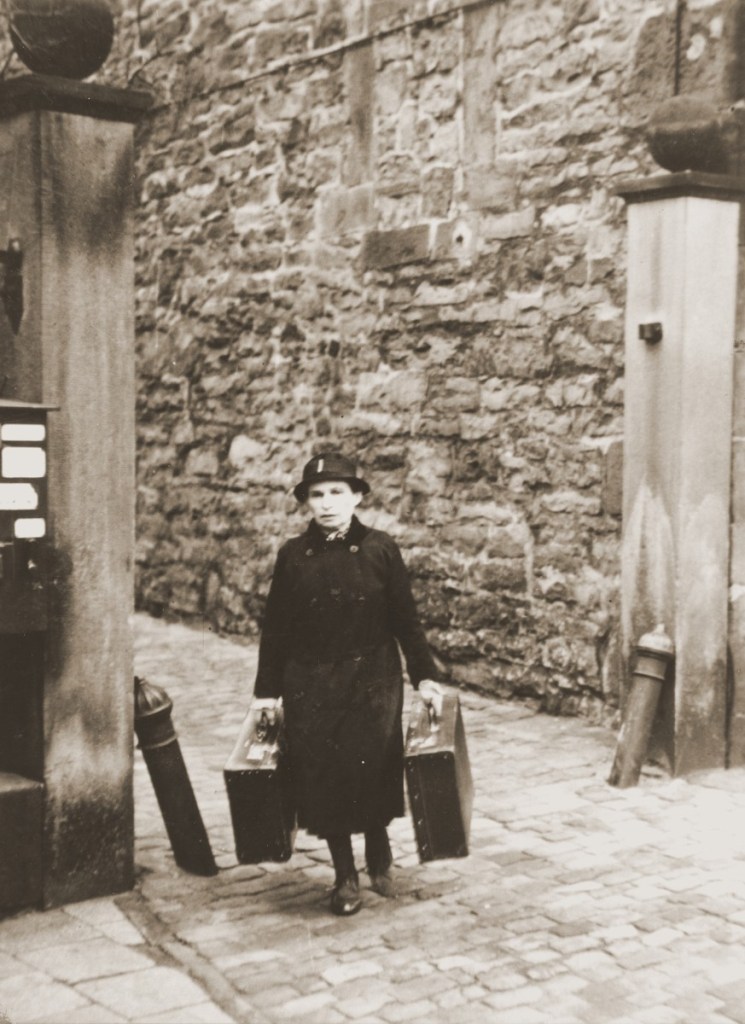
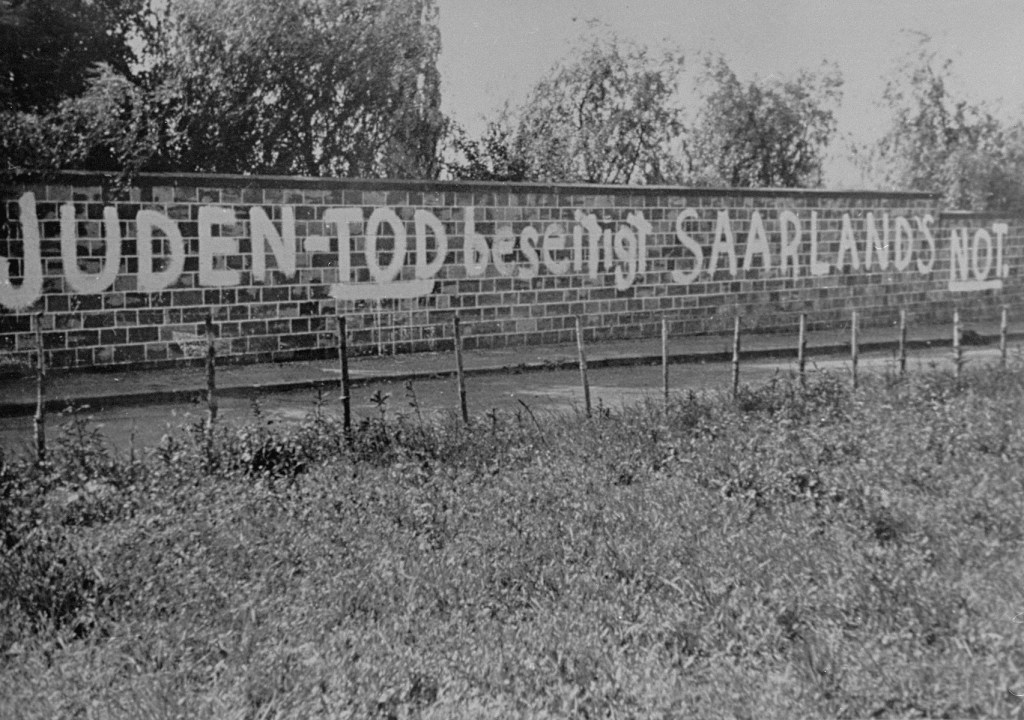
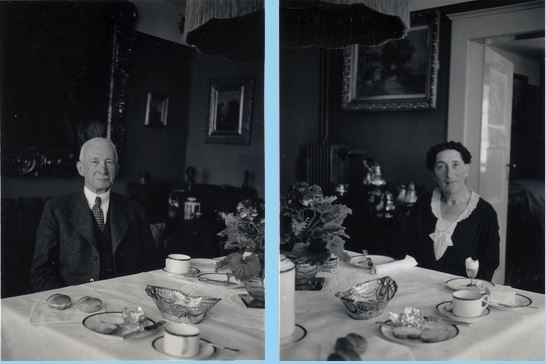
On November 10, 1938, a National Socialist mob marches through the streets of Garmisch-Partenkirchen. The Jewish inhabitants of the town are chased from their homes, insulted and spat upon. The Nazi district leader, Johann Hausböck, forces them to sign a lapel that they “leave Garmisch-Partenkirchen on the next available train and never return.” They must agree to sell their property, all “land, buildings and goods immediately from (their) new place of residence to an Aryan.” An SA man accompanies them to the train station. Michael and Emmy Schnebel were allowed to pack one more suitcase. Their apartment is sealed. An employee of the residents’ registration office later notes on their registration card: “Since the Jewish Action unknown where moved to.”
In their farewell letter in the Feldkirch hotel room, the two write before taking poison:
“It is best that we leave the world.” (…) “we consider it better to die in the fatherland than to be destitute in a foreign country. Like Cicero, we ask to be allowed to die in our fatherland.” Schnebel and his wife were found dead in their beds. They were initially buried in the Catholic cemetery of St. Peter and Paul, directly behind the hotel where they took their own lives. In April 1949 the remains of the two were moved to the Jewish cemetery in Hohenems. The exact location of their grave is unknown.
 History Diaries