Photograph: The Great Berlin Synagogue burning during Kristallnacht, 10 November 1938.
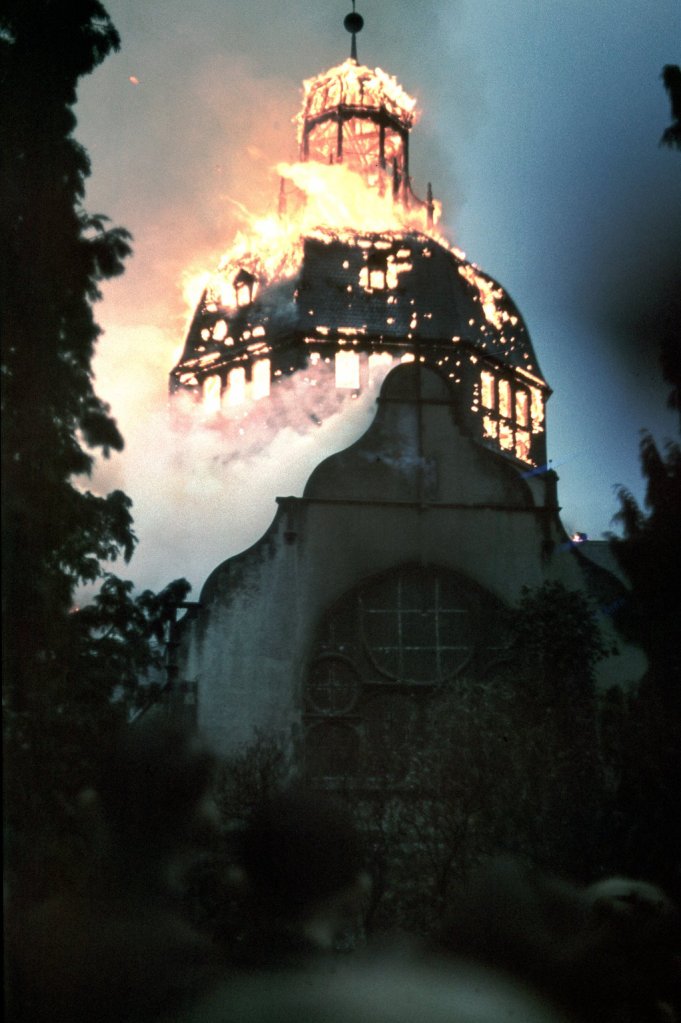
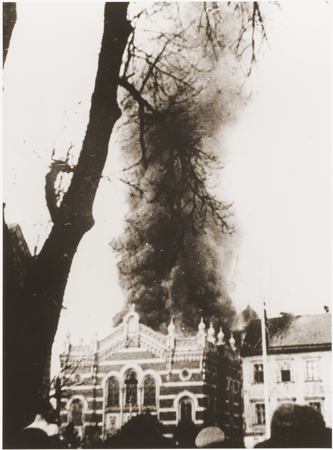
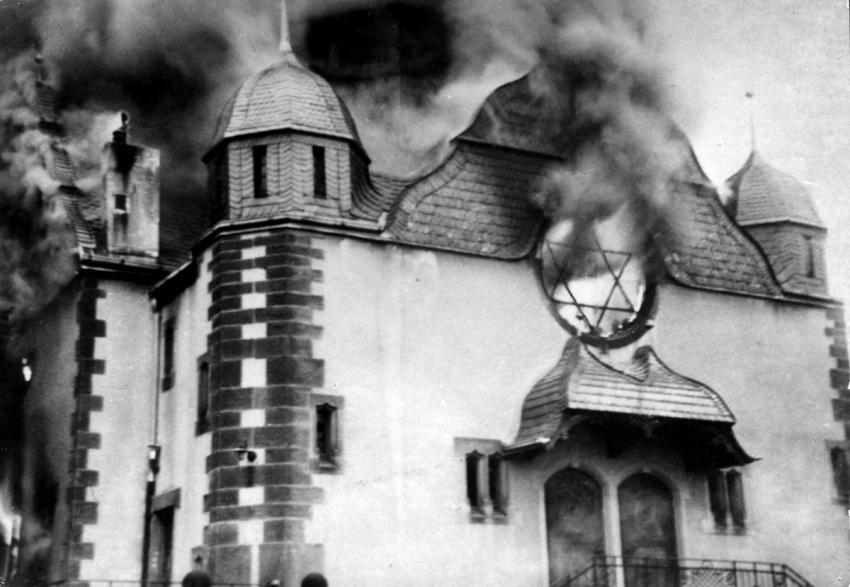
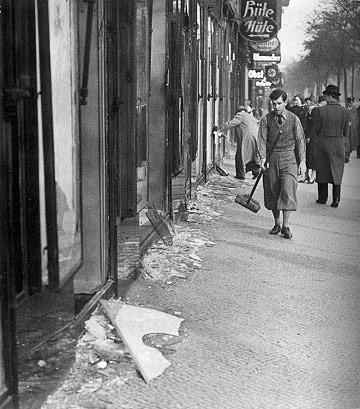
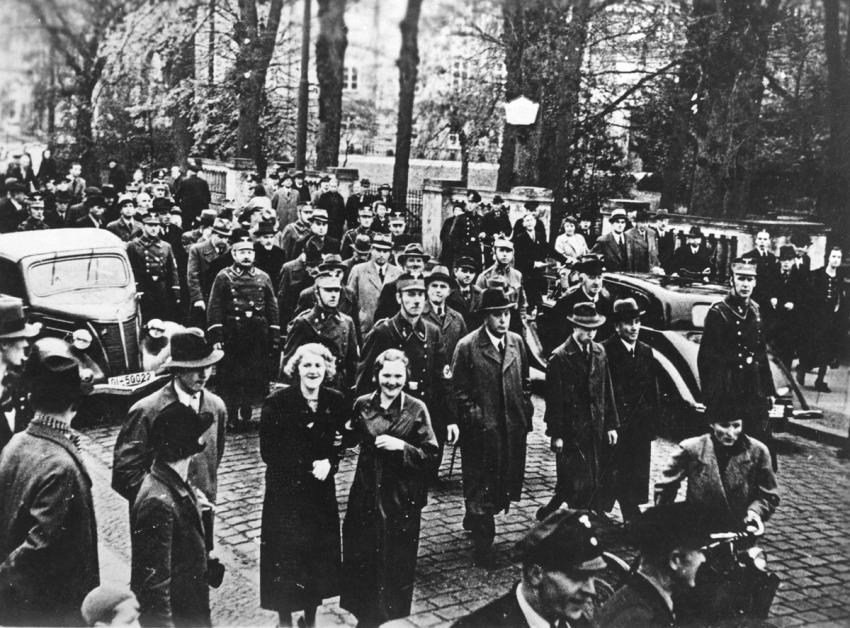
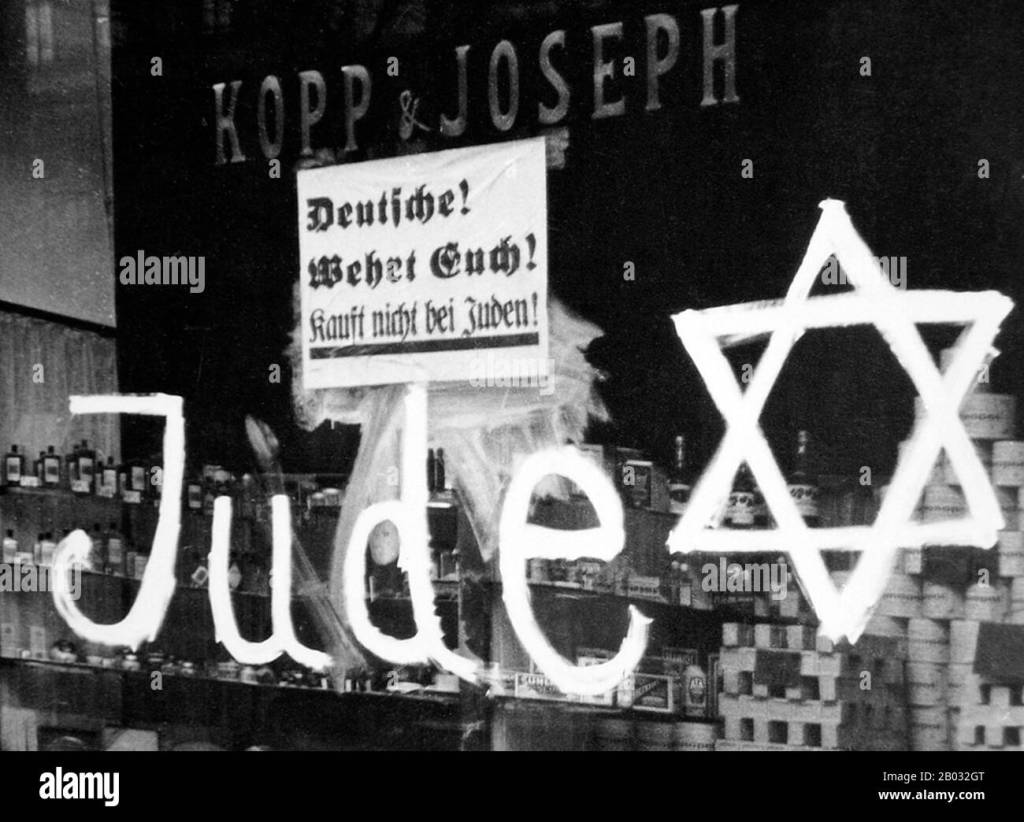
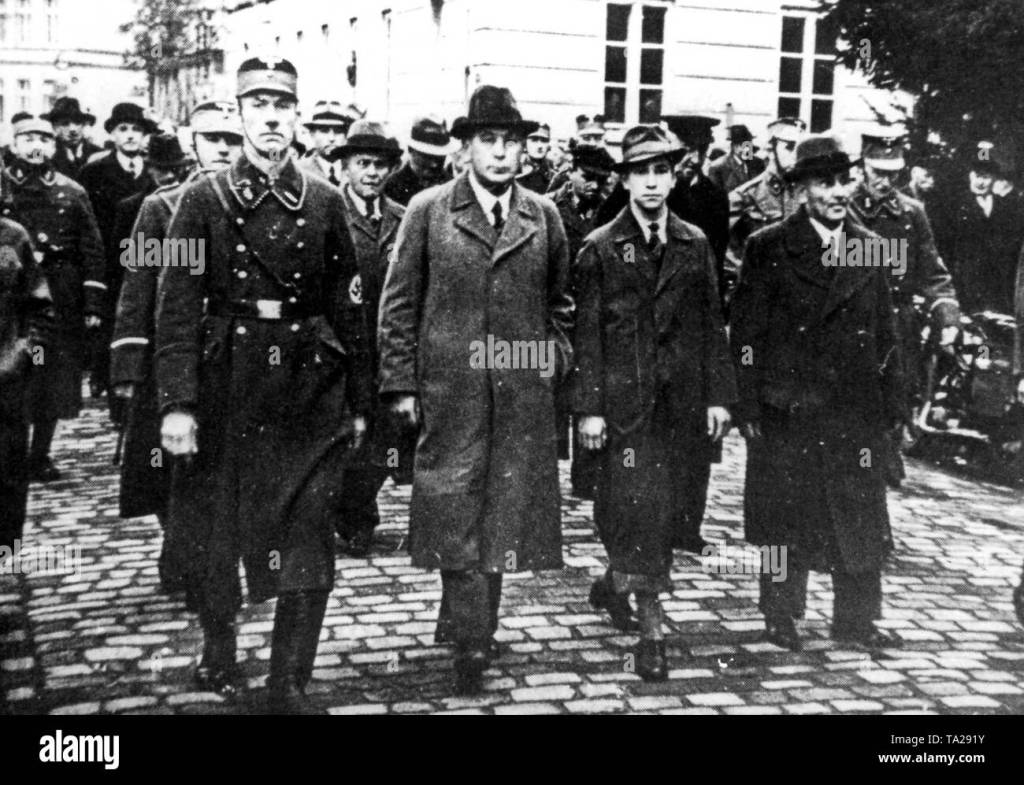
As Kristallnacht continues, 50,000 Jewish males are arrested and many are sent to concentration camps; at least 35 and possibly 200 are killed, mostly by public beatings. Jewish children hide in the woods as their orphanage burns in Dinslaken; many end up in the Netherlands. At least 15,000 Jews are arrested in Austria; mobs in the Sudeten drive Jews out of the area. Six million marks will be paid out by insurance companies for the damages of this rampage, which the Reich seizes.
At 1:20 a.m. on 10 November 1938, Reinhard Heydrich sent an urgent secret telegram to the Sicherheitspolizei (Security Police; SiPo) and the Sturmabteilung (SA), containing instructions regarding the riots. This included guidelines for the protection of foreigners and non-Jewish businesses and property. Police were instructed not to interfere with the riots unless the guidelines were violated. Police were also instructed to seize Jewish archives from synagogues and community offices, and to arrest and detain “healthy male Jews, who are not too old”, for eventual transfer to (labor) concentration camps. Heinrich Müller, in a message to SA and SS commanders, stated the “most extreme measures” were to be taken against Jewish people.
The young Polish Jew who assassinated the secretary of the German embassy was examined today by alienists. He was reported to have wept when he learned his act brought new mob vengeance against Jews in Germany. Herschel Grynszpan, 17 years old, had said he shot Ernst von Rath at the embassy Monday to protest anti-Semitism in Germany. Rath died yesterday. Von Rath’s body lay in state at the embassy and thousands of Germans, diplomats, and others called to pay their respects. There were private services this afternoon around the coffin, and Ambassador Count Johannes von Welczeck read a eulogy before the embassy staff. The embassy announced public funeral services would be held at noon Saturday in the German Protestant church of Paris. After the services a motor cortège will escort the coffin to the North station, where the body will be placed in a special railroad car and transported to Düsseldorf, Germany.
Erwin Rommel became the commanding officer of the military academy at Wiener Neustadt in southern Germany.
Georg von Bismarck became the commanding officer of the 7th Infantry Regiment in Gera, Germany.
The Siege of Gandesa in the Spanish Civil War was broken with the retreat of the Republicans. After its initial success, the ambitious republican offensive failed and the front stabilized in a line from Serra de Pàndols in the west through Gandesa and neighboring Vilalba dels Arcs, as far east as the Serra de Cavalls range and north to Serra de la Fatarella. Defended by the Nationalist 50th Division, the republican troops launched repeated attacks against Gandesa town, the wall of the local graveyard bearing the brunt of much of the combat action.
Disregarding the advice of fellow generals García Valiño and Yagüe and Aranda who preferred to hold the front as it was and initiate an offensive in the North towards Barcelona, Franco wanted to regain the lost territory at any price. His plan was to keep ramming against the republican lines with repeated frontal counterattacks despite the heavy number of casualties on his own side. General Aranda compared the lack of progress at Gandesa to a fruitless fight of two rams, but Franco concentrated on the fact that he had the best of the Republican Army caught up in a 35-kilometer long line and if he annihilated it, there would be not enough manpower on the side of the Spanish Republic to continue the war.
After months of confrontation, on 2 November the nationalists dominated all the high points of the Pàndols and Cavalls ranges and by 10 November all republican positions south of the Ebro were abandoned in a hasty retreat. There were a very high number of casualties on both sides; the Nationalist armies could bear them, but the Republican military would not recover from the heavy losses inflicted.
The Spanish rebel command reported tonight that its newly reinforced army on the Segre River front had halted the government’s four-day-old offensive. Government dispatches, by reporting no new gains, indicated the drive was meeting strong resistance. Earlier government reports said Lérida was being encircled in an expansion of the strong foothold west of the Segre in southern Catalonia. The government’s front on the west bank of the Ebro River which a week ago was said to have been reduced to a width of twenty-five miles was reported now to be only about ten miles wide. The rebels said they were pushing north from Venta de Los Camposines toward Asco, the last important town held by the government on the west bank.
Hungary completed the occupation of territory ceded by Czechoslovakia per the First Vienna Award.
A Vatican news service said tonight that the Holy See would protest a marriage restriction decreed today by the Italian cabinet to further the new Fascist policy of Aryanism. The decree was issued by the cabinet in a meeting over which Premier Mussolini presided. The racial policy first was outlined on October 7 by the Fascist grand council. Under the decree Jews and others who are not Aryans are forbidden to marry Aryan Italians. In cases where children of Jewish fathers are regarded as Christians they may be taken away from parental control if it is found that the father is educating them in the Hebrew faith or teaching them to oppose Fascism. The Vatican service said the restriction would be protested as a violation of the “concordat” — the accord between the Italian government and the Vatican.
Enrico Fermi of the University of Rome receives the Nobel Prize in Physics for his discovery of “Element 93” (Neptunium).
President Mikhail Kalinin of the all union executive committee of the Soviet Union today sent President Roosevelt a message of thanks for his expression of good wishes on the anniversary of the 1917 Bolshevik revolution. “I appreciate sincerely your kind congratulations on the occasion of the twenty-first anniversary of the October Socialist revolution,” Kalinin said in his reply. “Please receive the same good wishes you express.”
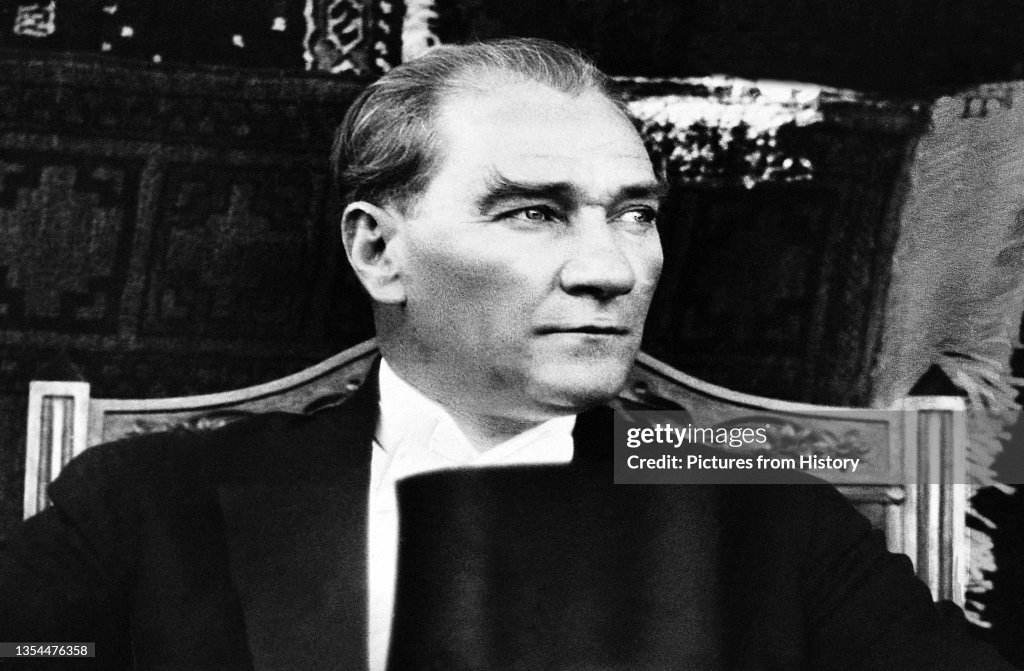
Kemal Ataturk, founder and president of Turkey for 15 years, dies. President Kemal Ataturk, the founder of modern Turkey, died today after a long illness. He was 57. His death had been expected for 24 hours following a relapse. He had suffered long from a liver ailment and was said to be in a dying condition October 17, but his strong constitution brought about a rally. It was officially stated death occurred at 9:05 a.m. (2:05 a.m. EST) A huge silent crowd stood in mourning outside the beautiful white Dolma Bagtche palace where the president breathed his last. The throng sadly watched the flag outside being lowered to half-mast. Uncertainty existed as to the successor of the man who took command of the shrunken Ottoman empire after the World war and built a new, strong nation according to the western pattern.
Arabs groups declare they will not attend a conference unless the Balfour Declaration is first rejected. Arab and Jewish leaders alike expressed disappointment today over what they termed Great Britain’s failure to offer any immediate solution after thirty-one months of Arab-Jewish strife. Jews called the British policy “fantastically ridiculous” and Arabs called it a “complete misnomer because it is no policy at all.” They referred to a project announced yesterday. It proposes the calling of a London conference of Jewish and Arab leaders to compromise the dispute over Jewish immigration to the Holy Land. It discards as unworkable a plan to divide Palestine into Arab, Jewish, and British corridor sections.
President Roosevelt, non-committal on the Republican congressional and gubernatorial gains in Tuesday’s elections, ends another eight-day stay in Hyde Park today to return to Washington for Armistice Day exercises. His special train was scheduled to leave early in the afternoon and to arrive in Washington tonight. If the election results dealt a more severe blow than Mr. Roosevelt had expected, it was not reflected in a statement last night by Secretary Marvin Mclntyre, who replied, when asked for presidential comment on “democratic losses’’: “He (the president) said there would be no comment. He said he was feeling very cheerful and everything is grand.’’
International problems of prime importance will confront the 1939 congress. Soon after the newly-elected lawmakers take their seats, President Roosevelt probably will ask them to vote for unprecedented peacetime arms appropriations, designed to modernize America’s defenses in the light of troubled world conditions. Reliable estimates fix the probable 1939 defense bill at $1,300,000,000. The 1939 congress also will be called on to decide what to do with the “cash and carry” provision of the Neutrality Act, which expires May 1 of next year.
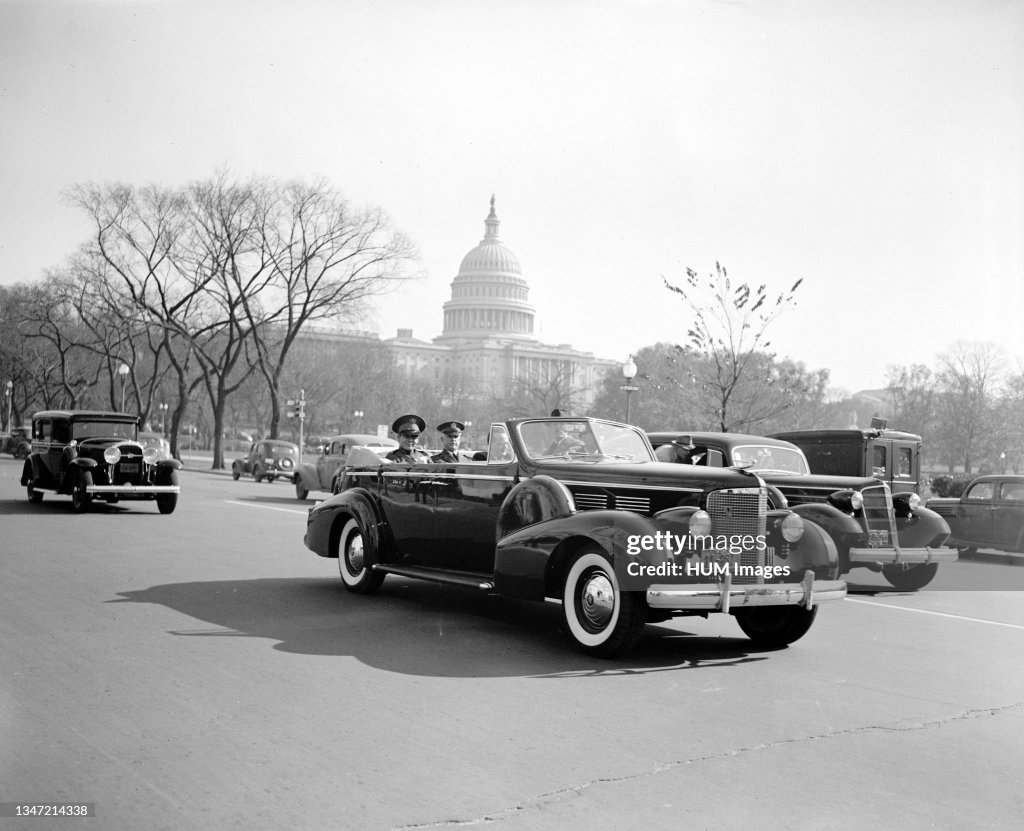
With pomp and ceremony, the nation’s capital today received the first foreign dictator ever to visit Washington. Little Colonel Fulgencio Batista, strong man of Cuba, stepped off a special train from Miami at noon to be greeted by the national anthem of Cuba, played by the army band, and a reception committee headed by General Malin Craig, chief of staff of the United States Army. As head of the Cuban army, he was given a military reception. Undersecretary of State Sumner Welles was among those greeting the swarthy colonel. Welles was ambassador to Cuba when Batista rose from sergeant-stenographer to colonel in the Cuban revolution five years ago. Others present included the Cuban ambassador, Dr. Martinez Fraga, and attachés of the Cuban embassy.
An 8.2-magnitude earthquake rocks the Shumagin Islands in Alaska, setting off a small tidal wave that hits Hawaii, but does little damage.
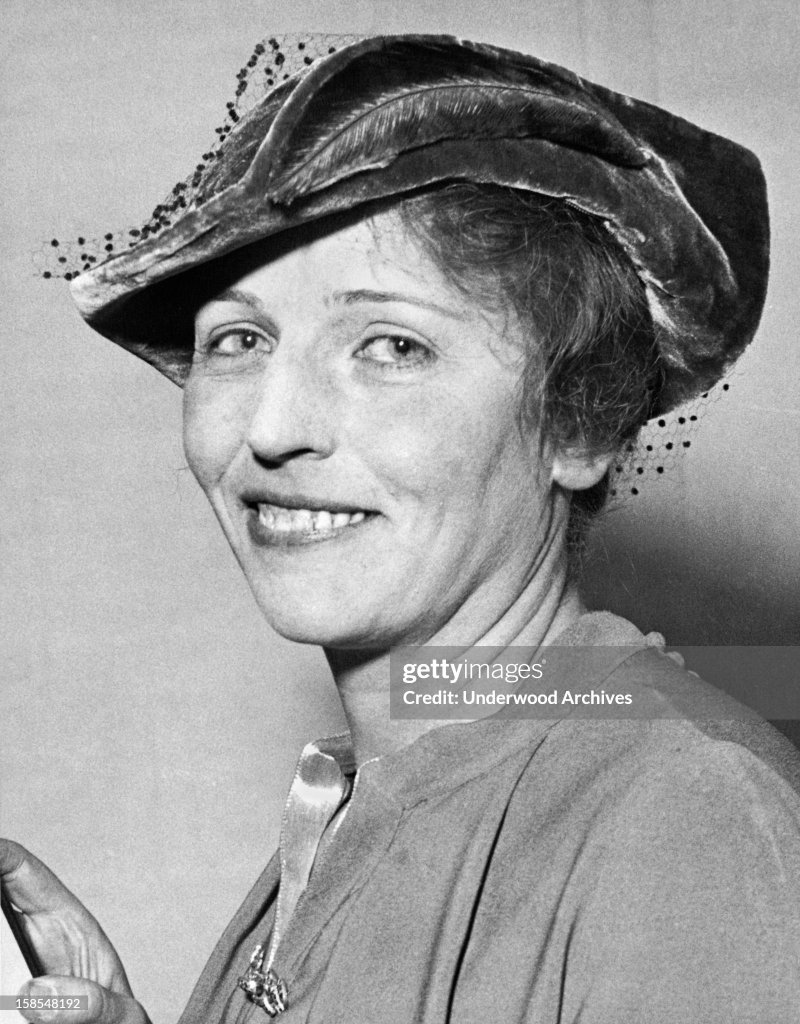
Pearl S. Buck wins the Nobel Prize for Literature. The 1938 Nobel prize for literature today was awarded today to Pearl Buck, American author of “The Good Earth,’’ and other novels dealing with China. She was the third American to win the Nobel award in literature. The others were Sinclair Lewis, and Eugene O’Neill.
On the same day that negotiations conclude between Mexican and U.S. diplomats over payment for seized agrarian land, nine American and British oil companies file suit in Mexico’s courts. They ask the return of their properties.
Chile and Germany extend their trade agreement for another six months.
Severe fighting is reported at Yochow, 80 miles north of Changsha, in Hunan.
The defensive garrison at Changsha, Hunan Province, China organized special teams around the city, who task was to set designated buildings ablaze once given the signal. The goal of it was to deprive the Japanese the use of the city should it fall to the imminent Japanese attack.
The Japanese drive to clear the Canton-Hankow Railway was making headway today despite strong Chinese opposition and it appeared that a great new battle was developing along two fronts — north of Changsha, capital of Hunan Province, and south of Henyang, Chinese divisional headquarters in south-central Hunan. Two large Japanese armies, split into many columns, were participating in the operation. The first army, a part of the forces which captured Hankow, was moving southward on both sides of the railway in North Hunan and had taken a dozen towns. Its vanguard, however, had been pushed back from the immediate vicinity of Changsha. The second army, part of the force which captured Canton, was moving north from that city, but still was well to the south of the Hunan border.
Eleven Americans arrived today in Hong Kong from Canton on a Standard Oil company launch, the first neutral vessel to come down the Pearl River since Canton fell to the Japanese on October 21. Canton maritime customs have been taken over by the Japanese, reports from Canton said. The metropolis was quiet, but gunfire could be heard occasionally from the north. Chinese reported their troops still were counter-attacking Tsungfa, thirty miles northeast of Canton.
Dow Jones Industrial Average: 157.47 (-0.61).
Born:
Jacque MacKinnon, AFL tight end and fullback (AFL Champions-Chargers, 1963; AFL Pro Bowl, 1966, 1968; San Diego Chargers, Oakland Raiders), in Dover, New Jersey (d. 1975).
Bob McLeod, AFL tight end (AFL Champions-Oilers, 1961; AFL Pro Bowl, 1961; Houston Oilers), in Sweetwater, Texas (d. 2019).
Hein van Royen, Dutch director of the Royal Concertgebouw Orchestra (1974-91), in Amsterdam, Netherlands (d. 1991).
Died:
Mustafa Kemal Atatürk, 57, first President of Turkey (1923-1938) and founder of the Republic of Turkey.
Naval Construction:
The Royal Navy “J”-class destroyer HMS Janus (F 53) is launched by Swan Hunter and Wigham Richardson Ltd. (Wallsend-on-Tyne, U.K.): Wallsend.
The Royal Fleet Auxiliary coastal stores carrier RFA Robert Dundas (A204) is commissioned.
The Royal Navy Bar-class boom defence vessel HMS Barcastle (Z 09) is commissioned.
The Royal Navy river gunboat HMS Scorpion (T 67), sole ship of her class, is commissioned.
The Royal Navy sloop HMS Egret (L 75, later U 75), lead ship of her class of 3, is commissioned.
The Вое́нно-морско́й флот СССР (ВМФ) (Soviet Navy) Project 1-class (Leningrad-class) destroyer flotilla leader Kharkov is commissioned.
The Вое́нно-морско́й флот СССР (ВМФ) (Soviet Navy) Project 1-class (Leningrad-class) destroyer flotilla leader Minsk is commissioned.
 History Diaries