Édouard Daladier decreed the military requisition of all principal railways in a bid to crush the French general strike before it even began. In north France, 50,000 striking workers are ordered into the military by Prime Minister Daladier. Daladier signed a decree imposing army control on the railroad workers, who had voted to join the general strike. The decree said simply that “in view of the present circumstances” requisition is authorized for the lines of the National Railway Company. This extended the move to six great networks covering more than 26,000 miles which were banded into one nationalized company August 31, 1937. The decree will become effective with publication of the Official Journal. The actual commandeering will be left to the ministries of war and public works. Earlier in the day similar tactics by the premier smashed strikes among miners, metal workers, and local railroad hands in northern France. Fifty thousand workers had walked out there. Daladier not only mobilized the striking workers and ordered them to work as part of the army, but established courts-martial to deal with those refusing to work. The unions gave in quickly, ordering strikers to resume work pending the general strike.
It was the French Confederation of Labor which ordered its 5,000,000 members to strike Wednesday. The action was a protest against Daladier’s decree laws suspending the forty-hour week. The confederation has planned Wednesday’s walk-out carefully, designing it to involve factories, stores, banks, theaters, newspapers, taxis, radio broadcasting, railroads, telephones, subways, buses, schools, post offices and even the government ministries. The only exceptions authorized were such necessary services as, water, gas, and electricity, which are to be manned by skeleton staff.
In effect, a tense truce prevailed between the government and labor pending the walk-out Wednesday. France’s left wing labor ranks shouted defiance at the government in nation-wide mass meetings late today, demanding Daladier’s resignation and abrogation of his decrees. The mass meetings, called by the Confederation of Labor, were part of a “national day of protest,” and served as a prelude to the general strike. Workers by the thousands swarmed to three major meetings in Paris. About fifty meetings were held in the provinces. The government’s steel helmeted mobile guards, with carbines slung over their shoulders, mounted guard around the meetings.
Resolutions were adopted protesting against the three-year recovery plan decrees approved by the government on November 12, terming them an unfair taxation burden on the lower classes. They protested abandonment of the People’s Front social reforms, especially the forty-hour week. The workers protested also against the government’s use of police to break the sit-in strikes. In the background of the conflict, there loomed the mounting political enmities between Premier Daladier’s Radical Socialists on the one hand and their former allies, the Socialists, communists and the General Confederation of Labor, on the other.
The growth of the German army has kept pace with the territories and populations Germany has annexed in the past nine months. It was revealed today that a sixth army group was formed under the command of General of Artillery von Kluge. The headquarters of the new group was not disclosed, but it can be assumed safely that it is in Reichenberg, capital of the newly incorporated Sudeten Germany — the area secured from Czechoslovakia under the Munich accord. The headquarters of the five other army groups are in Berlin, Frankfurt-on-Main, Dresden, Leipzig, and Vienna. The headquarters of the second army group was shifted only recently from Kassel to Frankfurt. In the event of war this group would man Germany’s western fortifications and Frankfurt lies closer to the fortifications than Kassel.
Each army group consists of at least three army corps, making a total of eighteen corps. Each army corps has at least three divisions. In addition to these fifty-four divisions, Germany has so-called “speed troops,” it was disclosed today. They are commanded by General Guderian of the tank corps, and presumably consist of the nation’s completely mechanized divisions. The German army now has at least five tank divisions, as against two tank divisions listed in the official army yearbook of 1938. Foreign observers estimate the strength of a German tank division at approximately 500 tanks.
Germany announces its Ambassador to the United States, en route to Germany, will not return.
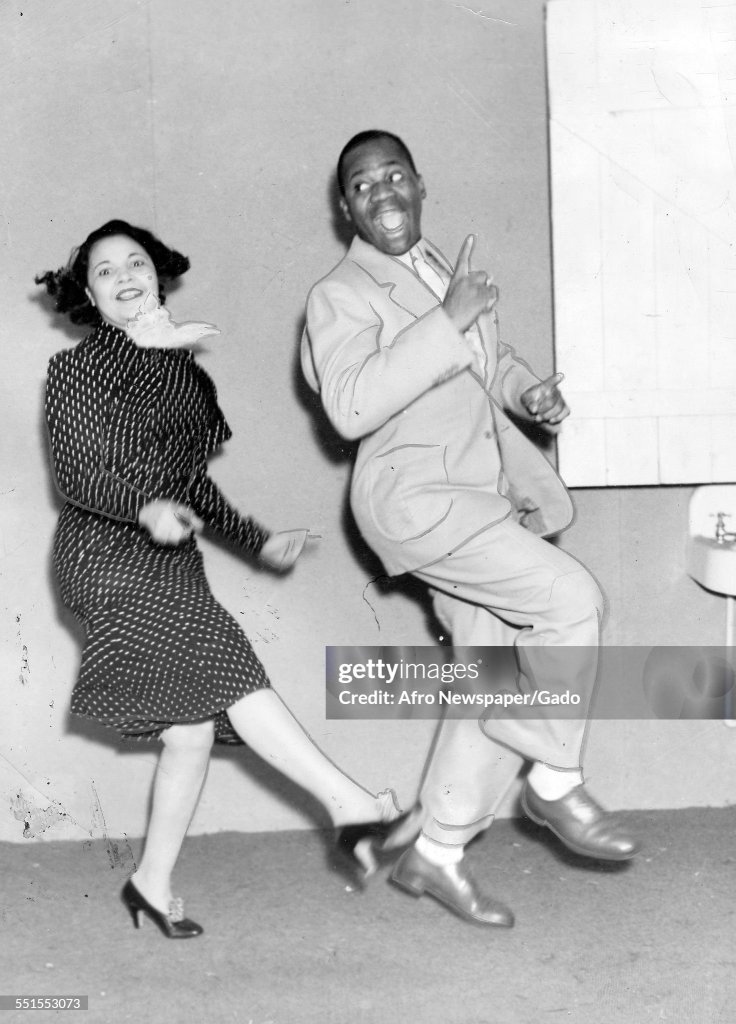
Nazi leaders in charge of Württemberg amusement places declared today that swing “may be fit for Negroes and Jews, but not for us Germans.” The district of Pommern (Pommerania), following the leaders’ “suggestion,” agreed to ban swing and jazz music after January 1. Musicians were told they must indulge in no musical acrobatics and must handle percussion instruments “according to the German conception.”
Poland and the Soviet Union renewed their non-aggression pact of July 1932.
Anti-Semitic riots in Hungary result in 35 arrests.
Firefighters use hoses to disperse a crowd of 20,000 in Sofia, Bulgaria, who demand the return of territory lost 19 years ago. One person dies; 360 are arrested. Martial law and press censorship are imposed.
Fears that Pope Pius XI was dying lifted today when he rallied strongly after the sudden heart attacks which prostrated him yesterday. The pontiff, who is 81 years old, passed a quiet night and was described by his physician, Professor Aminta Milani, as much improved this morning. Indomitable as always in the face of illness, the pope had a half hour interview with his nephew, Count Franco Ratti, who was summoned from Milan last night. Then he discussed official business with Cardinal Eugenio Pacelli, papal secretary of state. Finally, he had himself carried in his chair into his library, where he worked.
Doctors think that the pope now is out of danger, as far as this particular attack is concerned, and that a few days of rest should insure his recovery. There is, however, only a very restrained optimism in the pope’s entourage. The gravity of yesterday’s heart attacks is not concealed. It is learned that the pontiff had a similar heart attack at Castel Gandolfo, his summer home, three months ago, about which the public was not informed.
British Union of Fascists leader Oswald Mosley’s son Oswald Alexander Mosley was born.
British infantry and pilots wipe out a band of 15 Arab terrorists in Lower Galilee. The British also seized arge quantities of ammunition in the area.
Father Coughlin refuses to comply with radio network WMCA’s new rule that he submit his speeches 48 hours before broadcast. The radio station lowers the deadline to four hours.
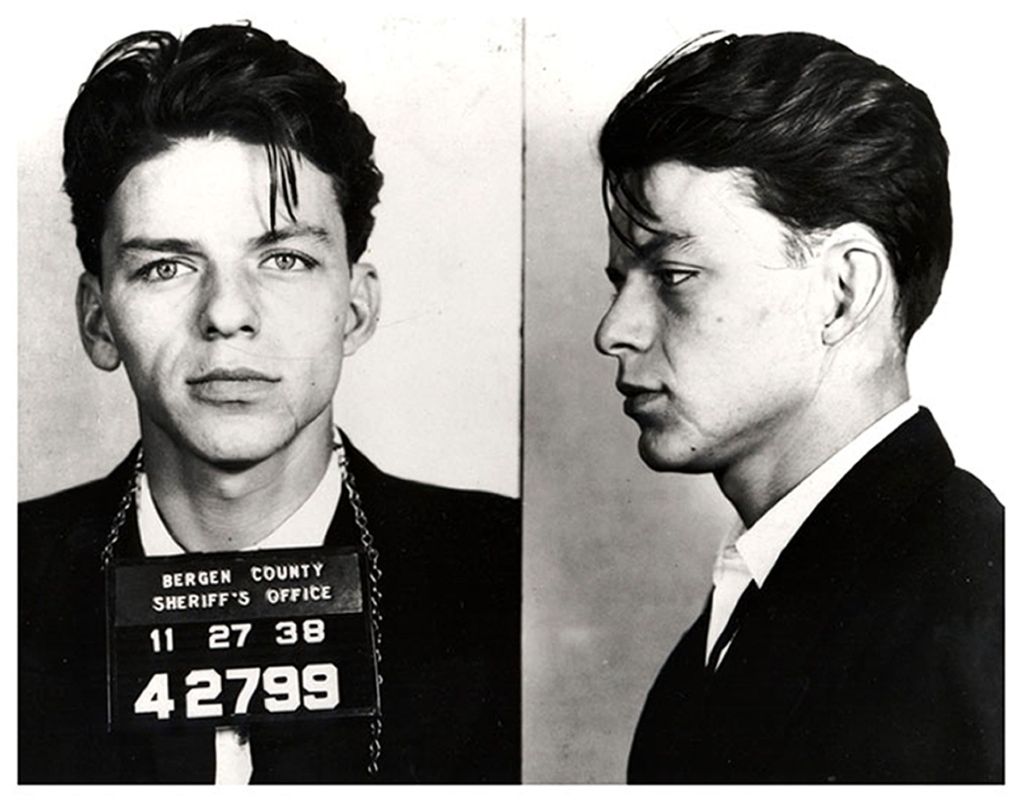
Frank Sinatra was arrested by the Bergen County Sheriff’s Office. Sinatra was arrested for carrying on with a married woman, a criminal offense at the time. The Bergen County (New Jersey) sheriff’s department arrests American singer Frank Sinatra (23) on charge of “seduction”, later withdrawn and amended to adultery, and shortly thereafter case dismissed.
The gangster film “Angels with Dirty Faces” starring James Cagney and Pat O’Brien was released.
Army defeated Navy 14–7 in the Army–Navy Game in Philadelphia.
Duke finished its season undefeated, untied, and unscored upon by beating Pittsburgh, in Durham, North Carolina. The score was 7 to 0.
Other College Football scores:
Holy Cross, 29; Boston College, 7.
Fordham, 25; New York U., 0.
Texas Christian, 20; Southern Methodist, 7.
Tulane, 14; Louisiana State, 0.
Stanford, 23; Dartmouth, 13.
Bolivia and Paraguay resume full diplomatic relations, exchanging ambassadors.
Japanese troops fight Chinese army “remnants” to within a half mile of Kowloon, which is British territory. At least 1,000 Chinese soldiers cross the border and are interned by the British. In a few instances, Japanese troops cross into Kowloon but quickly withdraw. Japanese troops in South China were reported tonight to be making rapid progress toward the border of the British leased territory of Kowloon. This area, a peninsula on the Chinese mainland, has been British since October, 1860, and now forms a part of the crown colony of Hong Kong. The Japanese vanguard was said to be only half a mile from the Kowloon frontier. The invaders reported they had swept aside what they called Chinese army “remnants” on the eastern shore of the Pearl (Canton) River delta.
Japanese reports said Chinese forces caught near the frontier had suffered heavy losses. A Hong Kong dispatch said Japanese warplanes bombed the town of Shumchun, on the crown colony’s border, increasing the number of refugees and wounded Chinese soldiers seeking to enter Hong Kong. At least 1,000 Chinese soldiers crossed into British territory and were interned, it was said.
An area near Samshui, 30 miles from Canton, is heavily bombed by 50 planes to remove 12,000 Chinese troops. Fifty Japanese warplanes attacked an estimated 12,000 Chinese near Samshui, thirty miles west of Canton, with what one Japanese described as “fearful results.” To the north, between Canton and Hankow, Chinese reported they had halted the Japanese drive down the Canton-Hankow railway toward Changsha, defeating the Japanese at Taolin and Tungcheng.
British soldiers and Hong Kong police were under fire from Japanese troops today and for a time the Japanese occupied a British outpost dugout near Shataukok. The Japanese retired after representations by the British. The British have established some defensive outposts on Chinese territory where the terrain within the Hong Kong colony is indefensible. It appeared that the Japanese resented or misunderstood the presence of the British troops on Chinese soil.
A munitions dump near Taiyuan in Shansi explodes, killing 300; Chinese guerrillas take credit.
Dow Jones Industrial Average: 148.45 (-1.65).
Born:
Porter Goss, American politician (Rep-R-Florida) and 1st Director of the Central Intelligence Agency, in Waterbury, Connecticut.
Rich Little, Canadian-American impressionist and actor (“Love on a Rooftop”), in Ottawa, Ontario.
Harold Wells, NFL linebacker (Philadelphia Eagles), in St. Louis, Missouri.
Naval Construction:
The Koninklijke Marine (Royal Netherlands Navy) Gerard Callenburgh-class destroyer HrMs (HNMS) Isaac Sweers (G 83) is laid down by Koninklijke Maatschappij De Schelde (Vlissingen (Flushing), The Netherlands).
The Marine Nationale (French Navy) aircraft carrier Joffre, lead ship of her intended class of 2, is laid down by Ateliers et Chantiers de Saint-Nazaire Penhoët (Saint-Nazaire, France). The ships were to operate an air group of around 40 planes, including 15 Dewoitine D.790 fighters (a navalized version of the Dewoitine D.520) and 25 Breguet 810 twin-engine attack planes (a navalized version of the Breguet 693) for level bombing, torpedo missions and scouting. Work was slowed by the start of World War II. The work was ultimately halted in June 1940 when France fell to German invasion. At this time, the ship was 20% complete. The assembled hull was later scrapped in the dock.
The Kriegsmarine (German Navy) Type IIC U-boat U-56 is commissioned. Her first commanding officer is Oberleutnant zur See Wilhelm Zahn.

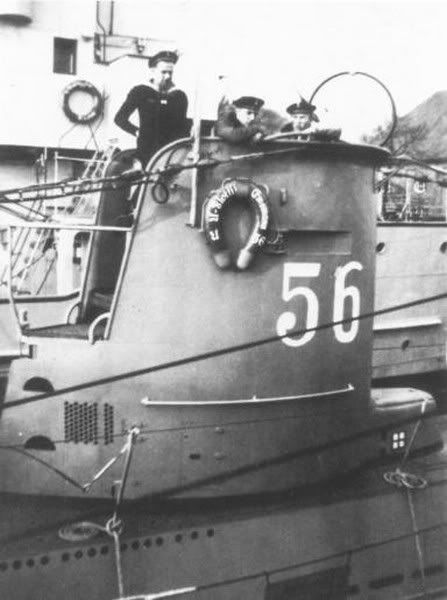
12 war patrols, 3 ships sunk (total tonnage 8,860 GRT), 1 auxiliary warship (auxiliary merchant cruiser HMS Transylvania) sunk (total tonnage 16,923 GRT), 1 ship damaged (total tonnage 3,829 GRT).
https://en.wikipedia.org/wiki/German_submarine_U-56_(1938)#Service_history
Decommissioned after being badly damaged on 3 April 1945 at Kiel by U.S. bombs. Scuttled on 3 May 1945 at Kiel. Wreck broken up.
 History Diaries