**********************************
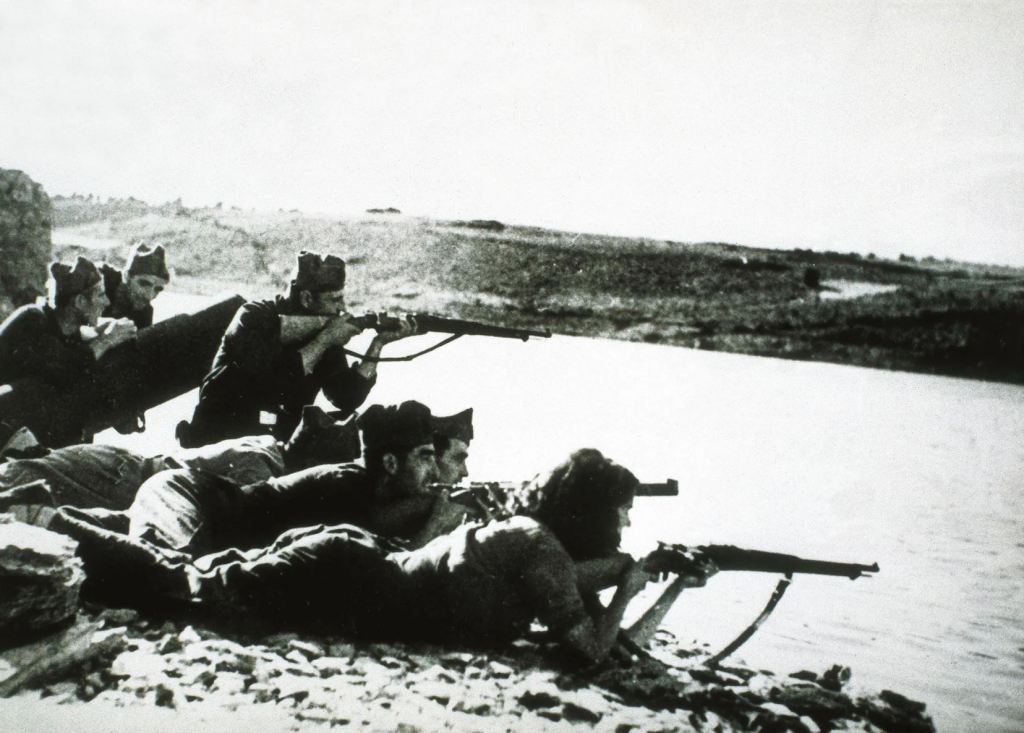
The Battle of the Ebro ended in a decisive Nationalist victory, as the last men of the Republican 35th International Division recrossed the Ebro River at Flix and the battle ended. Insurgents enter Ribbaroja, ending Spain’s Battle of the Ebro. The three months of fighting cost 100,000 combined casualties. The Battle of the Ebro (Spanish: Batalla del Ebro, Catalan: Batalla de l’Ebre) was the longest and largest battle of the Spanish Civil War and the greatest, in terms of manpower, logistics and material ever fought on Spanish soil. It took place between July and November 1938, with fighting mainly concentrated in two areas on the lower course of the Ebro River, the Terra Alta comarca of Catalonia, and the Auts area close to Fayón (Faió) in the lower Matarranya, Eastern Lower Aragon. These sparsely populated areas saw the largest array of armies in the war. The battle was disastrous for the Second Spanish Republic, with tens of thousands left dead or wounded and little effect on the advance of the Nationalists.
The Nationalists’ superiority in manpower and equipment meant that they were better able to withstand the losses and to exhaust the Republicans. As a result of the Battle of the Ebro the Republican army was destroyed as an effective force, and the Republican air force was no longer capable of offering further resistance.
Both sides had suffered huge losses, with estimates ranging from 50,000 to 60,000 to 110,000 casualties, as well as the loss of large numbers of aircraft (the Republicans between 130 and 150). The Nationalists had lost most of their best officers and most of their tanks and lorries needed repairs or spare parts, and the Republican army had lost most of its weapons and experienced units. Nevertheless, after Franco signed a new mining law that made huge concessions to the German government, Germany sent new weapons to the Nationalist forces and in December, Franco launched an offensive against Catalonia.
Historian Antony Beevor has argued that Negrín’s “active war policy” of attacking, rather than adopting strong defenses and hoping for a wider European conflict or harrying the Nationalist forces, had been driven primarily by the Communist Party of Spain’s desire for propaganda victories and that at the Battle of the Ebro, the policy destroyed the Republican army for no great purpose. The Republicans accomplished none of their strategic objectives and, according to Beevor, were unwilling to apply the theory of the deep operations to their attacks. Thus, their forces spent a long time clearing Nationalist secondary defensive positions, which allowed the highly-mechanized Nationalist forces to deploy in strong defensive positions quickly.
Britain acknowledges Italy as the conqueror of Ethiopia.
Premier Édouard Daladier, threatened with a cabinet split over his financial program, today was reported to have received stiff conditions from Italy as a price for a French-Italian friendship accord. These demands, said persons close to the foreign office, were that France cede to Italy the Djibouti-Addis Ababa Railway and the Port of Djibouti, in French Somaliland, and share with Italy the control of the Suez Canal and the administration of Tunisia. Such terms were universally acknowledged by parliamentary deputies to be unacceptable to France.
The demands came as a blow to Daladier’s new policy of seeking friendship accords with the dictators so he could better concentrate French strength in solving domestic problems and developing the colonies. The premier’s suppression of a second group of decree laws designed to increase the government’s supervision over commerce and industry was responsible for the cabinet dissension. Six of the seventeen ministers were reported to have threatened to resign. Minister of Commerce Pierre Gentin, Minister of Labor Charles Pomaret, Minister of Public Works Anatole de Monzie, Minister of Colonies Georges Mandel, Minister of Agriculture Henri Queille, and Minister of Merchant Marine Louis de Chappedelaine were said to be those who threatened to quit.
They declared that Finance Minister Paul Reynaud obtained the suppression of their decrees after safely launching his own. It was said they agreed to hold off any action which might topple the cabinet until after the visit of British Prime Minister Neville Chamberlain Nov. 23 and that of King Carol of Rumania late this month. Added to the worries for Daladier were a threat by the General Confederation of Labor to order its 5,000,000 workers to go on a twenty-four-hour general strike in protest against new taxes contained in his decree laws, and increased agitation by extreme conservative parties, upon whom the premier counts for his new chamber majority, for immediate dissolution of the communist party.
Germany builds pontoon bridges over the Danube and announces it will take control of four more Slovak towns.
Germany has collected over 9 million marks from Jews in Berlin alone to pay for repairs to their property — which will then be Aryanized.
The permanent international refugee commission in London has approached Germany with a proposal that the remainder of the Jews in Germany be put out of reach of further persecution, it was disclosed today. The commission, which was established last July after the conference on the Jewish refugee problem in Evian-les-Bains, France, made its appeal to Berlin in the name of thirty-one powers. Its communication asked that the Germans receive George Rublee, American chairman of the commission, to determine whether Germany will agree to the plan for aiding German Jews.
It would be a costly scheme for the powers participating since Germany forbids Jews to take money with them when they depart and refuses to join in bearing the cost of mass migration. Proposals to settle some of the German Jews in British territory in Africa or elsewhere have brought protests from residents of those areas. It was argued, however, that if they are spread thin enough over the British empire’s huge area and the United States and South America they could be absorbed conveniently. At least 10,000 or 15,000 could be absorbed in India, said Indian circles in London. They said the Jews would be welcomed, but the catch in that acceptance is that the Indians want only doctors, engineers, and highly skilled persons.
Hopes that the United States again will become the promised land for Europe’s persecuted Jews and that the American immigration laws will be revised to permit unrestricted migration were expressed today by Jewish newspapers in eastern Europe. These declarations were accompanied by a report from London that Joseph P. Kennedy, American ambassador to London, had informed the British government that the United States is willing to admit 30,000 Jewish refugees. The report said that Kennedy had asked how many Canada would accept. The Nasz Przeglad, Jewish newspaper in Poland, reported that South Africa is willing to accept another 30,000 Jews. It was taken for granted that migration facilities reported to have been offered to German Jews will be extended to include the Jewish population of Poland, Rumania, and other countries of eastern Europe.
[Ed: This plan, of course, will largely come to nothing, except small efforts like the Kindertransports.]
The Halifax Slasher scare began in West Yorkshire, England when two young women reported being attacked by an unseen assailant with a mallet or hatchet.
Lysergic acid diethylamide (LSD) was first synthesized by chemist Albert Hofmann at the Sandoz Laboratories in Basel, Switzerland.
Lavrentiy Beria personally interrogated Yakov Serebryansky, a former NKVD leader; Serebryansky later reported that he was beaten severely until he agreed to sign a previously prepared confession document.
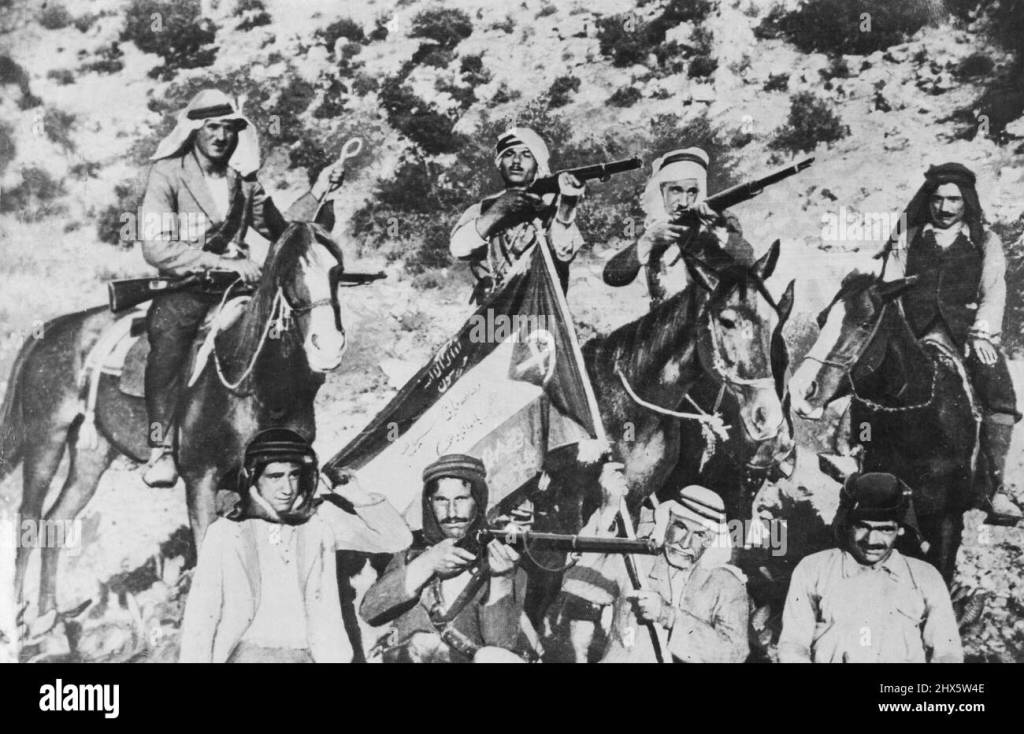
The Arab High Committee, which has fled Palestine, tells Britain it refuses to negotiate with Jews.
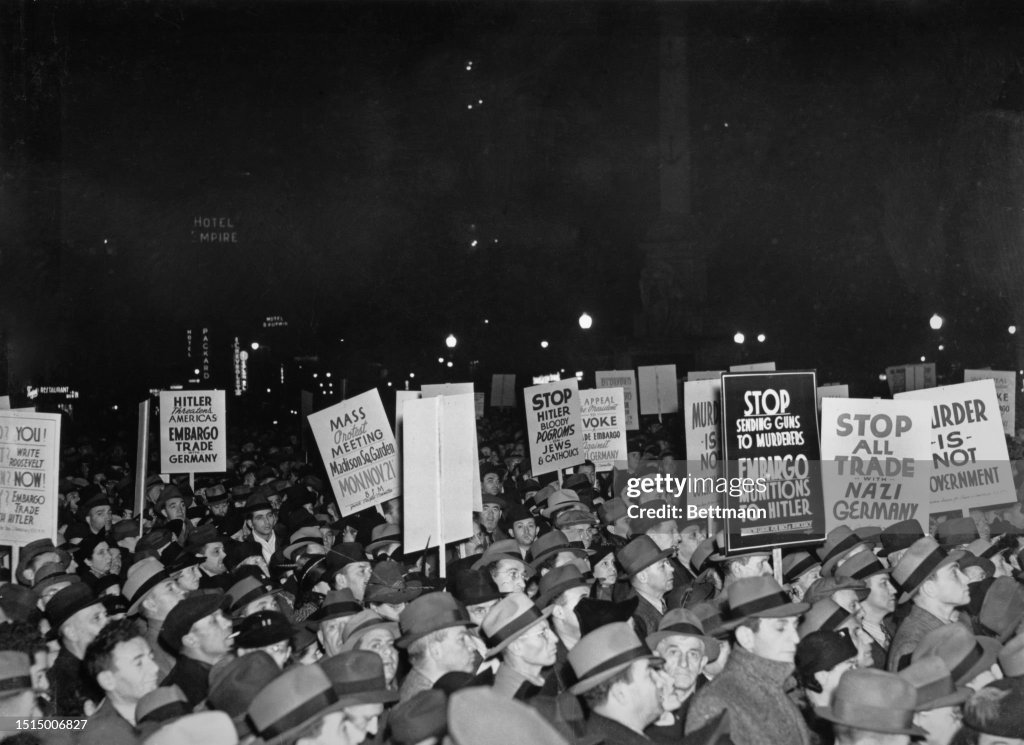
The Chicago Tribune opines: International and domestic policies of great moment are involved in President Roosevelt’s cracking down on Germany for persecution of Jews and Catholics. For rebuking Chancellor Adolf Hitler of Germany by word and by act, the President has the active support of some of the most powerful of the American citizenry, including the Jews, the Roman Catholics, many aggregations of Protestants, and communist and other radical organizations hostile to Nazi Germany and Fascist Italy. Embarking on a course which conceivably might embroil the United States in war with Germany, the President is actively pushing his program of rearmament which involves an outlay approaching 2 billion dollars to place the country in a state of preparedness for war.
The same groups that are supporting the aggressive Roosevelt actions against the Nazi government will be relied upon for powerful aid in putting the rearmament program through congress and in obtaining a modification of the neutrality act which would permit the President to take sides against Germany or Italy in any war in which either or both of these totalitarian states might become involved. Bound up in the rearmament program also is the future of unemployment relief under the WPA. The recent elections disclosed that the popular reaction against the New Deal was due to a considerable degree to the fact that there had been no lessening of the unemployment of 10 million or more persons in five years, that the unemployed were being supported by made work or work on construction projects that otherwise would not be undertaken, and that relief expenditures were being prostituted to political ends.
The administration is now endeavoring to remove the curse on its relief policy by shifting the load from WPA to rearmament. The expenditure of $2 billion for battleships, guns, airplanes, new army rifles, and vast amounts of war munitions, and the further expenditure of $2½ billion by the public utilities for new equipment in the name of war preparedness, will stimulate myriads of manufacturing activities that will require several million additional workers. To the extent that this demand takes persons from relief rolls and gives them jobs in private industry, a semblance of recovery will be achieved and the administration’s unemployment handicap will be diminished.
Americans own 37.7 million radios, according to research by NBC.
The New York police squad assigned to protect the German Embassy and officials has been reformed, and is composed entirely of Jewish officers.
Inland Steel announces it will not comply with the NLRB ruling, but will take the matter to an appellate court.
The Congress of Industrial Organizations (CIO) granted United Electrical, Radio and Machine Workers of America the first charter.
Chinese troops retreat from Hunan province but continue to fight as guerilla forces. Chinese troops today were reported retreating from two towns in the path of the Japanese drive toward Changsha, the capital of Hunan province in central China and seat of the silk industry. The towns are Siangyin, which is on the Siang River about thirty miles downstream (northward) from Changsha, and Pingkiang, on the Mi River about forty miles northeast of Changsha. The Chinese government reported that all able-bodied Chinese are being mobilized to defend Changsha. They claim to recapture towns from the Japanese, most notably Taierhchwang.
Japanese planes raid Sian, capital of Shensi province, and inflict heavy damage, cutting rail lines.
Dow Jones Industrial Average: 151.54 (-3.12).
Born:
Robert Nozick, philosopher, in Brooklyn, New York (d. 2002).
Toni Brown, American piano player, singer-songwriter (Joy of Cooking), magazine editor (Relix, 1980-2002), and guitarist, in California.
Naval Construction:
The Royal Navy Egret-class sloop HMS Auckland (L 61, later U 61) is commissioned. Her first commanding officer is Captain Jack Tuthill Borrett, OBE, RN.
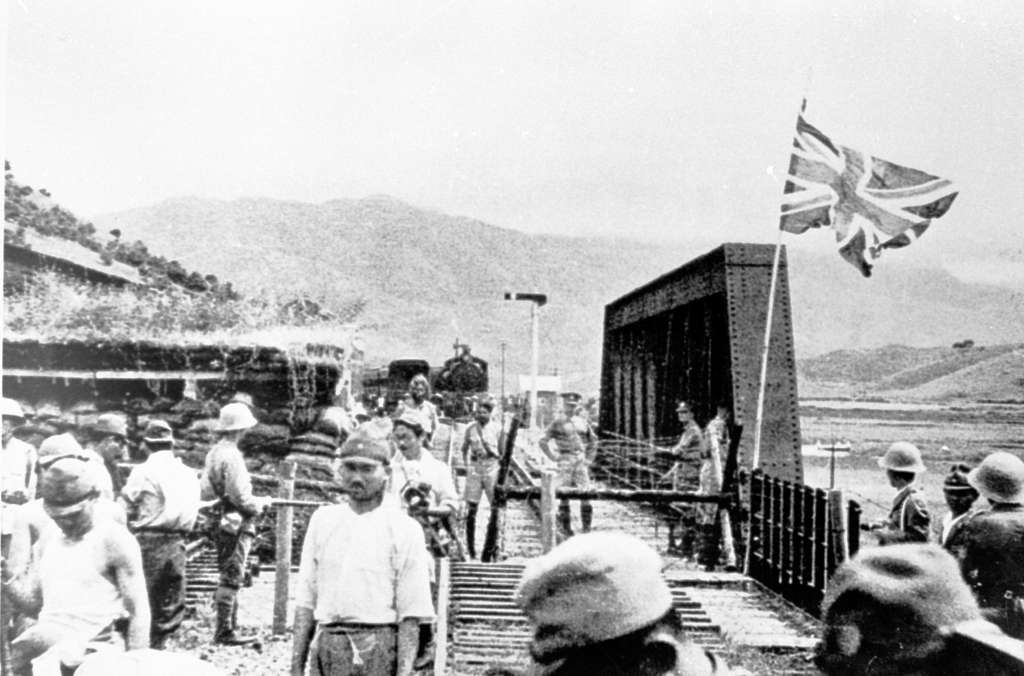
Three years later, in December 1941, six hours after the Attack on Pearl Harbor, Japanese launched the Battle of Hong Kong.
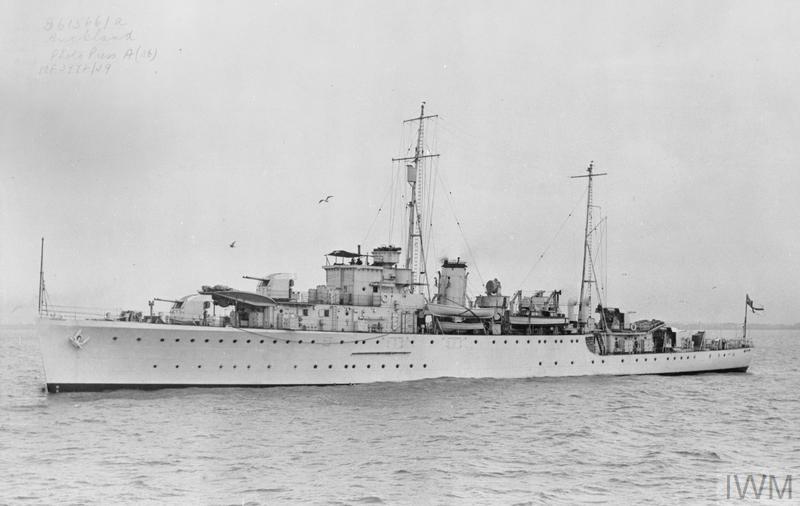
At the outbreak of the Second World War, HMS Auckland was stationed at Simonstown in South Africa. She was briefly employed in hunting for raiders in the South Atlantic before returning to the UK with convoy SL.9. In January 1940, Auckland was stationed at Rosyth, serving as escort to east coast convoys in the North Sea. In April, Auckland took part in Operation Primrose, a planned landing in Norway, and later assisted in the evacuation of troops from Namsos and Andalsnes. In May, Auckland was transferred to the Mediterranean for service in the Red Sea. After a refit she served as a convoy escort in the Red Sea, and in October was involved in the action around convoy BN.7. After a further refit in January 1941 Auckland joined the Mediterranean fleet. In April, she was involved in an action in the Kasos strait, defending a troop convoy against an attack by Italian destroyers. In May, she was escorting convoys to Tobruk, which was under siege by Axis forces in North Africa.
Lost 24 June 1941.
In June 1941, frequent Royal Navy losses were the result of German and Italian dive bomber attacks on their supply missions between Alexandria, Mersa Matruh and the beleaguered fortress of Tobruk. On the 24th of the month HMS Auckland (Cdr. Mervyn Somerset Thomas, DSO, RN) also met her fate 20 miles northeast of Tobruk. Three formations, each of 16 German Junkers 87 (Stuka) dive bombers attacked her and the Australian sloop HMAS Parramatta. Auckland was hit, she emerged from a cloud of smoke, out of control and heading for Parramatta, who had to turn to avoid her, as she passed the Australian ship, she was a wreck abaft the mainmast, with no stern visible, she was on fire aft, but her forward guns were still firing. After about 15 minutes there was a brief respite, Auckland stopped, and her crew abandoned ship, and Parramatta closed in on her and dropped whalers and skiffs, life belts and floats, to rescue the survivors who were being machined-gunned in the water by the attacking aircraft. At this time Auckland blew up with an explosion that lifted her slowly and steadily about six or seven feet into the air. Her back broke with a pronounced fold down the starboard side, and she rolled over and sank about 30 nautical miles east-northeast of Tobruk, Libya in position 32º15’N, 24º30’E. Most of her crew, 162 men, were saved by Parramatta.
Battle Honours: ATLANTIC 1939 – NORWAY 1940 – GREECE 1941 – CRETE 1941 – LIBYA 1941
 History Diaries