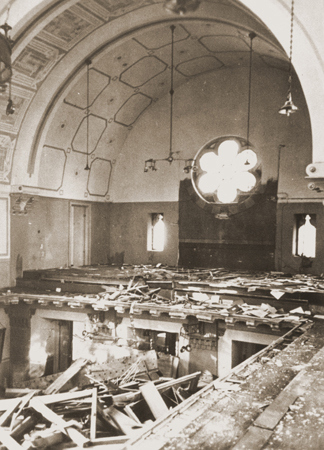
Photograph: A Jewish-owned business vandalized during Kristallnacht, 11 November 1938.

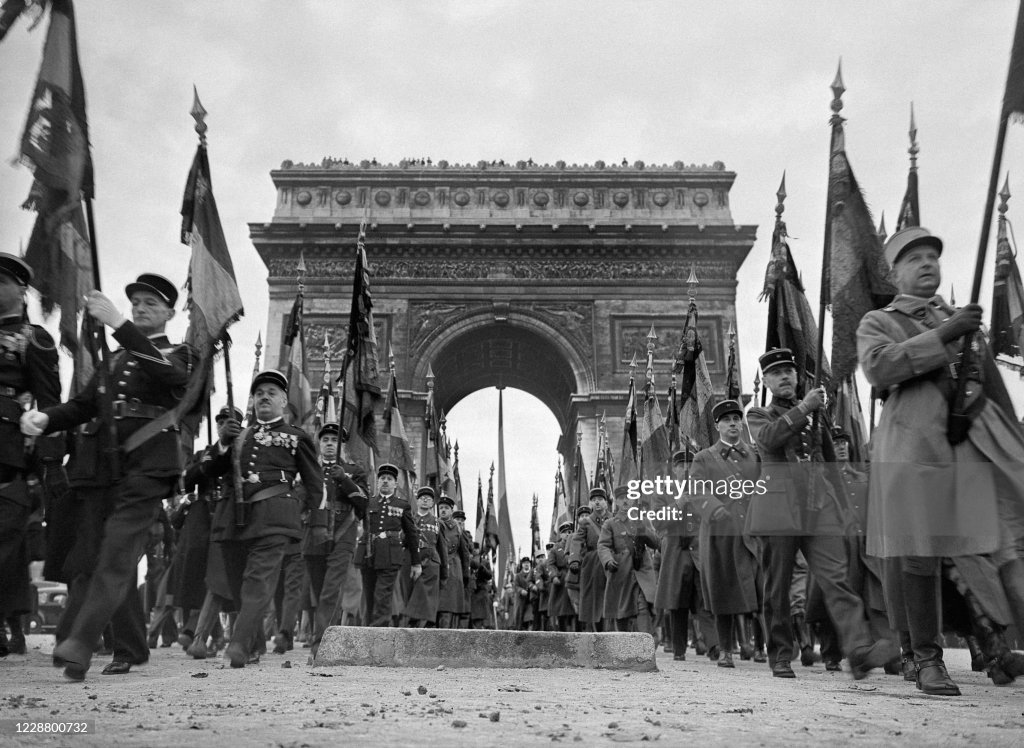
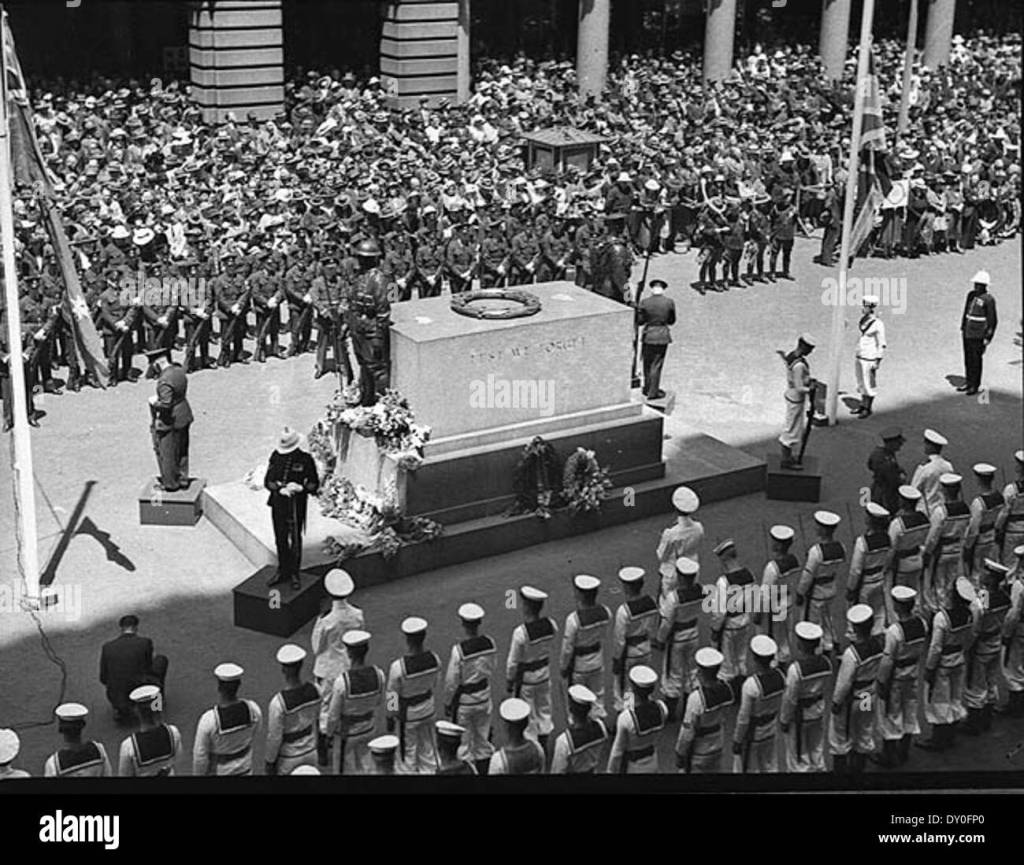
Armistice Day. The last Armistice Day with most of the world at peace for the next seven years.
Nazi leaders defend the anti-Jewish rioting of the last two days, saying that Germans were following their “healthy instincts.” The United States and many European countries condemn their actions; Propaganda Minister Goebbels warns that Germany’s Jews will pay for exaggerations in the foreign press.
German and Austrian Jews suffer 1 billion Marks damages in the Nazi rampage of Kristallnacht.
German Interior Minister Wilhelm Frick passed a decree prohibiting Jews from possessing weapons.
Hundreds of Jewish women stood today outside police headquarters in Berlin, begging for news of husbands, fathers, and sons taken away in the arrests accompanying the Kristallnacht violence.
The Times of London observed on this day: “No foreign propagandist bent upon blackening Germany before the world could outdo the tale of burnings and beatings, of blackguardly assaults on defenceless and innocent people, which disgraced that country yesterday.”
While November 1938 predated the overt articulation of “the Final Solution”, it foreshadowed the genocide to come. Around the time of Kristallnacht, the SS newspaper Das Schwarze Korps called for a “destruction by swords and flames.” At a conference on the day after the pogrom, Hermann Göring said: “The Jewish problem will reach its solution if, in anytime soon, we will be drawn into war beyond our border — then it is obvious that we will have to manage a final account with the Jews.” Kristallnacht was also instrumental in changing global public opinion. In the United States, for instance, it was this specific incident which came to symbolize Nazism and it was also the reason as to why the Nazis became associated with evil.
Charles Lindbergh and his family cancel plans to winter in Berlin because of the antisemitic riots.
British public opinion has been so outraged by German violence against Jews, informed quarters said today, that Prime Minister Chamberlain’s program of appeasement with Germany may be considerably hampered. Until yesterday there were persistent rumors that the prime minister would soon seek an opportunity to discuss the colonial question with Reichsführer Hitler as part of a general European settlement. Now it is believed any such negotiations with Germany probably will be postponed. Officials said Sir George Ogilvie Forbes, British chargé d’affaires in Berlin, had been instructed to take steps to safeguard the persons and property of Jews who are British subjects. They also said British Jews probably would be permitted to use diplomatic channels to claim compensation from Germany for property damaged. British subjects were known to be interested in some of the department stores and other commercial property which suffered.
The Armistice anniversary in Paris was celebrated peacefully today under the watchful eyes of thousands of mobile guards. They had been called to the capital because of fears that war veterans might seize the occasion for demonstrations in favor of a “public safety” cabinet. Guardsmen quickly broke up a skirmish between about 300 leftists and an equal number of rightists, but it was the only incident in which they were called to intervene. The leftists, singing the “Internationale,” clashed with the rightists on the Champs-Élysées. The veterans’ demands for a strong government will be heard tomorrow. Premier Edouard Daladier promised to receive a delegation then.
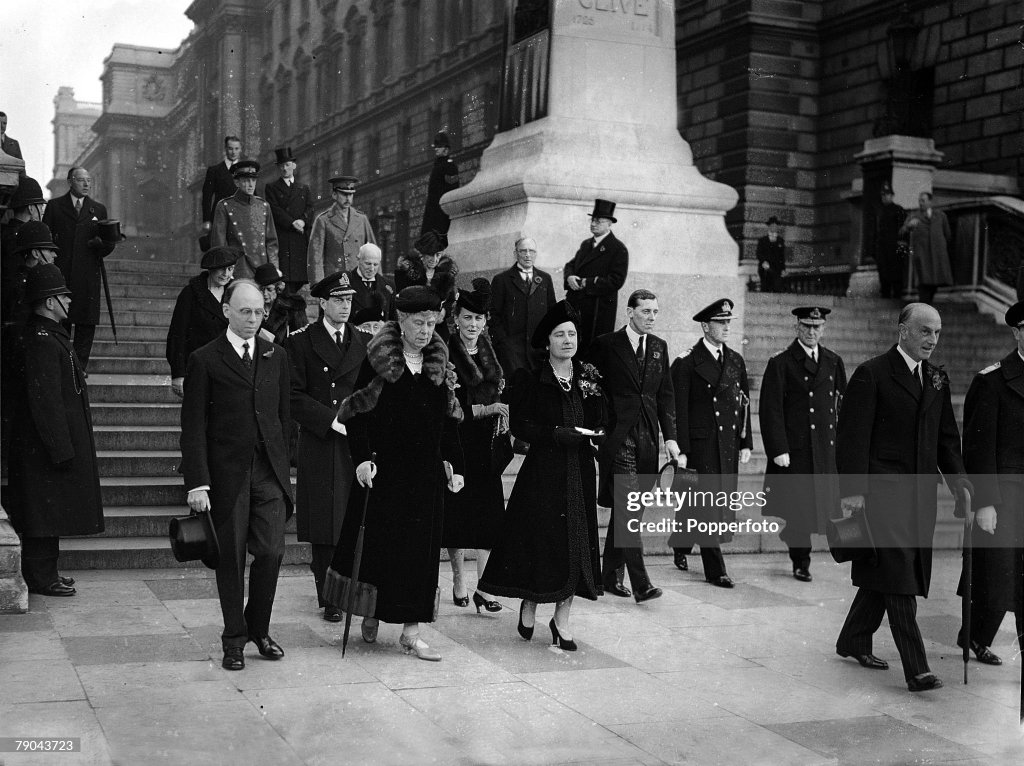
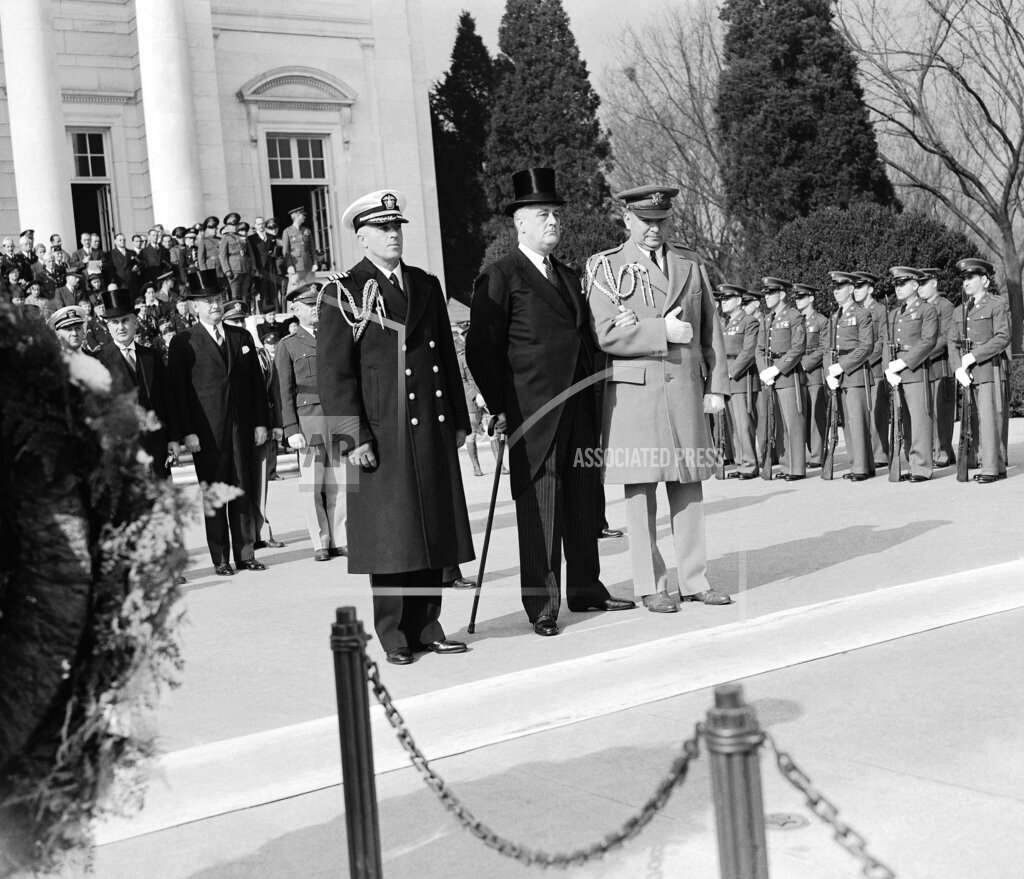
Britain honored her soldier dead today, mindful of two wars — one that ended two decades ago and one that did not break out last month. King George VI of Great Britain led the nation in the Armistice Day service at the foot of the Cenotaph in Whitehall.
Hungarian Regent Miklós Horthy toured territory newly gained from Czechoslovakia.
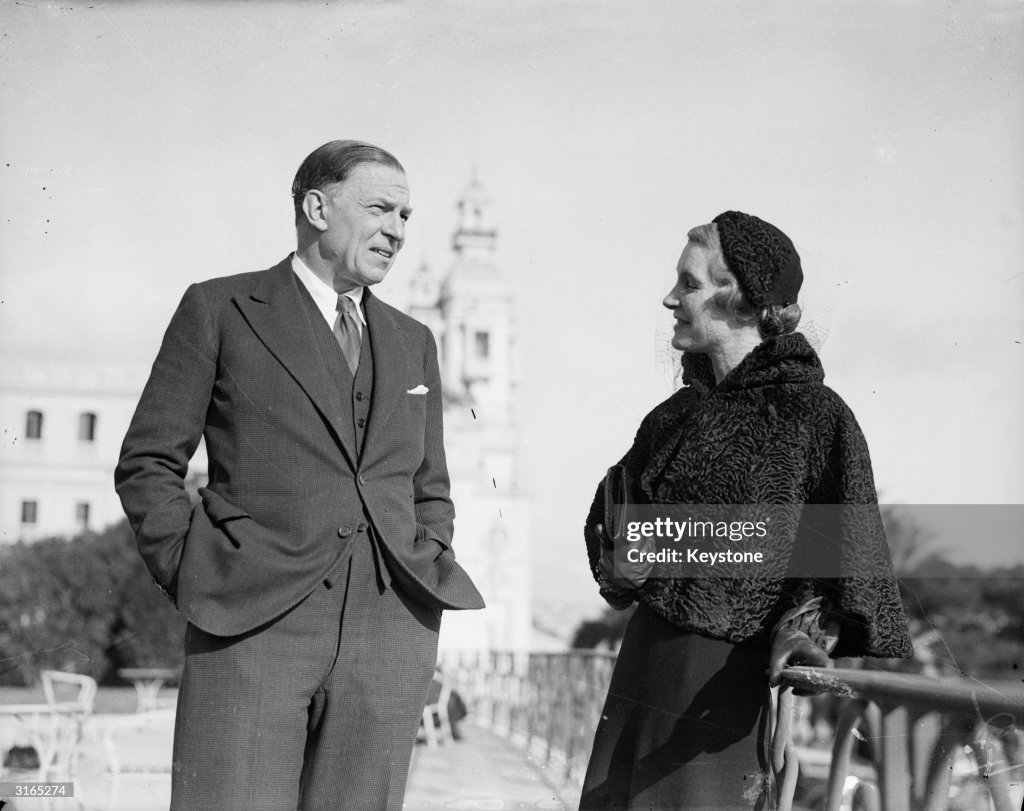
In Paris, the Duke and Duchess of Windsor met with the Duke and Duchess of Gloucester. It was the first time the brothers had met since Edward’s abdication.
Both loyalist and rebel armies, locked in battle on the Segre River in northeast Spain, reinforced their lines under cover of fog today. The battle, now five days old, raged on as insurgent commanders struggled to seize a line of blockhouses west of the river. In these the loyalists resisted heavy artillery fire and bombing from the air all day yesterday. Reports from government sources said the battle, which resulted from a loyalist offensive, was being fought on terrain favorable to their troops. The rebels, on the other hand, maintained the government’s offensive toward Lérida and Fraga had been stopped.
The Permanent Court of International Justice opens its third 1938 session.
Professor Enrico Fermi of Rome wins the Nobel Prize in Physics.
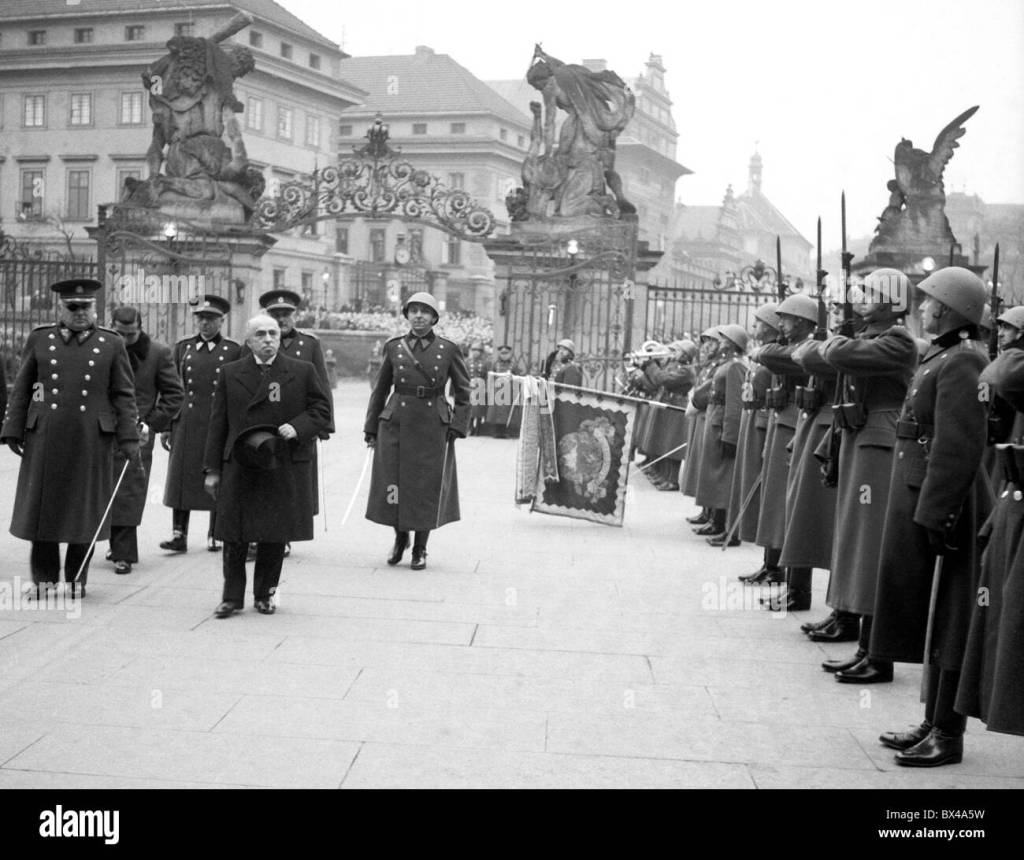
İsmet İnönü became 2nd president of Turkey. Turkey’s National Assembly elects General İsmet İnönü President. He vows to continue the policies of Ataturk.
A bomb was thrown at an American-owned store in Jerusalem today in the continuing violence there. One person was wounded and windows were shattered.
Above the clangor of the world’s shipyards and munitions plants rises the question of whether the United States is prepared for war. And, with the Czechoslovak crisis still fresh in mind, a second question follows: Could the American forces cope with the German army? Experts answer “no” to the first question. They add, however, that the United States is rapidly nearing a state of preparedness which will enable it to defend its own borders, although it will not fit the army and navy for an offensive war.
The second question, in the opinion of experts, is difficult to answer. If the armies of the two nations were to meet now, military experts say, the Americans would be routed, because they would be outmanned and up against superior equipment. But if Germany were to invade this country, the American forces would more than hold their own. Experts add that a German invasion of America is impossible, because Germany is outclassed at sea. An American invasion of Germany likewise is considered impossible, because this country lacks sufficient troops or equipment to carry German coast defenses. The United States is far better prepared today, however, than she was at the beginning of the world war, and each day is bringing improvement.
Representative Martin Dies (D-Texas) charged today that “intellectual tomtits” in Washington had hampered his congressional committee’s investigation into subversive activities. He explained that “a tomtit is the smallest bird in Texas.” “We can show from 1,000 to 1,500 communists in the employ of the federal government,” said the young Texas congressman in an address here before American Legion members. Dies said his committee has but written the preface of its exposé and is prepared to make new disclosures, “more startling than people ever dreamed of.” He announced he will ask congress to appropriate between $200,000 and $300,000 to continue the inquiry for two more years.
Alabama Governor Bibb Graves, who promised to pardon the remaining Scottsboro defendants on November 14, conducts interviews with the five inmates. He finds them rude and sullen, and says two sounded coached.
The 250,000-strong members of the International Ladies Garment Workers Union split from the CIO. The union decides on independence from both the CIO and the AFL.
Kate Smith sings “God Bless America” for the first time, during a radio broadcast celebrating Armistice Day.
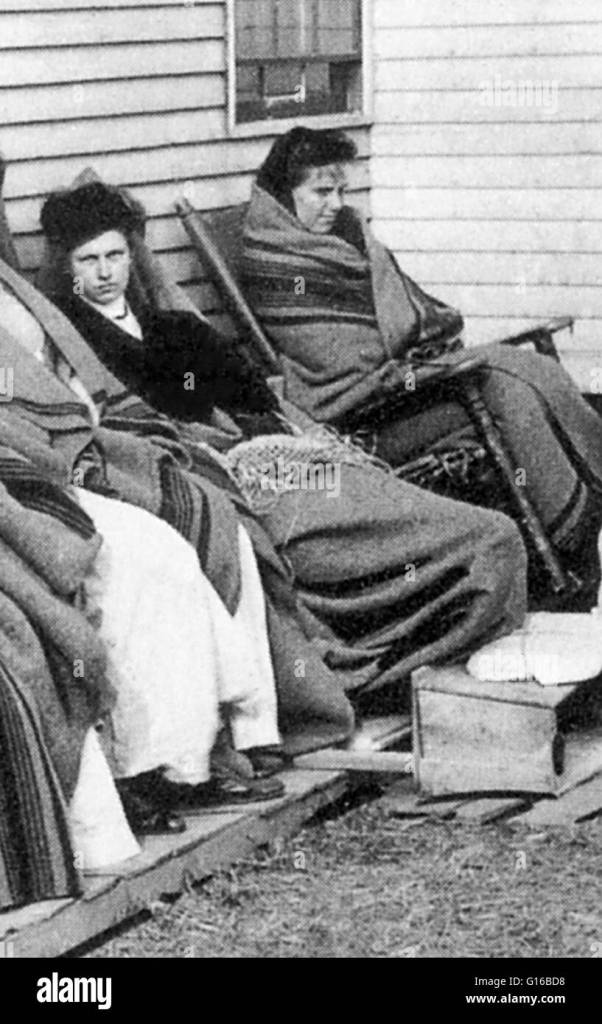
Mary Mallon, the original “Typhoid Mary,” dies of a stroke. She had lived in isolation for over 20 years, after outbreaks of typhoid were traced to her cooking four times over 10 years.
Severe fighting raged today in Yochow, gateway to Hunan province, between Chinese defenders and Japanese troops smashing towards Changsha, the provincial capital. Military dispatches said the Chinese were making a determined stand against the invaders who heretofore had met little resistance in their 122-mile drive up the Yangtze River from Hankow. Japanese commanders reported the Chinese were occupying strong entrenchments thrown about the town in rolling hills and along the banks of the river.
The Japanese said gunboats were steaming up the river within ten miles of Yochow and their guns would be available for a general bombardment of the town. Japanese announced another column had occupied Tungcheng, forty miles east of Yochow and was pushing toward the Canton-Hankow Railroad south of Yochow. The capture of Yochow would put the invaders in position to carry their offensive southward by rail against Changsha, eighty-three miles south of Yochow, and across large Tungting Lake against a dozen important cities.
Japanese troops capture hillsides around Yochow, and by moonlight enter the city, scaling its walls and fighting hand-to-hand.
A serious difference of views among Japanese cabinet leaders on the question of invoking article No. 11 of the national mobilization law, which permits government control and use of profits earned by private companies, threatened to plunge the cabinet into a new crisis today. The dispute is between Seihin Ikeda, a veteran businessman and industrialist who holds the portfolios of finance, commerce, and industry, and the war office. The war office is supported by Admiral Nobumasa Suetsugu, home minister, and Marquis Koichi Kido, welfare minister, who wish to utilize the profits from prosperous industries to spur new enterprises.
Ikeda maintains that restraint on the disposal of profits will kill incentive and cause the business man to hesitate to undertake expansion and production which the government regards as essential. Premier Prince Fumimaro Konoe is understood to be urging a compromise by the presentation of a substitute plan agreeable to industrialists as well as to the army. Ikeda declared he does not oppose the principle of equalization of obligation and sacrifice by all classes of people by the control policy on which the army insists, but argued that this, while excellent in theory, is unworkable.
Born:
Haruhiro Yamashita, Japanese gymnast (Olympics, 2 golds, 1964), in Uwajima, Japan.
John Reilly, American actor (Sean-“General Hospital”, “Dallas”, “Hamptons”), in Chicago, Illinois.
Roger Lavern [Jackson], English rock keyboardist (Tornados – “Telstar”), in Kidderminster, England, United Kingdom (d. 2013).
Died:
Typhoid Mary, 69, American carrier of typhoid fever.
 History Diaries